


GCSE Maths 2026 Summary: Insights, Highlights & What’s Next

Foundation grade boundaries rose by an average of six marks from grade 3 upwards this summer. Higher boundaries fell by an average of six marks. This article explains what sits behind both shifts, and what they mean for your next Year 11 cohort.
GCSE maths expert Christine Norledge works through every trend across the three 2026 Edexcel papers. Foundation leaned further into procedural work, with 57% of marks sitting in standard C1 questions. Higher moved the other way in Geometry, where only 9% of marks were C1. You will find what appeared, what went missing, and what both mean for your 2026/27 planning.

Edexcel, AQA and OCR Maths Foundation and Higher Papers: 2026
Download these free exam practice papers to help prep your next Year 11 cohort to build GCSE exam familiarity and confidence.
Download Free Now!GCSE MATHS 2026: STAY UP TO DATE
Join our email list to stay up to date with the latest news, revision lists and resources for GCSE maths 2026. We’re analysing each paper during the course of the 2026 GCSEs in order to identify the key topic areas to focus on for your revision.
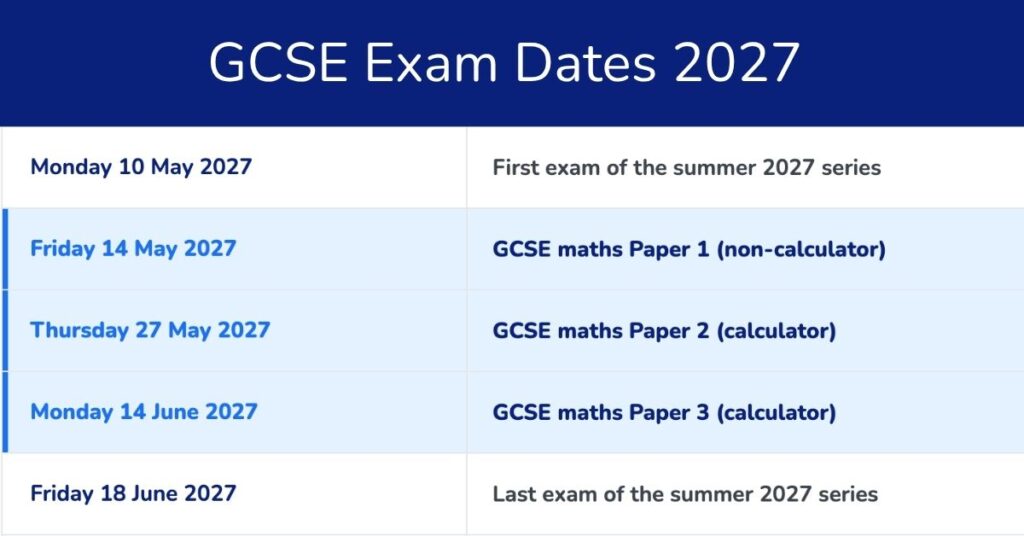
GCSE dates 2026
GCSE results 2026
Get ahead on revision with the GCSE maths papers analysis from 2026:
Analysis of GCSE Maths Paper 1 2026
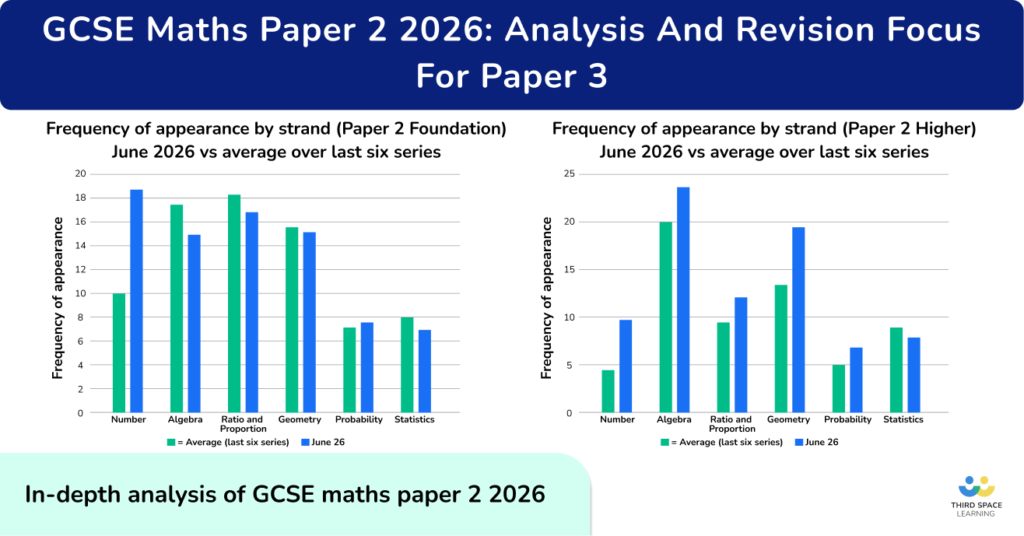
Analysis of GCSE Maths Paper 2 2026
GCSE Maths Paper Analysis and Summary 2026
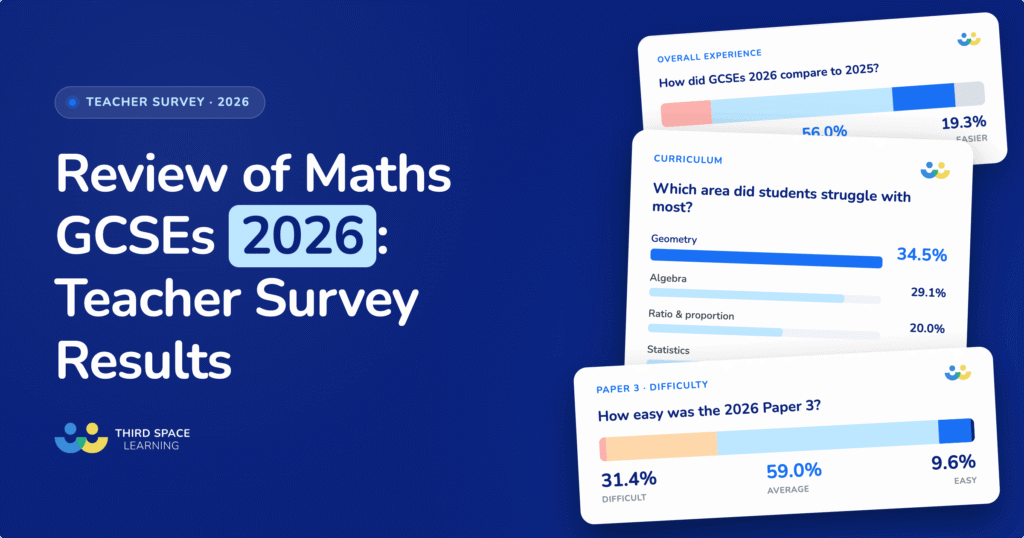
GCSE Maths Teacher Survey Results 2026
Highlights from the 2026 GCSE Maths papers
- The 2026 Edexcel papers closely resembled 2025. Students met familiar question styles, broad topic coverage and few unusual topic combinations.
- Foundation papers felt fair and accessible overall. Wordy common questions on Papers 2 and 3 challenged some weaker candidates.
- Higher papers followed familiar patterns and threw up few surprises. Common questions felt straightforward, but later Geometry content made real demands.
- Foundation boundaries held steady at grades 1 and 2. From grade 3 upwards, they rose sharply, averaging six marks above 2025.
- Higher boundaries moved the other way, falling six marks on average. Even so, they sat above the historic June average at every grade.
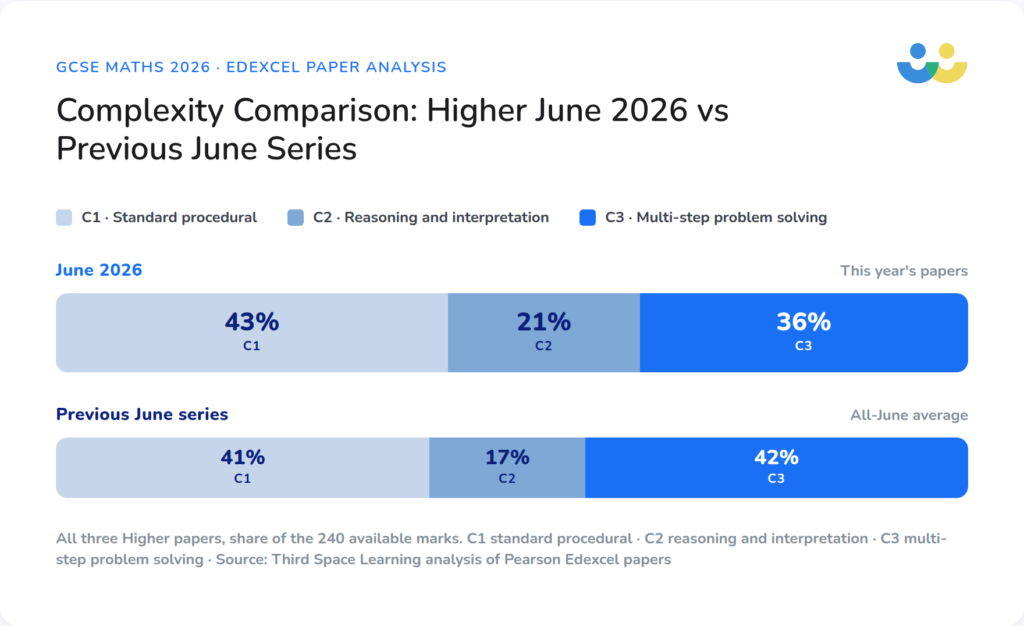
- Question complexity varied by tier. Foundation shifted further towards procedural C1 work. Higher carried more reasoning (C2) but fewer complex problem marks (C3) than average. Higher Geometry stayed heavily weighted towards C3.
Expected challenge in GCSE maths 2026 papers
Exam boards have to balance a familiar paper style against fairness for each new cohort. Your students need a clear sense of the questions they will face. Papers should not become so predictable that candidates can effectively guess the content. Each series also needs enough variation, but not so many curveballs that a paper feels unrecognisable. If it strays too far from the problems students meet in lessons, it stops being a fair test.
On that measure, the 2026 Edexcel GCSE maths papers landed close to the 2025 series, with few genuine surprises. Both tiers carried slightly more procedural work than the historic June profile. The balance of reasoning and problem-solving, though, varied by tier and by strand.
Students reacted positively at first, particularly after Papers 1 and 2. Familiar question styles and a higher share of procedural marks explain that reaction.
The grade boundaries add to this story. Foundation boundaries rose notably from grade 3 upwards. Higher boundaries fell from their unusually high 2025 levels, but stayed above historic June averages. Lower notional component boundaries for Higher Paper 3 tell you something too. Candidates found its higher-grade content harder than the work on the first two papers.
How we measure complexity
We classify questions in every GCSE paper analysis using the same measure of complexity:
- C1 – standard procedural problems, often worth one or two marks;
- C2 – problems asking candidates to explain their reasoning, interpret information from tables, diagrams or other contexts, or answer ‘show that’ questions;
- C3 – non-standard multi-step problems, worth three or more marks, which draw on skills from several topics.
This is not a direct measure of difficulty. A higher-grade topic can still appear as a short, standard procedure. Solving a quadratic equation by factorising at Foundation is a good example (see 1FQ24). Straightforward content can also sit inside a multi-step or unfamiliar problem. This year’s combined mean question on 2H did exactly that, and the algebraic expressions made it harder still.
The complexity profile shows you where students struggle for reasons beyond topic knowledge. Some questions ask them to do more than recall a method. Others ask them to combine two or more concepts. The profile also flags topic combinations that need extra teaching time, especially those that recur in unfamiliar problems or contexts.
A note on the data
This analysis mainly uses two comparison groups.
- The previous six series average covers the six preceding Edexcel assessment series, June and November. It gives a recent comparison for topic frequency. It also accounts for normal variation in syllabus coverage between individual series.
- The all-June series average compares summer papers only, over a longer period. We use it mainly to track paper difficulty and complexity over time.
We exclude June 2017 from the data set. Edexcel made significant structural changes after feedback on the first series of the specification. We also exclude the pandemic series, now dated November 2020 and November 2021. Series where candidates had extra support materials remain in the data.
We estimate syllabus coverage by assigning each question to its main topic. Longer questions often draw on several areas of maths, but we do not count embedded skills separately. For the full methodology and rationale, see our original Foundation and Higher paper analyses.
All percentages in this article are rounded to the nearest whole percent.
June 2026 GCSE Maths Papers: Foundation
The 2026 Edexcel Foundation papers felt familiar in style and content. Students who had worked thoroughly through past papers would have recognised most question types. The first few questions of each paper were very accessible and covered simple, predictable topics.
Foundation candidates often struggle more with the common questions, and this year set some challenges. Papers 2 and 3 in particular included demanding, wordy problems. No topic combinations stood out as unusual, though. Many common questions raised the demand level while staying within a single content domain. A multi-step compound interest problem (2FQ24) and a density problem involving two objects (3FQ25) both did this.
Number strand carried the most marks
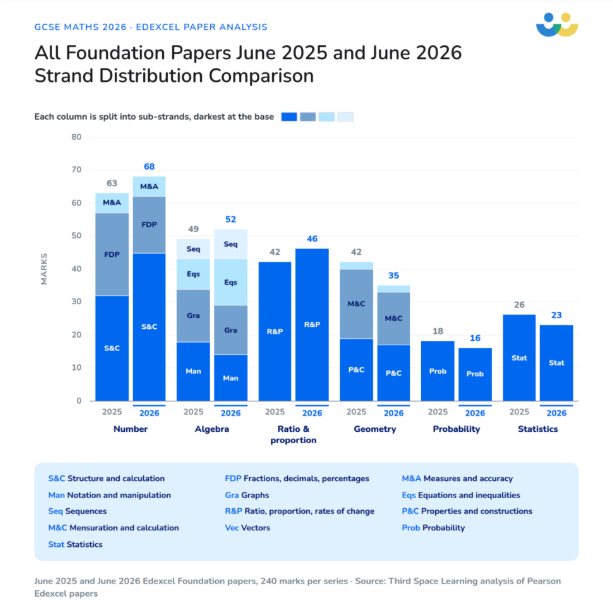
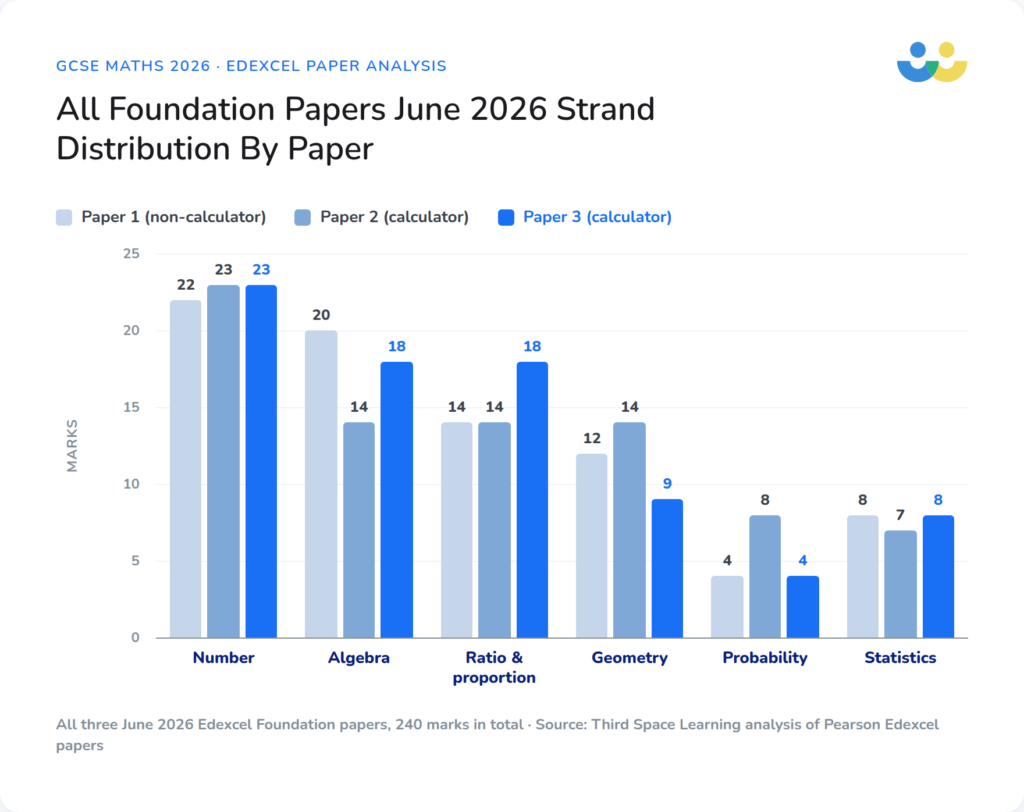
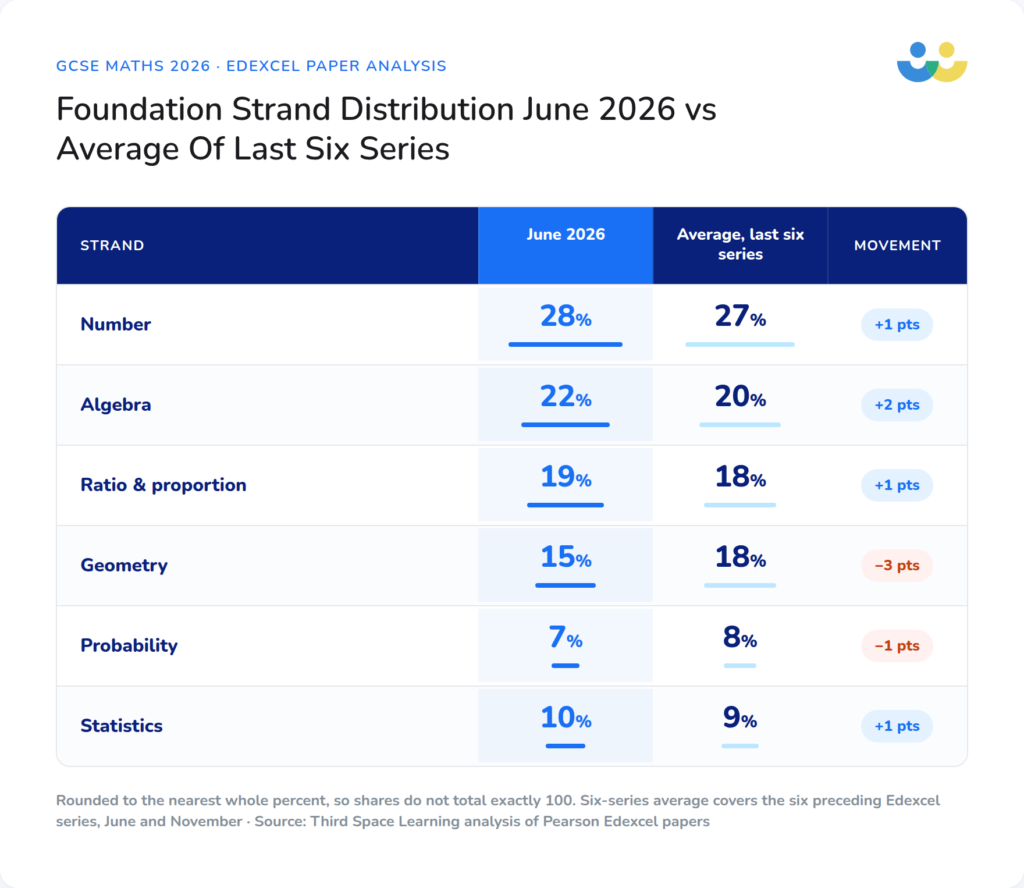
Number attracted the most marks across the three Foundation papers, followed by Algebra, then Ratio & Proportion. Both the June 2025 series and the six-series average carried less Algebra and more Geometry. Papers 1 and 3 showed this shift most clearly.
Set against 2025’s June papers, the overall distribution of marks stayed broadly similar. Number gained marks in 2026, particularly in the Structure and Calculations sub-strand. Geometry lost marks to balance this, most notably in Mensuration and Calculation. Other strands varied only slightly. Treat these as standard series fluctuations rather than an operational shift.
Foundation favoured procedural problems
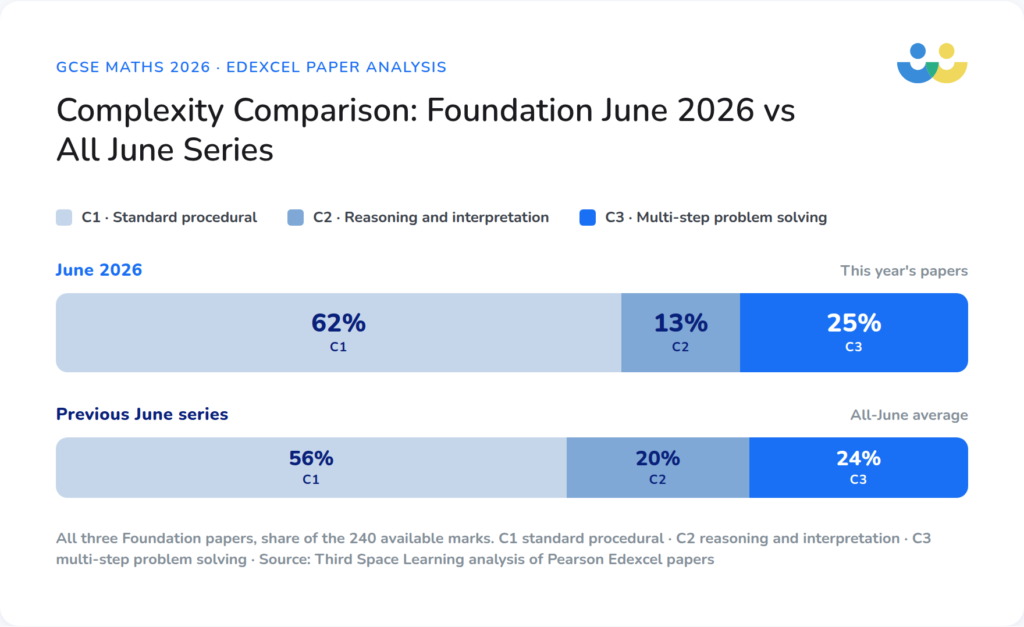
This year’s Foundation papers offered more C1 marks than the all-June series average. That figure sat broadly in line with 2025, at 57%. C2 held steady against last year, while C3 dipped slightly to 25%.
That does not mean students had an easy ride. The procedural work included topics Foundation candidates typically find difficult. Quadratic graphs and solving a quadratic equation both appeared. Many C3 questions stayed within a single content domain, such as coordinate geometry, best buy and compound interest. Algebra, Probability and Statistics also covered more topics than usual, while Geometry demanded less reasoning.
Even so, many students called the papers straightforward on social media, particularly Papers 1 and 2. The grade boundaries broadly back this up. From grade 3 upwards, boundaries rose six marks on average against 2025. They also sat more than five marks above the previous-series average.
Grade 4 moved most. Candidates needed eight more marks there than the historic June average. This supports the initial impression that the papers were relatively accessible, particularly for candidates working between grades 3 and 5.
At paper level, the notional boundaries for Papers 2 and 3 came out almost identical. Paper 1 usually sits lower, because candidates find the non-calculator paper more challenging. This year reversed that pattern. Paper 1 boundaries came in slightly higher than either calculator paper. Feedback matches this, with students naming the non-calculator paper as the least challenging in the series.
Number
Coverage and trends
Number coverage on this year’s Foundation papers was comprehensive, with nearly all core topics examined at least once. Candidates met plenty of work on the four operations and arithmetic, particularly in context. Number properties, including HCF and LCM, appeared throughout. Fraction and percentage representations and calculations also featured heavily.
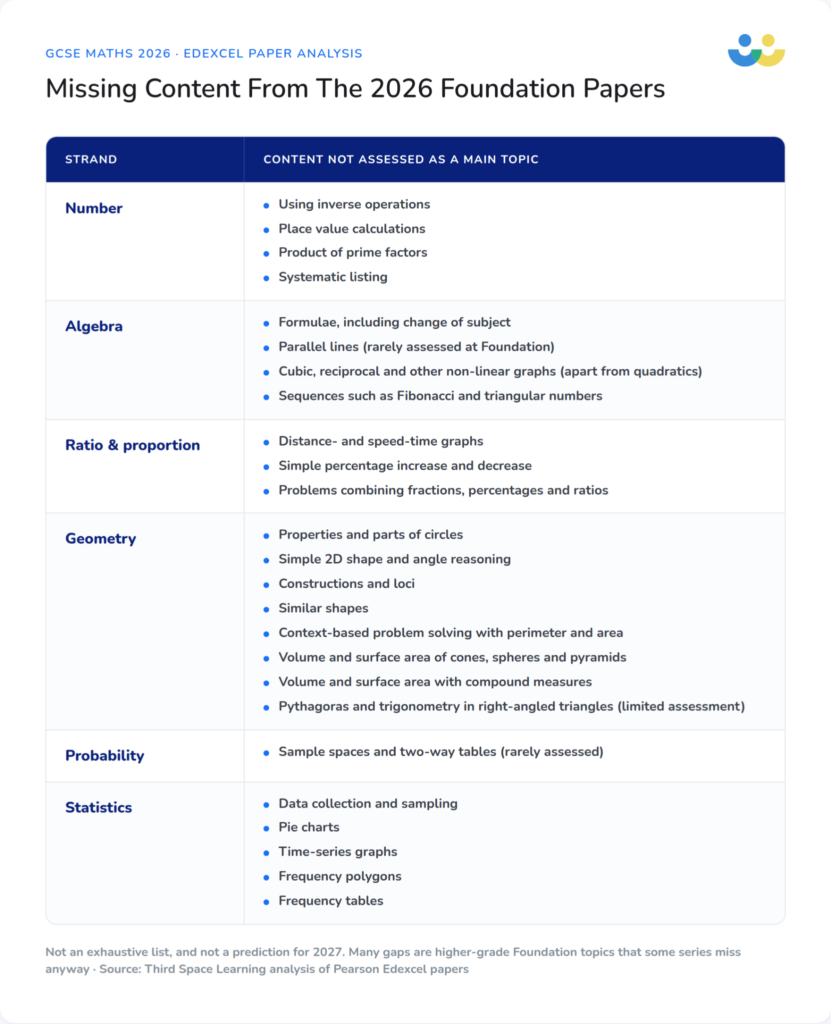
There weren’t many gaps in Number, but they include:
• Using inverse operations
• Place value calculations
• Product of prime factors
• Systematic listing
Complexity Profile
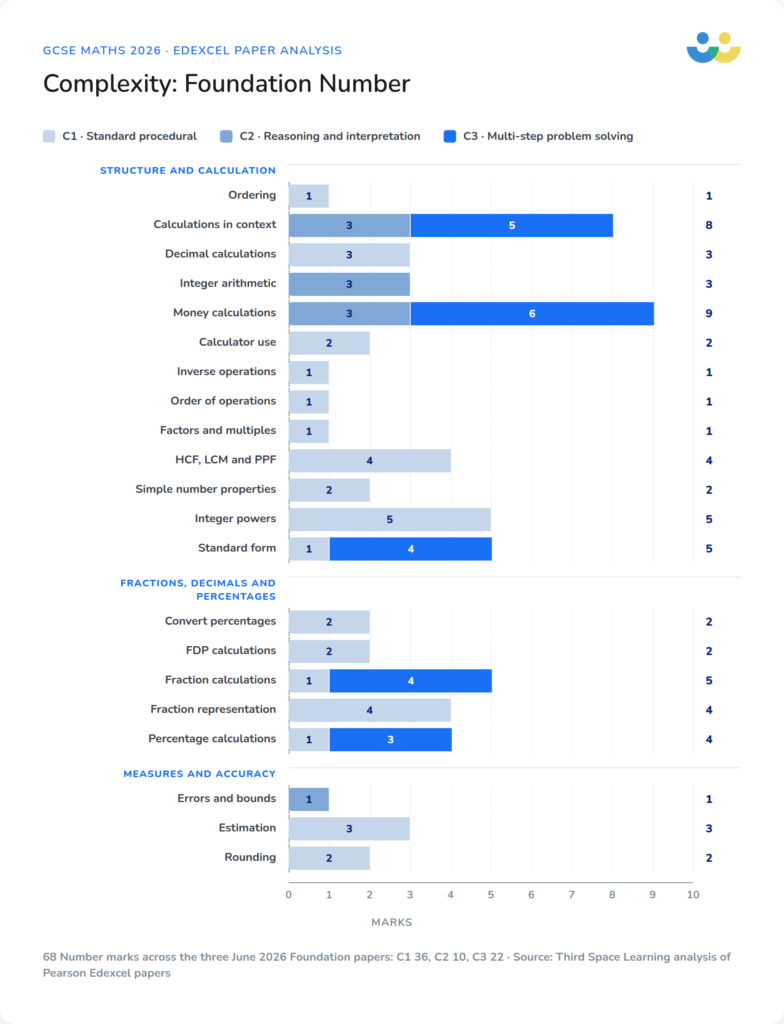
As usual, procedural C1 and problem-solving C3 split the vast majority of Number work between them, at 85%. C1 alone took more than half the marks in this strand. Integer powers, number properties, estimation and rounding all appeared as shorter procedures. Fraction, percentage and contextual calculation work, including money, asked candidates to think more deeply. Paper 2 also set a tricky context-based common problem on standard form.
Sample Question Style
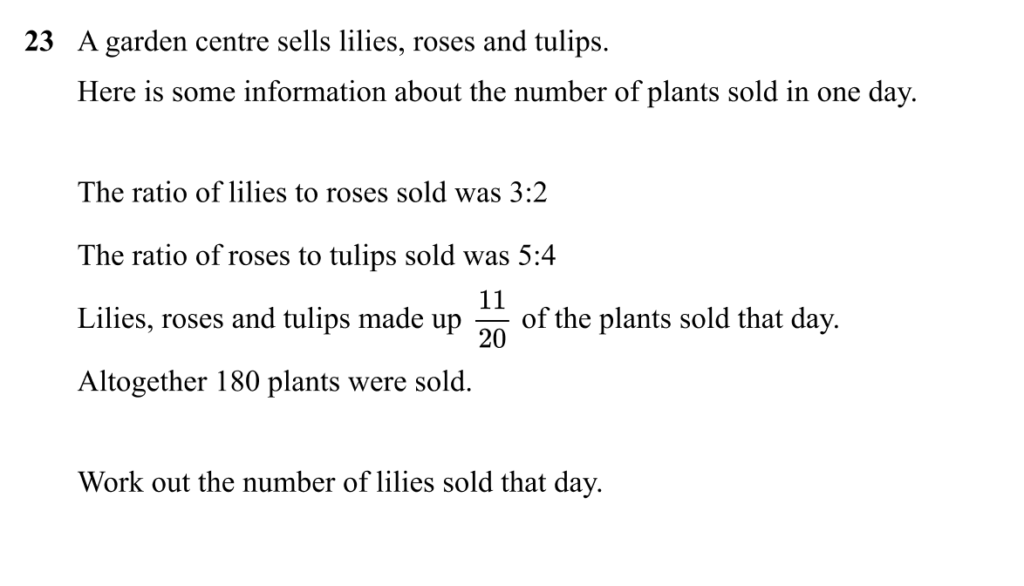
C3: Reasoning with ratio and fraction links
Algebra
Coverage and trends
Algebra coverage on this year’s Foundation papers was broad and varied. The papers assessed topics Foundation candidates see less often, such as solving quadratics by factorising and solving simultaneous equations. Equations and linear sequences carried slightly more marks than usual, while algebraic manipulation carried fewer.
Algebra gaps include:
- Formulae, including change of subject
- Parallel lines (rarely assessed at Foundation)
- Cubic, reciprocal and other non-linear graphs (apart from quadratics)
- Sequences such as Fibonacci and triangular numbers
Complexity Profile
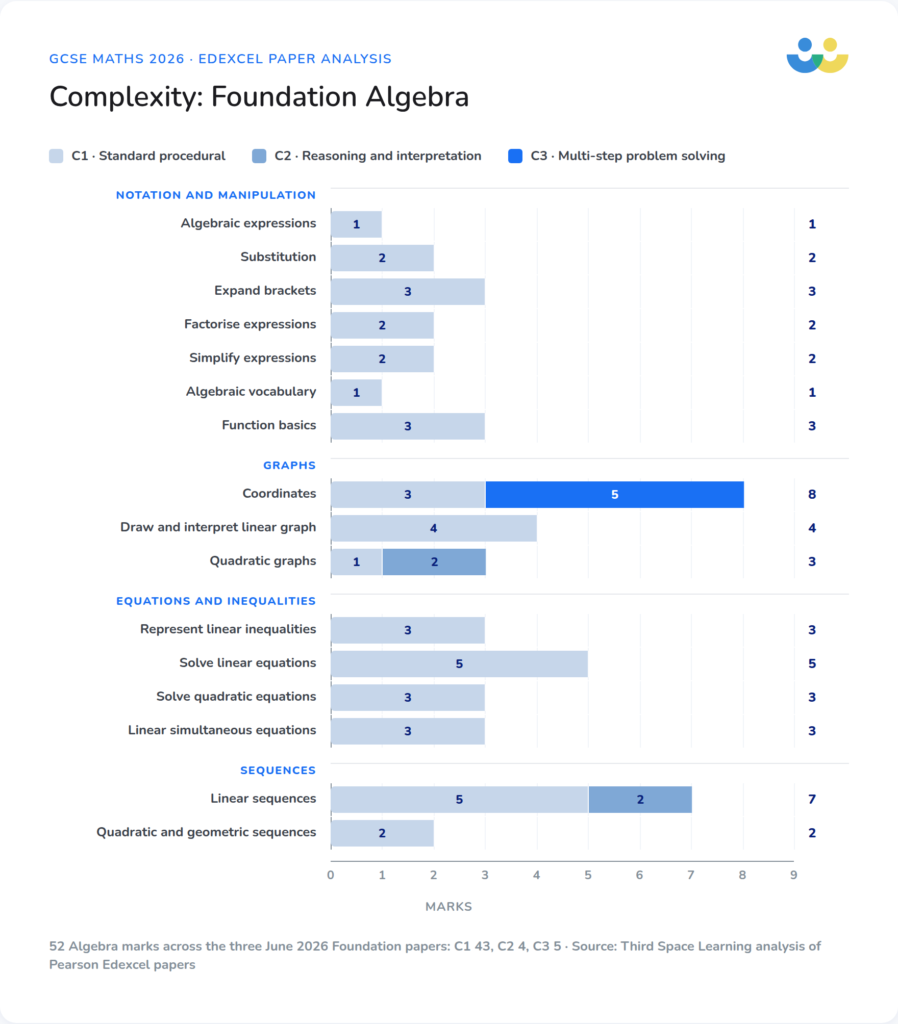
C1 questions took 83% of the Algebra marks, broadly in line with the usual Foundation profile. Coordinate geometry made the biggest demand on Foundation candidates. It asked them to apply Pythagoras to a problem set out in coordinates on an xy-grid. Beyond coordinate geometry, all the harder Algebra work sat in C1.
Sample Question Style
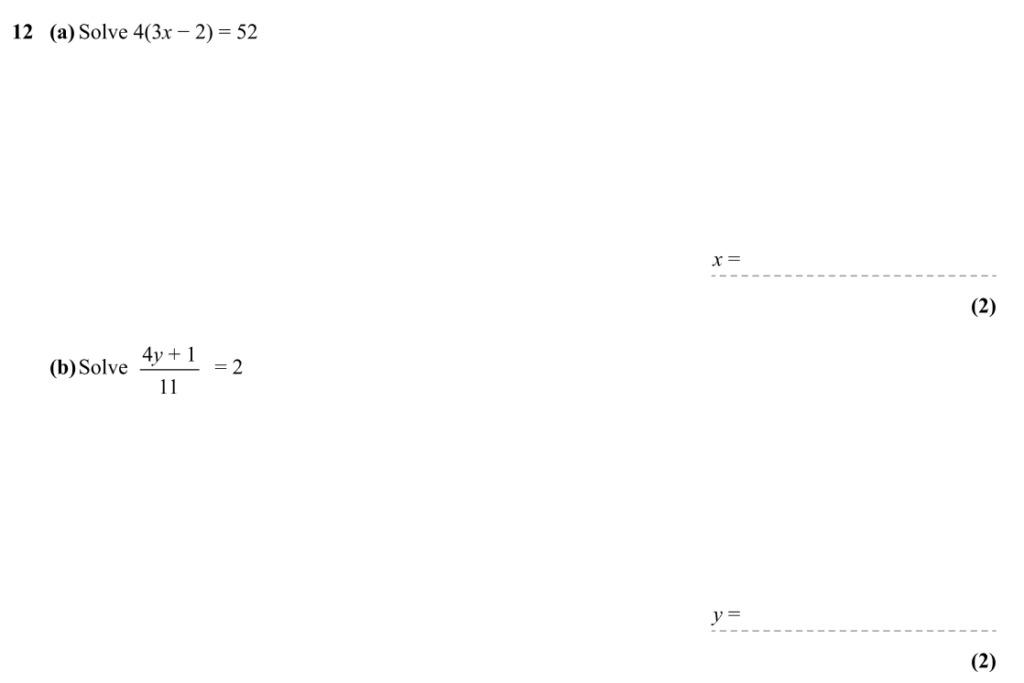
C1: Solving linear equations
Ratio and proportion
Coverage and trends
The same breadth ran through Ratio & Proportion this year. Candidates tackled measures, ratio, direct and inverse proportion, compound interest, reverse percentages and conversion graphs. That breadth left fewer repeats across topics. Ratio itself carried less work than on previous papers, with fewer problem-solving opportunities in this domain.
Ratio & Proportion gaps include:
- Distance- and speed-time graphs
- Simple percentage increase/decrease
- Problems combining fractions, percentages and ratios
Complexity Profile
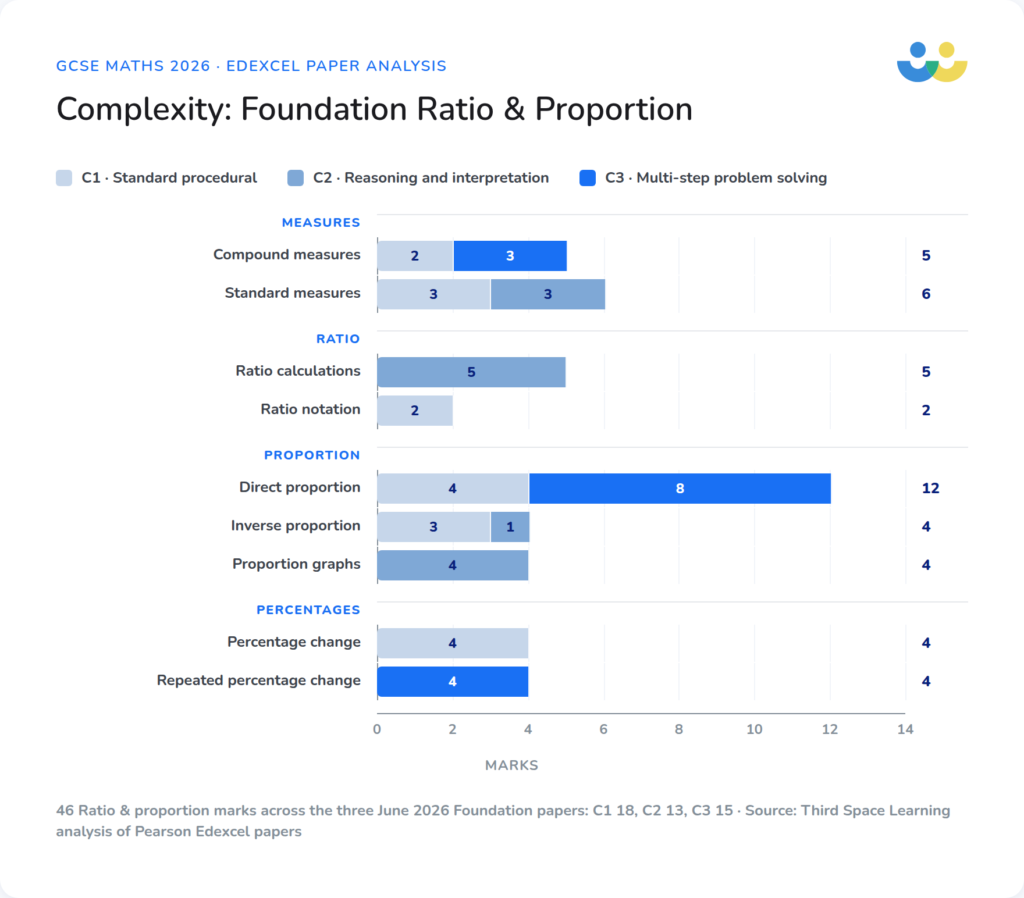
C1 problems held in line with historic averages for June papers, but C2 and C3 shifted this year. C3 took 33% of the marks, against an all-June average of over 50%. C2 problems therefore carried twice as many marks as usual.
This is unlikely to matter in the longer term, particularly as the C2/C3 distinction can be woolly. Still, students this year met more “show that” problems and more chart and table interpretation. They faced fewer substantially unscaffolded text-based problems.
Sample Question Style
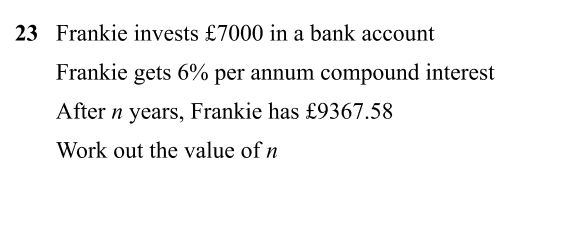
C3: Reverse compound interest
Geometry
Coverage and trends
Geometry carried slightly fewer marks than historic averages, with gaps in Mensuration and Calculation. Paper 1 initially weighted this sub-strand more heavily than usual. The two calculator papers then set less work on perimeter, area and volume than many previous series.
Pythagoras and trigonometry appeared only twice: a one-mark exact value question on Paper 1, and the coordinate geometry problem in Paper 3’s common section.
2D shape and angle reasoning featured little, and nearly all of it sat at a high-demand level for Foundation.
Geometry gaps include:
- Properties and parts of circles
- Simple 2D shape and angle reasoning
- Constructions and loci
- Similar shapes
- Context-based problem solving with perimeter and area
- Volume and surface area of cones, spheres and pyramids
- Volume and SA with compound measures
- Pythagoras and trigonometry in RA triangles (note above)
Complexity Profile
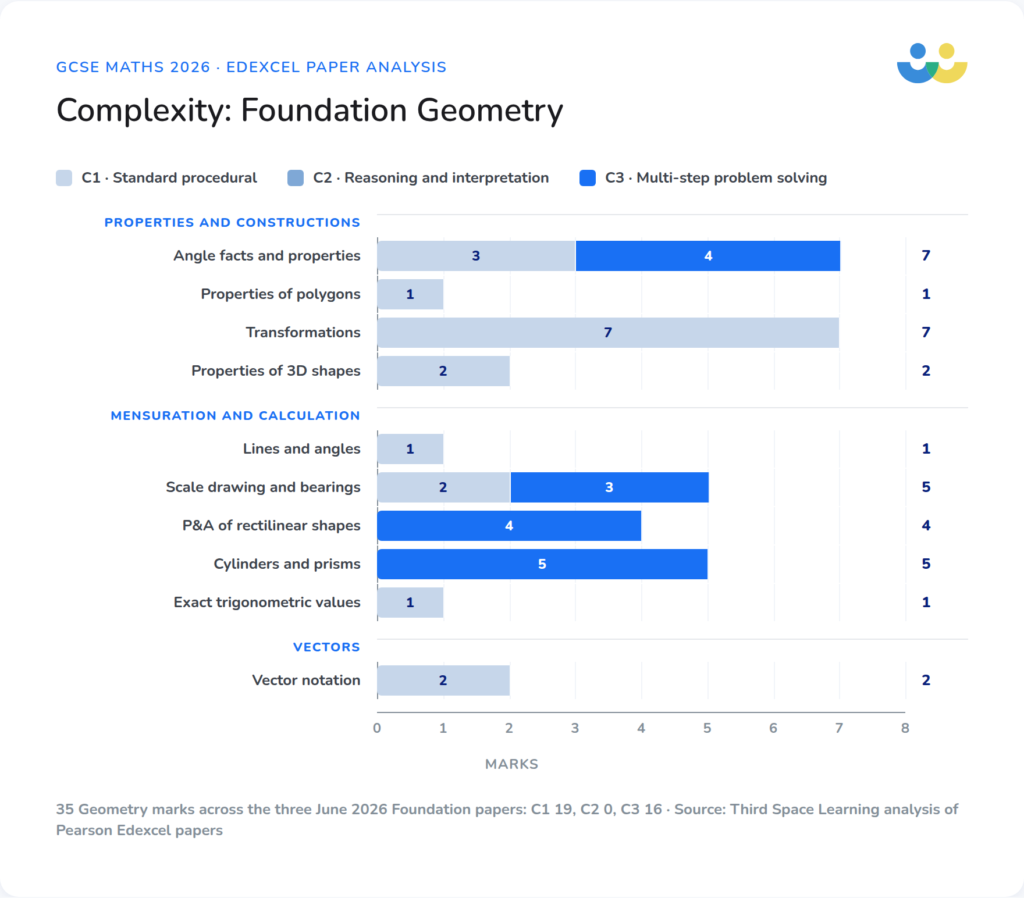
C3 questions held broadly in line with historic averages, but the balance between C1 and C2 differed noticeably. No marks went to C2 Geometry questions as a main topic this series.
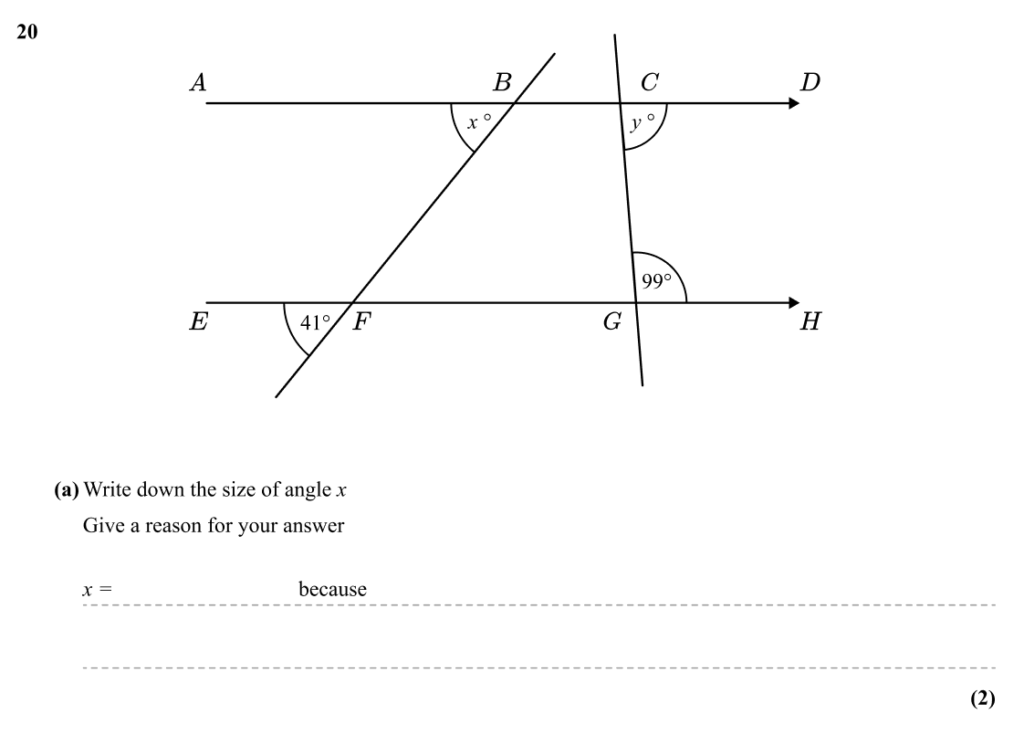
Two things may explain this: a slightly lower C2 share overall, and where those marks landed. Ratio and Proportion absorbed more of the C2 reasoning. Gaps in Geometry then removed some common C2 opportunities. Angle reasoning usually asks students to give reasons or explain an error, but featured less prominently across this year’s Foundation papers.
Sample Question Style
C2: Angles in parallel lines
Probability and Statistics
Coverage and trends
Probability and Statistics account for a small share of the available marks, so several topics normally miss any one series. Probability coverage at Foundation was relatively broad this year, though, with most topics assessed at least once. Frequency trees, tree diagrams, Venns, the probability scale and mutually exclusive events all featured.
Even so, Probability took slightly fewer marks than the last six series average, at 7% against 8%. No individual topic appeared more than once across the three papers.
Probability gaps include:
• Sample spaces and two-way tables (rarely assessed)
Statistics continued the broad coverage profile, particularly in graphs and charts. Candidates met a bar chart, a pictogram, a stem and leaf diagram and a scatter graph. Elsewhere in this strand, students tackled a couple of simple problems covering averages and range for ungrouped data. Paper 3 then asked them to estimate the mean.
Statistics gaps include:
• Data collection and sampling
• Pie charts
• Time-series graphs
• Frequency polygons
• Frequency tables
Complexity Profile
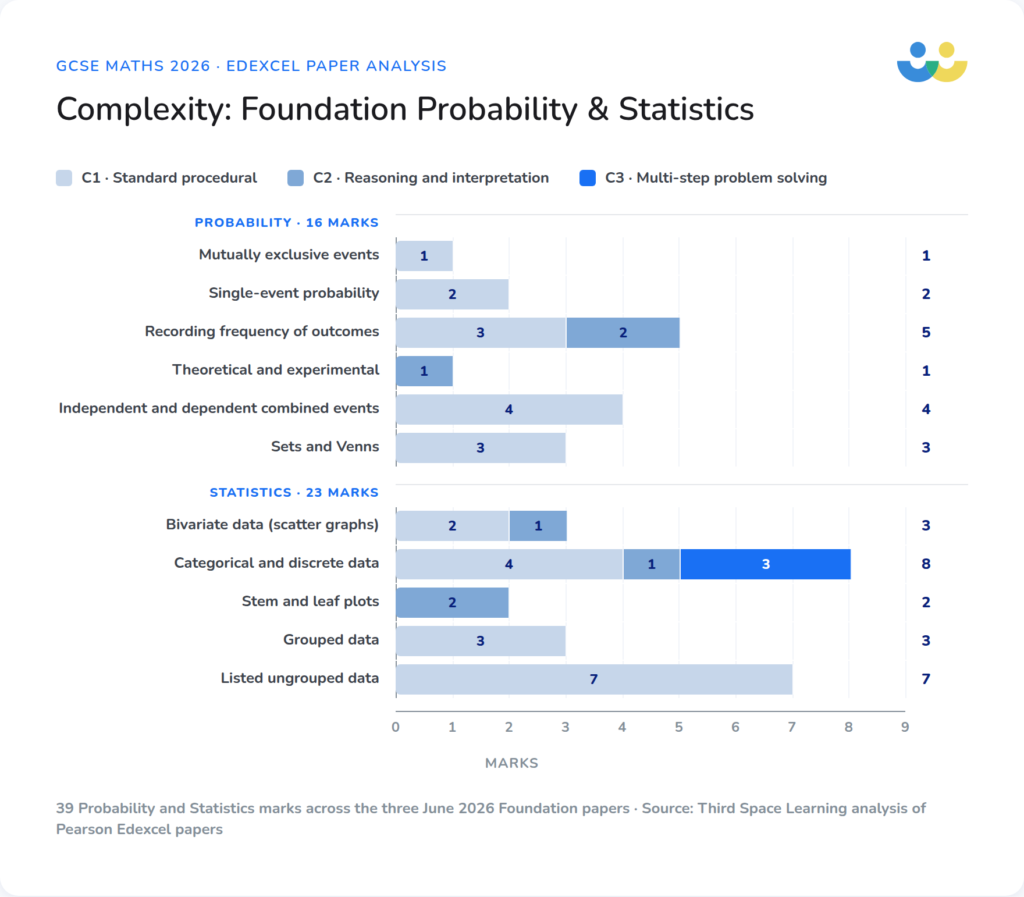
Statistics continued 2025’s trend towards an unusual amount of procedural work. C2 took 17% of Statistics marks, against 15% in 2025 and an all-June average of around 40%. Graphs and charts drew less analysis this year. Students more often drew or completed a chart, then used one piece of information from it in a standard calculation.
C1 questions took four-fifths of the Probability marks, well above the June-series average of 50%. Broad topic coverage probably explains this again. It left less scope to assess individual topics in greater depth or through problem-solving.
Sample Question Style
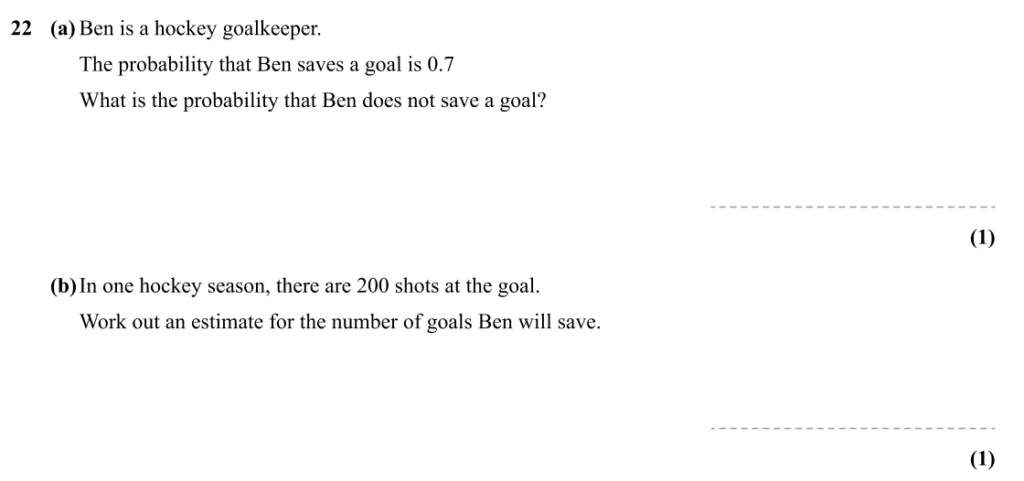
C1: Mutually exclusive events and relative frequency
Missing content from the 2026 Foundation Papers
This list is not exhaustive, and you should not use it to predict the content of the 2027 papers. Many gaps are higher-grade Foundation topics that some exam series miss anyway.

Free GCSE maths revision resources for schools
As part of the Third Space Learning offer to schools, the personalised online GCSE maths tutoring can be supplemented by hundreds of free GCSE maths revision resources from the secondary maths resources library including:
– GCSE maths past papers
– GCSE maths predicted papers
– GCSE maths worksheets
– GCSE maths questions
– GCSE maths topic list
June 2026 GCSE Maths Papers: Higher
The 2026 Edexcel Higher papers felt generally familiar in style and content. Candidates who had made good use of past papers would have recognised most problem types, particularly on the first two papers. Overall, the series threw up few curveballs.
As at Foundation, this series favoured topic breadth and syllabus coverage over more complex topic combinations. Beyond a couple of problems with embedded surd calculations, nothing unusual appeared. Higher students were upset about the circle theorem proof (1HQ22), which disallowed the Alternate Segment Theorem.
The common questions gave most Higher candidates a fair, almost generous start. They set procedural work on the nth term of a linear sequence and decimal multiplication. Expanding and factorising a simple quadratic, HCF and LCM, and estimating the mean also appeared.
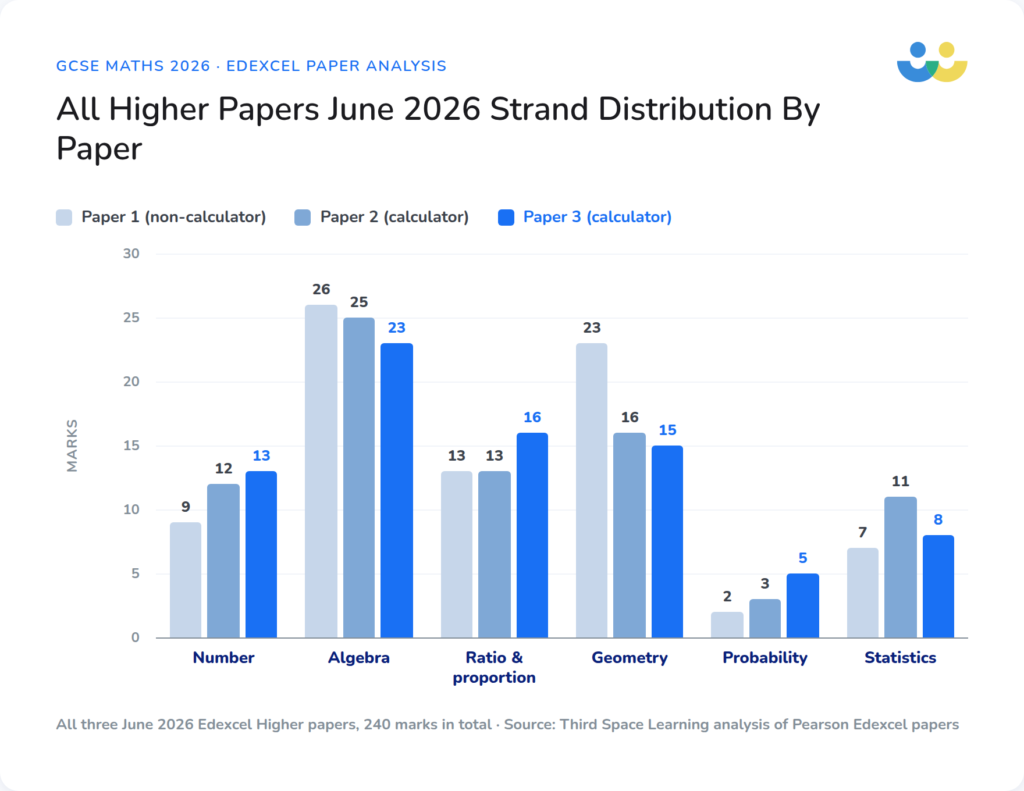
Algebra and Geometry strands carried the most marks
As usual on Edexcel Higher papers, Algebra and Geometry attracted the most marks, followed by Ratio & Proportion.
Statistics had a larger share this year, at nearly 11% of marks. That is almost double 2025’s figure, and around 2 percentage points above the six-series average. Probability balanced this out with only 4% of the marks, against a six-series average of over 7%.
Number assessment looked spikier this series on both Foundation and Higher. There was lighter main-topic Number coverage on Paper 1 and significantly heavier coverage on Paper 2. The eventual Higher profile sits only slightly below the six-series average. It is down, though, from last year’s June high of 18%.
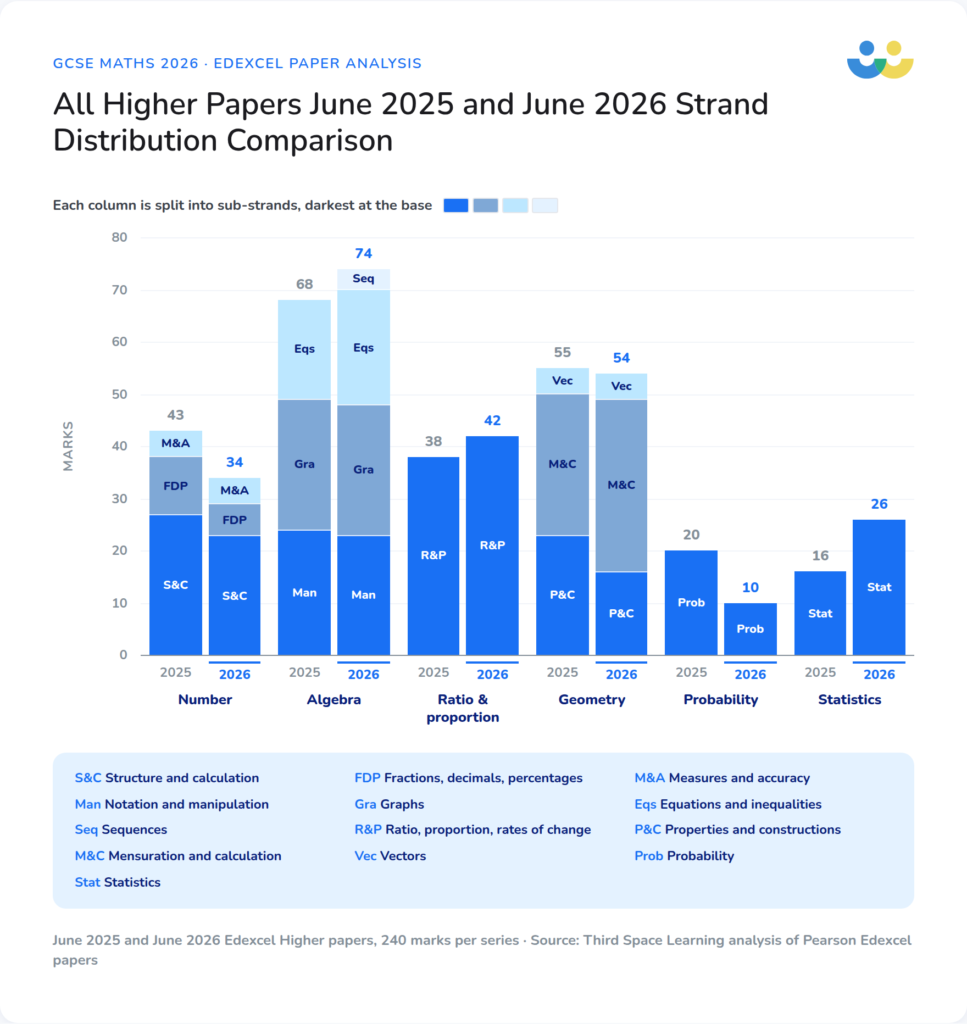
More complex problems return to the Higher tier
The 2026 Higher series offered slightly more C1 marks than the historic average, but fewer than last year’s high of 46%. C2 marks rose this year. Extra reasoning work in Algebra, Ratio & Proportion and Statistics partly drove that rise.
C3 marks consequently fell well below average, and many of these problems felt familiar despite their complexity.
This may explain the positive student reaction to Papers 1 and 2. Higher grade boundaries fell against 2025, but stayed above the historic June average at every grade. That suggests 2025’s unusually high top-grade boundaries were an outlier. Against the long-term picture, the 2026 Higher papers stayed manageable, particularly for stronger candidates.
Grades 7-9 saw the largest reductions from 2025’s boundaries. Even so, they sat four to five marks above the historic June average.
The notional component boundaries for Papers 1 and 2 came out very similar. At grades 5 and 6, they matched or fell within one mark. Paper 3 boundaries were lower, particularly at the top end. Candidates clearly found the higher-grade work on this paper more challenging.
Number
Coverage and trends
Number coverage fell slightly against both 2025’s papers and the last six series average. Even so, it ended up fairly comprehensive at Higher level, covering most topics to some degree. Fewer calculation and context-based Number problems appeared, though. The common content favoured procedural questions in this strand, such as a simple decimal multiplication and a straightforward HCF/LCM question.
Some Number skills still appeared inside questions assigned to other strands. Candidates had to spot an error in the addition of two algebraic fractions, which meant carrying out fraction arithmetic.
Number gaps include:
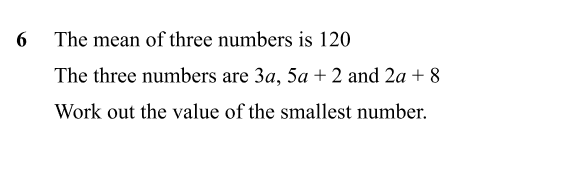
- Standalone fraction and percentage calculations, which usually appear in common questions when assessed at Higher
- Standalone surd calculations, although surds were embedded in 1HQ20 and 2HQ22.
Complexity Profile
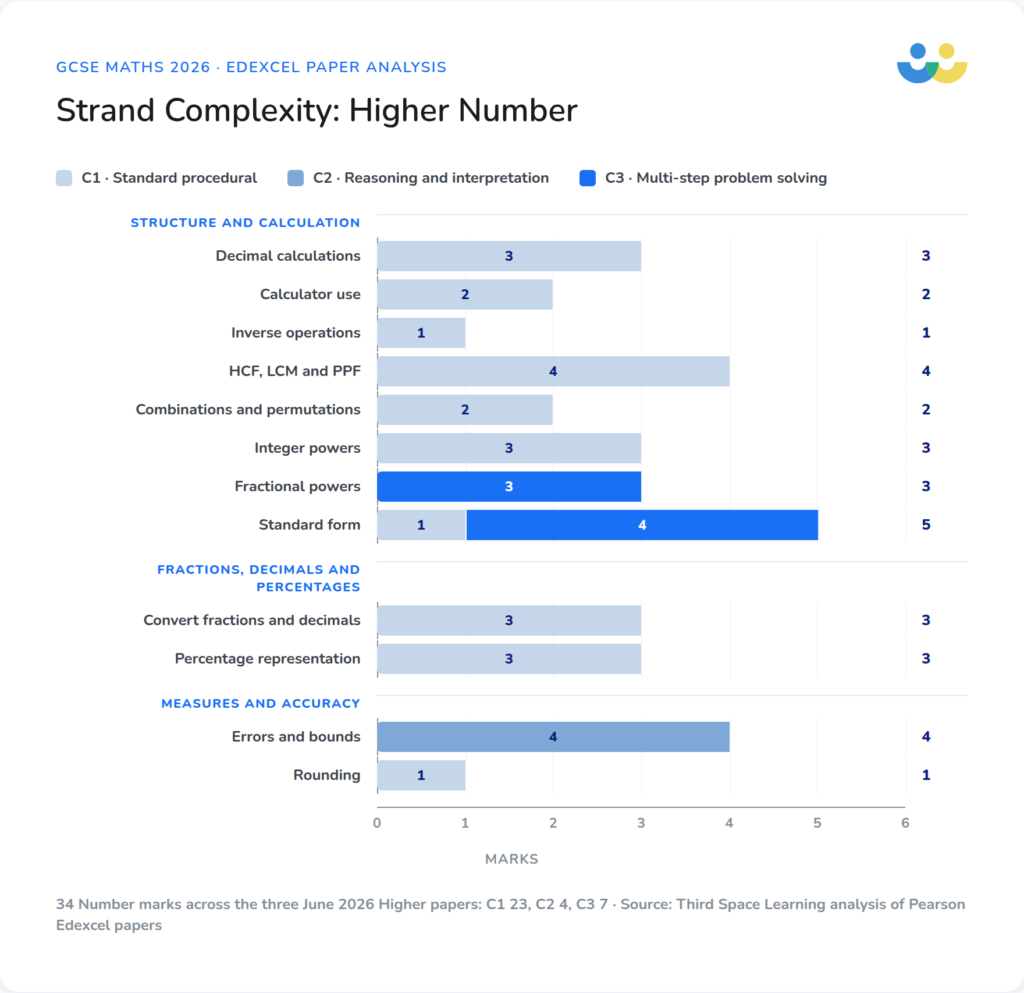
Procedural questions took roughly 68% of Higher Number marks, with 21% attached to C3 problems. The June averages sit at 59% and 28% respectively. No problem-solving asked candidates to reason with fractions, decimals and percentages, which common questions often include. C2 reasoning also fell slightly below average.
Sample Question Style
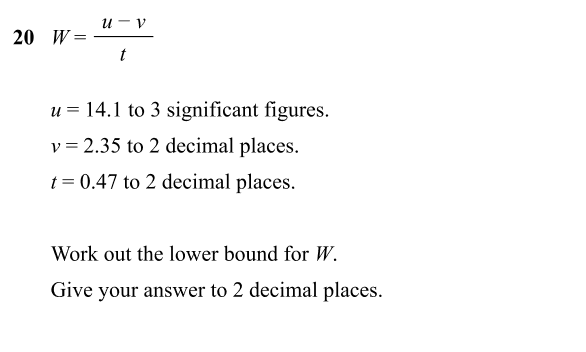
C1: Bound calculations
Algebra
Coverage and trends
As usual, Algebra coverage dominated the Higher papers, matching or slightly exceeding many historic averages. The papers assessed many topics directly, including several that usually stand alone. Gradients and areas, trigonometric graphs and completing the square to find a turning point all appeared.
Coverage was generally broad, with no significant gaps. Linear graphs came through other topics this year, namely linear inequalities and perpendicular lines. A quadratic simultaneous inequality problem on Paper 1 embedded the skills needed for simultaneous equations and quadratics. Linear simultaneous equations got no stand-alone assessment at Higher this year.
Algebra gaps include:
• Cubic, reciprocal and circle graphs
• Forming and solving equations or inequalities (linear or quadratic) to model a problem
• Linear simultaneous equations
• Non-linear sequences (quadratic, geometric, Fibonacci etc)
Complexity Profile
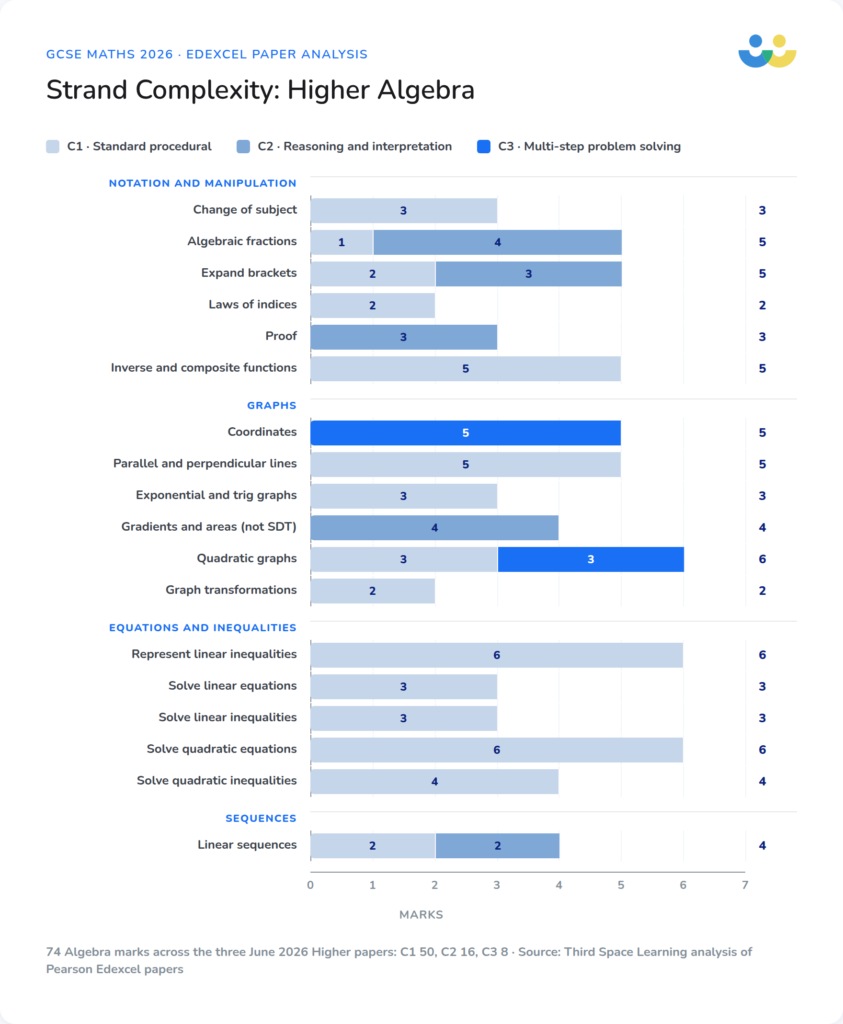
The Algebra complexity profile moved away from historic averages and trends this year. The types of topics assessed partly explain this. A lot of typically “high-grade” algebra appeared, such as simultaneous quadratic inequalities and graph transformations. Most of it sat towards the back end of the paper. Candidates rarely face unfamiliar problems in these domains.
A surprising amount of lower-level algebra appeared this way too. Paper 2 asked students to write down inequalities from a number line. Paper 1 asked for the nth term of a linear sequence. Both sat in the common questions.
Algebra also carried more C2 work than usual. A proof question drove most of that increase. Other procedural work came dressed up as “show that” problems, such as the triple bracket expansion on Paper 1.
Sample Question Style
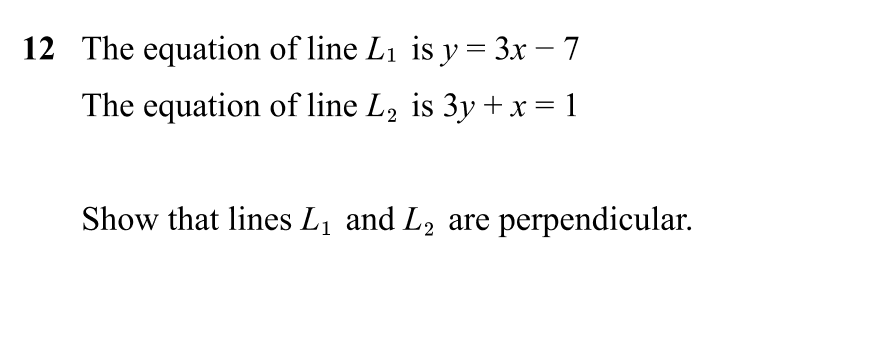
C2: Perpendicular lines
Ratio and proportion
Coverage and trends
Ratio & Proportion carried more marks than average, at 18%. That compares with 16% last year and a six-series average of 14%. A slight increase in the assessment of proportion and rates of change drove most of this.
Coverage included significant work on inverse proportion, spread across two papers. Equations of proportionality, percentage change, growth and decay also featured, alongside two problems involving compound measures. Paper 3’s common questions covered metric unit conversions, which rarely stand alone at Higher level.
Ratio & Proportion gaps include:
- Direct proportion (best buy, recipes etc)
- Proportion graphs
- Ratio problems, such as combining or linking to fractions
Complexity Profile
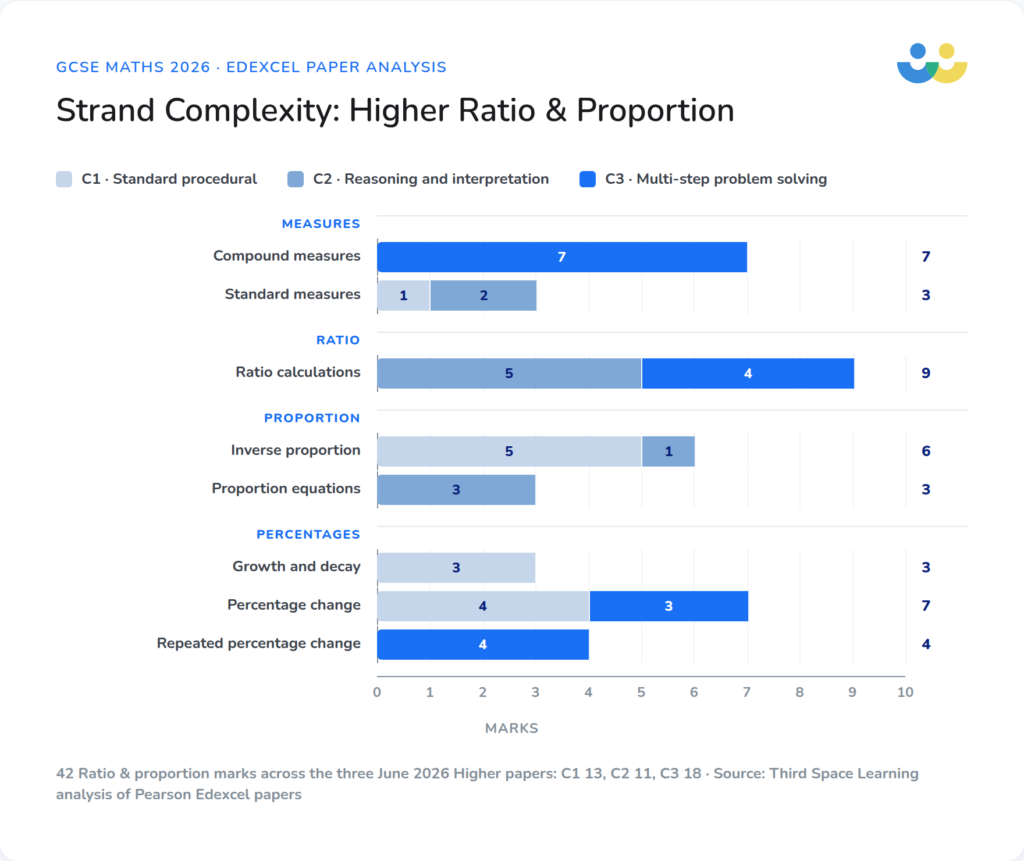
Ratio & Proportion mixed procedural and problem-solving questions more evenly than last year’s papers. C3 dropped from an unusually high 68% to 43%. Set against the all-June average of 59%, this year’s papers carried more C1 and C2 problems than many previous series.
Significant assessment of inverse proportion partly drives this change. Inverse proportion often appears in common questions and is a challenging topic for Foundation candidates. Examiners therefore tend to assess it procedurally.
Paper 2 also set a big chunk of ratio assessment as a C2. It asked students to assess a statement and show how they reached their answer. That replaced the typical, less structured C3 line of questioning.
Sample Question Style
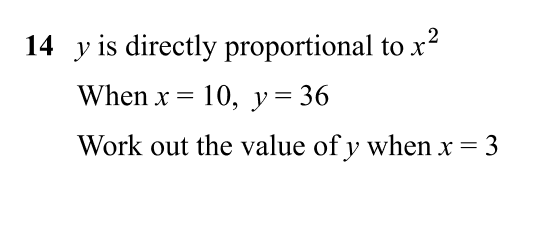
C1: Proportion equations
Geometry
Coverage and trends
Geometry accounted for 23% of the marks. Recent papers average 24%, and 2025 sat at a very similar figure. Volume and surface area, and 2D shape and angle properties, both carried slightly more work than average. The second of these happened even though the common questions omitted parallel lines and simple shape reasoning.
Perimeter and area fell slightly below historic averages, as did transformations, congruence and similarity. Higher students got no standard geometrical transformations question this year. The topic appeared only through the work on invariant points, late into Paper 3.
Geometry gaps include:
- Scale drawings and bearings (less frequently assessed on Higher)
- Context-based problem solving with perimeter and area
- Standard geometrical transformations
Complexity Profile
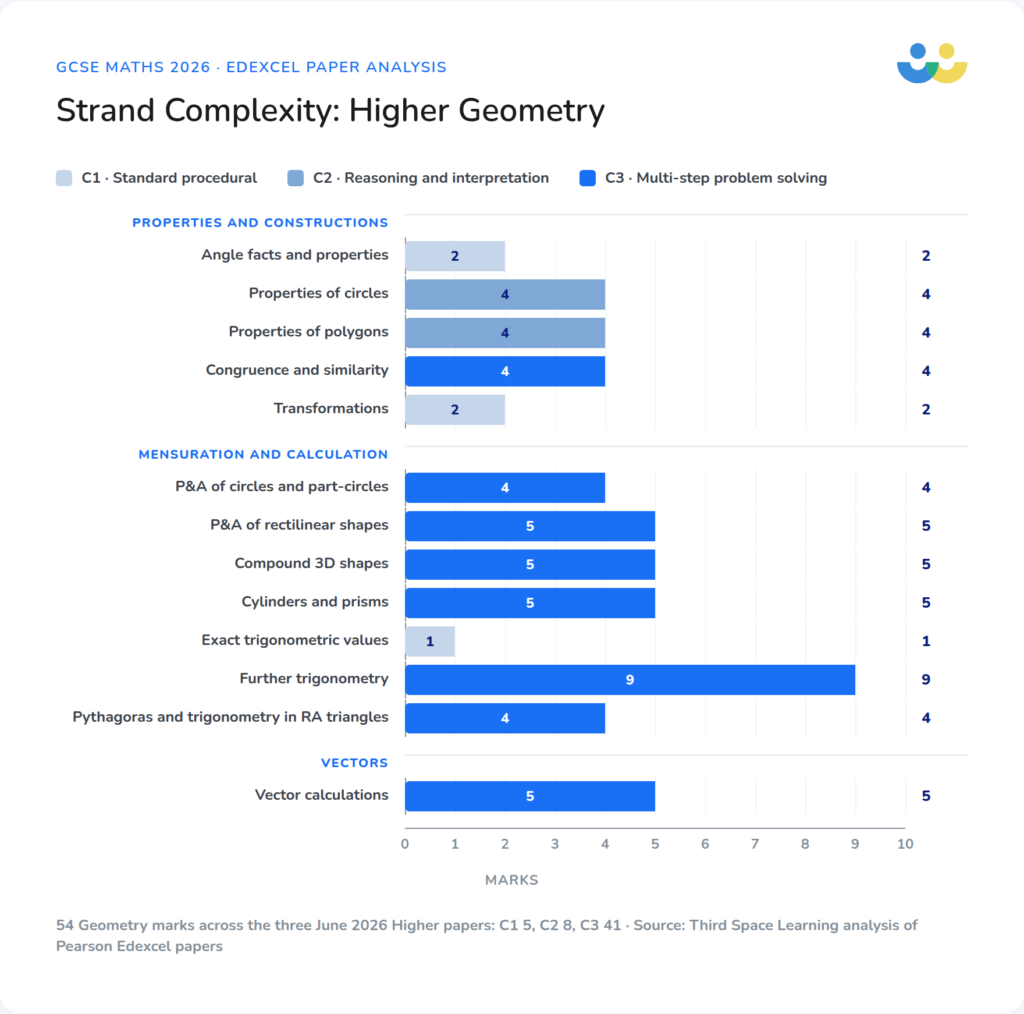
Only 9% of this year’s Geometry marks fell into C1, against an all-June average of 16%. That sits nowhere near last year’s fairly anomalous 35%. C2 marks also dropped below average. Over three-quarters of this year’s Geometry marks therefore went to in-depth or unfamiliar problems.
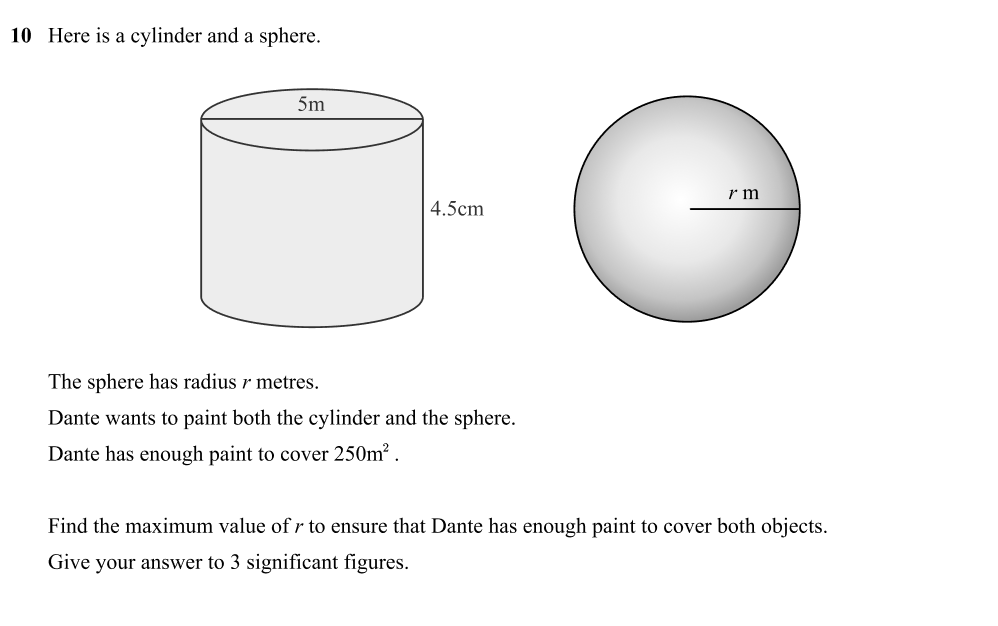
These included reasoning with Pythagoras and trigonometry in 3D on Paper 2. Paper 3 asked candidates to work out surface area from volume, a particularly tricky question. It also folded in ratio and required an answer in terms of π.
The more procedural Geometry work covered a very narrow selection of topics. A single-mark recall question on exact trigonometric values appeared. So did a question on angles in polygons, in Paper 2’s common questions. The invariant points problem completed the set, and that ranks among the more challenging Higher topics anyway.
Sample Question Style
C3: Problem-solving with volume
Probability and Statistics
Coverage and trends
Probability and Statistics coverage broadly mirrors the patterns seen at Foundation level. Probability took fewer marks than average, at 4% against 7%. Statistics took more, at 11% against 9%. As at Foundation, this inverts the 2025 relationship, where Probability rose and Statistics fell. Expect this trade-off year-on-year, as one strand often redresses the other in a later series.
Probability coverage on the Higher papers was therefore fairly narrow. Most work focused on probability events. Candidates met mutually exclusive events in the common section, the AND rule for independent events, and problem-solving using combined events.
There was little work on representation of events, and notable gaps include:
- Venn diagrams and set notation
- Recording outcomes (e.g. tree diagrams)
- Conditional events
Statistics matched Foundation for breadth of coverage. Graphs and charts took the focus again, including a histogram, cumulative frequency graph, box plot and scatter graph. Mean calculations also featured heavily, with problem-solving on Paper 2 and estimating the mean on Paper 3. The less frequently assessed capture-recapture method appeared too.
Statistics gaps include:
- Time series graphs
- Frequency polygons
Both topics appear infrequently anyway, and rarely turn up on Higher papers.
Complexity Profile
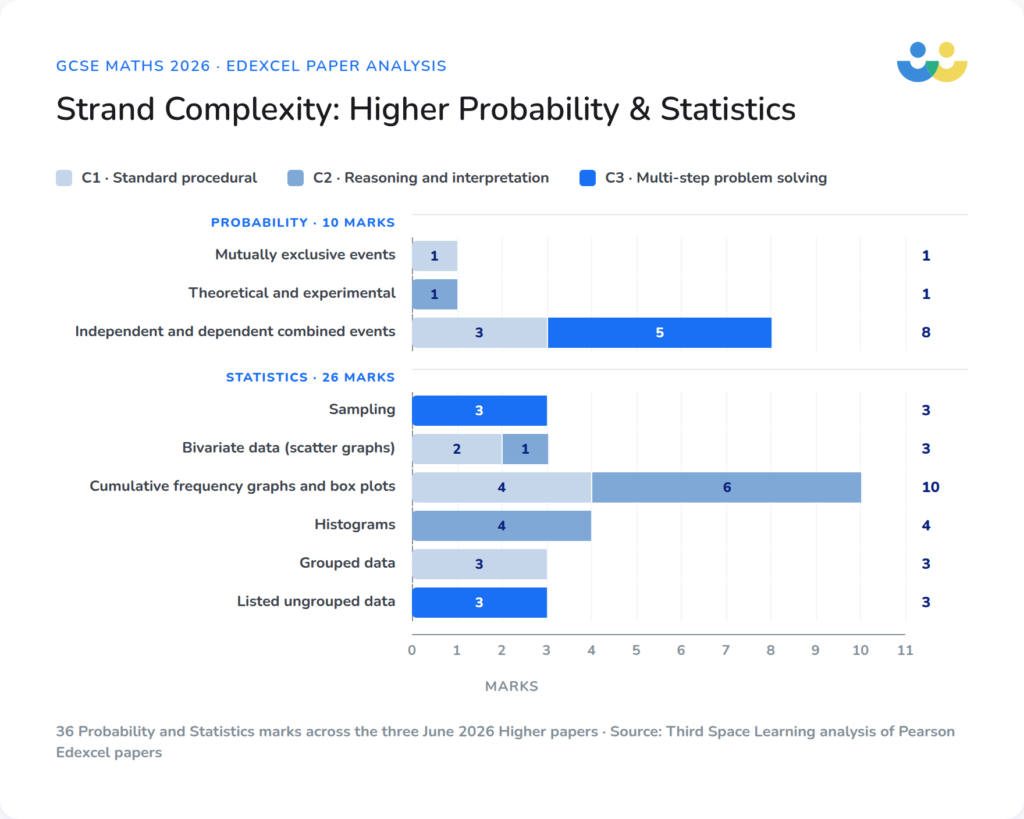
C3 questions took 50% of Probability marks, against last year’s particularly low 15%. That pulls this year’s papers back in line with the all-June average of 44%. C1 and C2 distributions also matched historic averages.
Statistics carried far more reasoning marks than last year. C2 took 42%, against 13% in 2025 and an all-June average of around 35%. C3 Statistics questions took nearly twice as many marks as average. A significant share of this year’s Statistics content therefore avoided procedural assessment.
Sample Question Style
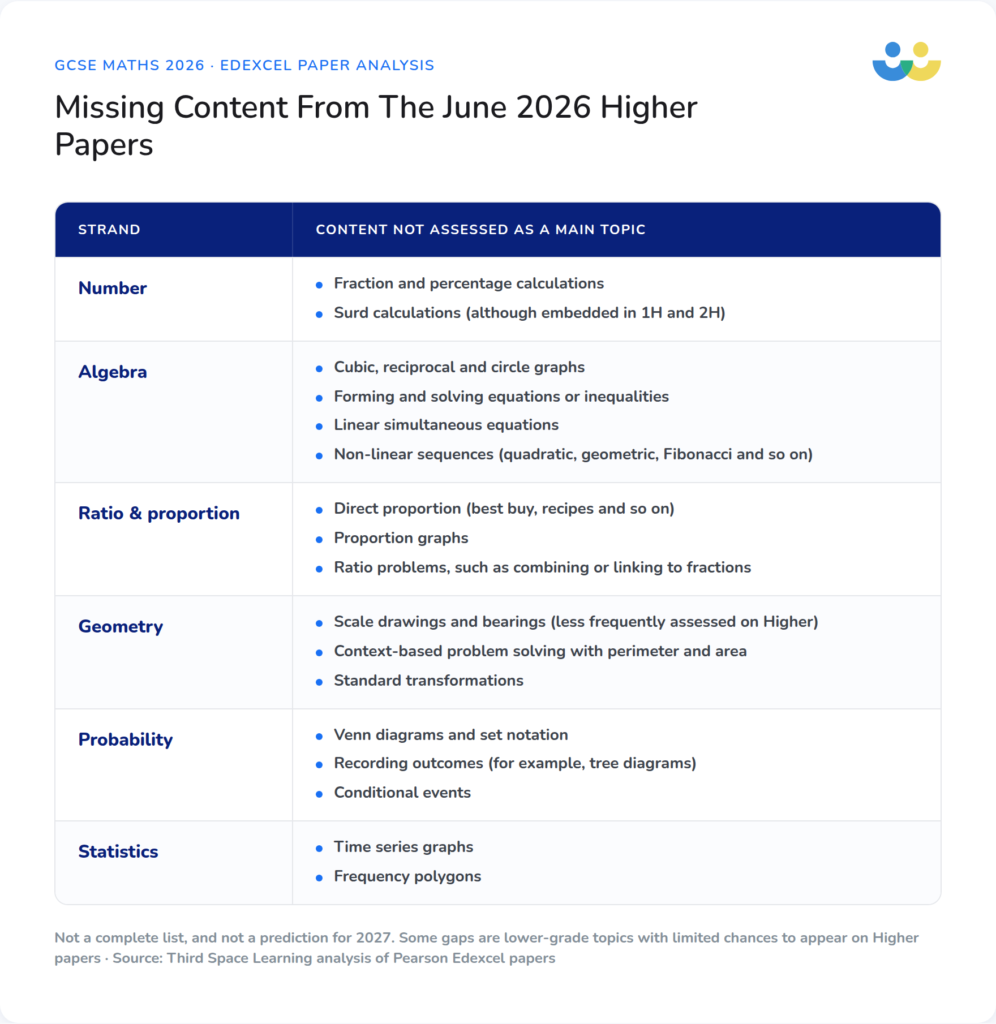
C3: Problem-solving using the mean
Missing content from the June 2026 Higher papers
This list is not complete, and you should not treat it as a prediction for 2027. Some gaps are lower-grade topics with limited chances to appear on Higher papers. They usually surface only in the common questions or as embedded skills.
Implications for 2027
Here are some practical ways to build the 2026 findings into your planning for the 2026/27 academic year.
Departmental strategy and curriculum planning
- Use the full GCSE-series analysis to check the balance of your existing curriculum. Do not treat one year’s omissions as a prediction for the next series.
- At Foundation, secure the core Number, Ratio & Proportion and Geometry content that appears regularly across papers.
- At Higher, prioritise secure Algebra knowledge. Students need fluency with their core algebra toolkit before they can apply it to wider problems.
- Frontload topics that underpin several later areas of the course, such as proportional reasoning, calculation skills and geometrical reasoning. Then return to them through mixed practice, rather than teaching each strand once and moving on.
Question types and revision planning
- Build challenging or unusual problems from previous exams into teaching materials for your next Year 11 cohort. Some of 2026’s Geometry questions work particularly well.
- Use repeated or scaffolded variations. Students then separate the underlying mathematics from the surface features of one particular question.
- Include frequently appearing topic crossovers in lessons and revision. Students need regular practice with mixed-topic questions, deciding which combination of skills a problem requires.
- Some strands historically carry a greater proportion of C2 or C3 marks, such as Ratio & Proportion and Geometry. Build explanation, interpretation and unfamiliar multi-step work into revision for these, not just standard procedures. This year’s coordinates/Pythagoras common question illustrates the point well.
Assessment design
- Consider how strand imbalances in one series can skew the reliability of your assessment data. Students may find this year’s Statistics-heavy paper more straightforward than some of the historic papers.
- Give students mock materials that reflect the usual balance of strands and question types, not just the most recent paper.
- Include a realistic mix of procedural, reasoning and problem-solving questions across both tiers.
- Spread the more demanding questions through the paper, rather than confining them to a single final section.
- Use GCSE maths mark schemes to mark consistently and to spot where students lose method, reasoning or accuracy marks.
Targeted intervention
- Use question-level analysis to separate a topic gap from a question-type gap. A student may know the mathematics but fail to recognise it in an unfamiliar context.
- Group intervention by precise need where you can. Run one session on forming and solving equations, another on ratio problems, and so on.
- Revisit prerequisite knowledge before you repeat whole topics. Weak fractions, algebraic manipulation or proportional reasoning can drag down performance across several topics.
Data use and departmental CPD
- Where you can, ask the 2026 cohort which questions they found hardest, then compare that with the mark data. Student experience and actual marks achieved make a useful comparison!
- Use the exam board’s question-level analysis to identify patterns at class, tier and cohort level.
- Look for departmental gaps that do not match this year’s national results. These may point to sequencing issues, inconsistent approaches, or a useful focus for shared planning and CPD.
- Share examples of strong methods and common misconceptions from more complex questions. Writing your own versions from examiners’ report feedback is usually easier. It also avoids asking individual students for permission to keep and reuse their work.
CPD checklist for Maths leaders
- Have we reviewed both topic coverage and question complexity across all three papers?
- Are our mock papers reasonably representative of the longer-term Edexcel profile?
- Which 2026 questions exposed genuine content gaps, and which exposed difficulty with interpretation or problem-solving?
- Are there class or teacher-level patterns which would benefit from joint/team planning or subject-specific CPD?
- Which changes need to be made now, and which findings should simply be monitored across future series?
How Third Space Learning can improve GCSE maths results
Grade 4 boundaries moved most this summer, with Foundation candidates needing eight more marks there than the historic June average. A new Year 11 arrives in September, and the students sitting between grades 3 and 5 are the ones grade boundaries impact most. The sooner they receive an intervention, the more time the support has to work.
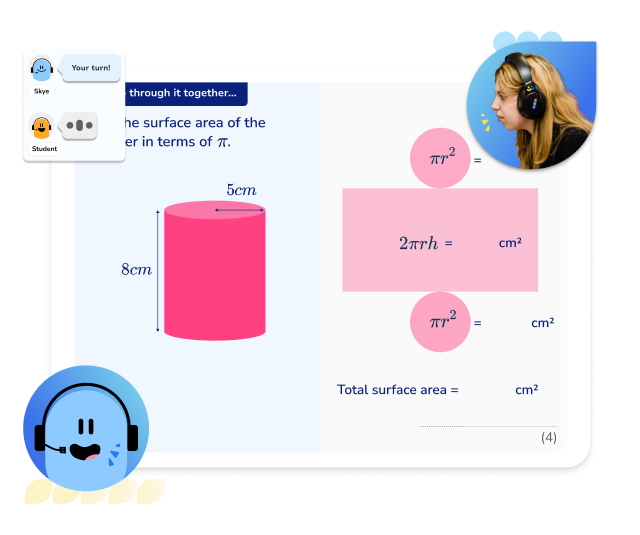
Since 2013, schools like yours have trusted Third Space Learning’s GCSE maths revision programme and one-to-one GCSE maths tutoring to get more Year 11 students to a grade 4 and above. In a low-stakes, one-to-one setting, our AI maths tutor, Skye, gives hundreds of target students the support they need to clear up misconceptions and build confidence in the topics they find trickiest, so they walk into their GCSE exams ready to show what they can do.
Every session is written by expert maths teachers and aligned to the national curriculum, so students work through lessons built by specialists, not content generated on the fly. Skye is scheduled by the school to fit around the timetable, so no teacher has to come off timetable to run it.

DO YOU HAVE STUDENTS WHO NEED MORE SUPPORT IN MATHS?
Skye – our AI maths tutor built by teachers – gives students personalised one-to-one lessons that address learning gaps and build confidence.
Since 2013 we’ve taught over 2 million hours of maths lessons to more than 170,000 students to help them become fluent, able mathematicians.
Explore our AI maths tutoring or find out how our GCSE maths tutoring programmes could support students in your school.