


GCSE Results 2026: Headlines, Analysis & Next Steps For Teachers & School Leaders

GCSE results 2026 held steady at the top line. Among 16-year-olds in England, 70.7% of entries reached grade 4 or above, up 0.2 percentage points on 2025, and 23.1% reached grade 7 or above.
The maths picture is more interesting. The grade 4+ rate slipped by 0.1 percentage points, but grade 5+ jumped a full point and grade 7+ rose by 0.8. Fewer grade 4s, more grades 5 to 7 – the distribution shifted upwards.
Throughout the summer exams, I analysed the Edexcel GCSE maths papers, looking at the content and complexity of each one and building revision lists for Papers 2 and 3. Now the results and grade boundaries have landed, we can see whether students’ experience of the exams matched the outcomes.
This article covers the main headlines from GCSE results day 2026, the national picture for GCSE math, how the Edexcel GCSE maths grade boundaries compare with previous years, what schools can learn from their own results, and how departments can use this to plan for GCSE maths 2027.
Unless we say otherwise, the figures here are for 16-year-olds in England. We flag any figures that cover all ages, or that come from Wales and Northern Ireland.
GCSE results 2026 at a glance
- The overall pass rate held. 70.7% of GCSEs taken by 16-year-olds in England reached grade 4 or above, up 0.2 percentage points. Grade 7+ rose 0.1 points to 23.1%.
- Maths shifted upwards, not outwards. The grade 4+ rate fell 0.1 points to 71.8%, while grade 5+ rose a full point to 53.8% and grade 7+ rose 0.8 points to 22.3%.
- Grade 4 awards in maths dropped 1.1 percentage points, offset by gains at grades 5, 6, 7 and 9. More borderline candidates crossed into the higher grades.
- Edexcel Higher boundaries fell at every grade, by an average of six marks. Foundation boundaries rose from grade 3 upwards, by around six marks on 2025.
- The resit picture worsened. Only 15.3% of candidates aged 17 or over reached grade 4 in maths, against 71.8% of 16-year-olds.
- The regional gap widened. London remained England’s strongest region and the West Midlands the weakest, with the gap growing from 8.7 to 9.3 percentage points.

Edexcel, AQA and OCR Maths Foundation and Higher Papers: 2026
Download these free exam practice papers to help prep your next Year 11 cohort to build GCSE exam familiarity and confidence.
Download Free Now!GCSE results 2026: headlines
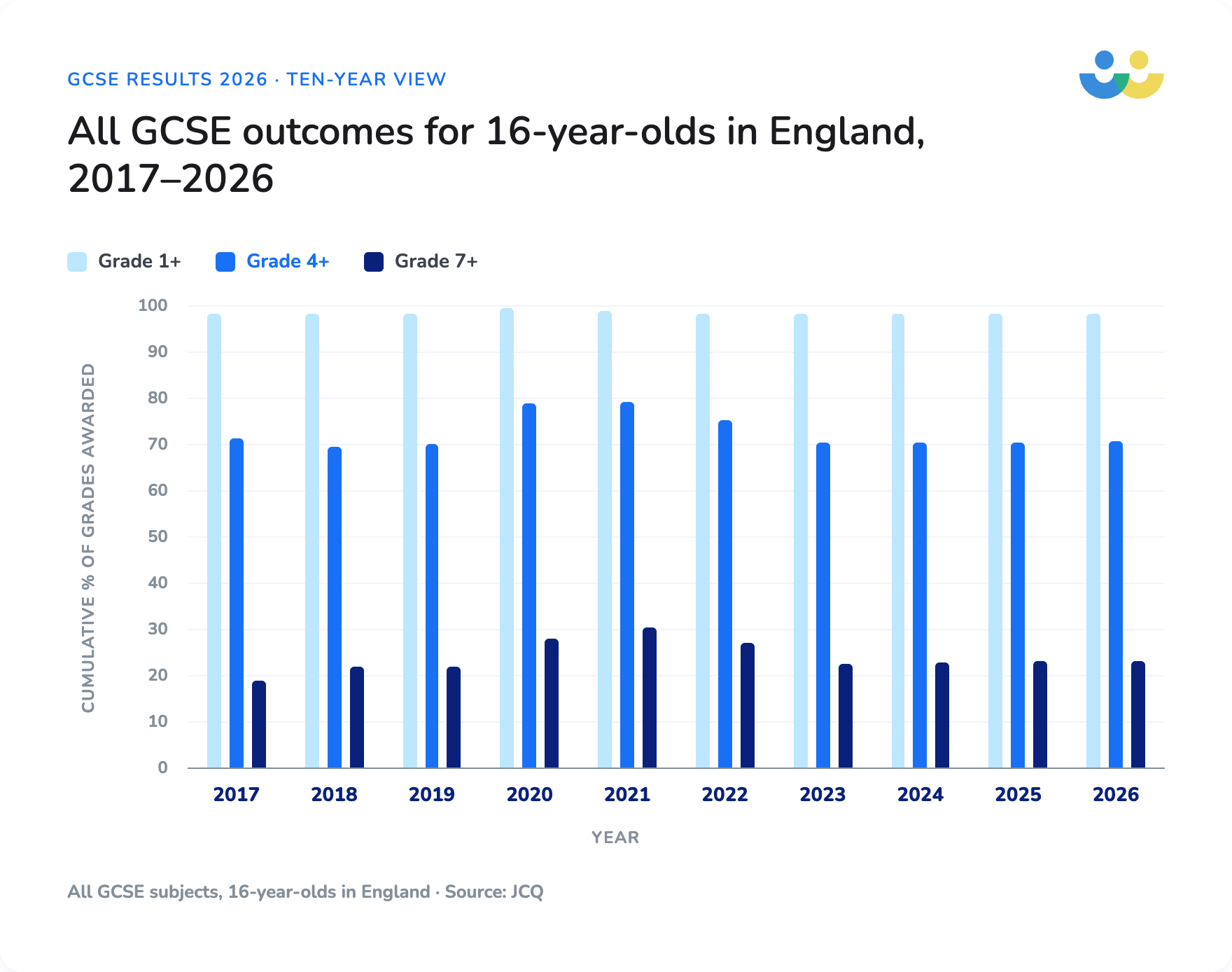
GCSE results rose sharply during the pandemic years, when exam boards cancelled summer exams and schools awarded grades through centre or teacher assessment. Grading returned much closer to the pre-pandemic standard in 2023, and results in 2024 and 2025 then moved only slightly year on year for 16-year-olds.
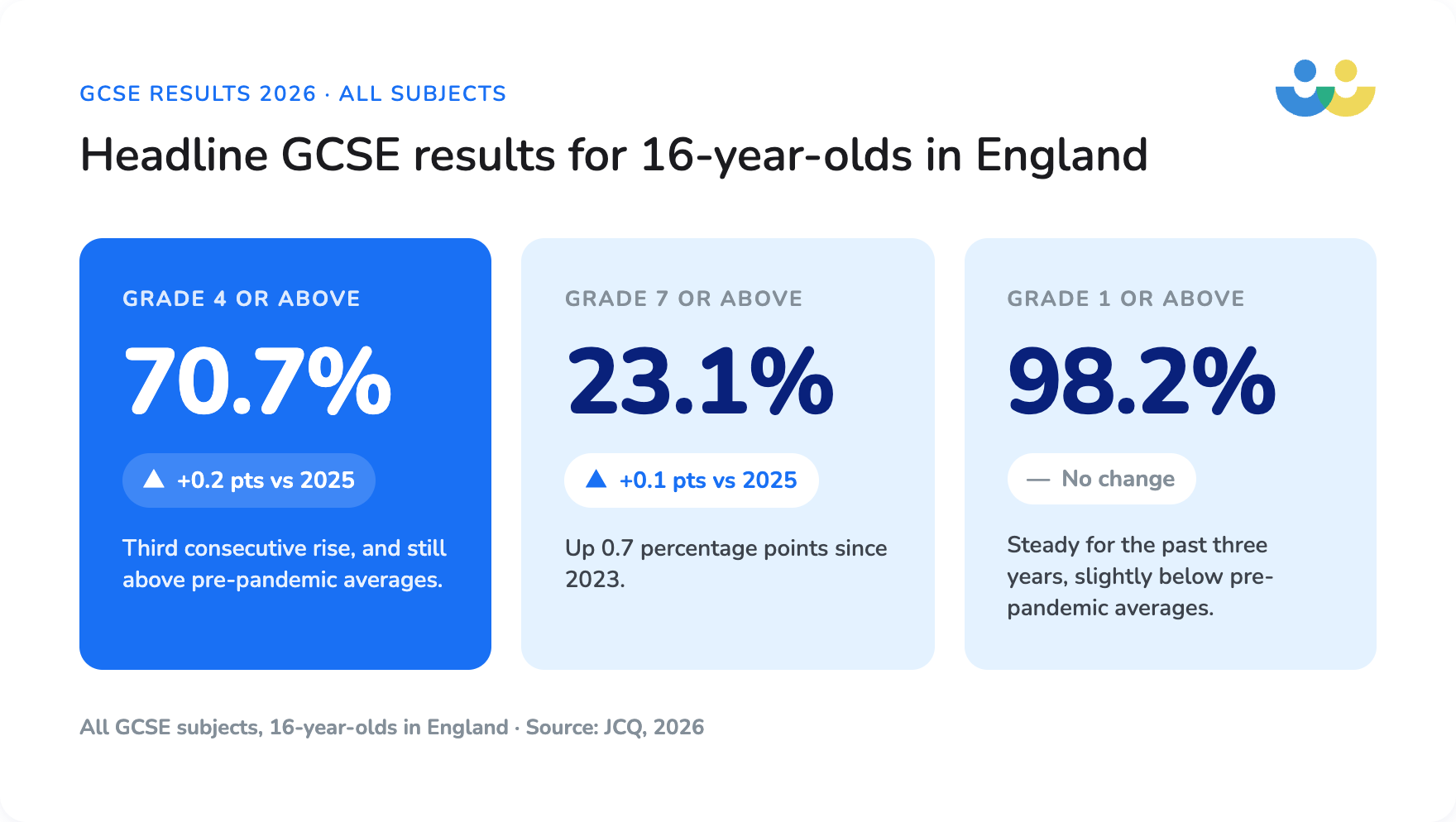
The 2026 headlines look much like the 2025 GCSE results. Among 16-year-olds in England, grades 4 and 7 rose fractionally, by 0.2 and 0.1 percentage points, while the proportion awarded grade 1 or above held steady at 98.2%.
The all-age picture is less positive. It takes in post-16 resit candidates alongside the main Year 11 cohort, and the grade 4+ pass rate fell again by 0.1 percentage points to 67%.
Among 16-year-olds in England, 70.7% of GCSEs across all subjects reached grade 4 or above, the standard pass. The all-age figure for England was 67%, and the combined figure for England, Wales and Northern Ireland was 67.3%.
GCSE MATHS 2026: STAY UP TO DATE
Join our email list to stay up to date with the latest news, revision lists and resources for GCSE maths 2026. We’re analysing each paper during the course of the 2026 GCSEs in order to identify the key topic areas to focus on for your revision.
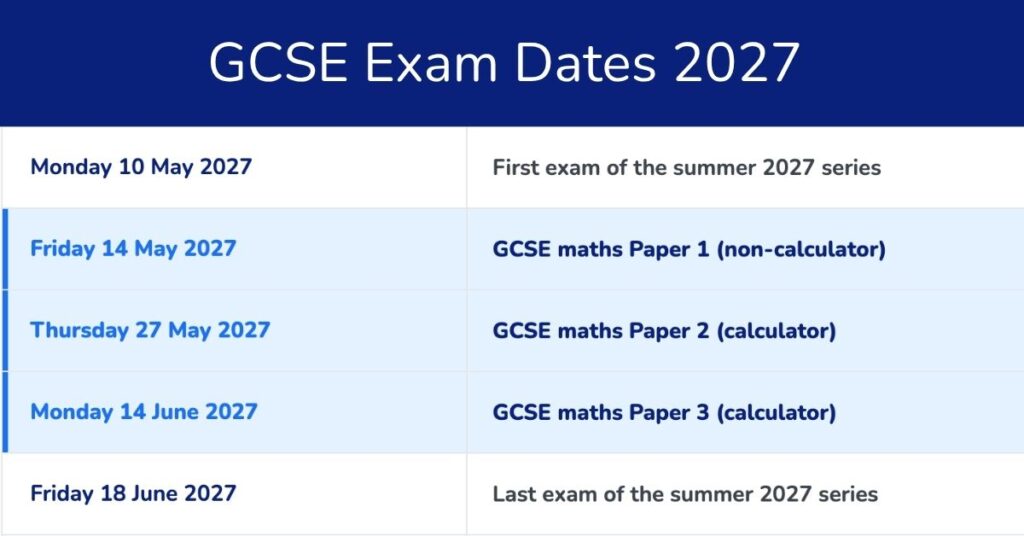
GCSE dates 2026
GCSE results 2026
Get ahead on revision with the GCSE maths papers analysis from 2026:
Analysis of GCSE Maths Paper 1 2026
Analysis of GCSE Maths Paper 2 2026
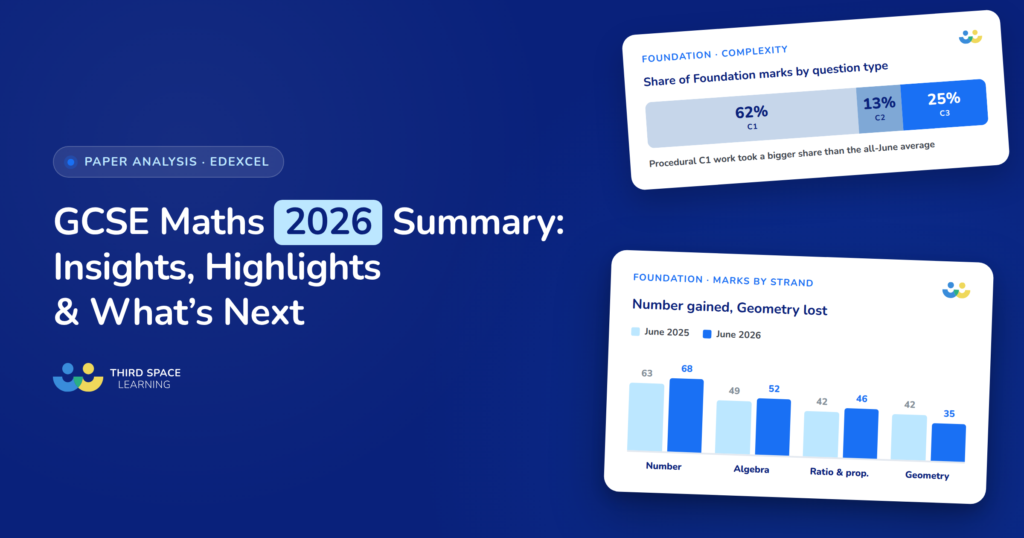
GCSE Maths Paper Analysis and Summary 2026
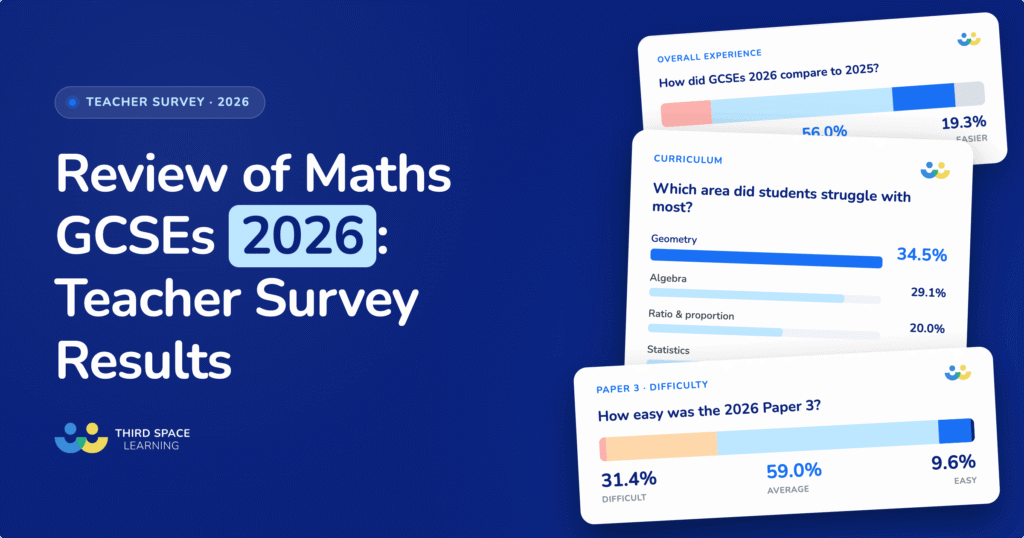
GCSE Maths Teacher Survey Results 2026
The key GCSE results day numbers
These headline figures cover all GCSEs in all subjects, for 16-year-olds in England.
Grade 1 or above:
- The proportion of GCSEs awarded grade 1 or above has held at 98.2% for three years running;
- Grade 1+ passes remain slightly below pre-pandemic averages.
Grade 4 or above (commonly called a pass):
- Grade 4+ awards rose very slightly, by 0.2 percentage points, to 70.7%;
- That is the third consecutive rise, and it stays above pre-pandemic averages.
Grade 7 or above (top grades):
- GCSE grade 7+ awards rose by 0.1 percentage points to 23.1%;
- This sustains last year’s rise, taking the increase since 2023 to 0.7 percentage points.
The GCSE resit picture
Post-16 resits make up a substantial share of English and maths GCSE entries. The all-age figures therefore fold in large numbers of resit entries alongside the main Year 11 cohort and candidates entering at other ages.
England’s all-age grade 4+ rate fell again, from 67.1% in 2025 to 67% in 2026. The rate for 16-year-olds rose from 70.5% to 70.7%, widening the gap between the two groups by 0.3 percentage points.
Other headlines from England’s all-age data:
- Passes at grade 1+ rose by 0.1 percentage points to 98%;
- Grade 7+ awards also rose by 0.1 percentage points, to 21.8%.
Entries from candidates aged 17 or over give us one of the clearest available pictures of GCSE resit outcomes in England, though not everyone in that age group is necessarily resitting.
- Candidates aged 17 or over accounted for nearly a quarter of English Language and maths entries, up 0.9 percentage points to 24.3%;
- Across all subjects, the grade 4+ pass rate for candidates aged 17+ was 22.1%;
- Maths looks particularly bleak, with only 15.3% reaching a grade 4+ pass, against 71.8% of 16-year-olds.
The sector debated the “resit crisis” throughout last year’s exam season, and the government has since confirmed plans to change post-16 qualifications. Education Secretary Lucy Powell said “the treadmill of constant GCSE resits brands too many as a failure again and again”, and has set out plans for a new level one “stepping stone” qualification in maths and English.
Regional differences in GCSE results
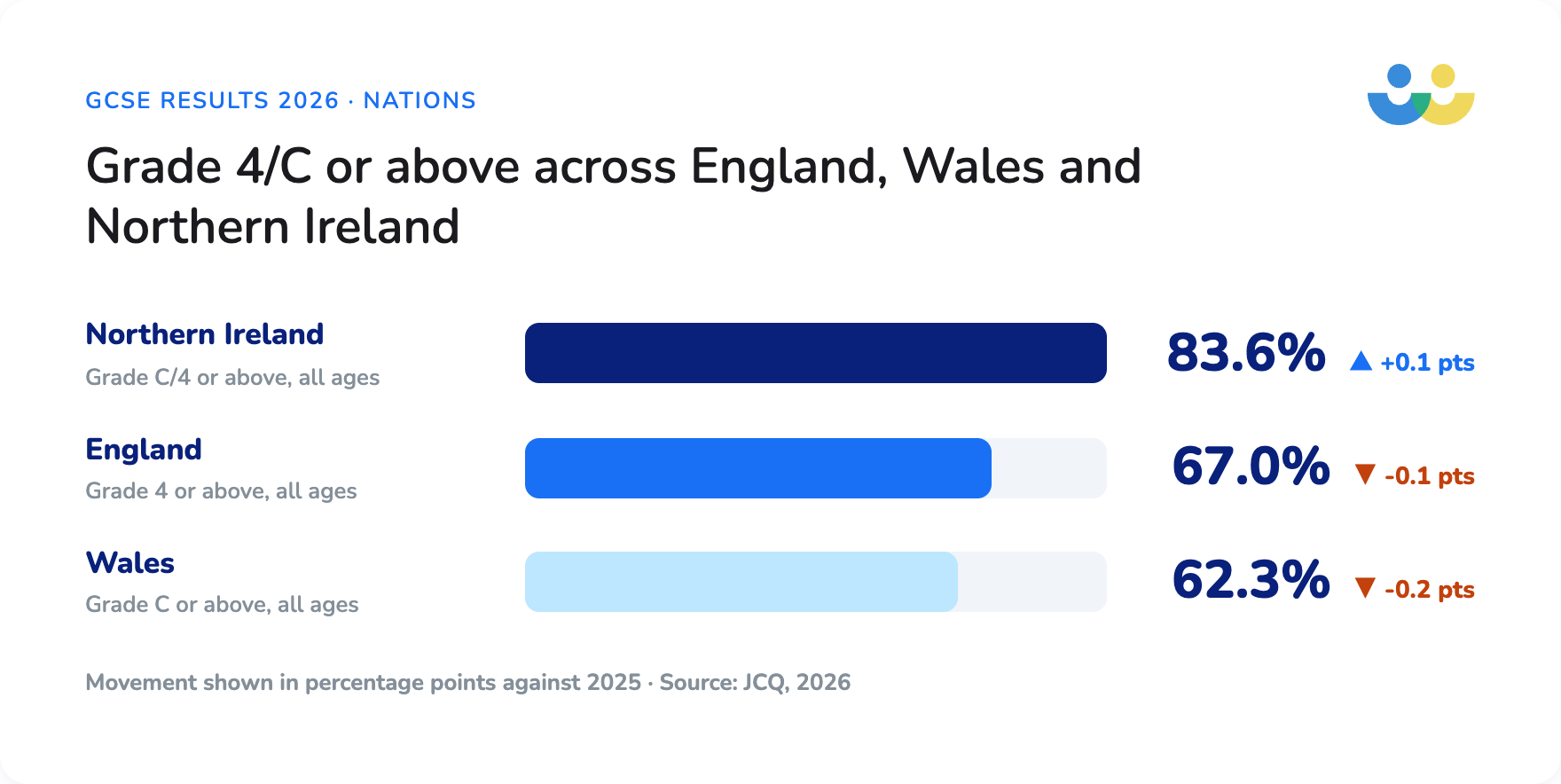
The three nations moved in different directions. In Wales, results at grade C/4 or above fell by 0.2 percentage points to 62.3%, almost back to the 2024 figure of 62.2% after last year’s rise.
Northern Ireland continued last year’s upward trajectory with a second consecutive rise, lifting the pass rate by 0.1 percentage points to 83.6%.
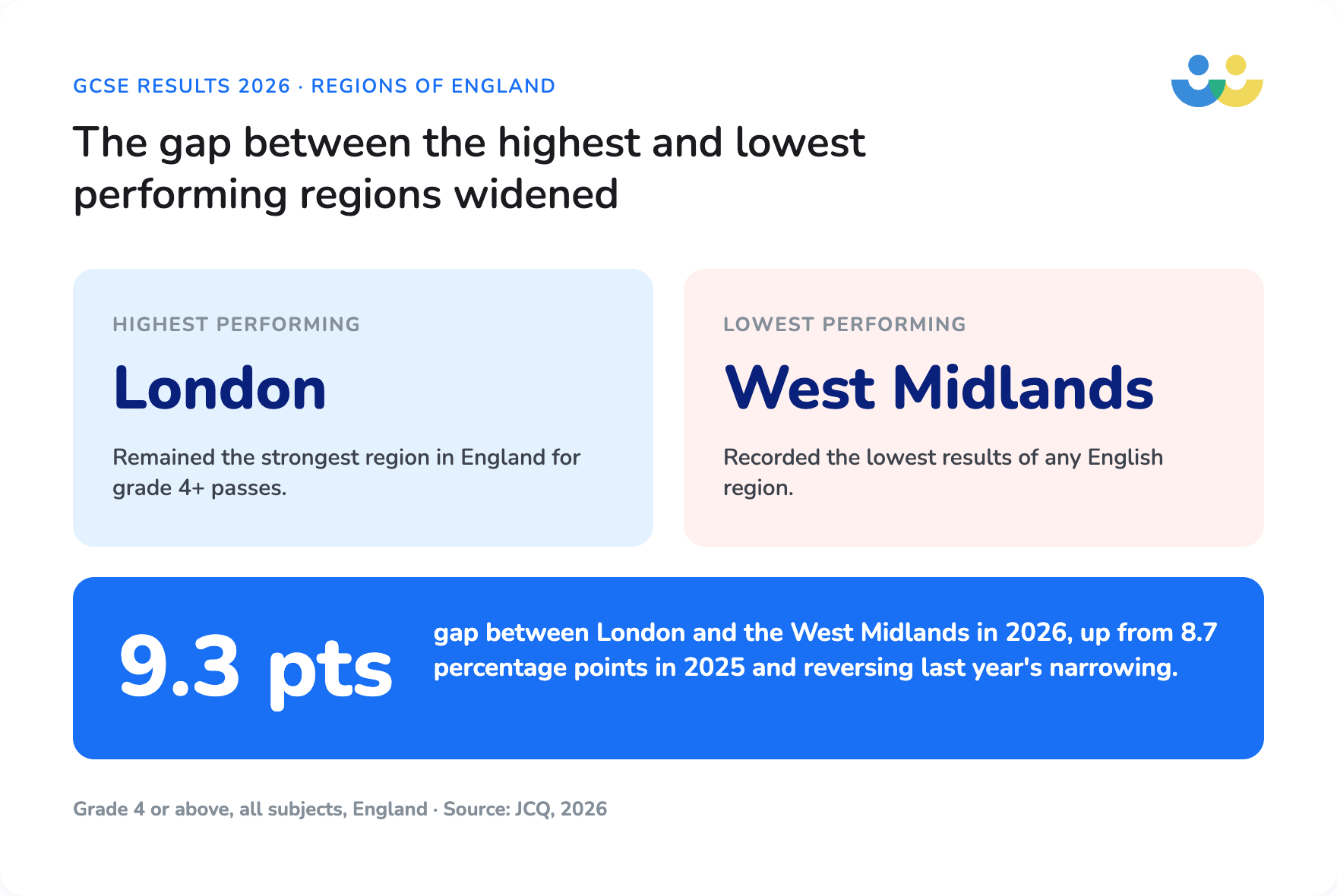
London remained the highest-performing region in England, and the West Midlands recorded the lowest results. The gap between them widened from 8.7 percentage points in 2025 to 9.3 in 2026, reversing the tentative narrowing we saw last year.
GCSE maths results 2026
Third Space Learning specialises in supporting schools with mathematics resources and tuition, so maths is the main focus here.
Key GCSE maths results data
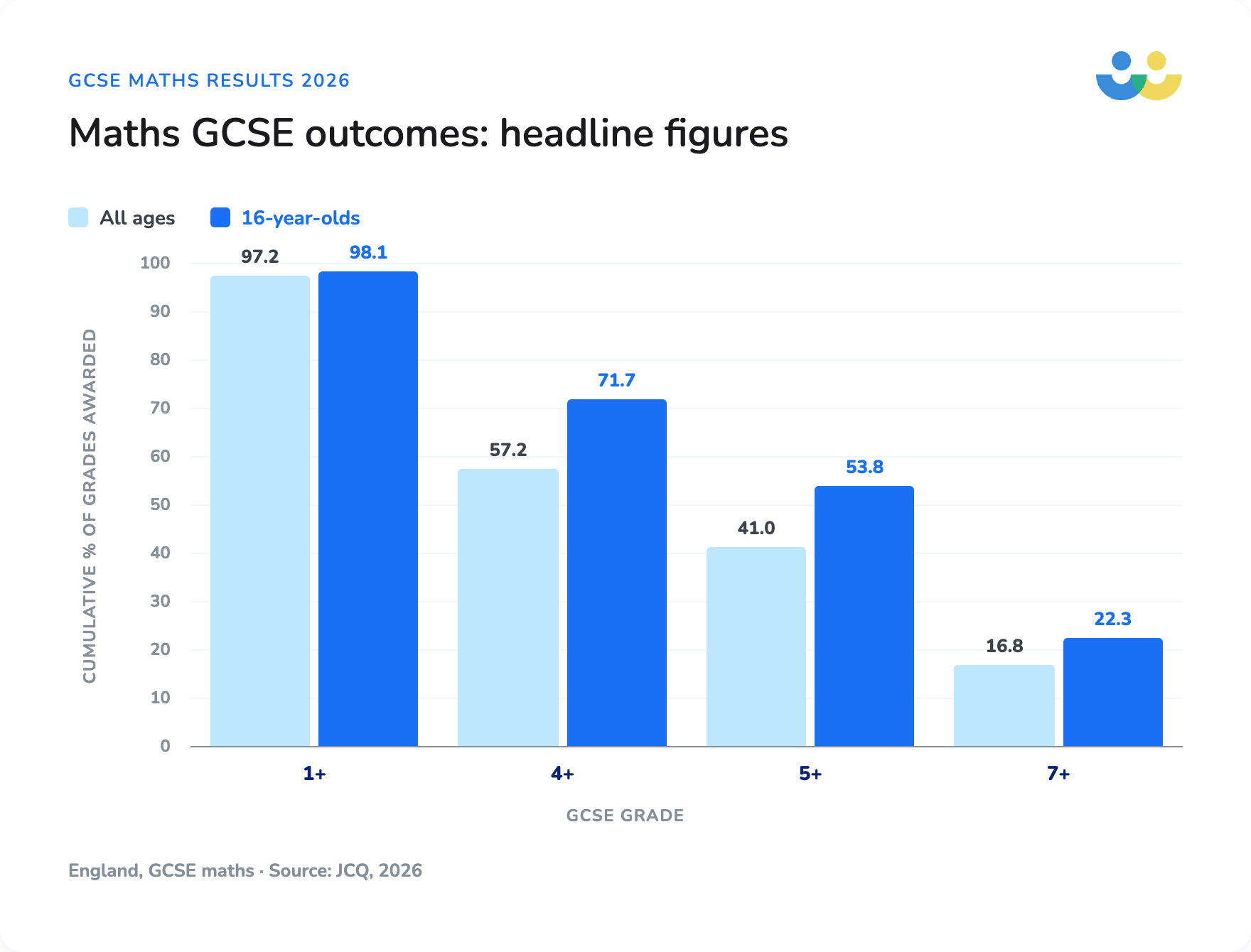
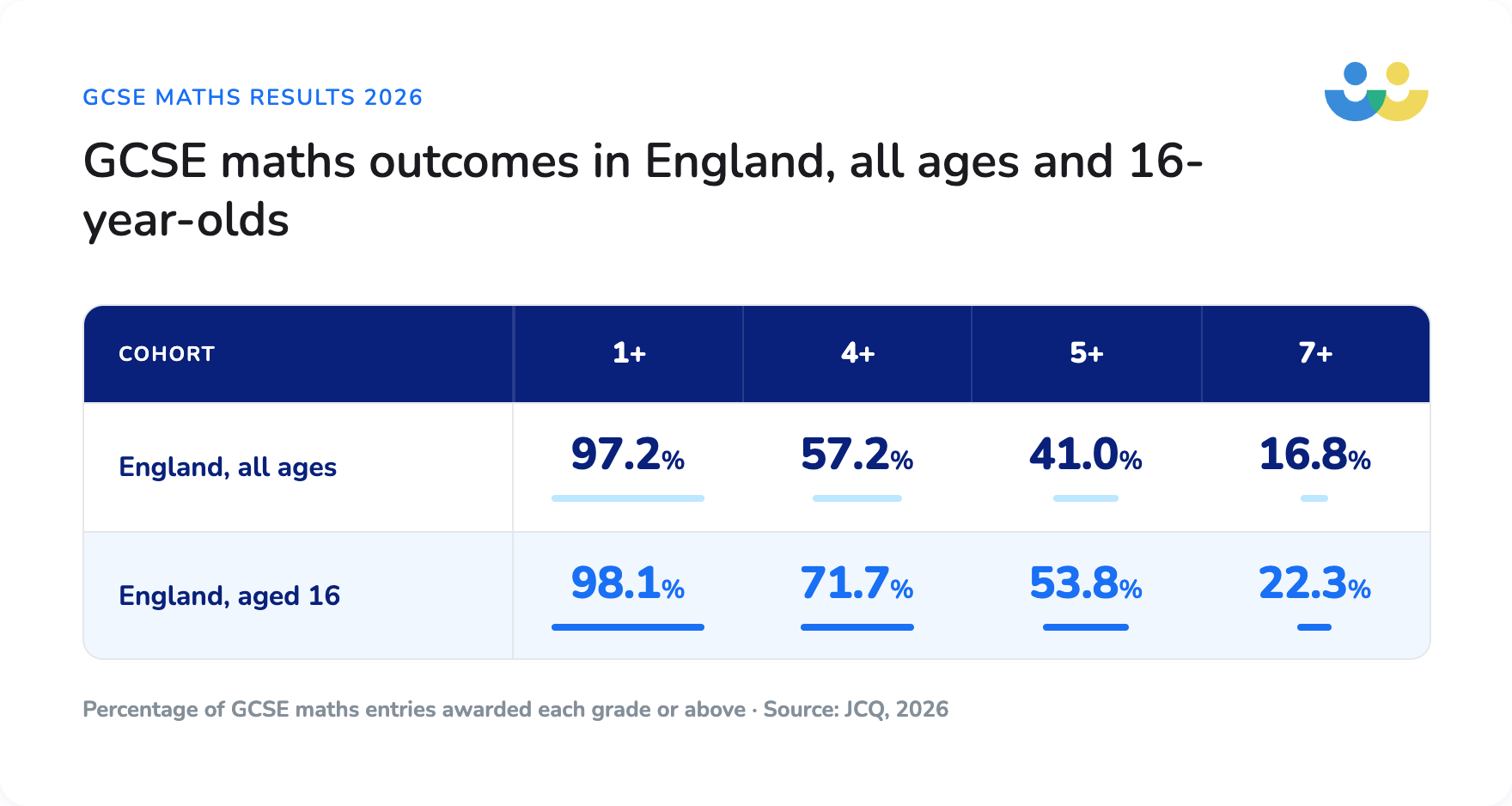
For 16-year-olds in England, the 2026 GCSE maths results sat close to 2025, with one clear exception at the higher grades.
- Grade 1+ awards rose slightly, by 0.1 percentage points on 2025;
- Grade 4+ awards fell by 0.1 percentage points to 71.8%. Even after that drop, the figure stays 0.3 percentage points above the pre-pandemic 71.5%;
- Grade 5+ awards jumped a full percentage point to 53.8%;
- Grade 7+ awards rose by 0.8 percentage points to 22.3%, which is 1.9 points above the 2019 figure of 20.4%.
Award of individual grades
The distribution of grades actually awarded fills in the picture.
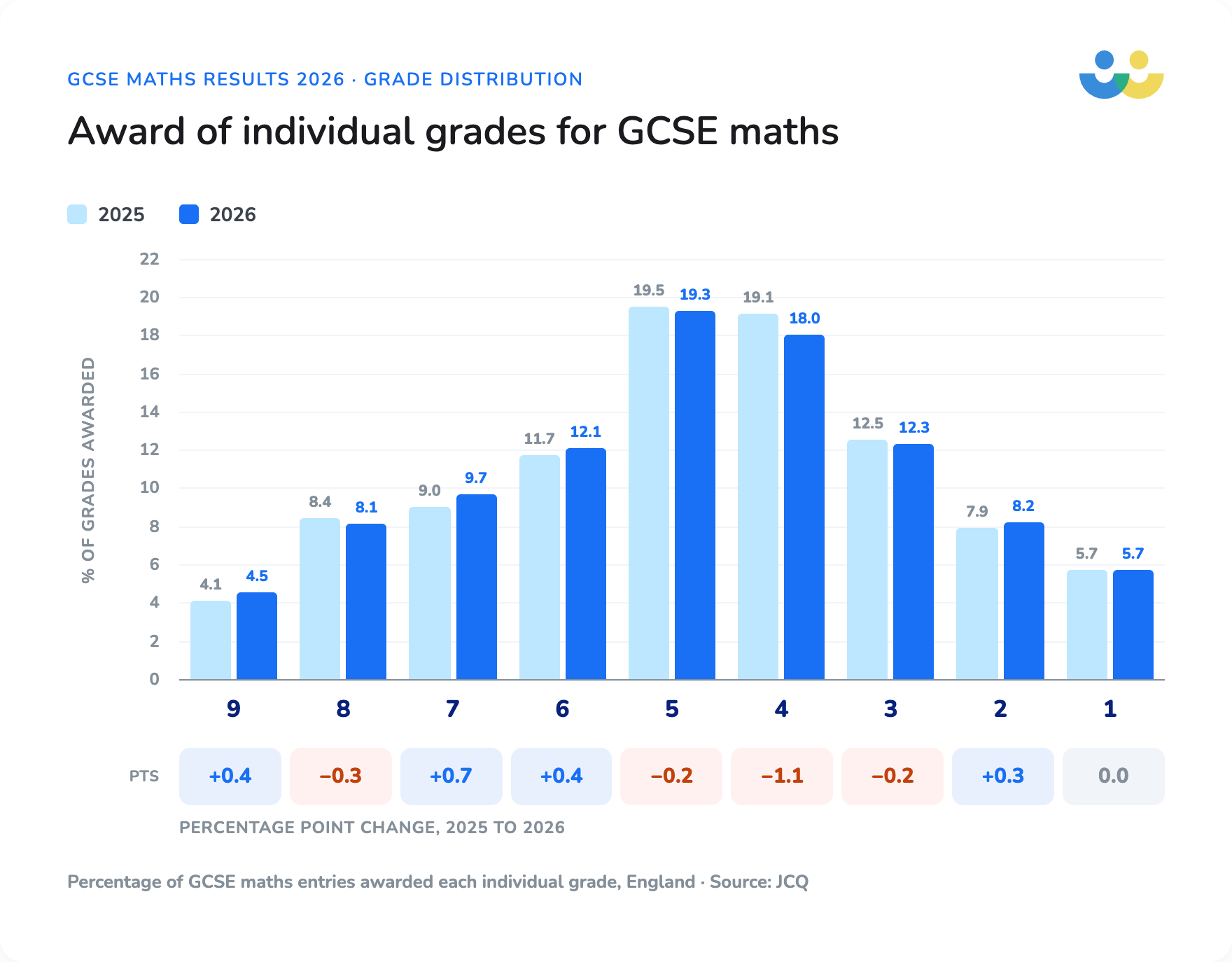
Grade 4 awards fell by 1.1 percentage points, a notable drop. Increases at grade 5 and above offset it, so the grade 4+ pass rate held broadly steady while the distribution of passing grades shifted upwards.
More grade 5s did not drive that shift. The proportion awarded grade 5 actually fell by 0.2 percentage points. The increase came further up the scale, mainly through a 0.7 percentage point rise at grade 7, with smaller gains at grades 6 and 9.
Year-on-year comparison of GCSE maths results
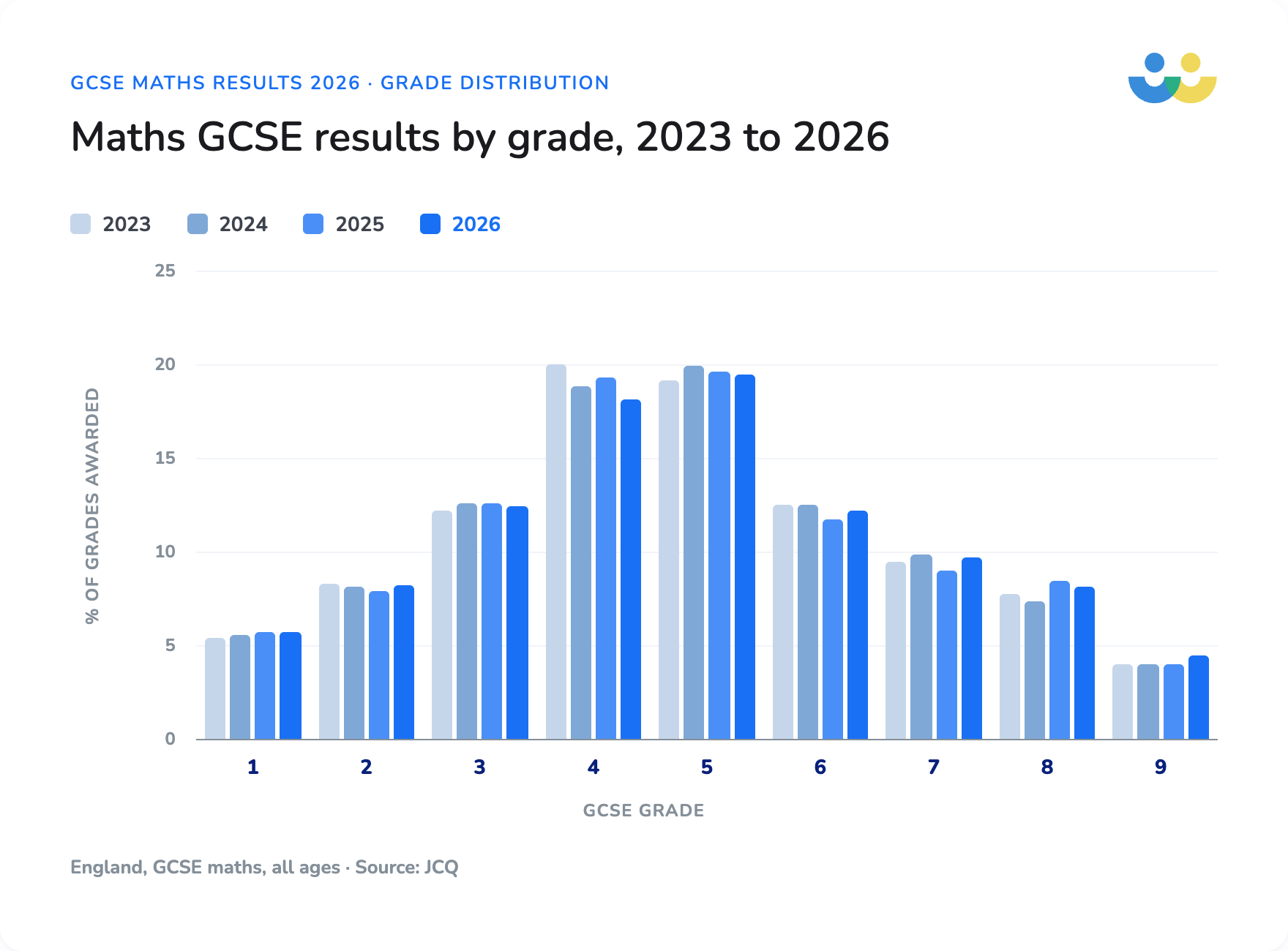
Exam boards removed the grade-boundary adjustments after the pandemic years, and GCSE grading returned much closer to the pre-pandemic standard in 2023. Results in 2024 and 2025 then stayed broadly similar, though the grade distribution shifted underneath.
In 2024, grade 5 awards increased while grade 4 awards fell. That pattern reversed in 2025, which suggests borderline candidates struggled to find the extra marks needed to move from grade 4 to grade 5. At the top end, grade 8 awards rose noticeably in 2025.
The distribution shifted slightly upwards again in 2026, driven mainly by grades 6, 7 and 9. The overall grade 4+ rate fell by 0.1 percentage points, but grade 5+ and 7+ awards rose substantially, by 1 and 0.8 percentage points.
Little moved across the grade 3/4 threshold: both the grade 4+ proportion and the grade 3 proportion fell only slightly. The clearer movement came around the grade 4/5 boundary, where fewer candidates took a grade 4 and more progressed into the higher grades.
That fits what students told us and what the grade boundaries show, both discussed below. The Higher papers, particularly Papers 1 and 2, look to have been fairly accessible for stronger candidates. At Foundation, the higher boundaries from grade 3 upwards suggest candidates working at and above that level accumulated marks more easily than on some previous series.
2026 Edexcel grade boundaries for GCSE maths
How GCSE grade boundaries are set
Each GCSE grade reflects the marks a student earns across written exams, coursework and any other assessed components. GCSE maths carries no coursework, but in subjects with non-exam assessment, the work students submitted during the year counts towards the final grade too.
Grade boundaries show the minimum marks needed for each grade. Senior examiners set them after marking, using statistical evidence and samples of candidates’ work to keep standards comparable from one year to the next.
Boundaries move from year to year. A harder paper usually carries lower boundaries, while an easier paper needs more marks for the same grade. The aim is to hold the standard behind each grade steady, not to fix the same boundaries every year.
GCSEs in England use the 9–1 scale, with grade 9 as the highest grade. Grade 4 counts as a standard pass and grade 5 as a strong pass. A grade 9 is not a fixed percentage: examiners set the boundary each year, and it commonly falls below 90%. On Edexcel Higher maths in 2026, it took 208 marks out of 240.
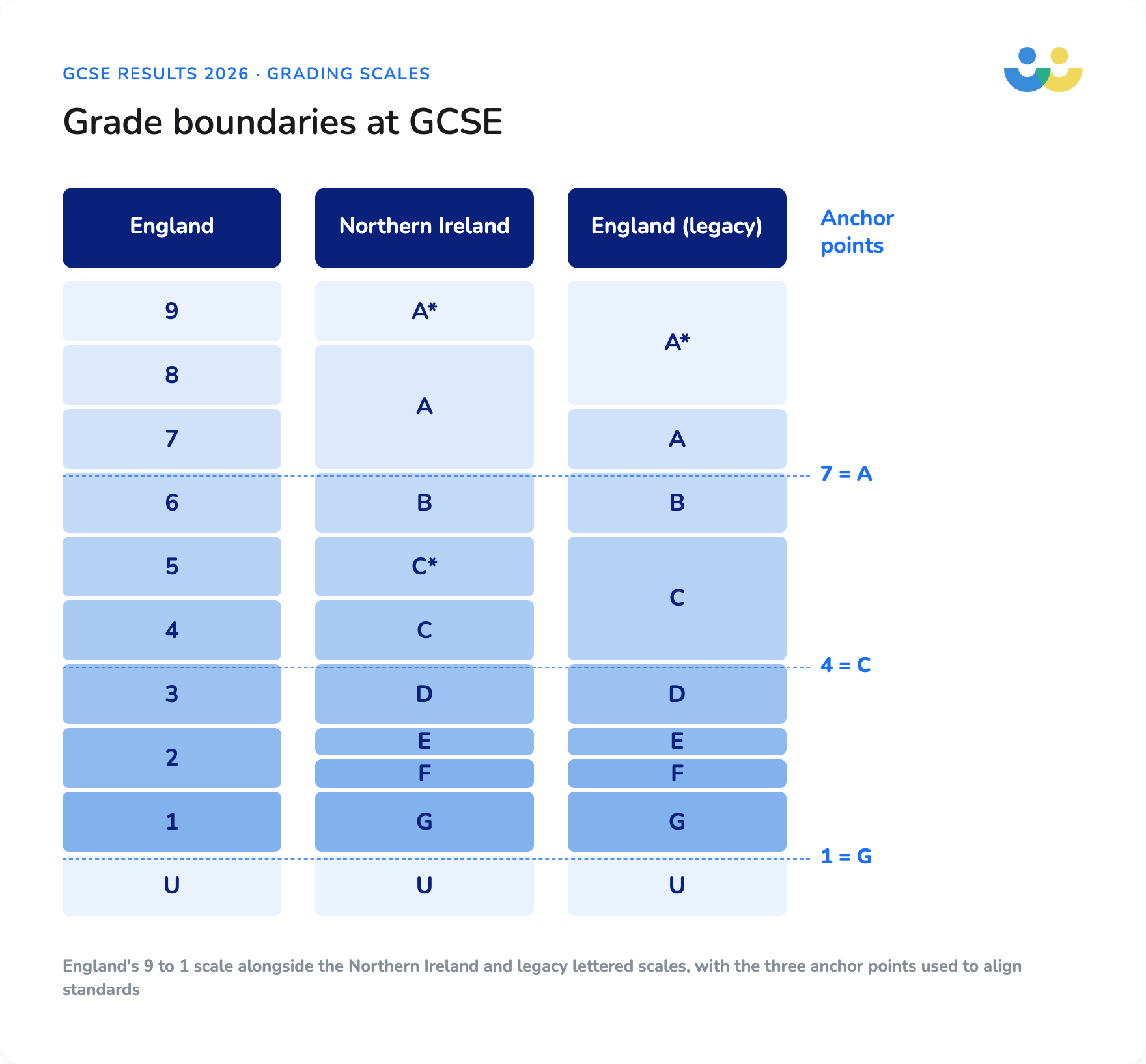
Wales and Northern Ireland continue to use A*–G grades, with Northern Ireland also awarding C*. The main anchor points between the two systems are grades 1/G, 4/C and 7/A. Both nations are reforming their GCSEs, though the changes do not affect the 2026 cohort.
Foundation tier boundaries
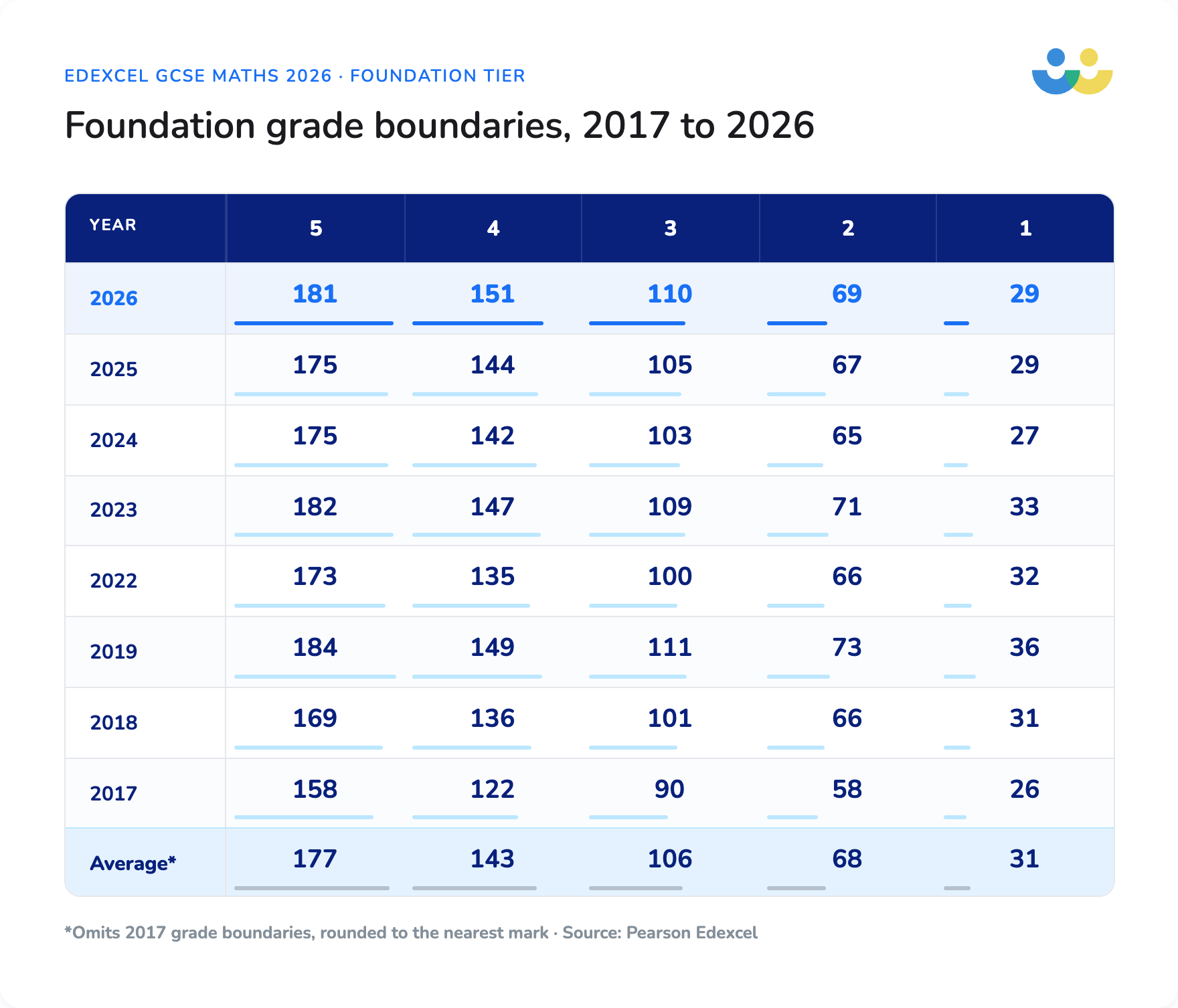
- Foundation boundaries barely moved at grades 1 and 2, sitting within two marks of both 2025 and the previous-series average.
- From grade 3 upwards the boundaries climbed, averaging six marks above 2025 and over five above the previous-series average.
- The pass boundary moved most of all: candidates needed eight more marks for a grade 4 than the historic June average.
- That fits first impressions of the exams. The 2026 Foundation papers suited candidates working between grades 3 and 5.
Foundation boundaries by paper
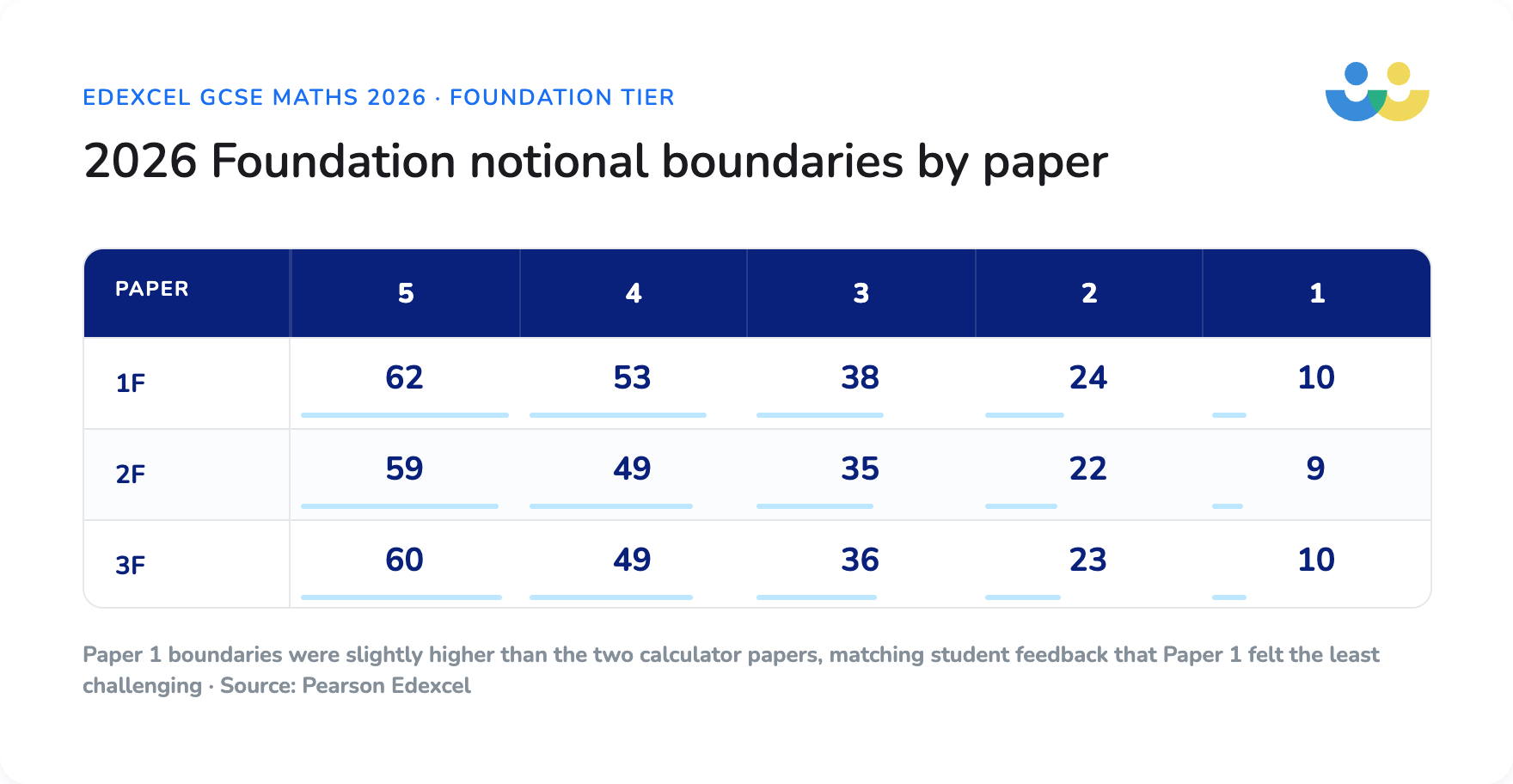
- The two calculator papers produced almost identical boundaries.
- Paper 1 usually carries the lowest boundaries, because students find the non-calculator exam harder. This year that flipped, with Paper 1 sitting slightly above Papers 2 and 3.
- Students said the same. Most found Paper 1 the least demanding of the three.
Higher tier boundaries
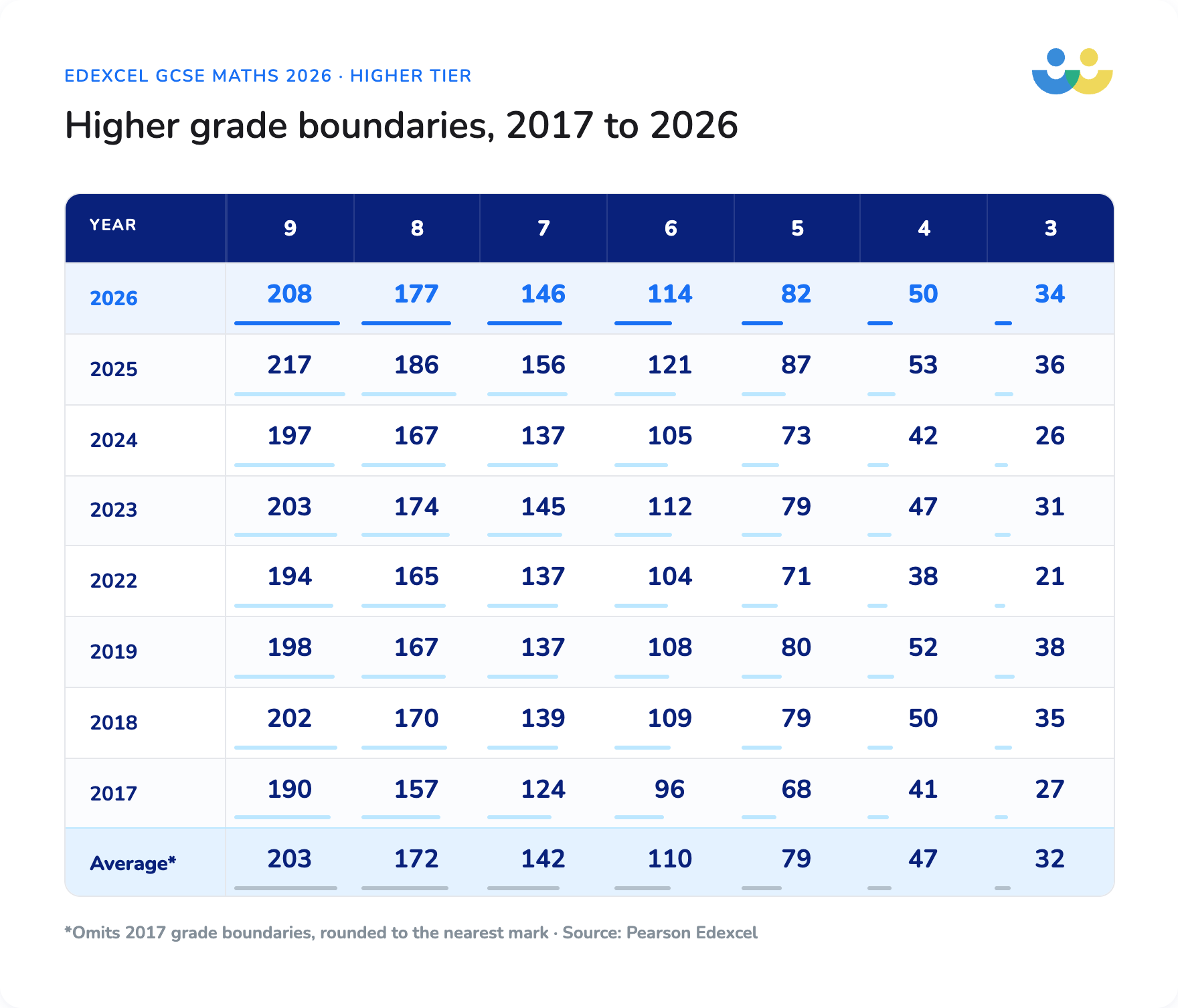
- Every 2026 notional component boundary fell below its 2025 equivalent, by an average of six marks per grade.
- The largest drops came at grades 7 to 9, though even those stayed four to five marks above the historic June average.
- Set against that historic average, the Higher papers look manageable, particularly for stronger candidates.
- It also suggests 2025 was an outlier. Its unusually high top-grade boundaries did not start a new pattern.
Higher boundaries by paper
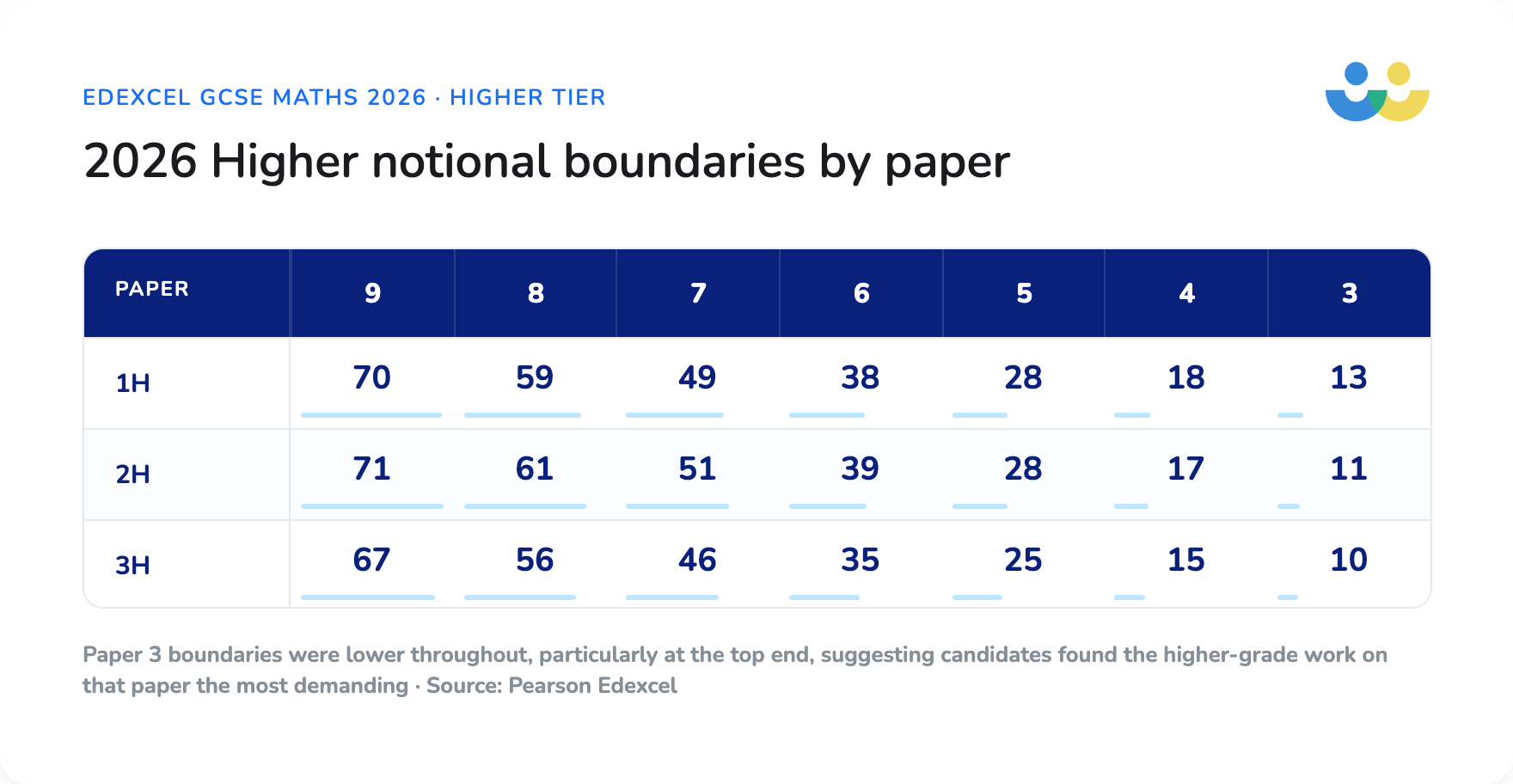
- Papers 1 and 2 produced very similar notional boundaries, matching or sitting within one mark of each other at grades 5 and 6.
- Paper 3 came in lower, especially at the top end, so candidates clearly found the higher-grade work there hardest.
GCSE results 2026: Core subjects
English Language GCSE results 2026
GCSE English language is compulsory for most students, and sixth forms and colleges generally require a grade 4 or above for progression. Students who miss it can carry on studying English and resit the qualification post-16.
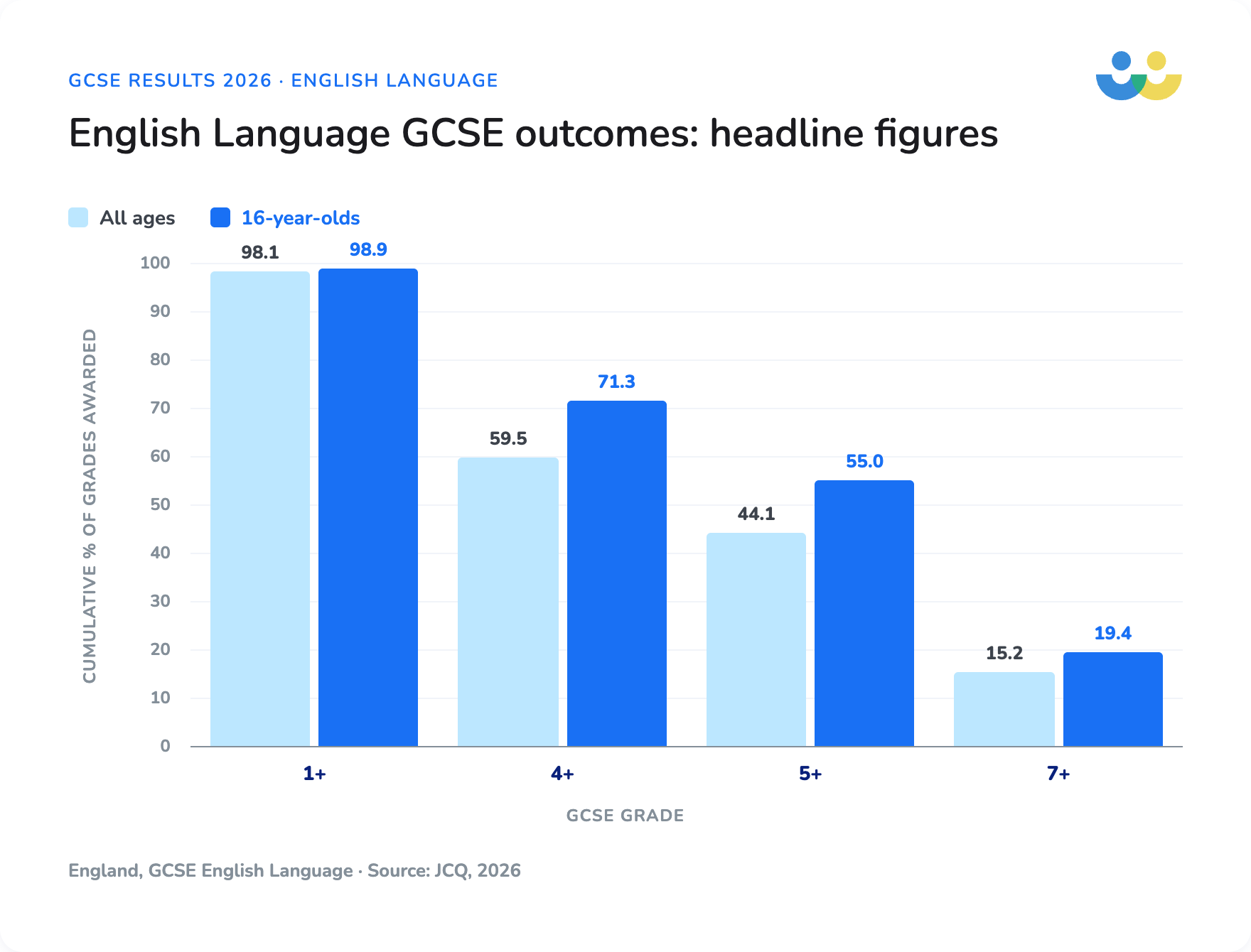
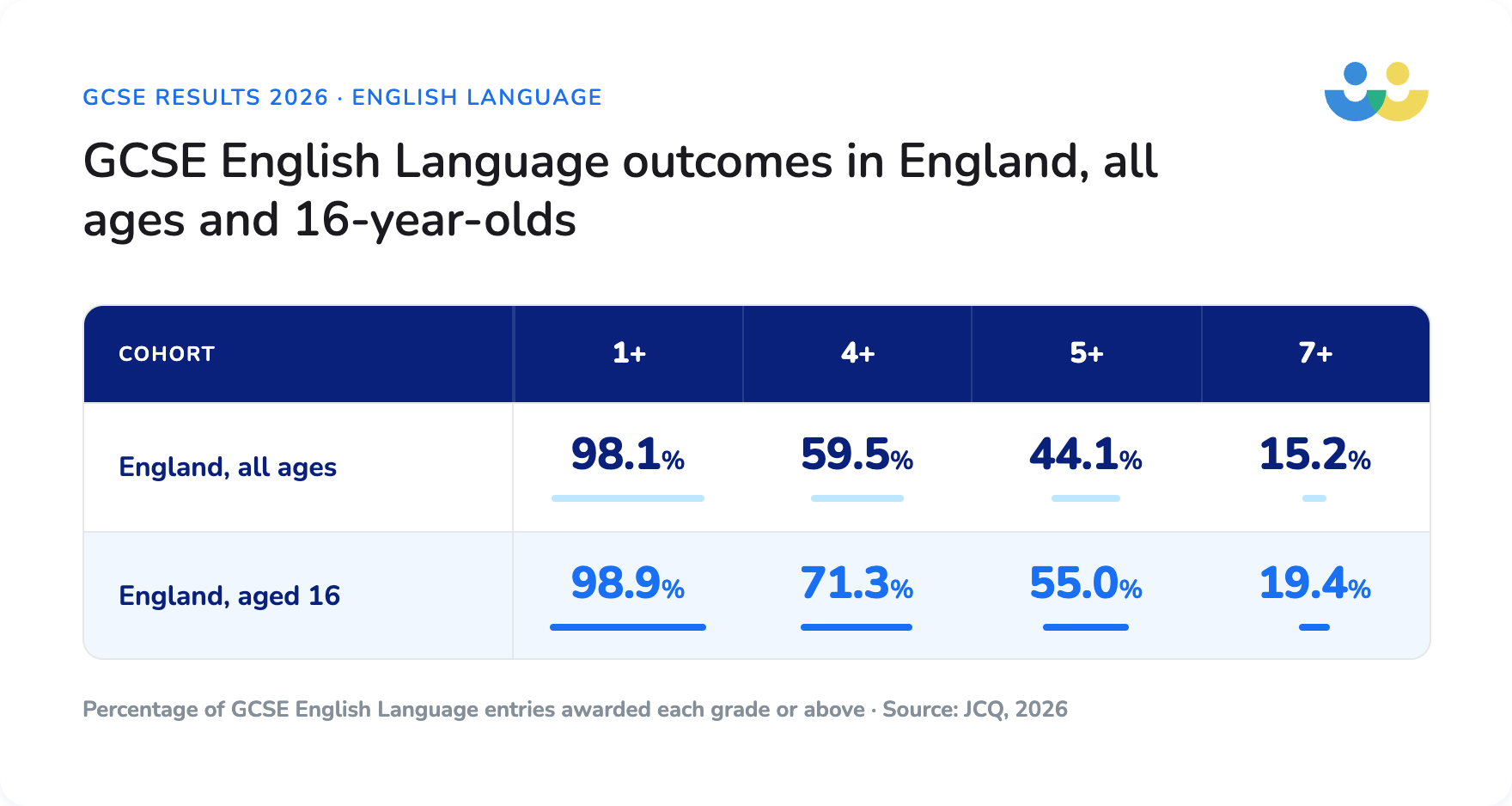
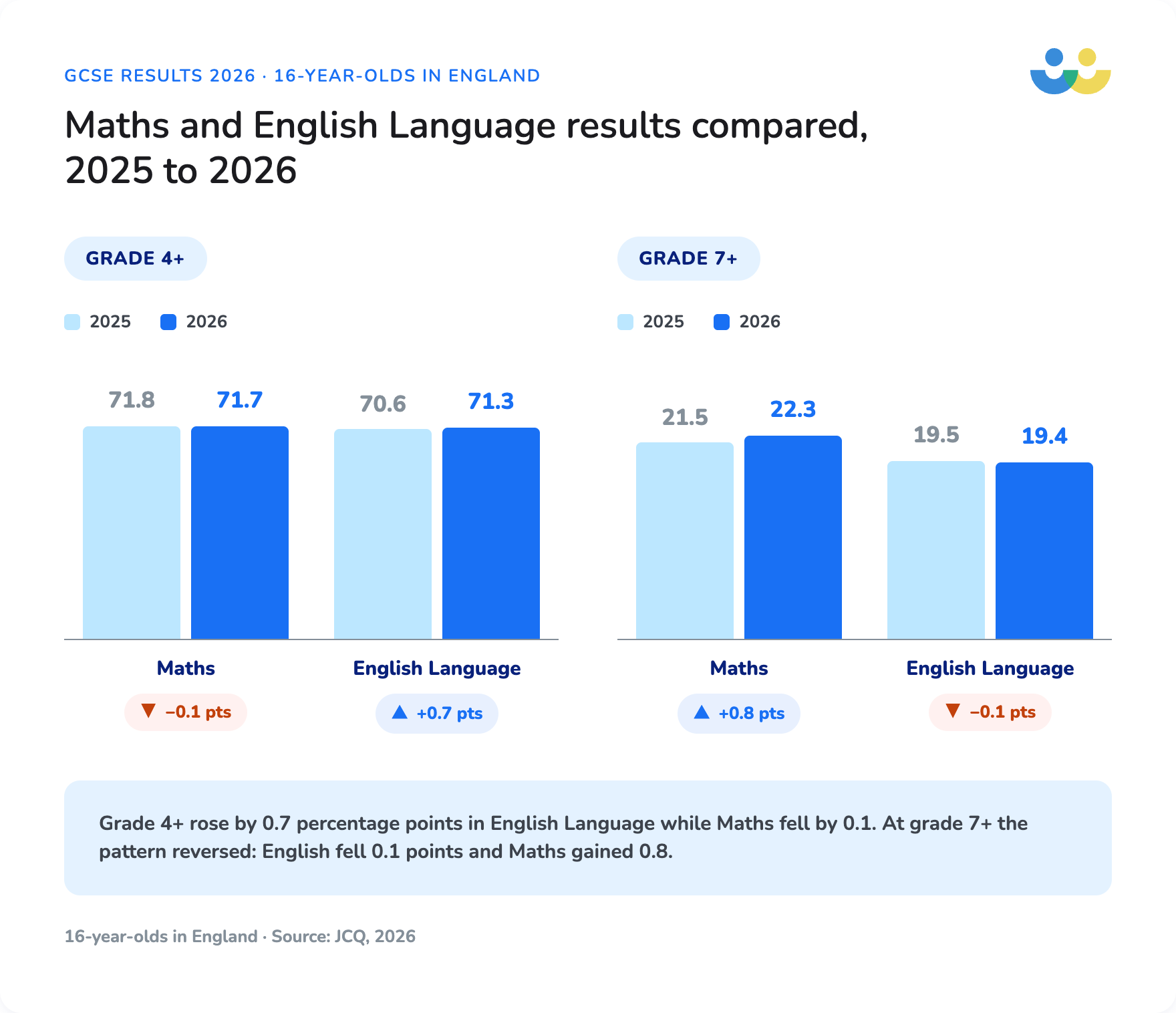
English Language results for 16-year-olds in England differ from maths in a few ways.
- Grade 4+ awards rose noticeably, by 0.7 percentage points, against a 0.1 point fall in maths;
- Grade 7+ awards in English slipped by 0.1 percentage points, while maths rose by 0.8;
- Both subjects saw a significant rise at grade 5+ – 0.8 percentage points in English Language and a full point in maths.
English Literature moved the other way, with small falls at both key thresholds. Grade 4+ awards dropped to 74.2% and grade 7+ fell by 0.4 percentage points to 20.5%.
GCSE Science results 2026
Science counts as a core subject too. Unlike English Language and maths, though, students do not have to resit the exams to reach a minimum standard.
Combined Science results fell in 2023, after exam boards removed most post-pandemic adaptations, but they have risen every year since. Grade 4+ awards rose again in 2026, by 0.5 percentage points to 58.1%, and grade 7+ edged up by 0.1 percentage points to 9.2%.
How to use the GCSE results 2026 data
Close out this year’s exam season with your students first. Celebrate the successes, offer support and apply for reviews of marking where you need to.
Then turn to the data. What do the results tell you about the 2026 cohort, and how does that apply to this September’s Year 11?
National figures and grade boundaries give you context, but question-level analysis of your own school’s data is what drives planning. The national picture will not always match the strengths and weaknesses of your curriculum or department.
Key focus areas for reflection
- Compare your high and low performers against teacher assessments and mock results, and note any surprises.
- Investigate the reasons behind underperformance. Did you identify and support these students early enough?
- Judge each intervention against students’ starting points, not against grade thresholds alone.
- Use question-level analysis to find class-wide patterns, separating gaps in knowledge, interpretation and application.
- Read borderline scripts when they come back, even where the marks stay the same.
- Compare your results with board averages using electronic scripts and exam board analysis tools. Identify relative strengths and weaknesses
- Share a short list of findings with the department to shape planning for the year ahead.
Spotting class-wide trends
- Which GCSE maths topics did your whole class or cohort struggle with?
- Had your mock exams and assessments already flagged those areas?
- Did students drop marks on straightforward procedural questions, or did multi-step and unfamiliar problems cause the difficulty?
- Did any unexpected topics perform poorly? If so, plug that teaching and learning gap this academic year.
- Do the knowledge gaps follow a pattern? Shared weaknesses across Foundation and Higher may point to curriculum gaps at KS3.
- Subject leaders: did exam results differ between classes? That points to teaching or curriculum issues rather than a national trend, so plan support for less experienced staff and non-specialists.
Supporting students on results day and beyond
Results day can be stressful, and emotions may run high, even for students who achieved excellent grades. Some will feel disappointed because they missed a personal target or a course requirement, even where the result looks successful on paper, and especially after months of hard revision.
Most queries on the day are practical rather than academic: what a grade means, whether a course will still take them, and who they can discuss their options with. Talk to students, tell them what to expect beforehand and prepare those answers in advance. It takes the stress out of the day and makes it easier to reassure a student not to panic.
Students who miss their predicted or expected grades need practical help to understand their choices. This could include:
- Explaining the review of marking and appeals process to students and parents;
- Checking scripts and requesting reviews of marking – exam officers submit these to the awarding organisations;
- Discussing alternative post-16 courses, including A levels, vocational routes and apprenticeships;
- Liaising with the local sixth form or college if a student’s place is at risk;
- Identifying suitable resit provision and confirming entry deadlines with the relevant exam boards;
- Making sure students know what to do next, who to contact after Results Day and where to get careers advice.
The students who did well need someone to talk to as well, because those decisions matter just as much. A student holding strong grades may still be weighing up A levels or an apprenticeship, and a short conversation with a teacher who knows them beats a printed list of entry requirements. Where students are interested in university later on, explore early which subject choices keep the most doors open.
Results day is also a good point to review how well your support worked. Where access arrangements were in place, ask whether they made the difference they were meant to before that student sits their exams again in November.
Planning GCSE maths 2027: what to prioritise
Curriculum and teaching implications
One series of papers should not trigger a full curriculum rewrite. Small year-on-year variations are inevitable, in student profiles and in the exams themselves. But paper analysis, question-level performance and teacher feedback will help you decide whether to adjust, and where.
For the detail behind these boundaries, our full analysis of the 2026 papers covers topic coverage and question complexity across all three.
Departments could also:
- Review when you teach and revisit high-priority content;
- Build short retrieval opportunities for procedural skills into the year;
- Scaffold the harder 2026 questions before students attempt similar problems alone. The Pythagoras coordinate geometry question works well for Foundation students;
- Include less-standard combinations of topics in lessons and assessments;
- Check that your mock papers balance procedural, reasoning and problem-solving questions;
- Plan intervention points early, so you can change course if students do not respond to support;
- Use department meetings or CPD time to share teaching approaches for identified strengths and weaknesses.
How Third Space Learning can improve GCSE maths results
A new Year 11 arrives in September, and the students your results analysis flagged are already in the building. The sooner they are on an intervention list, the more time the support has to work.
Since 2013, schools like yours have trusted Third Space Learning’s GCSE maths revision programme and one-to-one GCSE maths tutoring to get more Year 11 students to a grade 4 and above. In a low-stakes, one-to-one setting, our AI maths tutor, Skye, gives hundreds of target students the support they need to clear up misconceptions and build confidence in the topics they find trickiest, so they walk into their GCSE exams ready to show what they can do.
Every session is written by expert maths teachers and aligned to the national curriculum, so students work through lessons built by specialists, not content generated on the fly. Skye is scheduled by the school to fit around the timetable, so no teacher has to come off timetable to run it.
2026 GCSE results: the essentials
Students in England, Wales and Northern Ireland collected their GCSE results on Thursday 20 August 2026, closing this summer’s main results period.
Other key dates: A-levels came out the previous week, on Thursday 13 August, and students in Scotland received their National and Higher results on Tuesday 4 August.
Exams and grading have largely returned to normal since the pandemic. Even so, students still received formula sheets in GCSE maths, physics and some combined science qualifications, and the DfE has confirmed these stay in place for the remaining lifetime of the current specifications.
Ofqual expects reformed GCSEs to arrive in stages, with first teaching from 2029 and 2030. The current Curriculum and Assessment Review also includes an evaluation of the formula sheets.
Exam results and certificates
Exam boards release results to schools and colleges the day before results day. That gives centres time to check and prepare everything before students arrive.
Students collect their results from school, and most centres open from around 8am, though arrangements vary and should be confirmed in advance. A student who cannot collect in person should ask the school to post their results, or nominate someone else to collect them on their behalf.
Students at schools registered for the Education Record app could also access their results online from 11am.
Schools and colleges may ask students to bring photo ID. This matters most where a family member collects results for someone else.
On GCSE results day, students receive a provisional results slip, titled Candidate Statement of Provisional Results. Exam boards issue official GCSE certificates around three months later, which leaves time for reviews of marking, appeals and any other corrections. Remind students to keep those certificates safe. They are the evidence of their qualifications for college, university and employers.
DfE results trial: education record app
Last year, the DfE trialled its Education Record app in the West Midlands and Greater Manchester. The pilot gave 95,000 students digital access to their GCSE exam results and certificates, cutting their reliance on paper documents.
This year the programme rolled out nationally. The BBC reports that over 750 schools opted in, letting students access their results from 11am on results day.
DfE guidance says the app “is not intended to replace the results slip” handed to students in person, and centres still provided paper results this year.
It is too early to judge the rollout. The DfE has published no figures on pupil take-up, and the app remains an addition to the results slips schools issue rather than a replacement.
GCSE results 2026 FAQs
In England, grade 4 is a standard pass and grade 5 is a strong pass. Students who do not reach at least grade 4 in English and maths must keep studying these subjects post-16 and resit the exams, with maths and English resits sat in November. Wales and Northern Ireland use A*–G grades, where grade C is the equivalent standard pass.
Not for the students who sat exams this summer. The 2026 cohort took the current specifications, and formula sheets remained in place for GCSE maths, physics and combined science. Bigger changes are coming: Ofqual expects reformed GCSEs to be introduced in a staggered form for first teaching from 2029 and 2030, following the Curriculum and Assessment Review.
No, 2026 was a broadly stable year. Across the UK, 67.3% of entries achieved grade 4/C or above, down 0.1 percentage points on 2025 and effectively level with the 2019 figure of 67.4%. Top grades increased for a second year, with 22.0% at grade 7/A or above. The weaker picture sits in post-16 GCSE resits.
Grade boundaries vary by exam board, subject and tier, and awarding organisations publish them on results day. For Edexcel GCSE maths in 2026, Higher tier candidates needed 208 marks for a grade 9 and 50 for a grade 4, while Foundation tier needed 181 for a grade 5 and 151 for a grade 4. Boundaries are set after marking, so they shift each year.

DO YOU HAVE STUDENTS WHO NEED MORE SUPPORT IN MATHS?
Skye – our AI maths tutor built by teachers – gives students personalised one-to-one lessons that address learning gaps and build confidence.
Since 2013 we’ve taught over 2 million hours of maths lessons to more than 170,000 students to help them become fluent, able mathematicians.
Explore our AI maths tutoring or find out how a GCSE maths tutor could support students in your school.