

GCSE Exam Dates 2027: Full Timetable And Key Dates For Schools

GCSE exam dates 2027 are already published, which gives your current Year 10s a fixed set of deadlines to work back from. The summer series runs from Monday 10 May to Friday 18 June 2027, with a contingency day on Wednesday 23 June.
Every awarding body follows the common timetable agreed through the Joint Council for Qualifications. Maths, English and science exam papers sit on the same days whichever specification your department teaches.
The GCSE dates 2027 below cover the key dates at a glance, the maths paper dates in full, and what the shape of the timetable means for mocks and intervention. Every date comes from the final published timetables for summer 2027.
Stay updated for the 2027 GCSE season
Join our email list to be alerted to any new changes to GCSE maths exams in 2027.
We’ve got all the GCSE dates 2027 and we will be reviewing the contents of each of the GCSE maths papers in 2027 and taking a good look at the GCSE results 2027 in August.

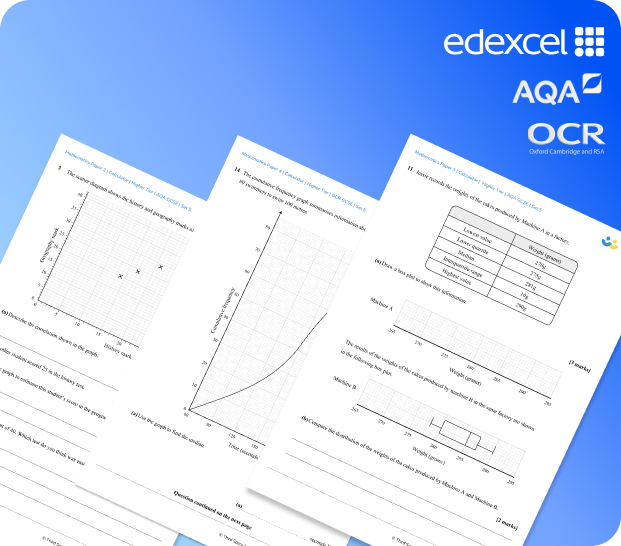
Edexcel, AQA and OCR Foundation and Higher Papers: Set 5 (2026)
Download these free 2026 GCSE maths practice paper packs for students following the Edexcel, AQA and OCR exam boards. Each exam board contains 3 foundation and 3 higher tier papers.
Download Free Now!GCSE dates 2027: key dates at a glance
Date | What happens |
|---|---|
Tuesday 3 – Monday 9 November 2026 | November 2026 GCSE resit series (maths and English) |
January 2027 | November series results issued |
Monday 10 May 2027 | First exam of the summer 2027 series |
Friday 14 May 2027 | GCSE maths Paper 1 (non-calculator) |
Thursday 27 May 2027 | GCSE maths Paper 2 (calculator) |
Monday 14 June 2027 | GCSE maths Paper 3 (calculator) |
Friday 18 June 2027 | Last exam of the summer 2027 series |
Wednesday 23 June 2027 | Contingency day |
Thursday 12 August 2027 | A level results day |
Thursday 19 August 2027 | GCSE results day 2027 |
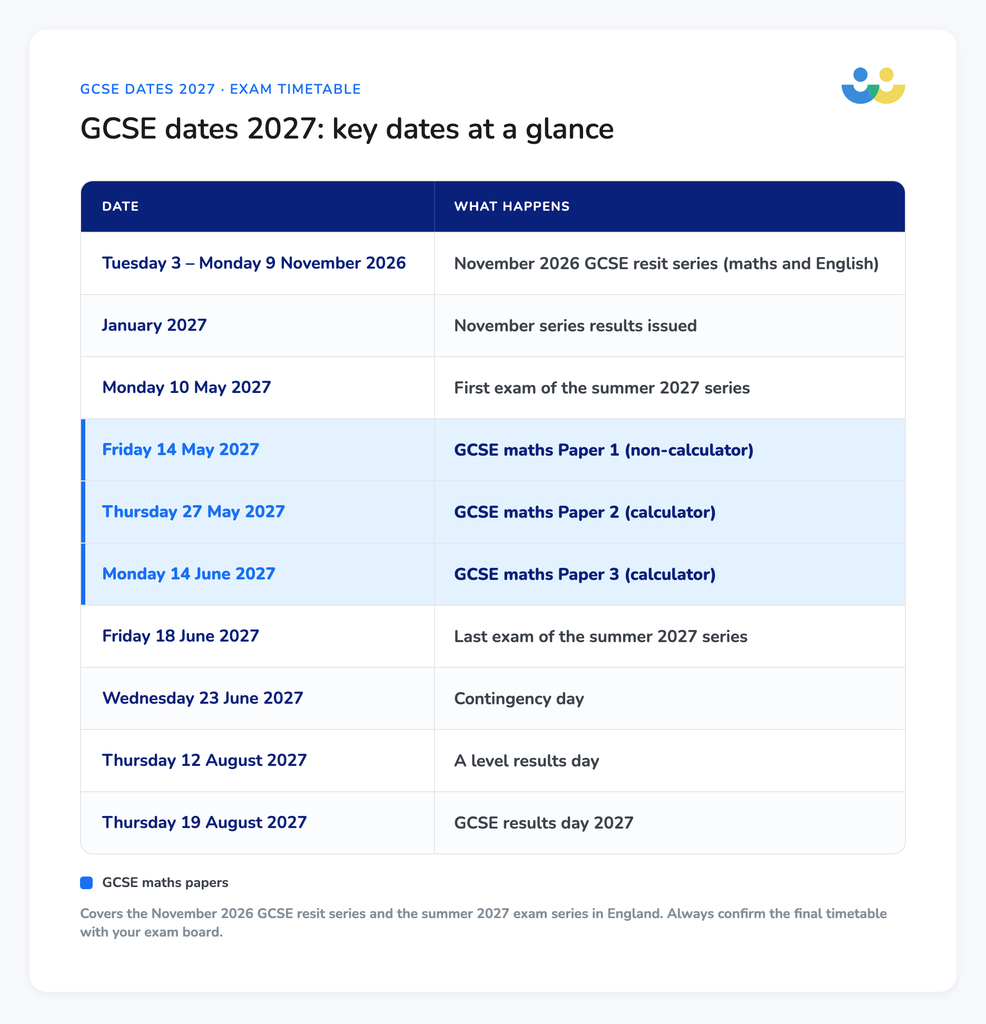
GCSE exams start on Monday 10 May 2027 and finish on Friday 18 June 2027. Morning exams start at 9am and afternoon exams start at 1.30pm.
The JCQ timetabling rules acknowledge the school calendar. Examinations avoid weekends, bank holidays and school breaks, and they take religious festivals into account where possible.
The 2027 contingency day
The contingency day for 2027 is Wednesday 23 June, five days after the last paper. Every centre must keep students available until that date, even where no exam is timetabled.
The contingency day only comes into use if national disruption stops a paper going ahead. It exists to ensure no cohort loses a paper altogether. It still matters for families, because family holidays booked before 24 June put a student at risk of missing a rescheduled exam. Most schools send that reminder home in the spring term.
Exam board timetables for GCSEs 2027
Your GCSE exam board sets paper lengths and content, not the dates for the main subjects. Those come from the JCQ common timetable, so a maths paper sits on the same morning whether a student is entered with AQA, Edexcel or OCR.
Schools choose their exam boards subject by subject, and that choice changes paper lengths rather than dates. Students still need to know which board they are entered with for accurate information on paper structure. Examinations are not timetabled at weekends, bank holidays or school holidays anywhere in the UK, and each board publishes its own key dates alongside the timetable.
Provisional timetables, key dates and final versions
Awarding bodies publish provisional timetables around two years ahead, then confirm a final version. The summer 2027 timetables are now final, so departments can plan curriculum delivery for the spring and summer terms with confidence.
Where a student has two papers in one session, centres apply the JCQ clash conditions and supervise one paper either side of the timetabled slot.
AQA, Edexcel and OCR
AQA, Pearson Edexcel and OCR all run the summer 2027 series from Monday 10 May to Friday 18 June. All three publish a full exam timetable as a PDF, and any late change appears on the awarding body’s news page. AQA and Pearson Edexcel between them cover most English entries, and the OCR exam timetable matches them date for date on the core subjects.
WJEC and Eduqas
Eduqas and WJEC follow the same series dates and the same contingency day. Paper lengths differ, and in Wales students sit GCSE Mathematics and Numeracy as a double award across three units.
CCEA in Northern Ireland
CCEA publishes its own final GCSE timetable for June 2027 in Northern Ireland. Centres there should work from the CCEA document rather than an English board’s version, because unit structures differ.
Scotland, Cambridge Nationals and other qualifications
Scotland sits National 5s and Highers rather than GCSEs, on the SQA timetable, so the dates on this page do not apply there. OCR also publishes separate key dates for Cambridge Nationals, and every board runs its own timetable for vocational qualifications alongside the GCSE series.
Cambridge Nationals and similar level 2 qualifications often carry earlier assessment windows, some of them in April. A student can finish a vocational assessment weeks before the written GCSE series opens, so those dates belong on the same centre timetable.
Entries, access arrangements and key deadlines
Exams officers confirm entries, book hall spaces and put access arrangements in place. Access arrangements need evidence on file well before the series starts. Your school calendar sets when study leave begins, and where events such as options evenings sit alongside the exam weeks.
Exams officers can download the final timetable and the guidance that goes with it from the awarding body’s site. That version carries the session details and paper lengths, and it is the information to work from when key deadlines land.
Check the specification code on your entries, for example 1MA1 or 8300, because paper lengths differ even where dates match. Your exams officer is the first point of contact for anything that affects an entry.
Most schools publish the centre exam timetable on the school website in the spring term. Check any date you are building a scheme of work around against that version before it goes into planning documents.
Key GCSE exam dates 2027: core subjects
Subject | Papers | Dates |
|---|---|---|
Maths | 3 | 14 May, 27 May, 14 June |
English literature | 2 | 12 May, 19 May |
English language | 2 | 24 May, 8 June |
Biology | 2 | 11 May, 10 June |
Chemistry | 2 | 17 May, 15 June |
Physics | 2 | 25 May, 18 June |
The core subjects spread across the full six weeks, which is why a Year 11 timetable can look light in one week and brutal in the next. Most students sit their last core paper before the GCSE exam season closes on 18 June.
GCSE maths exam dates 2027
All three maths papers sit in the morning, and all three run for 1 hour 30 minutes on the AQA, Edexcel and OCR specifications.
Paper | Date | Session | Length |
|---|---|---|---|
Paper 1 (non-calculator) | Friday 14 May 2027 | Morning | 1h 30m |
Paper 2 (calculator) | Thursday 27 May 2027 | Morning | 1h 30m |
Paper 3 (calculator) | Monday 14 June 2027 | Morning | 1h 30m |
The maths dates highlighted above hide two gaps worth planning around. Thirteen days separate Paper 1 and Paper 2, and eighteen days separate Paper 2 and Paper 3.
For most schools, the May half term break falls inside that second gap. Both gaps create opportunities for targeted intervention, as long as the work is set before students leave.
Edexcel GCSE maths dates 2027
Pearson Edexcel GCSE Mathematics (1MA1) follows the common timetable exactly. Paper 1 sits on Friday 14 May, Paper 2 on Thursday 27 May and Paper 3 on Monday 14 June, all morning sessions of 1 hour 30 minutes. Foundation and Higher tier papers sit at the same time on the Pearson Edexcel timetable.
AQA GCSE maths dates 2027
AQA GCSE Mathematics (8300) sits on the same three dates and in the same sessions. Foundation and Higher tier students are timetabled together on the AQA exam timetable, so tiering decisions do not change when a student sits.
OCR GCSE maths dates 2027
OCR GCSE Mathematics (J560) follows the same JCQ common timetable dates for all three papers. Confirm the session times against the OCR final exam timetable before publishing them internally.
WJEC and Eduqas GCSE maths dates 2027
Eduqas GCSE Mathematics (C300) sits Component 1 on Friday 14 May and Component 2 on Thursday 27 May. Both are morning papers of 2 hours 15 minutes at Foundation and Higher.
In Wales, GCSE Mathematics and Numeracy (Double Award) runs across three units: Unit 1 on Friday 14 May, Unit 2 on Thursday 27 May and Unit 3 on Monday 14 June. Resit units for the legacy Mathematics and Mathematics-Numeracy specifications sit separately in May and June.
GCSE English language and English literature exam dates 2027
Paper | Date | Session |
|---|---|---|
English literature Paper 1 | Wednesday 12 May 2027 | Morning |
English literature Paper 2 | Wednesday 19 May 2027 | Morning |
English language Paper 1 | Monday 24 May 2027 | Morning |
English language Paper 2 | Tuesday 8 June 2027 | Morning |
English literature Paper 1 falls on the third day of the series, which puts real pressure on the spring term for English departments. Delivering the last of the literature content before Easter becomes the priority.
GCSE English language Paper 2 covers writing as well as reading, and it sits on 8 June with a fortnight of study leave in front of it.
The dates above hold for AQA and Pearson Edexcel, which both sit English literature Paper 1 on 12 May. OCR follows the same common timetable. Paper lengths vary between the boards, so check duration against your own specification before you plan revision sessions around them.
GCSE science and combined science exam dates 2027
Separate science and combined science papers share the same six dates. Students taking Combined Science: Trilogy sit six papers of 1 hour 15 minutes. Students studying separate biology, chemistry and physics sit six papers of 1 hour 45 minutes.
Paper | Date | Session |
|---|---|---|
Biology Paper 1 | Tuesday 11 May 2027 | Morning |
Chemistry Paper 1 | Monday 17 May 2027 | Morning |
Physics Paper 1 | Tuesday 25 May 2027 | Morning |
Biology Paper 2 | Thursday 10 June 2027 | Morning |
Chemistry Paper 2 | Tuesday 15 June 2027 | Morning |
Physics Paper 2 | Friday 18 June 2027 | Morning |
The GCSE science exam dates split across both halves of the series. Biology Paper 1 sits on 11 May and biology Paper 2 on 10 June. Chemistry Paper 1 sits on 17 May and chemistry Paper 2 on 15 June. Physics Paper 1 sits on 25 May and physics Paper 2 on 18 June.
The May biology paper arrives on day two of the series, so biology teaching finishes first. Combined science candidates sit their chemistry and physics papers on the same mornings, and physics Paper 2 is the last paper of the whole series on Friday 18 June 2027.
The dates above are the AQA science examinations. Pearson Edexcel and OCR follow the same common timetable, though paper lengths differ between them, so confirm the detail against your own board’s exam timetable.
Other GCSE subject exam dates 2027
Dates below are the AQA specifications. Other boards sit these subjects in the same broad slots, though papers and sessions vary more than they do for the core three.
History and geography exam dates 2027
The history papers sit on Thursday 20 May and Friday 28 May, both morning. The second history paper lands the day after maths Paper 2, so note that clash of demand when you plan revision sessions. The geography papers sit on Tuesday 18 May (morning), Wednesday 26 May (afternoon) and Thursday 10 June (afternoon).
French and Spanish exam dates 2027
French listening and reading sit on Wednesday 26 May in the morning, with writing on Tuesday 8 June in the afternoon. Spanish listening and reading sit on Wednesday 9 June in the morning, with writing on Wednesday 16 June in the afternoon.
Modern foreign languages speaking tests run in a centre-set window, scheduled from 12 April to 21 May 2027. Those tests start in April, before the written series opens, so language departments work to an earlier deadline than everyone else.
Computer science and religious studies exam dates 2027
Computer science Paper 1 opens the whole series on Monday 10 May in the morning, with Paper 2 on Wednesday 19 May in the afternoon. Religious studies sits on Thursday 13 May and Friday 21 May, both morning. Citizenship studies sits on Monday 10 May and Thursday 20 May, both afternoon.
Arts and technology subjects include non-exam assessment, and those deadlines fall well before 10 May 2027, so the subjects spread across a wider range of dates. Your exams officer holds the centre timetable that lists every paper your students are entered for.
Other key dates
GCSE results day 2027
GCSE results day 2027 falls on Thursday 19 August 2027, the third Thursday in August. A level and AS results are issued a week earlier, on Thursday 12 August 2027.
Schools receive results electronically on Wednesday 18 August 2027, and most open from around 8am on the Thursday. That gives senior teams a working day to prepare. They then discuss resits, sixth form places and appeals with students, parents and carers. Parents often ring on the day, so the key dates for appeals are worth having to hand. Students interested in post-16 courses check their grades against entry requirements set in the 9 to 1 grading system.
Grade boundaries are published on results day morning, and looking at how GCSE grade boundaries have moved over recent series helps departments read a set of results quickly.
GCSE appeals
Centres check clerical marking and administrative errors first, then request a review of marking where a result looks out of line with a student’s work.
Reviews of marking run through late August and September 2027, and priority deadlines apply where a place at a sixth form or college depends on the outcome. JCQ guidance confirms the exact windows each summer.
GCSE resits 2027
Students who miss a grade 4 in maths or English resit in the November series, because a grade 4 counts as a level 2 pass and gates a lot of post-16 qualifications. Colleges treat those qualifications as an entry condition, so schools set up resit entries in the week after results day. The November 2026 series runs from Tuesday 3 to Monday 9 November 2026, with English language on 3 and 5 November, and maths papers on 4, 6 and 9 November.
Results are issued in January 2027. The November 2027 series will sit in the same early-November window, with results the following January, though JCQ has not confirmed the exact dates yet.
Planning for the GCSE exams in 2027
Working backwards from Friday 14 May 2027 gives departments roughly six full teaching weeks after February half term. Three planning decisions usually follow from the shape of the exam season.
Sequence non-calculator content earlier. Paper 1 arrives before either calculator paper, so the non-calculator GCSE maths topics (number fluency, fractions, surds and algebraic manipulation) need to be secure by the end of the spring term.
Use the eighteen-day gap deliberately. With the May half term break sitting between Paper 2 and Paper 3, students need a structured revision plan rather than open revision ideas. A short set of GCSE maths questions by topic gives them something concrete to work through at home.
Plan mocks against the real dates. Running mocks in November 2026 and February 2027 leaves enough time to act on the gaps in knowledge they expose. Feedback from a February mock still has ten teaching weeks to change something.
Mock exam dates for the 2027 cohort
Mock exam dates are set by individual schools rather than the boards. Most schools run Year 11 mocks in December or January, and some add a shorter set at the end of Year 10. Mock marks do not count towards final grades, which is worth saying out loud to a cohort that treats them as a verdict.
Worth a note when you plan the calendar: a mock results day that mirrors the real one helps students prepare for the August version. Sitting mocks against the exam timetable, in the hall and to time, does more for exam technique than another set of revision notes.
Feedback from that round is also when exam tips land best. Teachers can point at a real script, show where the marks sit and what the mark scheme rewards, rather than handing out general revision resources in May. Students who arrive at 14 May ready for the format lose fewer marks to it.
Departments often use GCSE maths predicted papers for the second round, so students get timed practice on unseen exam papers and learn to pace three papers in a fortnight.
Assessing where each pupil sits against the grade 4 borderline in the autumn term is best practice in most departments. It gives you two full terms to act, rather than a scramble after the February mock.
Students also need to understand what they are given in the exam. The GCSE maths formula sheet provided from 2025 onwards changed what has to be held in memory. Students who discover the sheet in May have already spent revision time on formulas printed in front of them.
For the cohort sitting exams this academic year, the GCSE exam dates 2026 remain the ones to plan against.
Support for the GCSE exams in 2027
The students who need one-to-one support before their maths GCSE are rarely the three or four a tutoring budget stretches to. In most Year 11 cohorts, the number sitting a grade 3 or 4 borderline runs to twenty or more, and the timetable above gives you about twenty teaching weeks with them.
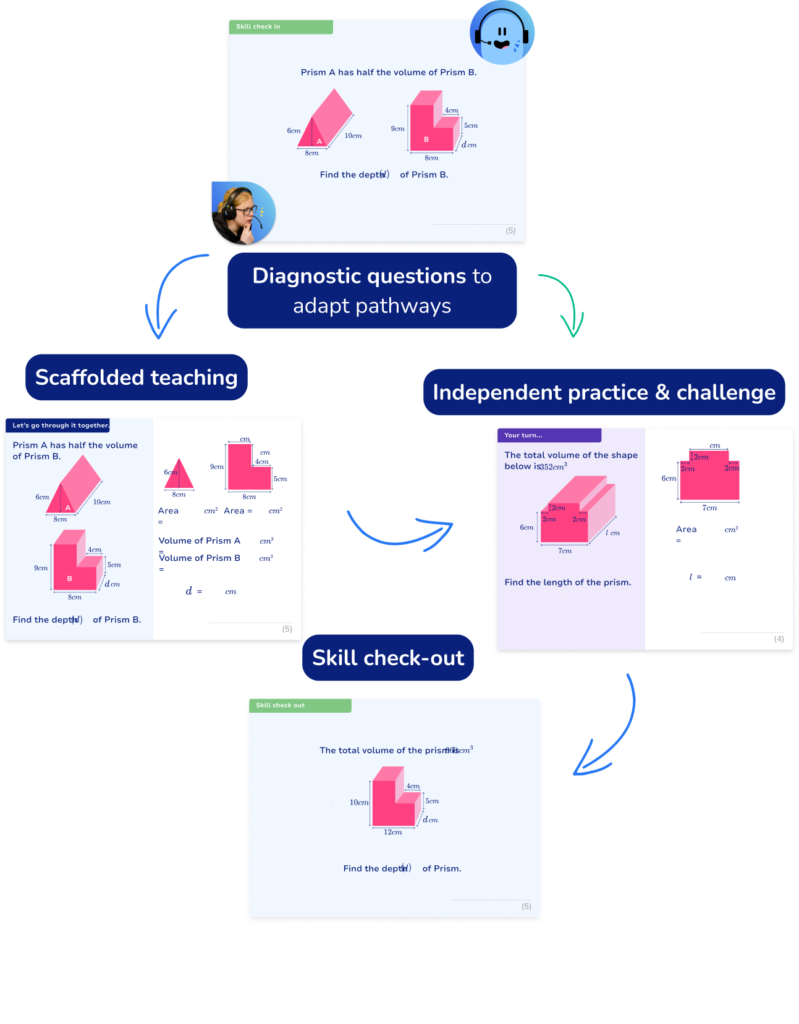
Skye is Third Space Learning’s spoken AI maths tutor. Students talk to it while working through a lesson on screen. Sessions are either scheduled and run in school with staff supervising, or launched on-demand as homework.
Lessons are built for grades 3-7 by former teachers and maths pedagogy specialists rather than generated on the spot. When a student stalls on a question, Skye works through hints and progressive support before it models a method, so the learner keeps doing the thinking. That is also where misconceptions surface, which a mark scheme on its own tends to hide.
For a Year 11 cohort, that changes who can access interventions; rather than choosing which three or four pupils get support, departments can put the whole grade 3 to 4 borderline group through it.

Free GCSE maths revision resources for schools
As part of the Third Space Learning offer to schools, the personalised online GCSE maths tutoring can be supplemented by hundreds of free GCSE maths revision resources from the secondary maths resources library including:
– GCSE maths past papers
– GCSE maths predicted papers
– GCSE maths worksheets
– GCSE maths questions
– GCSE maths topic list
Final note on exam dates for 2027
Exam dates rarely move once a board publishes a final timetable. They do get updated though, so check your centre exam timetable each term rather than trusting a date noted in September. The most helpful thing you can do now is print the tables above as a reminder for the department wall, then plan the teaching backwards from Friday 14 May.
GCSE exam dates 2027 FAQs
GCSE exams start on Monday 10 May 2027. Computer science and citizenship studies sit on that first exam day.
The last paper of the series is on Friday 18 June 2027, followed by the contingency day on Wednesday 23 June.
GCSE maths Paper 1, the non-calculator paper, is on Friday 14 May 2027 in the morning. Paper 2 follows on Thursday 27 May 2027 and Paper 3 on Monday 14 June 2027.
GCSE results day 2027 is Thursday 19 August 2027, the third Thursday in August. A level results day is Thursday 12 August 2027.
OCR runs the same series dates as every other board, from 10 May to 18 June 2027, because the main subjects sit on the JCQ common timetable. OCR publishes its own final exam timetable with session times and paper lengths.
Each exam board publishes a full timetable as a downloadable PDF on its own key dates page. Your exams officer holds the centre version, which lists only the papers your students are entered for.
Yes, for the main subjects. AQA, Pearson Edexcel, OCR and WJEC/Eduqas all follow the JCQ common timetable, so maths, English and science papers sit on the same dates. Paper lengths and session times can differ between specifications.
The November 2026 resit series runs from Tuesday 3 to Monday 9 November 2026. English language sits on 3 and 5 November, and maths sits on 4, 6 and 9 November, with results issued in January 2027.

DO YOU HAVE STUDENTS WHO NEED MORE SUPPORT IN MATHS?
Skye – our AI maths tutor built by teachers – gives students personalised one-to-one lessons that address learning gaps and build confidence.
Since 2013 we’ve taught over 2 million hours of maths lessons to more than 170,000 students to help them become fluent, able mathematicians.
Explore our AI maths tutoring or find out how a GCSE maths tutor could support students in your school.