

Getting Pupils To Engage With AI Tutors In Schools: What Actually Works

AI tutors in schools are AI tools used to give pupils structured, teacher-directed, curriculum-aligned support through targeted practice, feedback and consolidation. For school leaders, teachers, tutoring leads and other education decision-makers, the question is no longer just whether the technology works, but which kind of AI tutor pupils will actually use well enough to improve learning – especially if the goal is to narrow attainment gaps rather than widen them.
A few years ago, the main question about AI tutors in schools was whether the technology could actually work. Could it explain clearly? Could it respond to what a pupil said? Could it adapt when they got stuck, and hold something like a real tutoring conversation?
Those questions still matter, but for school leaders, they are no longer sufficient on their own. The more useful question is whether pupils will use an AI tutor well enough to learn anything from it.
Khanmigo, the AI assistant built into Khan Academy, is a useful cautionary case here. When Sal Khan, its founder, reflected on its early challenges, he did not describe a technology failure. The tool was available, well-intentioned and built around a serious educational ambition, and yet for many pupils it remained what he called a “non-event”. They simply did not use it, despite it being there whenever they wanted it.
The image he used to explain this is immediately recognisable. Imagine a human tutor who walks into a classroom, sits at the back, and waits for pupils to come over and ask for help. A handful of confident pupils will make their way across the room; the majority will carry on exactly as they were.
That, in essence, is the implementation problem, and it is why I would describe Khanmigo’s early struggle as an engagement problem rather than a technology one.

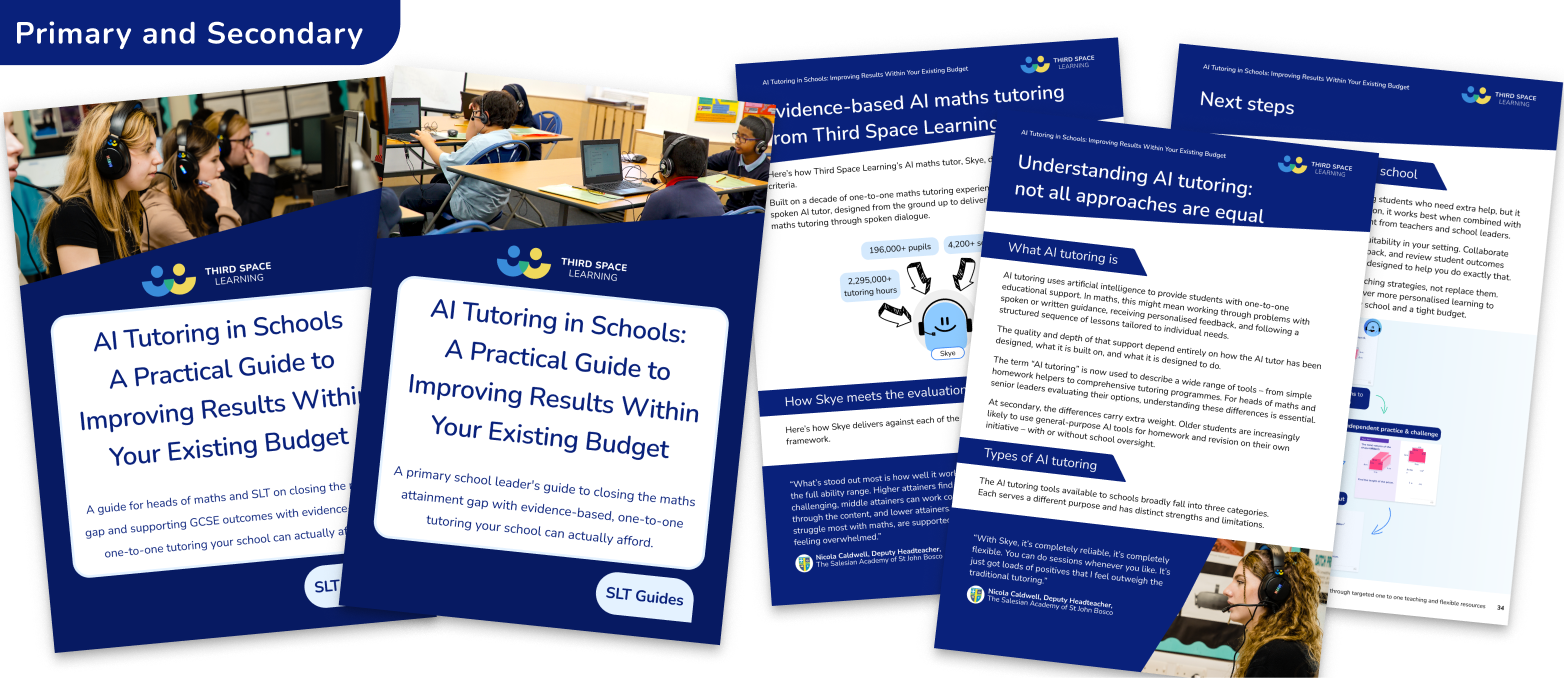
AI Tutoring in Schools: A Practical Guide to Improving Results Within Your Existing Budget
Use this clear step-by-step roadmap built on evidence-based impact to decide whether AI tutoring is right for your school. Discover the essential features and core qualities of effective AI tutoring, clear examples of how to integrate AI tutoring in your school setting and a list of questions to ask potential AI tutoring providers.
Download Free Now!Why so much focus on pupil engagement for AI tutoring?
That is also what this piece examines: why pupil engagement breaks down, how different types of AI tutors in schools create different implementation challenges, what design principles make structured use more likely, and what schools can learn from programmes such as Skye that have produced stronger uptake.
The promise of AI tutoring is that more pupils, including those from disadvantaged backgrounds, receive structured, responsive support when they need it. Access alone will not deliver that promise, because a pupil who never engages with the tool learns nothing from it, however clever the technology underneath.
And if AI tutors only work for pupils who are already confident, motivated and supported at home, they will not close the attainment gap. They may, as I have cautioned for some time, widen it.
The attainment gap for disadvantaged pupils that underpins all interventions
AI in education is as much an equity question as it is an edtech one.
In maths, the gap between disadvantaged pupils and their more affluent peers remains one of the most persistent challenges in English education. According to the Education Policy Institute, disadvantaged pupils are already around 10 months behind their peers by the end of primary school, and that gap widens to roughly 19 months by the time they sit their GCSEs. It is the main reason AI tutoring tools are being discussed so seriously.
There is a hopeful version of the story. AI tutors could make something closer to one-to-one tutoring available to more pupils, providing extra practice, timely feedback, real-time feedback and targeted consolidation at a scale that schools cannot achieve through traditional methods or private tutoring alone. Tutoring itself is well evidenced: the EEF rates both one-to-one and small-group tuition among the more reliable ways to add months of progress, though that benefit only materialises if pupils actually engage.
In a primary school, that might mean Year 6 pupils receiving targeted support on fractions, ratios, or arithmetic before SATs. In a secondary school, it might mean Year 7 pupils consolidating gaps from Key Stage 2 before they harden into long-term difficulties. For GCSE pupils, it might mean more regular practice on the topics, preventing secure understanding in maths and other core subjects.
But there is also a version of one-to-one AI tutoring that, as teachers, we are less comfortable admitting exists.
The pupils most likely to benefit from an open, optional AI platform may be the pupils already most likely to seek help. They may already have quiet places to work, strong routines, confident parents, better devices and paid access to premium AI tools.
Meanwhile, the pupils most affected by the disadvantage gap may be less likely to access the tool, persist with it, or use it in a way that improves student learning. As a school leader, you already know that the same tool will be implemented and used very differently depending on the context it sits in.
A school-based, teacher-directed AI tutor can be a structural response to a structural problem, in a way that a freely available chatbot relying on pupil motivation never will be.
The question throughout should be a simple one: does this model reach the pupils who need it most, or only those already likely to opt in?
Be clear what kind of AI tutor you mean
The phrase “AI tutor” covers too many different things.
It can mean an open chatbot, such as ChatGPT or Gemini, used by a pupil at home. It can mean one of the growing number of AI tutoring tools marketed by edtech companies. Or it can mean a structured, school-directed programme with curriculum-aligned lessons, assessment and adult oversight.
Each of these is a different proposition, and they behave very differently once they are in front of pupils.
A chatbot answers; a tutor teaches
A chatbot that answers a pupil’s questions is doing something useful, but answering questions is a small part of what a tutor actually does.
A tutor diagnoses, prompts, checks, redirects, withholds answers when necessary, and keeps the pupil thinking. Good tutoring supports critical thinking; it does not simply produce answers on the pupil’s behalf. There should be no cognitive offloading or outsourcing.
In schools, tutoring also sits inside a wider system: the national curriculum, assessment, safeguarding, behaviour routines, teacher judgement and school priorities.
So when school leaders evaluate AI tutoring tools, I would suggest the first question is a design one: what is the educational design here, and under what conditions does it need to work? How advanced the artificial intelligence is can come second.

READ MORE: Intelligent tutoring systems
What the tools that work have in common: a push and a pull
I have been writing about AI tutoring tools in schools for a while now, and watching which ones actually earn their place. The tools that work are rarely the cleverest models. They tend to get two things right at the same time.
The first is a push from the school. An adult decides the session matters, schedules it, gives it a purpose and checks what happened afterwards.
The second is a pull from the programme itself. The design is good enough for an AI-powered tutor to draw a pupil in, keep them thinking, and show them they are getting somewhere.
Access on its own is neither a push nor a pull, and that is the gap Khanmigo fell into.
What follows are the ingredients that make up each one.
The push: what the school and the tutoring lead must drive
This is the half the school controls – everything the tutoring lead and teachers put in place around the tool, before and after each session.
Do not rely on pupils asking for help
The clearest lesson from Khanmigo’s early challenge is that schools should not design AI tutoring around voluntary help-seeking, where students are left to initiate support for themselves.
Many pupils who need help the most are the least likely to ask for it. Some lack confidence or suffer from maths anxiety. Some do not know what they do not know. Some avoid tasks that reveal difficulty, and some have learned how to look busy while doing very little thinking at all.
Anyone who has taught a class will recognise these pupils, because this is a normal classroom context problem that existed long before AI technology arrived. Putting the support behind a screen does not automatically solve it.
A pupil who avoids asking a teacher for help will not necessarily become self-regulating because the helper is digital. In some cases, the screen may make avoidance easier, because students can guess, click through, stay quiet, test the system, or give just enough of a response to move on.
This matters most for pupils receiving a learning intervention, particularly those from disadvantaged backgrounds. If the model depends on pupils recognising their own gaps, choosing to log in, asking precise questions and persisting when they are stuck, it is likely to work best for pupils who already have many of the habits and supports we are trying to build.
- The weaker model: “Here is an AI tutor. Use it when you need it.”
- The stronger model: “Your teacher has identified this session because it connects to something important you need to secure. The session is scheduled. The goal is clear. An adult will know whether you completed it and whether it helped.”
Structure is what makes student engagement more likely, and it costs nothing to build in from the start.
Some pupils may find AI tutoring lower-stakes
Some quiet or anxious pupils may engage more readily with an AI tutor than with an adult or peer, and from the pupil’s point of view, this makes perfect sense.
In a classroom, asking for help can feel public. Getting something wrong can feel embarrassing, and explaining your thinking in front of others can feel risky.
For some pupils, speaking to an AI tutor may feel lower-stakes. They can try, pause, correct themselves and ask again without feeling watched in the same way.
To be clear, this is about confidence, context and participation, and has nothing to do with the debunked idea of “learning styles”. Different pupils respond differently to different classroom interactions, and some are more willing to attempt difficult concepts when the interaction feels less public.
That has a practical implication for how schools select pupils. Some tools can also lower participation barriers through real-time translation and assistive technology for pupils with additional needs. Rather than selecting only from attainment data, schools should also consider pupils who under-participate in class, rarely ask questions, or know more than they are willing to say publicly. For some of those pupils, AI tutoring may provide a quieter route into mathematical talk.
I would not overstate this, though. AI tutoring does not replace relationships, teacher encouragement or classroom belonging, but it can offer another route into participation for pupils who find the classroom a difficult place to speak up, and that is worth having.
READ MORE: Why AI tutors will never replace tutors
Connect tutoring to real learning goals and the national curriculum
Pupils are more likely to engage when the tutoring connects to something that matters to them.
“Use this AI tutor” is weak. “This session will help you with equivalent fractions because that is what you struggled with in Friday’s lesson” is stronger, and “this is part of your SATs revision plan” is stronger still.
The goal might be SATs revision, GCSE revision, a current unit, or a specific gap identified by the teacher. The important thing is that the tutoring is not floating separately from the rest of school, and that the session gives students a clear reason for doing it now.
Find out more about Third Space Learning’s tutoring programmes:
This matters for disadvantaged pupils because intervention time is precious. If a pupil is missing assembly, afternoon curriculum time, form time, or part of another intervention, the session needs a clear purpose. It should connect to what the pupil is learning, what they need next, and what the teacher will do afterwards.
It also matters for teachers. If AI tutoring is linked to curriculum priorities, teachers are more likely to value it. If it becomes another platform running in the background, it will be easier to ignore, and far less likely to support stronger student performance.
Routines and room setup matter
Schools need to think about the ordinary practical details. Where will pupils sit? How noisy will the room be? Who will supervise? What should pupils do if the tutor misunderstands them? How should they speak? What counts as good participation? What happens if they test the system?
These details can look minor until they undermine the intervention.
Imagine a quiet Year 6 pupil in a busy intervention room. The room is too noisy, the pupil speaks softly, and the AI tutor repeatedly misunderstands them. The pupil becomes frustrated, gives shorter answers, and eventually stops trying to explain. From a distance, that might look like poor motivation. In reality, it is a poor setup, and it was avoidable.
How students are onboarded really matters.
A five-minute launch routine
A five-minute launch routine before the first session can make a difference. Pupils need to know how to speak, how to listen, what to do when they are stuck, and why explaining their thinking matters. They also need to know that an adult will notice the quality of their participation, not just completion.
Many tutoring tools fail because the routines around them are weak, even when the idea behind them is perfectly sound, and AI tutoring is no different in this respect.
Pupils need to be taught how to use it as a learning activity, not just shown where to log in. Those example classroom interactions matter because pupils need to know what good participation sounds like. Strong systems are built with educators using those examples and clear scoring criteria aligned to the curriculum, so expectations are clear from the start.
Teach pupils how to get the most out of the intervention
Schools should assume pupils need to be taught how to engage with AI tutoring. The goal is to think, explain, respond to feedback and improve, and pupils will not arrive knowing that unless someone tells them.
Schools should also anticipate predictable behaviour.
- Some pupils will say as little as possible.
- Some will guess repeatedly.
- Some will test boundaries.
- Some will try inappropriate language.
- Some will look as though they are participating while doing little thinking.
Every one of those behaviours will be familiar from ordinary lessons, and each is a teaching opportunity in exactly the same way. The answer is the same as elsewhere: clear routines, adult supervision, high expectations and follow-up when pupils do not engage properly.
A simple first-session routine might look like this. The teacher explains the purpose of the tutoring, links it to a real maths goal, models one strong response and one weak response, then tells pupils what adults will check afterwards: completion, effort, mathematical explanation and progress from check-in to check-out.
Those example classroom interactions matter because pupils need to know what good participation sounds like, and that depends on good implementation from the adults.
Keep an adult in the loop
AI tutoring should not mean removing the teacher.
Teachers still need to decide which pupils receive support, what the learning goals are, how sessions connect to face-to-face teaching, and what happens next. They need to know whether pupils are engaging properly, whether the content is appropriate, and whether the tutoring is improving understanding.
Without adult oversight, AI tutoring can produce a false sense of progress. A pupil may complete sessions without learning securely. Another may guess repeatedly. Another may need a different explanation, more concrete examples, visual explanations, or direct adult intervention.
Teacher-directed tutoring is one of the conditions that makes AI tutoring more likely to work.
READ MORE: Why AI tutoring needs a human in the loop
The AI can deliver structured student interactions, targeted feedback and immediate prompts, while the teacher makes sense of what is happening and connects it to the wider curriculum.
The teacher is not being replaced here. They are delegating the part of the labour an AI tutor can handle, and the expert remains in the loop at all times.
Bring teachers with you
Teacher engagement matters as much as pupil engagement, because if staff hear “AI tutor” and think “replacement teacher”, implementation will be fragile from the beginning.
School and college leaders need to be clear with their staff. AI tutoring is not a substitute for high quality teaching, subject knowledge or adult relationships. It is a way to provide additional structured practice and feedback where schools currently struggle to provide enough, which makes it an argument about teacher workload and equity.
Teachers and leaders overseeing rollout need to know which pupils are using the tutor, why those pupils have been selected, what content they are working on, how it links to classroom learning, what information teachers will receive, and what they should do when pupils are not engaging or not improving.
Teachers should also have a stake in what is being taught. They should know why a topic matters for a particular child, and how it is being taught, whether the methods and approach match the ones used in school.
If teachers cannot see the connection between the tutoring and their teaching, they are unlikely to value it.
What a class teacher needs to see
A class teacher does not need another dashboard for the sake of it. They need usable information. Which pupils attended? Which pupils engaged properly? Which questions did they struggle with? Which concept needs reteaching? Which pupils are ready to move on?
What a maths or intervention lead needs to see
A maths lead, intervention lead or college leaders need a wider view.
- Is support reaching the right pupils across different educational settings within the school?
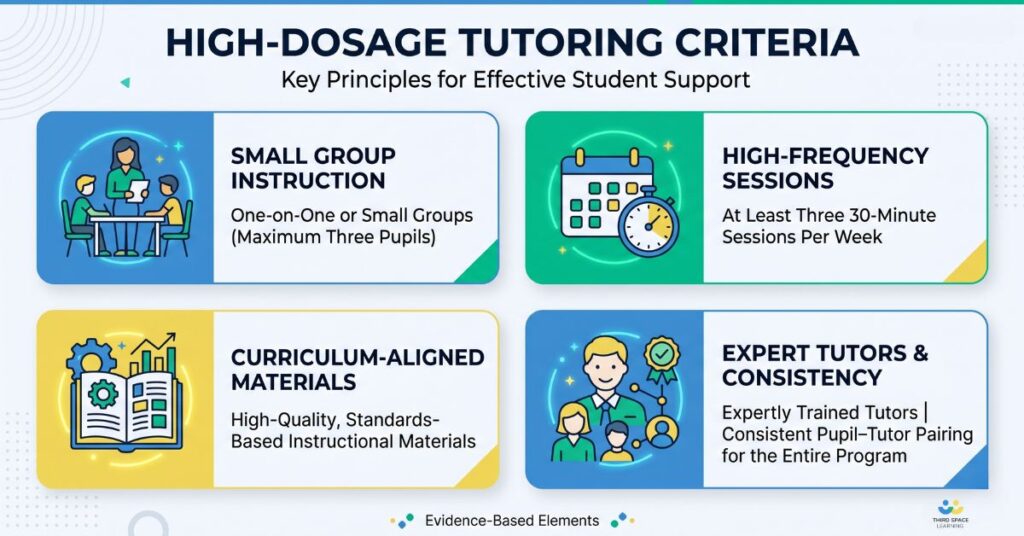
- Are pupil premium pupils receiving enough sessions, especially given what we know about the importance of high-dosage tutoring as well as high-impact tutoring?
- Are the pupils with the greatest gaps attending consistently?
- Are there classes or year groups where engagement is weaker?
- Is the programme supporting existing curriculum priorities?
Give teachers a real role here: identifying gaps, setting goals, reviewing progress and deciding what happens next, rather than sitting as passive monitors of a product.
The pull: what a well-designed programme provides
This is the half that depends on the AI tutoring programme’s design – whether it is built to draw pupils in and keep them thinking, or simply left open for them to use.
AI tutoring tools need educational guardrails
The best AI tutoring tools are not answer machines. An answer machine gives pupils the next line, whereas a tutor decides what the pupil needs to think about next.
In maths, pupils often need a hint, a worked example, a prompt to explain their reasoning, or a carefully chosen follow-up question. If the tool gives the answer too quickly, it can remove the very thinking the pupil needs to do.
This is why effective intelligent tutoring systems need educational guardrails. The AI should not be the curriculum designer. It should work inside a curriculum-aligned sequence built by people who understand the subject, the national curriculum and the common errors and misconceptions pupils are likely to bring with them.
A weak AI tutor can accept vague reasoning. It can generate a plausible but unhelpful explanation, choose examples that do not expose the mathematical structure, or move pupils on before they have understood the key idea.
Good tutoring has a shape. It models, guides, checks and gradually releases responsibility, helping pupils build conceptual understanding and deeper understanding without hiding the difficulty of the content.
Some AI tutoring tools are open-ended chat interfaces based on large language models. Other AI tutoring tools are structured programmes where the AI delivers educational resources designed by teachers and subject experts. Schools need to know which one they are buying.
READ MORE: AI tutoring
Make progress visible quickly
Pupils are more likely to engage when they can see that the session is helping them.
That does not mean making the work easy. It means designing the learning process so pupils experience genuine movement: from uncertainty to partial understanding, and from partial understanding to success.
Motivation often follows success rather than preceding it, which is particularly important for pupils who have experienced repeated failure in maths. For some pupils, intervention can feel like another reminder that they are behind. A well-designed tutoring session should reverse that experience quickly, so that pupils feel, “I can do more now than I could at the start.”
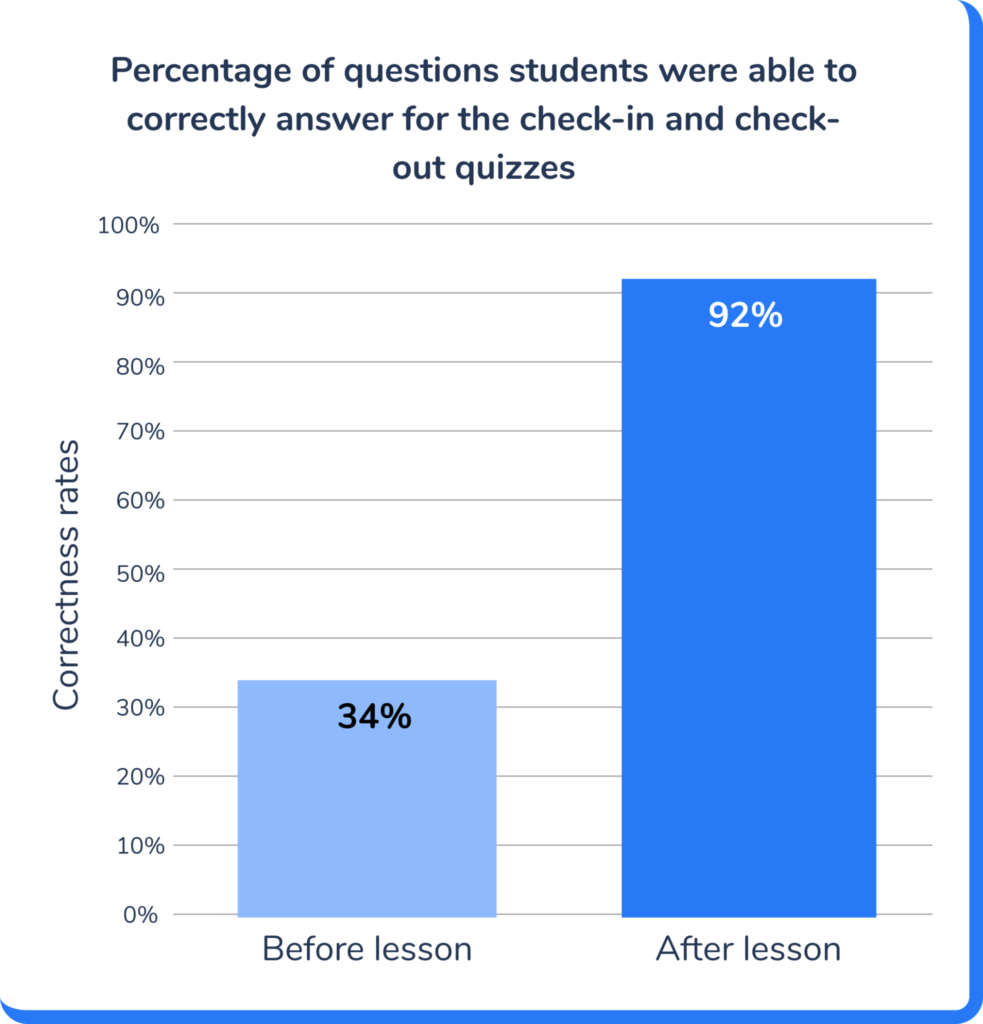
That is why diagnostic skill check-ins, progress tracking and skill check-outs matter. They give pupils and teachers a visible measure of progress within the session. The pupil can see improvement, and the teacher can see whether the session had the intended effect.
Pupils are more likely to persist when the session gives them evidence of improvement.
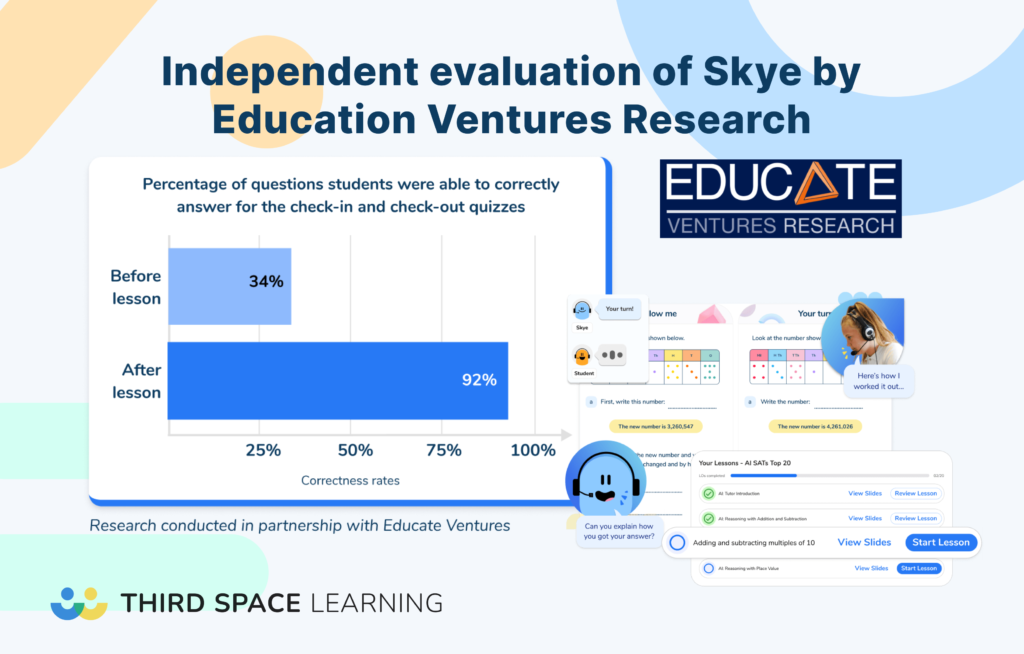
In an independent analysis of 9,320 Skye sessions by Educate Ventures Research, pupils improved within the session from 34% correct on diagnostic check-in questions to 92% on check-out questions. In sessions that included confidence prompts, 63.8% of pupils ended more confident than they began.
Be cautious about personalisation and gamification
There is an appealing argument that AI tutors can offer personalised support and round-the-clock help, which is especially useful for remote learners or pupils stuck on homework late at night, by adapting every question to a pupil’s interests.
A football fan gets football questions. A gamer gets gaming questions. A pupil who likes baking gets baking questions.
Used sparingly, that may reduce friction at the start of a task, particularly for pupils who are reluctant to begin. But as a model for learning, I am cautious.
The risk is that we confuse interest with understanding. Pupils do not only need to solve problems in contexts they already like; they need to recognise the underlying mathematics across unfamiliar contexts, which is why from KS2 onwards the curriculum is built around word problems and problem solving.
Free maths problem solving resources
Develop problem solving skills across your school with these ready-to-use resources:
 Free downloadThe ultimate guide to maths problem solving techniques
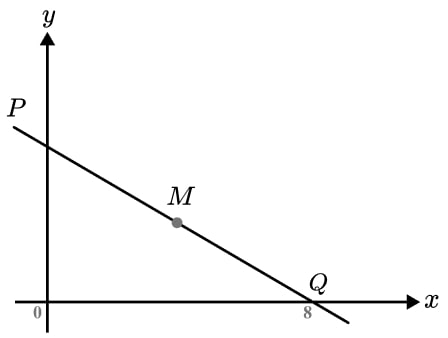 SecondaryProblem solving maths questions
The same caution applies to gamification. Points, badges and streaks can enhance engagement, but activity is not the same as learning, and a pupil can be very engaged in beating the system while doing little mathematical thinking.
The form of engagement worth designing for is the feeling of becoming more successful at something that matters. Points and badges are decoration around that.
What Skye shows about the direction of travel for effective AI tutoring
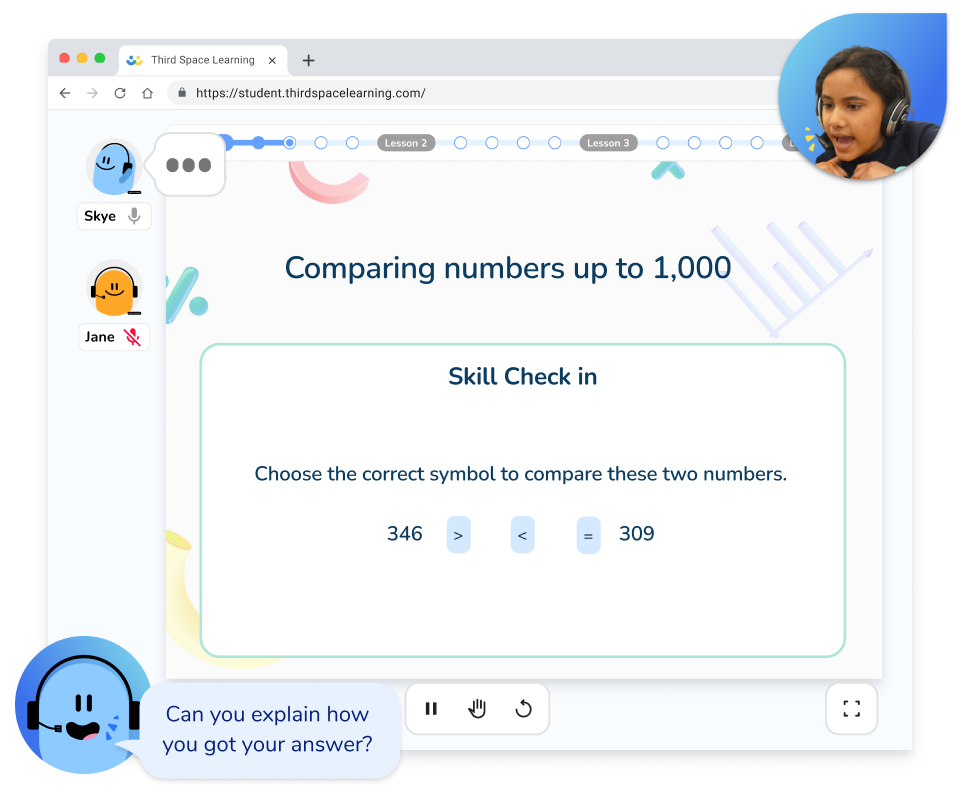
Skye, Third Space Learning’s AI maths tutor, is a useful example of what we have discussed in this article about engagement with AI tutors, because it shows what happens when the AI is placed inside an explicitly designed tutoring structure.
Skye sessions are school-scheduled and teacher-directed, so pupils do not self-access without teacher intent. Lessons follow an “I do, we do, you do” structure created by qualified maths teachers, which is better suited to complex subjects because it breaks learning into manageable steps.
Skye does not generate its own curriculum content; it delivers curriculum-aligned lessons built by people with subject expertise. Each lesson begins with a diagnostic skill check-in and ends with a skill check-out.
That addresses several of the risks discussed above. It does not rely on pupils voluntarily seeking help. It does not make the AI the curriculum designer. It builds in assessment, makes progress visible, and keeps the school in control of who receives support and why.
That is a different model from giving pupils access to a chatbot and hoping the right pupils use it well.
To see exactly how AI tutoring with Skye works, you can watch AI tutor Skye in action.
Year 5 AI tutoring session with Skye
 Press play to see and hear this session
Six questions that separate AI access from AI tutoring
Before adopting any AI tutoring tool, school leaders should ask:
- Does the tool wait for pupils to seek help, or is it scheduled by the school?
- Does it generate content freely or deliver a designed curriculum?
- Does it use worked examples, scaffolding, immediate feedback and checks for understanding?
- Does it show learning progress, or only usage data?
- Does it support disadvantaged pupils, or mainly the pupils most likely to opt in?
- How will adults monitor engagement, progress, safeguarding and whether it engages students in explanation rather than shortcutting thinking?
The questions hold wherever the tool is used – in school, at home, or across other educational settings – and they keep the focus on the quality of the learning, and the teacher behind it, rather than the novelty of AI-generated content or access to AI systems.
Key takeaways
- AI tutors may become part of the answer to the attainment gap, which is why the DfE’s AI tutoring pilot is running – the government expects it to reach up to 450,000 disadvantaged pupils in Years 9 and 10.
- Adoption still depends on limits around sensitive student data, including risks of surveillance or data misuse, and on the fact that AI tutors may lack the emotional intelligence of human support.
- We cannot assume AI tutors are the answer until we interrogate the type of AI tutoring being provided to schools.
- The pupils who most need support are not always the pupils who will seek it out, and the families who can pay for premium access are not the families most affected by the attainment gap. The Sutton Trust finds that in the exam years, 32% of the wealthiest families pay for private tuition, against 13% of the poorest.
- The tools that look best in a demonstration are not always the tools that work best in schools.
AI tutoring in schools is most likely to improve learning outcomes when it is structured, teacher-directed, curriculum-aligned, consolidation-focused and available to the pupils who need it most, so schools are choosing a safer, more effective learning experience rather than just more access.

DO YOU HAVE STUDENTS WHO NEED MORE SUPPORT IN MATHS?
Skye – our AI maths tutor built by teachers – gives students personalised one-to-one lessons that address learning gaps and build confidence.
Since 2013 we’ve taught over 2 million hours of maths lessons to more than 170,000 students to help them become fluent, able mathematicians.
Explore our AI maths tutoring or find out about the AI tutor for your school.