


Form Time Ideas: 11 No-Prep Tutor Time Activities for Secondary Students

Form time is short, unpredictable and often squeezed between morning admin and the rest of the school day. One week you have 25 minutes to play with, the next you have 10 after a fire drill, and you are still expected to take the register, read the notices and check in with 30 teenagers. Whether you have 10, 20 or 30 minutes to fill, the ideas in this article are designed to scale.
That small slice of the school day does a lot of heavy lifting, though. Form time is where your tutor group feels a sense of belonging, where pastoral issues surface first, and where you sit as the bridge between home and school. Research from UCL suggests that the form tutor relationship is one of the most consistent sources of support students experience across secondary school.
This article shares 11 practical form time ideas for KS3 and KS4, grouped by type, plus a featured case study showing how one secondary school is using form time as an academic intervention slot.
Key takeaways
- Form time is a short, dedicated period of 15 to 30 minutes when students meet with their form tutor for pastoral care, registration and community building
- Effective form time activities include numeracy and literacy starters, news and debate discussions, study skills spotlights, student-led quizzes, wellbeing check-ins, reading circles and career spotlights
- Rotate activities across the week (wellbeing on Monday, numeracy on Tuesday, current affairs on Wednesday, literacy on Thursday, a quiz on Friday) so your form group recognises the routine
- A growing number of secondary schools are using form time as a one-to-one AI maths tutoring slot, provided pastoral time is protected elsewhere in the week
- At Bournville School, around 80% of Year 11 students can correctly answer a question on a new maths skill by the end of a 30-minute form time session, an early in-session signal that the slot is working
What is form time?
Form time is a short daily period, usually 15 to 30 minutes, when a tutor group meets its form tutor for registration, notices and pastoral check-ins. Most secondary schools run it first thing in the morning, though some place it after break or at the end of the school day.
How long is form time in secondary school?
Form time in most UK secondary schools runs for 15 to 30 minutes a day. Once registration is done, the workable window is usually closer to 10 or 15 minutes, which is why the best tutor time activities are built around a single question rather than a full lesson.
Form time, tutor time or registration – what is the difference?
These terms describe the same slot, and schools use them interchangeably. Registration is the statutory part: the legal record of attendance taken twice a day. Form time and tutor time describe everything around it.
Vertical tutoring schools, where one tutor group mixes students from Year 7 to Year 11, still work to the same structure.
What is a form tutor responsible for?
Tutors are a student’s first point of contact in school. That covers attendance and punctuality, equipment checks, passing on notices, noticing when someone is struggling, and being the person who talks to home.
Most schools also give tutors a role in personal development, which is where a planned range of tutor time activities earns its place.
If you’ve just taken on your first form group as an ECT, these practical tips will help you navigate form time.


Maths Intervention Packs Grades 3 to 7
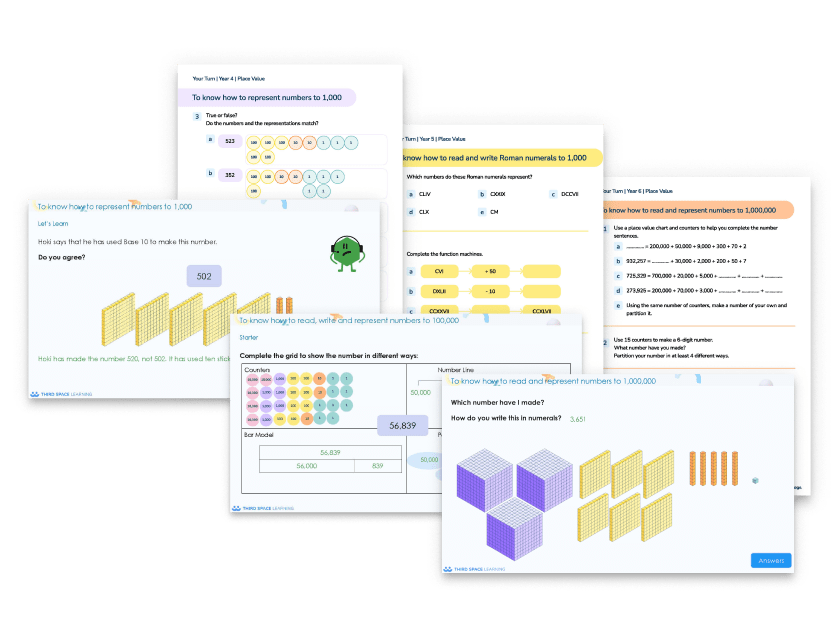
Free revision lessons on selected topics for GCSE grades 3 to 7. Each lesson contains teaching notes, answers and slides to work through with your students, the perfect form time activity.
Download Free Now!11 form time ideas and activities for your secondary students
Quick 5-minute form time ideas
These work when registration runs long or an assembly overruns. Tutors who write the prompt on the board before students arrive find the activity runs itself.
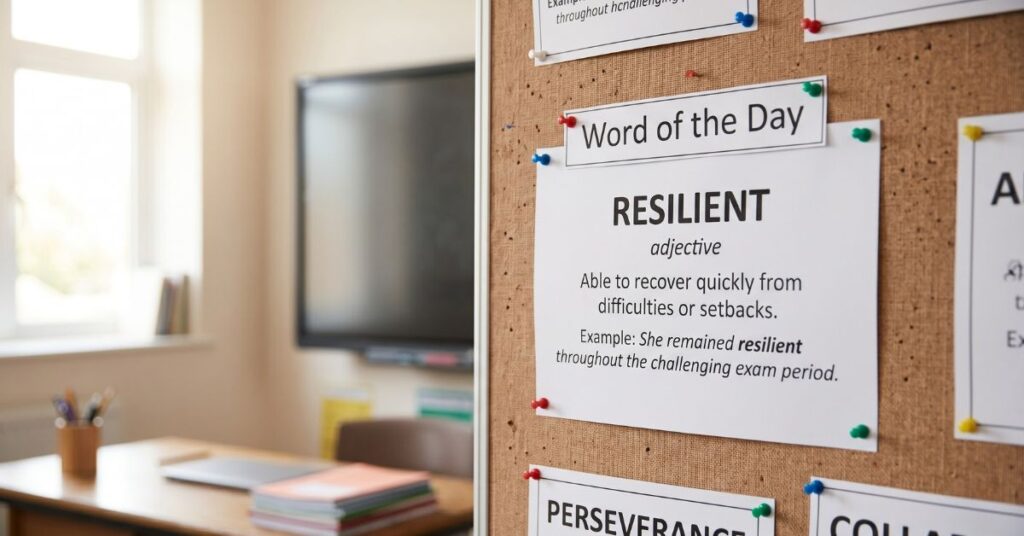
1. Word of the day
Put an unfamiliar word on the board with three possible definitions and ask students to guess which is right. Reveal the answer, then ask two of them to use it in a sentence.
Why it works: vocabulary sits behind reading in every subject, and it costs nothing but board space.
How to run it: KS3 students enjoy guessing, so keep the wrong answers close together. For KS4, choose exam command language – evaluate, justify, derive – so one example does double duty.
2. Quick-fire numeracy challenges
Put five mental maths questions on the board and give students three minutes. Read out the answers and ask for a show of hands on how many they got.
Why it works: number fluency fades fast without practice, and a short daily set keeps it alive between maths lessons, which builds confidence over time.
How to run it: for KS3, mix times tables, percentages and fractions such as 15% of 80, or \frac{1}{2} of 24. For KS4, use non-calculator questions. Students can create the next day’s set as a reward, which they take seriously.

3. Mindfulness and wellbeing check-ins
Ask students to rate their week out of ten on a scrap of paper, or to write one thing they are looking forward to. Collect them in or leave them, whichever suits the group.
Why it works: it gives tutors a fast read on the room and a private route for a student who would never raise their hand. It is often the first sign that something has changed at home.
How to run it: keep it short and never make anyone talk about it. With KS4 in the spring term, swap the rating for a question about workload, which surfaces exam pressure early.
Form time games and quizzes
Games are the most requested tutor time activities and the easiest to get wrong. A game that ends cleanly is worth more than a clever one, so nobody is still arguing when the bell goes. Both of these build teamwork, and both are fun without having to be a reward.
4. Student-led form quizzes
Hand a pair of students responsibility for a five-question round each Friday. They create it, present it and mark it themselves. You keep a running scoreboard on the wall display.
Why it works: the competition carries it, and the students creating the quiz do more thinking than the ones answering it. Quizzes are also the easiest activity to hand over to a class.
How to run it: set a general knowledge round for KS3 and rotate the pairs so everyone takes a turn. For KS4, ask each pair to build a round on a subject they are revising, which turns a quiz into retrieval practice without anyone noticing.
5. Riddles and brainteasers
Put one riddle on the board, ask students to discuss it in threes, then have one group explain its reasoning.
Why it works: working through the reasoning does more good than arriving at the solution. Asking a group to explain a wrong route is more useful than hearing the right one, and the discussion is where teamwork happens.
How to run it: KS3 groups respond well to a running score. For KS4, choose puzzles with a mathematical structure and let students explore the method, because the way they argue it through transfers into their exam work.
10-minute tutor time activities
Ten minutes is enough for something with a bit of shape, as long as you are not also handing out letters. Each of these supports work students are already doing in lessons.
6. Goal setting and reflection
On Monday, students write one target for the week on a sticky note. On Friday, they find it and say whether they hit it.
Why it works: the target belongs to them rather than to you, and it gives the week a shape. The EEF rates self-regulation strategies highly for the cost involved.
How to run it: keep KS3 targets concrete – equipment, homework on time, one contribution in a lesson. For KS4, tie the target to a revision plan so the reflection has something to measure against.
7. Study skills spotlight
Spend ten minutes on one technique. Cover retrieval practice one week, spacing in the next session and dual coding after that. Model it on a real topic rather than talking about it in the abstract.
Why it works: students are told constantly to revise and rarely shown how. Tutors are well placed to fill that gap because they see the same students every day.
How to run it: for KS3, use a topic from a subject you teach so you can model it properly. For KS4, run it on content from recent lessons so they practise the technique on material they already need to know.
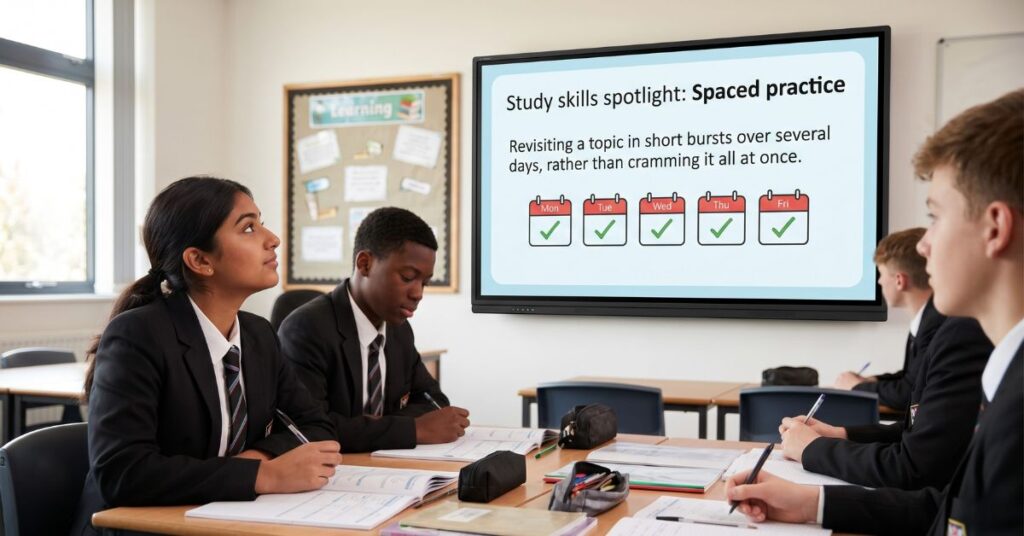
8. Career spotlight
Take one job and give it ten minutes. Cover what the person does, what they earn and what route got them there. Students ask questions at the end.
Why it works: careers guidance is patchy, and hearing about a job nobody has heard of does more than a careers fair. It costs nothing, and it works better than most careers resources.
How to run it: for KS3, explore jobs connected to the subjects they are choosing between at options. For KS4, invite students to present a job someone in their family does – working life described by someone they trust is the version they remember.
20-minute form time activities
Save these for the long slot, and protect it. If your school runs a 25 or 30 minute period once a week, this is what tutors should be using it for.
9. News and current affairs debate
Take one story from BBC Newsround or The Day, give the class two minutes to read it, then split the room and debate it.
Why it works: students form a view about the world faster when they have to defend it in front of people they know. A debate gives the quieter half of the room a structure to speak inside, which they rarely get in a lesson.
How to run it: for KS3, pick a debate with a clear two-sided question – phones in school, uniform, the voting age. For KS4, require a point, evidence and a counter-argument, and rotate who speaks so the same four students are not debating every time.

10. Reading circles
Give six students one short text, ask them to read aloud in turns, then discuss it as a group. Everyone else reads independently.
Why it works: reading aloud in a small group is one of the few things that reliably helps children who have stopped reading and not told anyone. It is also a visible sign of whether children are coping with the reading load in their lessons.
How to run it: short stories and non-fiction extracts work better than novels for KS3. For KS4, use articles connected to their subjects. Rotate the circle so every student gets a turn across the half term.

11. GCSE past paper questions
Put one question on the board, ask students to work through it, and walk the classroom while they do. Mark it together against the mark scheme.
Why it works: the marks are usually lost on presentation and method, not on the maths, and tutors spot that pattern faster than a subject teacher seeing them twice a week. Getting a full mark scheme answer builds confidence quickly, and the support takes only ten minutes.
How to run it: for KS3, use foundation questions on topics already covered. For KS4, work through past GCSE questions and display the mark scheme alongside the answers so students can see exactly where the marks sit.

No-prep form time ideas for covering another tutor group
Covering someone else’s students is the hardest version of this, because you do not know the group and they know it. Four ideas are perfect for this, and none of them needs resources.
- Ask each student for one thing they are good at that you would not guess.
- Run a 60-second challenge – name a country for every letter of the alphabet, or list what you can buy in a corner shop beginning with B.
- Play a jump-up game where students stand if a statement is true of them, which surfaces more common ground in two minutes than a term of small talk.
- Open with a joke and a would you rather question, and take a class vote on both.
None need a website or a printer, and each gives teachers something to chat about with a group they may well teach again.
A weekly form time rota you can copy
A bank of tutor time ideas is less useful than a routine. Once students know what Tuesday is, the activity starts without you asking twice, and tutors stop spending Sunday evening planning from scratch. Create the rota once and it will hold for the rest of the term.
| Day | Focus | Activity | Time |
|---|---|---|---|
| Monday | The week ahead | Registration, notices, weekly target on a sticky note | 10 min |
| Tuesday | Numeracy | Quick-fire numeracy set | 5 min |
| Wednesday | Reading | Reading circles | 20 min |
| Thursday | The wider world | Debate or career spotlight | 15 min |
| Friday | Quiz and reflection | Student-led quiz, review the target | 15 min |
Share the rota across your year team so a colleague covering your students knows what should be happening, and so new tutors can create a term of activities from something rather than nothing. It is one of the more useful things a head of year can hand out in September.
You can listen to a few of the best teaching podcasts or read some of the best teaching blogs for further ideas. Or, use our free CPD guide for more ideas on stretching a small budget for form time.
Adapting these ideas for KS3 and KS4
The same activity carries a different purpose at each end of the school. For KS3, tutor time is about building a group that works together, which means settled routines, a sense of community and the habit of turning up ready.
Games, quizzes and discussion do that, and the creativity they allow is fun without being a waste of the slot.
For KS4, the pressure changes. Students are managing revision, controlled assessment and their own workload, and they will tell you they have no time. Activities that connect to that – study skills, exam questions, a target tied to a revision plan – feel more meaningful than a general knowledge round.
Unlike primary school, where the class teacher sees everything, secondary tutors often hold the only complete picture of how a student is coping. Keeping that picture up to date depends on a range of small observations across a term, and no form will capture all of it.

Using form time for one-to-one AI tutoring at Bournville School
For most secondary schools, the challenge with academic intervention is finding a slot that doesn’t cost something else. Pulling students out of lessons trades subject time. Before-school sessions depend on attendance. After-school support competes with buses, part-time jobs and fatigue.
Form time is increasingly being used as an alternative, and a small number of schools now run one-to-one AI tutoring during the tutor slot. Before looking at how it works in practice, there’s a trade-off to name honestly. Form time is also where tutor–student relationships are built, where pastoral issues surface first, and where tutors get a daily read on how their group is doing. Using it for academic intervention means keeping pastoral time protected elsewhere in the week.
At Bournville, for example, the fifth morning is protected for the year group’s weekly assembly, which no student gets pulled out of. Schools that make form-time intervention work tend to think those trade-offs through before they start, with form tutors bought in and a clear plan for where pastoral time will live.
Here’s how Chrissy, Head of Maths and Associate Assistant Principal at Bournville School, describes her Year 11 programme in her own words. Bournville is one of four secondary schools in the Fairfax Academy Trust, three of which have over 65% Pupil Premium. Closing the attainment gap for the Year 11 cohort is a top priority.
Why I chose form time
I needed an intervention slot that didn’t pull students out of subject lessons or rely on voluntary attendance. Form time gave me 30 minutes, four mornings a week, with 15 Year 11 students already in one room. Five of them were working towards a grade 4, five were pushing for a grade 5 and five needed a push to a grade 7, so I could target all three groups in parallel.
How the set-up works
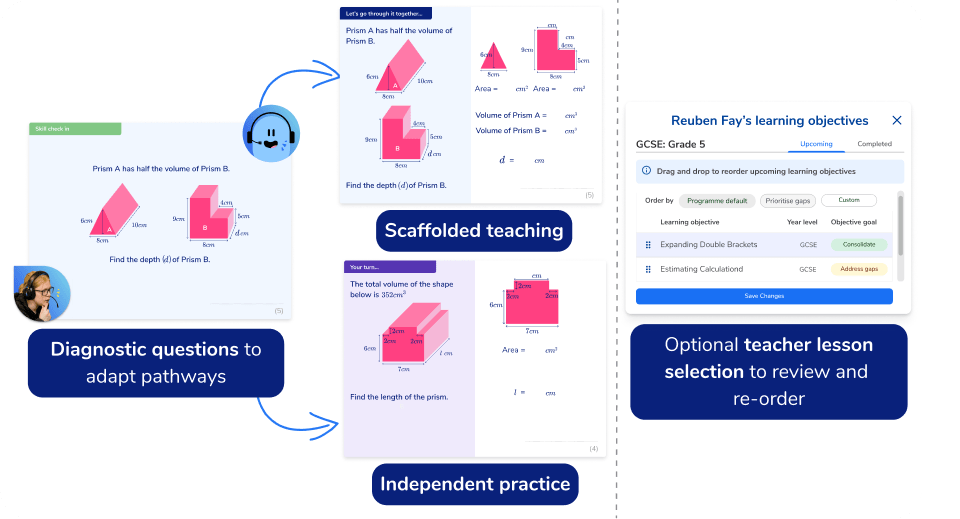
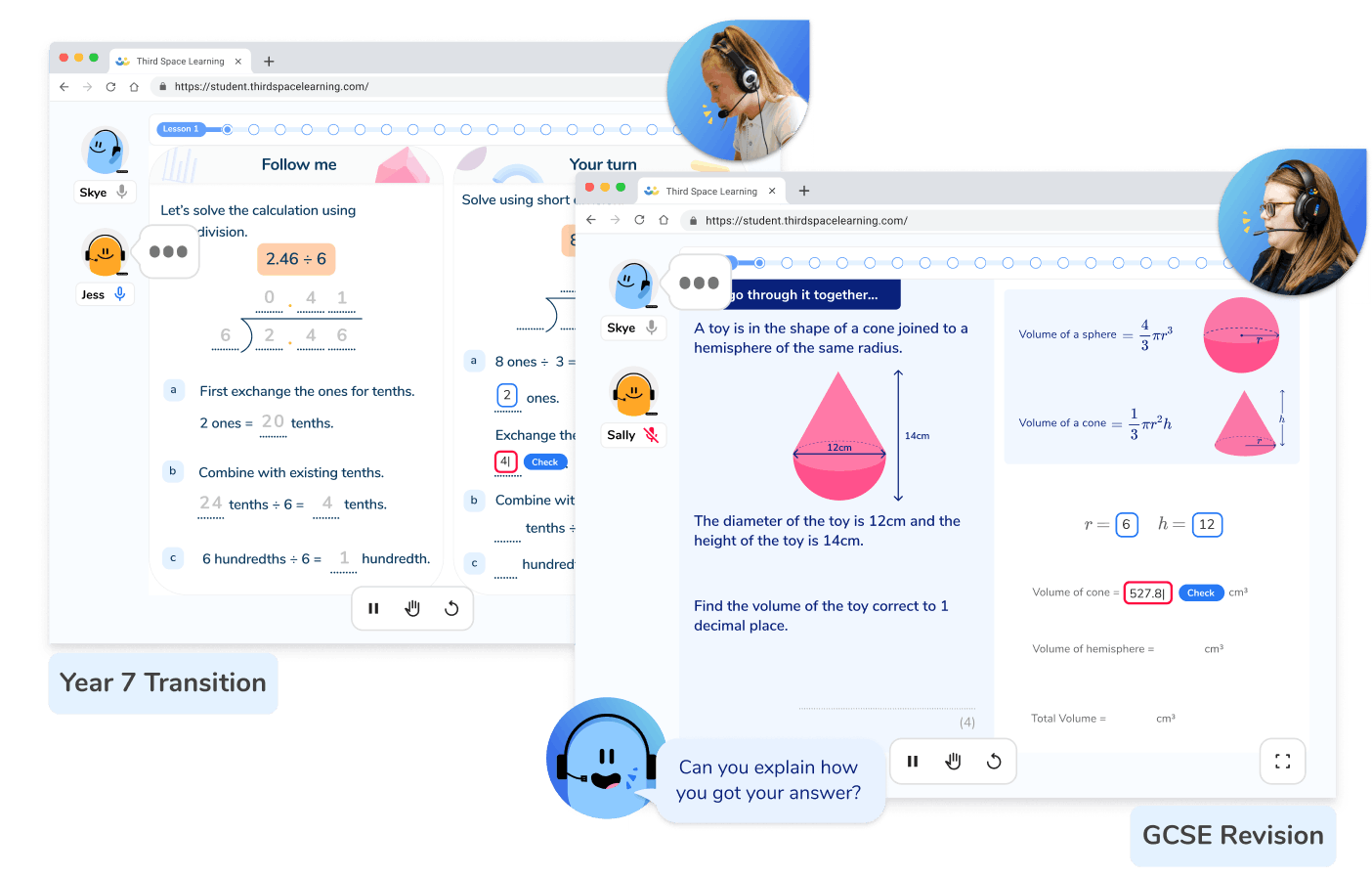
The students come in every morning during form time, put on their headsets, which are still a novelty, log in to the platform and crack on with their session with Skye for 30 minutes. Every student is working on something different based on their target grade and mock data.
The set-up itself was quick. I emailed Third Space Learning with my Year 11 list, selected the students I wanted in, and chose a target grade for each of them based on their mock data. The Skye sessions run four mornings a week; on the fifth morning, the year group has their weekly assembly, which is protected time that no student gets pulled out of.
The early data
The data signal I care about most sits at the end of each session. On a Monday morning, a student will come in, meet a question they can’t do and work through it with Skye. By the end of the 30 minutes, around 80% of them can answer a question on that same skill correctly.
We’re not calling this mastery. Mastery is a retention question, and we’ll only know whether those skills have stuck when we look at the December mocks and the summer exams. What we do know is that in-session progression is consistently high, and the students keep turning up, which together gives us confidence that the programme is doing something useful. We’ll share the retention data once we have it.
What’s next
I’m planning to scale the programme to Year 10 and a fresh Year 7 cohort from September. Year 7 maths is particularly exciting because it lets us close foundational gaps earlier, rather than fighting fires in Year 10 and 11.
Making form time count
Form time is the one slot in school where teachers see the same students with no curriculum to get through. That is unusual, and it is worth protecting. The groups where it works are rarely the ones with the biggest bank of resources. They tend to be the ones where students know what happens on a Wednesday.
Pick three of these ideas, put them on a rota, and give it a half term before you judge it. A good routine you can keep up will help your class more than a perfect plan you abandon after a fortnight.
If Bournville’s case study has sparked an idea, our one-to-one AI maths tutoring with Skye is built for form time intervention in exactly this shape.
Form time activities FAQs
Good 10-minute tutor time activities include a quick-fire numeracy challenge, a word of the day, a news discussion, a riddle or logic game, or a mindfulness check-in. Pick ones that need minimal prep, suit your form group, and deliver a clear win in under 10 minutes.
KS3 form time should focus on community building, literacy, numeracy fluency and confidence. KS4 form time should shift towards exam readiness, careers education, options choices and wellbeing, with more student-led activities. Both stages benefit from consistent routines and a strong form tutor relationship.
Use the first three minutes for admin and register, then move straight into a short activity that does not need your full attention. A word of the day, puzzle or student-led quiz runs itself while you finish notices, letters or safeguarding follow-ups.
Form time becomes purposeful when activities connect to wider goals (pastoral care, literacy, numeracy, wellbeing, or academic intervention) and follow a predictable weekly rhythm. A clear purpose, consistent routine, and a form tutor who knows each student turn form time from filler into something meaningful.

DO YOU HAVE STUDENTS WHO NEED MORE SUPPORT IN MATHS?
Skye – our AI maths tutor built by teachers – gives students personalised one-to-one lessons that address learning gaps and build confidence.
Since 2013 we’ve taught over 2 million hours of maths lessons to more than 170,000 students to help them become fluent, able mathematicians.
Explore our AI maths tutoring or find out about maths intervention programmes for your school.