




Building A School Culture Of Educational Excellence Without Breaking The Budget

A positive school culture shapes everything from staff retention to pupil outcomes, but it’s one of the hardest things to define and even harder to change. When school leaders create an environment where staff feel supported to try new approaches and learn from both successes and setbacks, remarkable things happen to student outcomes.
This guide explains what school culture really means, the different types you might recognise in your own school, what a positive school culture looks like in practice, and the practical steps school leaders can take to build one – without adding to workload or spending money you don’t have. It follows a “7 I’s of Innovation” framework designed specifically for school leaders and teachers working within typical constraints of limited budgets and heavy workloads.
The aim here is to give you a practical roadmap for implementing innovation that reduces workload over time, using approaches that cost little or nothing to implement.

The innovation mindset
At Third Space Learning, we’ve applied this same innovation mindset we see in successful schools – questioning assumptions, iterating rapidly, and focusing on systematic improvement – in our approach to the development of our maths tutoring offer for schools.
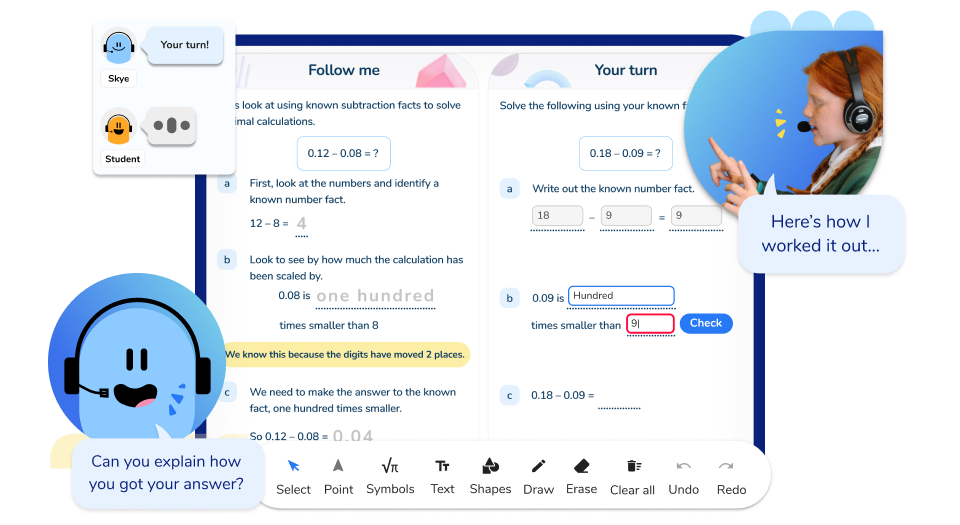
The persistent challenge has always been how schools can provide intensive maths support to every pupil who needs it without breaking already-stretched budgets. While we started with online tutoring using traditional tutors, as the technology has evolved and budgets have shrunk, the next stage of innovation has been to use AI to develop Skye, the AI maths tutor.
This is the kind of innovative thinking we’re encouraging you to cultivate in your own school. Innovation requires a shared vision that goes beyond test scores and involves engaging the entire school community in honest reflection about current practices.
What is school culture, and why does it matter?
School culture is the shared set of beliefs, values, behaviours and traditions that shape how everyone in a school community interacts and approaches learning. It’s the way staff, pupils, parents and governors experience the school day-to-day – not what’s written in the prospectus, but what people actually feel, say and do.
A positive school culture is one where staff feel trusted and supported, pupils feel safe and valued, and high expectations are matched by genuine care. It’s the invisible architecture that holds a school together: every policy, every classroom routine, every staffroom conversation either reinforces it or chips away at it.
Positive school culture is closely linked to better behaviour, higher staff retention and improved academic outcomes. Ofsted’s renewed inspection framework explicitly references the importance of a positive culture, particularly around safeguarding, behaviour and inclusion, and the DfE-commissioned Bennett review identifies school leaders as the key drivers of cultural change.
Strong leadership is vital in creating and maintaining a positive school culture, but it requires shared vision and commitment from the entire school community. When school leaders successfully develop this foundation, innovation naturally follows. The importance of establishing high standards and shared values cannot be overstated in building this foundation.


New Ofsted Framework 2025 Toolkit Checklist
Download this practical audit aligned with the Ofsted toolkit guidance on school inspections under the new framework for 2025.
Download Free Now!Why school culture matters
A positive school culture is linked to better behaviour, higher staff retention, stronger pupil outcomes and a more inclusive environment for disadvantaged pupils. The link to retention is particularly stark: around a third of teachers leave the profession within their first five years (NFER, 2025), and school culture is one of the strongest predictors of who stays.
The Education Endowment Foundation identifies leadership practices that build trust and foster a strong school culture as one of the few areas with meaningful, evidence-backed impact on teacher retention. The DfE-commissioned Bennett review puts it more bluntly: schools where good behaviour is the norm are schools where pupils achieve better outcomes and where staff wellbeing, retention and working conditions are stronger.
In other words, the case for working on culture isn’t soft. It runs through every part of how a school performs – academically, operationally and in inspection.
Types of school culture
Not every school culture is positive, and not every positive culture looks the same. Education researchers typically describe school cultures along a spectrum from healthy and collaborative to fragmented and toxic. Recognising which one you’re working with is the first step to changing it.
Collaborative
Staff work together openly, share resources and ideas, and see each other’s classrooms as part of one shared endeavour. CPD is genuinely valued, feedback is two-way, and decisions are made with input from across the school. This is the culture most leaders aspire to – but it takes consistent effort to maintain.
Comfortable but uncritical
On the surface, everything looks fine. Staff get on well, relationships are warm and there’s little conflict. But there’s also little challenge: difficult conversations get avoided, underperformance isn’t addressed, and improvement is slow. The risk is mistaking politeness for genuine collaboration.
Contrived collegiality
Collaboration exists on paper – planning meetings, shared schemes of work, peer observations – but it’s mandated rather than chosen. Staff go through the motions without real buy-in. This often happens when leaders try to impose a collaborative culture too quickly without building trust first.
Fragmented or siloed
Departments or year teams operate as separate islands. Information doesn’t flow across the school, expertise stays locked inside individual classrooms, and there’s little sense of a shared mission. This is particularly common in larger secondary schools and across MATs where individual schools haven’t yet built trust with the central team.
Toxic
The most damaging type. Staff feel undermined or unsupported, there’s a culture of blame rather than learning, and turnover is high. Toxic cultures rarely happen overnight – they build through small, consistent erosions of trust. They also take the longest to repair.
Characteristics of a positive school culture
A positive school culture isn’t about everyone agreeing all the time, or about there being no difficult conversations. It’s about how those conversations happen, and what they’re rooted in. The most consistently positive cultures share a handful of features.
High expectations matched by genuine care
Staff and pupils know they’re held to a high standard, and they also know someone has their back. The two don’t sit in tension – they reinforce each other.
Trust between leadership and staff
Teachers feel trusted to make professional judgements in their classrooms. Leaders feel confident that staff will raise issues honestly rather than hiding them. Trust is the foundation everything else sits on. Even with workload acceptance improving from 17% in 2021/22 to 26% in 2024/25 (NFER, 2025), the gap between teachers and comparable professions remains wide – which is why cultures that protect time and trust staff to make professional judgements have an outsized effect on retention.
Shared vision and values
Everyone can articulate what the school is trying to do and why. The vision isn’t just a sentence on the website – it shows up in the choices leaders make about timetabling, behaviour, CPD and curriculum.
Open communication
Information flows in both directions. Staff have safe ways to raise concerns, suggest ideas and disagree with decisions. Leaders share the reasoning behind decisions, not just the decisions themselves.
Recognition and celebration
Wins are noticed – including the quiet ones. Staff feel seen for the work they put in, and pupils feel seen for more than just their grades.
A continuous improvement mindset
Mistakes are treated as data, not failure. The question after something goes wrong is “what can we learn?” rather than “whose fault was it?”
Psychological and physical safety
Pupils feel safe in the building and safe in their classrooms. Staff feel safe to ask for help, to admit when they’re struggling, and to try something new without fear of being judged.
School culture vs school climate: what’s the difference?
“Culture” and “climate” get used interchangeably in education, but they’re not the same thing. The distinction matters because they call for different kinds of leadership intervention, and getting them mixed up is one reason culture-change projects often stall.
The simplest way to think about it: climate is how the school feels right now; culture is why it feels that way.
School climate is the day-to-day mood and atmosphere – the energy in the corridors on a wet Wednesday in November, how the staffroom sounds on a Friday afternoon, whether pupils greet adults on arrival, how parents experience the front office. Climate is visible. You can read it in a single visit. It can change quickly: a difficult Ofsted week, a wellbeing initiative, a new headteacher’s first term.
School culture is the deeper foundation underneath the climate. It’s the set of beliefs, values, habits and unwritten rules that shape how staff and pupils behave when no one is watching. Culture is what makes the climate feel the way it does. You can’t read it in one visit, and it doesn’t shift in a term – but once it’s built, it’s much harder to disrupt.
A short comparison:
| School climate | School culture | |
| Time frame | Days to weeks | Years |
| Visibility | Easy to read on a visit | Takes time to surface |
| What it captures | Mood, atmosphere, immediate experience | Beliefs, values, habits, unwritten rules |
| How it changes | Initiatives, events, leadership decisions | Consistent, repeated action over time |
| Best measured by | Surveys, observations, walk-throughs | Patterns in behaviour, retention, language |
Why the difference is important for school leaders
The risk of confusing the two is real. A wellbeing week, a new reward system or a staff away-day can lift the climate quickly – but if the underlying culture is unchanged, the lift fades within weeks. Leaders who notice an improving climate sometimes assume the culture has shifted with it, then find themselves surprised when behaviour or retention slides back.
The reverse is also true. If you’re working on culture – building trust, shifting habits, embedding a shared vision – you might not see climate change for months. That can feel discouraging. The temptation is to abandon the long work in favour of something quicker, when the long work is exactly what’s needed.
In practice, strong leaders work on both at the same time. Climate signals tell you whether your culture work is starting to land. Culture work tells you whether your climate gains will last.
What school culture looks like in practice
The hardest thing about school culture is that you can’t point at it directly. You can only point at the everyday choices and rituals that reveal it. Here are seven recognisable examples of school culture in action – the kind of thing every head, SLT member and MAT lead has seen in their own building.
The first thirty seconds of the school day
Walk through the gates between 8.30 and 8.40. Are senior leaders visible at the door? Do staff and pupils greet each other by name? Is the tone calm, warm and businesslike? The first thirty seconds tell you most of what you need to know about the culture, because they’re the part nobody can stage.
The Monday morning staff briefing
Briefings reveal what leaders prioritise and how they treat staff time. Are they short, sharp and focused on what matters this week? Or are they long, top-down and unfocused? Culturally healthy schools treat staff briefings as a service to teachers, not a reporting exercise for SLT.
The way new staff are inducted
Cultures show up most clearly in how they welcome people in. Is induction a structured handover with a designated buddy, regular check-ins, and an explicit “you belong here” message? Or is it a thick folder, a quick tour and “let us know if you have any questions”? The first version reinforces a positive culture; the second leaves new starters guessing.
How the school talks about behaviour
In schools with a strong behaviour culture, expectations are taught the way curriculum is taught – explicitly, consistently, and revisited. Form tutors model what good listening looks like. Assemblies reinforce shared values without being preachy. Staff use the same language across classrooms. In schools where the culture is weaker, behaviour is talked about as a problem to be managed rather than a curriculum to be taught.
The CPD culture
Watch a CPD session. Are teachers leaning in, contributing, and disagreeing constructively? Or are they marking books at the back? Strong CPD cultures treat professional learning as part of the job, fiercely protect the time, and let teachers choose the focus where possible. They’re also the schools where staff feel safe asking, “Can someone show me how to do this?”
The way leaders handle mistakes
When a member of staff makes a mistake – a parent complaint, a missed deadline, a poor lesson – what’s the first response? In positive cultures, the question is “what can we learn?” before “what went wrong?” Staff feel safe enough to flag problems early. In weaker cultures, mistakes get hidden because flagging them feels too risky.
The staffroom on a Friday
The Friday staffroom is the litmus test. Are people unwinding together? Is there laughter? Are pupils’ wins being shared informally? Or are people eating at their desks? The Friday staffroom doesn’t lie about how the culture really feels.
Going deeper for better outcomes
“Look harder,” the wise Rafiki tells Simba in The Lion King. In education, we often need the same guidance – to look beyond surface-level solutions and quick fixes toward deeper, more sustainable innovation. But how do we do this when we’re already stretched thin and working with limited resources?
Innovation has become one of those words that’s simultaneously overused and misunderstood. We slap it on job titles, department names, and corporate mission statements like a coat of fresh paint, hoping some of its magic will rub off on our schools. But genuine innovation – the kind that transforms educational outcomes and creates lasting value – isn’t hype or a bolt-on feature. It’s a culture, a mindset, a way of being that needs to be carefully cultivated and consistently maintained within your organisation.
The 7 I’s of innovation in schools
Through years of working with schools across multiple sectors, successful school culture transformation shares seven core elements – the Seven I’s of Innovation. Each represents a crucial aspect of creating a positive school culture where new approaches don’t just emerge, but thrive and translate into meaningful change. More importantly for state school leaders, each can be implemented without adding to workload or requiring significant budgets.

READ MORE: How to reduce teacher workload
1. Introspection: the data mirror
What it means in schools: Moving beyond headline data to understand the stories behind student performance, combining quantitative metrics with qualitative insights from staff discussions. This introspective approach engages the entire school community in building a shared language around what success truly means.
The first step in any innovation journey isn’t looking outward for solutions – it’s looking inward with courage and honesty. When was the last time your school truly examined itself in the mirror? Not the polished version presented in annual reports or Ofsted preparations, but the real reflection, complete with blemishes and blind spots?
Effective introspection in schools means asking uncomfortable questions: Why do we do things this way? What assumptions are we making? What patterns are we not seeing in our data? But there’s a crucial element that many schools miss – this isn’t just about analysing test scores and attendance figures. The richest insights often come from combining quantitative data with qualitative discussions with teachers who see the day-to-day reality of learning.
Practical application
Instead of just looking at assessment data in isolation, create structured conversations around what teachers observe.
- When Year 6 SATs results show gaps in problem-solving, the numbers tell part of the story. The complete picture emerges when teachers share that these pupils struggle with mathematical vocabulary rather than computational skills, or that they freeze when faced with multi-step problems, regardless of their mathematical ability.
READ MORE: Understanding maths anxiety
Quick win: Replace one data meeting per term with a “What are we not seeing?” discussion that combines quantitative analysis with staff insights.
- Modern AI tools excel at pattern recognition in large datasets. Use AI to identify correlations in your existing data that human analysis might miss – perhaps attendance patterns correlate with specific subjects, or behaviour incidents cluster around particular times or transitions. This frees up your time for the human element: discussing what these patterns mean and what they reveal about your students’ experience.
Budget solution: Cost = £0. This uses data and expertise you already have, just in a more systematic way.

2. Intent: beyond the Ofsted framework
What it means in schools: Having a clear ‘why’ that goes deeper than exam results or inspection grades – a purpose that informs every decision and innovation within your culture.
Viktor Frankl observed that humans are fundamentally meaning-seeking creatures. “Those who have a ‘why’ to live,” he wrote, “can bear with almost any ‘how’.” This insight applies powerfully to school culture development. Schools driven by clear, meaningful intent innovate differently from those simply chasing the next Ofsted grade or league table position.
True intent runs deeper than targets. “Achieving Good or Outstanding” isn’t a purpose – it’s an outcome. Real educational intent might be “Preparing young people to think critically in an uncertain world” or “Ensuring every child discovers their unique potential.”
These purposes create what James Carse calls the “infinite game” – where the goal isn’t to win, but to keep playing, to keep pushing boundaries, to keep making progress.
Schools with clear intent make different choices.
A primary school committed to “Nurturing lifelong learning” might prioritise curiosity and questioning over test preparation.
A secondary focused on “Preparing students for jobs that don’t yet exist” might emphasise adaptability, creativity, and digital literacy alongside traditional subjects.
Practical application
Define your school’s deeper purpose in one sentence that goes beyond compliance. Test it with students – does it ring true?
Use this intent to guide decision-making: when faced with competing priorities, which option best serves your core purpose?
This replaces scattered decision-making with clear criteria. When your intent is clear, choices become easier and faster. Clear intent creates a shared vision that guides all decision-making and helps establish shared values across the school community. This strong vision becomes the foundation for continuous improvement.
Your why informs how you prompt and use AI tools.
- If project-based learning is part of your core purpose, you can prompt AI lesson planning tools to suggest collaborative, enquiry-based approaches.
- If retrieval practice is a core belief, you can guide AI to generate spaced repetition activities and knowledge organisers that align with your pedagogical values.
Budget solution: Cost = £0. This is about clarity of thinking, not additional resources.
3. Inquisitiveness: the engine of innovation
What it means in schools: Creating school cultural norms where both staff and pupils are encouraged to question, explore, and wonder – moving beyond accepting “because we’ve always done it that way.”
‘Ignorance killed the cat; curiosity was framed’, wrote C.J. Cherryh. This principle challenges the age-old warning against asking too many questions. In schools, our failure to question, to explore, to wonder truly limits our potential for school improvement.
Practical application
Leverage AI tools to research answers to staff questions quickly. When someone wonders about attention spans, prompt an AI tool to summarise current research on adolescent attention patterns and suggest evidence-based strategies.
Learning question meetings
Replace one weekly meeting with a learning question session where teachers share genuine curiosities about their practice. These aren’t rhetorical questions or disguised complaints – they’re authentic wonderings that invite collective exploration.
This replaces unfocused meetings with purposeful enquiry. Learning Question sessions boost both staff curiosity and student engagement
These sessions can be:
- Asynchronous: Use anonymous question boxes or digital surveys where staff can submit wonderings throughout the week
- Brief: 15-minute focused discussions rather than lengthy meetings
- Collaborative: Questions become shared investigations rather than individual problems to solve
Examples of learning questions:
- Why do some pupils who struggle with written work excel in verbal discussions, and how can I bridge that gap more effectively?
- What’s actually happening in those moments when a disengaged student suddenly ‘gets it’ – and can I create more of those moments deliberately?
- I’ve noticed my Year 8s seem more focused in the last 10 minutes of lessons than the first 10 – what does that tell me about attention spans and lesson structure?
- Why does peer feedback sometimes work brilliantly and sometimes fall completely flat – what are the conditions that make the difference?
- When I give the same instruction to different classes, the responses are totally different – how much of that is about the instruction itself versus the classroom culture?
Budget solution: Cost = £0. Uses existing meeting time more effectively.
4. Interdependence: breaking down silos
What it means in schools: Moving from isolated classrooms to collaborative learning communities where expertise is shared systematically.
Innovation rarely happens in isolation. It emerges from the collision of ideas, the fusion of different perspectives, and the unexpected connections between seemingly unrelated concepts. The myth of the lone genius teacher has done education a disservice – today’s challenges require collaborative wisdom.
Practical application
Teaching triads
Create groups of three teachers from different subjects or year groups who observe each other monthly and share strategies. This uses existing expertise more effectively than hiring external consultants. Teaching triads also create opportunities for celebrating achievements across departments.
It replaces individuals struggling with collective problem-solving. Teachers report feeling less isolated and more supported.
Then use AI tools to analyse successful collaboration patterns.
- Which combinations of staff expertise lead to the most innovation?
- What are the optimal groupings based on complementary skills and shared interests?

Discovering staff expertise
Expertise always exists in schools – staff just need encouragement to share. You can try a range of different approaches, which could include:
- Formal systems: Integrate expertise mapping into performance management conversations. Ask not just about development needs, but about strengths and interests staff could share.
- Self-identification: Create opportunities for staff to volunteer in areas where they feel confident supporting others.
- Peer recommendation: Encourage staff to nominate colleagues whose practice they admire in specific areas.
- Senior leadership recognition: Senior leaders actively seek out and amplify the achievements and quiet expertise they observe.
Budget solution: £0 (or potentially some internal cover to free up staff to complete the triads). Uses existing staff expertise rather than external training. Cost-effective professional development that builds internal capacity.
5. Insatiability: the 1% better principle
What it means in schools: Focusing on continuous small improvements rather than dramatic overhauls – the compound effect of marginal gains within your culture.
Steve Jobs wasn’t advocating for endless striving without purpose when he said, “Don’t settle.” He was describing a mindset that sees ‘good enough’ as a stepping stone, not a destination.
In schools, this translates to a healthy restlessness within your school culture – always looking for the next small improvement that could make a positive impact. This mindset of continuous improvement transforms how staff approach daily challenges, and small improvements compound to create positive culture change throughout school life.
Practical application
- Add charging stations on classroom tables to eliminate the constant “my Chromebook isn’t charged” disruptions, saving 2-3 minutes per lesson across the school.
- Implement SSO with platforms like Wonde or Clever to remove the daily password struggles, saving ~5 minutes per session while reducing frustration.
- Trial micro-pilots of AI tools
- e.g. for report writing, you could trial Teachmate.ai with three teachers, refining the approach before broader rollout.
- e.g. to make an effective, affordable change in maths outcomes, you can also try Skye the AI maths tutor for free
- Work on classroom routines: Efficient book distribution and collection routines established at the start of the term can transform school life. Research suggests that they can save up to 15-20 minutes per lesson across the year. These ‘invisible’ improvements compound dramatically – what seems like a small optimisation becomes hours of additional learning time.
Budget solution: Focus on optimising existing processes and only consider new tools when you are sure of the problem they’re solving.
6. Iteration: the learning loop
What it means in schools: Treating teaching as experimentation with rapid feedback cycles within the school culture – test, learn, adapt, repeat.
Innovation isn’t about getting it right the first time; it’s about getting better every time. This approach transforms how we think about failure – there’s no such thing as failure, only feedback. Every attempt provides data that informs the next iteration.
Practical application
- Build rapid feedback systems that incorporate AI technologies: Google Classroom’s Practice Sets exemplifies this principle. Teachers can see real-time data visualisation of student understanding, identifying misconceptions as they emerge rather than after the assessment. This allows for immediate adjustments to the teaching approach within the same lesson. Real-time feedback systems significantly improve student engagement in lessons.
- Create Friday experiments where teachers can try one new small approach each week and evaluate impact with immediate student feedback
- Use exit tickets not just for assessment but for teaching iteration: “What worked well in today’s lesson? What would have helped you learn better?” AI excels at pattern recognition in feedback data. Upload your exit ticket responses to AI tools for rapid analysis: which teaching strategies are students responding to? What common confusion points are emerging? This speeds up the iteration cycle significantly.
- Use existing planning periods for reflection time rather than adding new meetings. Integrate reflection into existing practices rather than adding new tasks.
- Use student voice to guide improvements.
Budget solution: £0 if you already use Google Workspace for Education
Iteration principle at work within lessons
Third Space Learning’s AI maths tutor Skye, demonstrates this iteration principle perfectly. Every tutoring session provides immediate feedback on pupil understanding, automatically adapting the next question based on how children respond. This creates a continuous improvement loop where the AI gets better at supporting each pupil, while teachers receive reports showing which topics pupils struggled with and succeeded in.
7. Ideation: crowdsourcing solutions
What it means in schools: Harnessing collective intelligence for problem-solving within your school community – quantity breeds quality in idea generation.
Nobel laureate Linus Pauling declared that “The best way to have a good idea is to have lots of ideas.” In schools, our best solutions often come not from individual brilliance, but from collective wisdom – including students, parents, and other members of the community. The school community becomes a source of creative solutions, and celebrating achievements becomes part of the ideation process when schools recognize innovation.
Practical application
- Involve stakeholders: Systematically gather ideas from all stakeholders when facing challenges. Create structured “Solution Sprints” where different groups brainstorm approaches to school-wide issues. There are lots of online resources to help with sprints. This one from Easy Agile is one I particularly like.
- Use generative AI to amplify your brainstorming sessions then focus human time on evaluation and refinement rather than starting from scratch. This approach generates diverse perspectives quickly, giving your team a broader range of possibilities to refine and test.
Sample prompts
“We’re looking to improve [insert focus area – behaviour systems, homework policies, lunchtime routines, curriculum enrichment]. Act as a valued member of our school community to bring a unique perspective. Please suggest five ideas that could make a real difference, considering our school’s vision and value. It can be something you’ve seen work elsewhere, something we’re missing, or something we could do differently. Be bold, be honest, and be specific. If it helps, think about: what’s the problem, what’s your idea, and how might it work in practice?”
[BONUS: Include PDF copies of your school values, any relevant policies and suggestions from staff.]
Implementation roadmap
- Month 1 – introspection: Examine one dataset you already collect through the lens of staff insights, building shared language around data.
- Month 2 – intent: Define your school’s deeper purpose in one sentence, test it with students, creating a strong, shared vision across the school community.
- Month 3 – inquisitiveness: Introduce Learning Question sessions, replacing one existing meeting to boost student engagement and support professional development.
- Months 4-6 – interdependence, insatiability and iteration: Build collaborative systems strengthening school community relationships, (Interdependence), focus on 1% improvements to create a positive culture (Insatiability), and establish feedback loops for continuous improvement (Iteration).
- Ongoing: Create regular ideation opportunities, using AI tools to enhance rather than replace human creativity.
The two big questions
“How do I do this without adding to the workload?” The principle throughout is “replace, don’t add.” Every new practice should eliminate an existing one. Learning question sessions replace unfocused meetings. Data discussions replace separate analysis meetings. The 1% improvements eliminate inefficiencies. The result is better outcomes with the same or less effort.
“How do I do this with little or no budget?” These approaches primarily reorganise existing resources rather than requiring new ones. Your biggest assets are the expertise already in your building and the intelligence of your school community. AI tools amplify these existing strengths rather than replacing them.
School culture, behaviour and Ofsted
The renewed Ofsted inspection framework, which came into effect on 10 November 2025, puts culture at the heart of how schools are judged – more explicitly than the framework it replaced. School inspections now use a report card across up to 11 evaluation areas, each graded on a five-point scale from “exceptional” to “urgent improvement”, and culture sits behind almost all of them.
Where culture shows up in the new framework
- Safeguarding: This is graded on a binary scale (Met or Not Met) and explicitly requires schools to “instil an open and positive safeguarding culture”. Statutory compliance on its own isn’t enough. A “Not Met” judgement automatically places a school in a category of concern.
- Attendance and behaviour: Inspectors look at learner conduct, engagement and attendance as part of the same evaluation area. Strong schools treat attendance as a daily cultural discipline rather than a compliance task, and inspectors look for evidence that respectful, motivated behaviour is the norm across the school day.
- Leadership and governance: Inspectors evaluate how leaders shape the conditions for pupils and staff to do their best work. That includes the culture leaders build around CPD, decision-making, accountability and improvement.
- Personal development and wellbeing: A new emphasis on wellbeing – including, for the first time, staff wellbeing as a formal inspection area – means inspectors are reading the culture of the staffroom as well as the classroom.
- Inclusion: Now a standalone evaluation area, inclusion looks at how the school’s culture supports disadvantaged pupils, pupils with SEND and other groups who have historically been underserved. A genuinely inclusive culture shows up in everyday choices, not just in policy documents.
The Education Endowment Foundation’s guidance report on improving behaviour in schools sets out the evidence base, and the DfE now funds a National Professional Qualification specifically in Leading Behaviour and Culture – a signal of how seriously the link between leadership, culture and behaviour is being taken at the policy level.
What this means for school leaders
Ofsted has been clear that inspections under the new framework should feel “done with, not done to”. The pre-inspection conversation, the move away from deep dives, and the self-assessment toolkit all point in the same direction: inspectors want to understand the culture you’re building, not catch you out.
That makes the link between everyday culture work and inspection-readiness stronger than ever. Schools where staff genuinely feel trusted, where pupils experience a calm and respectful environment, and where leaders model the standards they expect, walk into inspections from a position of strength. The framework, in that sense, rewards the culture work you should be doing anyway.
For the underlying evidence on why culture and behaviour are so closely linked, the DfE-commissioned Bennett review (2017) remains a foundational reference, even though the inspection framework around it has since changed.
The promise of an innovative school culture
Schools implementing systematic school culture approaches tend to see:
- Improved staff retention and positive morale
- Enhanced student engagement and academic outcomes
- Better problem-solving capacity across the school community
- Sustainable school improvement is built into the culture rather than being dependent on individuals
- Challenging behaviours reduced through positive environment creation
But perhaps most importantly, they create learning environments that prepare young people for an uncertain future while ensuring all children experience a sense of belonging and celebrating achievements becomes part of everyday school life.
School culture transformation isn’t about dramatic change – it’s about creating conditions where small continuous improvement compounds over time. When school leaders and senior leadership commit to these principles for effective leadership, they don’t just improve test scores; they build learning communities where both students and staff thrive. The importance of strong leadership in creating lasting change cannot be overstated – when these principles transform the entire school environment, remarkable transformations occur in both academic outcomes and student engagement.
The future belongs to schools that can cultivate these principles effectively within their positive school culture. In a world of constant change, it’s not the strongest that survive, but those most responsive to change and most committed to continuous improvement and positive transformation of their entire school community.
School culture FAQs
School culture is the shared set of beliefs, values, behaviours and traditions that shape how everyone in a school community interacts and approaches learning. It’s the way staff, pupils and families experience the school day-to-day – not what’s written in policy documents, but what people actually feel, say and do.
A positive school culture is linked to better behaviour, higher staff retention, stronger pupil outcomes and a more inclusive environment for disadvantaged pupils. It also shows up directly in Ofsted’s new inspection framework, which assesses culture across safeguarding, attendance and behaviour, leadership and governance, and inclusion.
Improving school culture starts with leadership. The most effective steps are: define a clear, shared purpose; build trust through transparent communication; set high expectations and follow them through consistently; recognise staff and pupil contributions; treat mistakes as learning, not failure; and create regular opportunities for collaboration across teams. Small, consistent actions compound into lasting cultural change.

DO YOU HAVE STUDENTS WHO NEED MORE SUPPORT IN MATHS?
Skye – our AI maths tutor built by teachers – gives students personalised one-to-one lessons that address learning gaps and build confidence.
Since 2013 we’ve taught over 2 million hours of maths lessons to more than 170,000 students to help them become fluent, able mathematicians.
Explore our AI maths tutoring or find out about one to one tuition for your school.