

How To Get Started With High Impact Tutoring In Your School or Trust And Make Sure It Benefits Those Who Need It Most

High-impact tutoring is a research-based practice that accelerates student learning through intensive, individualised instruction. When schools implement high-impact tutoring effectively, it leads to significant learning gains across year groups and subjects, making it one of the most powerful intensive interventions available for improving outcomes across year groups.
Research shows that high-impact tutoring can increase student learning by 3 to 15 months, with particularly strong effects in maths and literacy. For schools seeking pandemic recovery strategies to close attainment gaps and accelerate student learning, high-impact tutoring offers a proven, scalable approach grounded in evidence-based practices.
This guide covers everything you need to know about high-impact tutoring: what it is, why it works, how to implement it, and how to fund it.
Key takeaways
High-impact tutoring is one of the most effective intensive interventions available to schools for accelerating student learning and improving student outcomes. The evidence base, spanning randomised controlled trials, large-scale implementations, and EEF evaluations, consistently confirms that high-impact tutoring leads to significant gains when delivered with fidelity.
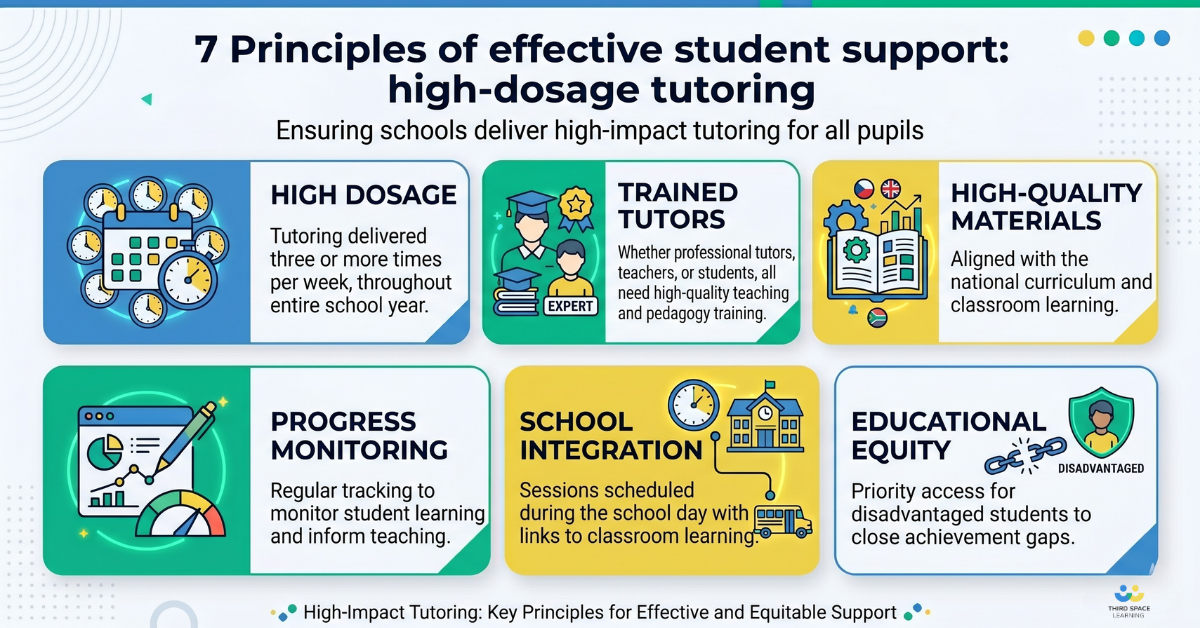
For high-impact tutoring to deliver on its promise, schools must ensure:
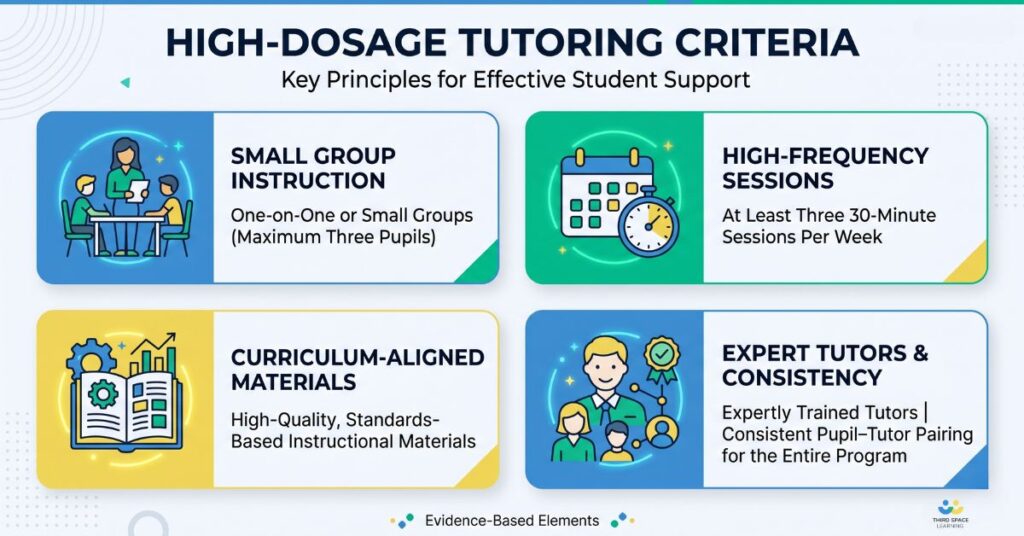
- High dosage: High-dosage tutoring delivered three or more times per week throughout the school year
- Trained tutors: Whether professional tutors, teachers, or university students, all tutors need high-quality training in teaching and pedagogy
- High-quality instructional materials: Aligned with the national curriculum and classroom learning
- Small group instruction: One-on-one or in small groups of no more than three students
- Progress monitoring: Regular tracking to monitor student learning and inform teaching
- School integration: Sessions scheduled during the school day with links to classroom learning
- Educational equity: Priority access for disadvantaged students to close achievement gaps
High-impact tutoring addresses not just academic attainment but overall student well-being. Tutor–student relationships build trust, increase motivation, and create supportive learning environments for students. High-quality tutoring helps students develop growth mindsets and learning strategies, contributing to lasting student success.
Successful implementation of high-impact tutoring requires careful planning, collaboration, and strategic resource allocation. With the right approach, high-impact tutoring leads to transformative outcomes for students across every year group and subject.

The Ultimate Guide to Effective Maths Interventions
Find out how to plan, manage, and teach one to one (and small group) maths interventions to raise attainment in the students who need it most.
Download Free Now!What is high-impact tutoring?
High-impact tutoring is intensive tutoring delivered one-on-one or in small groups of three or fewer students. It requires a minimum of three weekly tutoring sessions, with each session lasting 30–45 minutes. The National Student Support Accelerator at Stanford University defines high-impact tutoring as tutoring that leads to substantial student learning gains by supplementing students’ regular classroom instruction.
The critical features that distinguish high-impact tutoring from traditional tutoring are its high-dosage frequency, strong relationships between one tutor and a consistent group of students, high-quality instructional materials aligned to the curriculum, and regular data use to monitor student progress.
High-impact tutoring is closely related to high-dosage tutoring — in practice, the terms are often used interchangeably. High-dosage tutoring refers specifically to the frequency and intensity of tutoring sessions, while high-impact tutoring focuses on the quality interactions and evidence-based practices that drive student outcomes. For tutoring to be truly high-impact, it must be both high dosage and high quality.
High-impact tutoring vs traditional tutoring
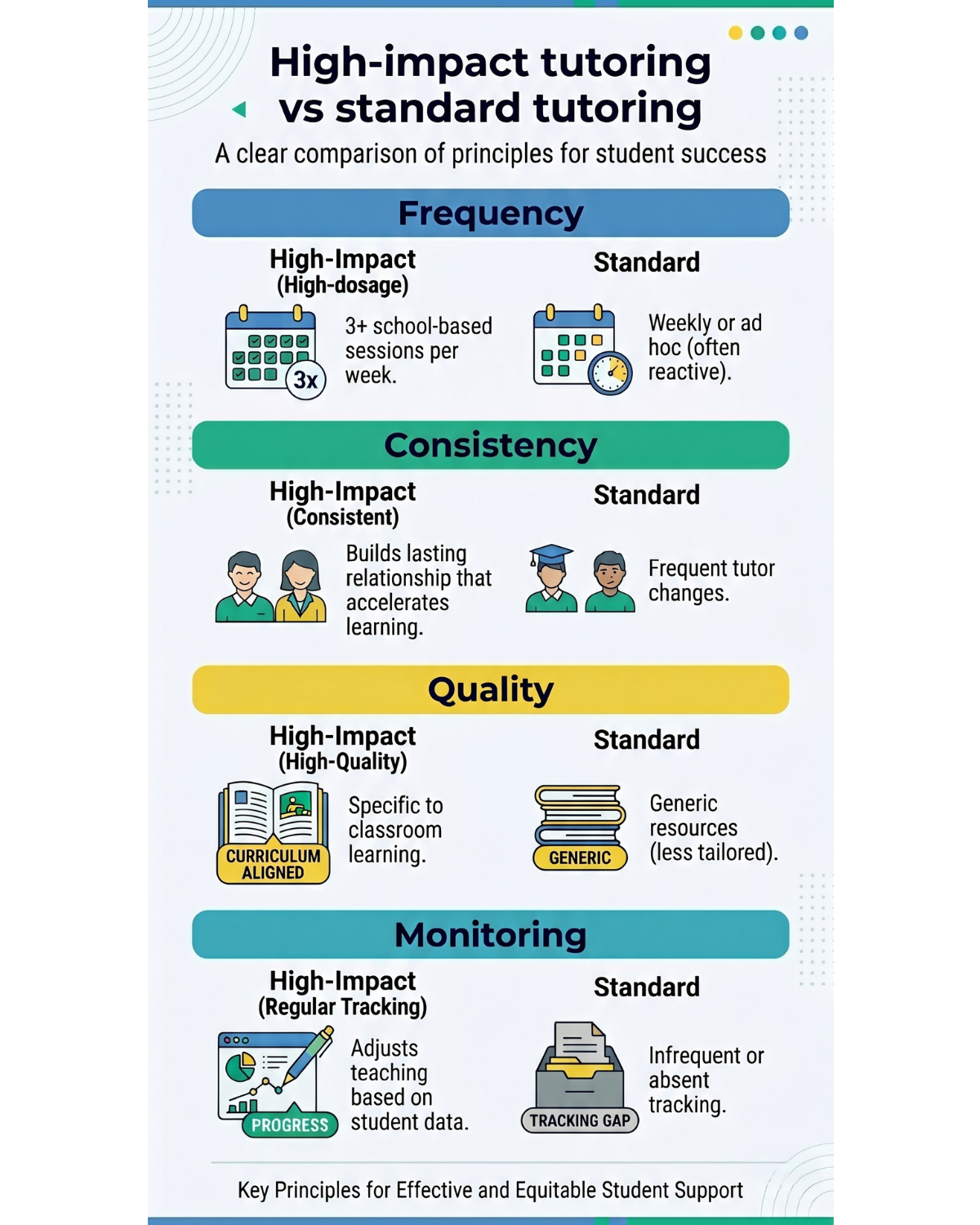
Standard tutoring approaches are typically infrequent, often reactive, and lack the structured approach that makes high-impact tutoring so effective. Students receiving conventional tutoring may meet a tutor once a week or only when problems arise, with little consistency in who delivers the sessions. The key differences include:
- Frequency: high-impact tutoring requires high-dosage delivery of three or more school-based sessions per week, whereas conventional tutoring may be weekly or ad hoc
- Consistency: high-impact tutoring programmes pair students with one tutor consistently, building lasting relationships that accelerate student learning
- Quality: high-impact tutoring uses high-quality instructional materials aligned with classroom learning, rather than generic resources
- Monitoring: high-impact tutoring programmes incorporate regular progress tracking, allowing tutors and leaders to monitor student progress and adjust teaching in response to students’ needs
Why schools should implement high-impact tutoring
Effective across year groups
Meta-analysis shows that high-impact tutoring leads to significant gains across all year groups. Research from Brown University and the Education Endowment Foundation demonstrates that high-impact tutoring can accelerate student learning by 3 to 15 months, from primary schools through to secondary and post-16 settings, with the strongest effects at the primary and lower secondary levels.
Previous research by Dietrichson et al. (2017) found that intensive tutoring was the most common and most effective intervention for improving academic outcomes among students from lower socioeconomic backgrounds. This evidence base, built on randomised controlled trial data and large-scale studies, confirms that high-impact tutoring leads to measurable academic growth across subjects.
Scalable
High-impact tutoring is not just effective in small pilot programmes — it works at scale. Large-scale high-dosage tutoring implementations serving hundreds or thousands of students have directly demonstrated significant gains. Saga Education in the US, for example, delivered high-impact tutoring to thousands of students in small groups and found the programme directly demonstrated significant gains equivalent to several additional months of student learning. These results held across many different school contexts, reinforcing that high-impact tutoring can deliver consistent benefits in small groups and one-on-one, regardless of setting, when core quality standards are maintained.
In the UK, the National Tutoring Programme showed that school-led high-dosage tutoring could be delivered at scale when properly supported. Schools that adopted structured, high-dosage tutoring models saw stronger student outcomes than those using ad hoc approaches. The key to scaling high-impact tutoring while maintaining its effectiveness is ensuring quality interactions in every small group and one-on-one session, even as student numbers grow.
Educational equity
High-impact tutoring is a central strategy for closing the achievement gap. Research suggests that high-impact tutoring is particularly effective for students from disadvantaged backgrounds, making it a powerful tool for promoting educational equity in education.
The EEF Teaching and Learning Toolkit identifies one-to-one tuition as capable of boosting students’ progress by up to 5 additional months, with the greatest impact on students eligible for pupil premium. High-impact tutoring leads to improved outcomes for exactly the students who need the most intensive intervention, helping schools fulfil their duty to narrow achievement gaps and promote equity in education.
Personalised instruction for every student
High-impact tutoring leads to significant gains precisely because it offers personalised instruction tailored to each student’s needs. In small group instruction or one-on-one tutoring sessions, tutors can identify and address individual students’ learning gaps, misconceptions, and areas of strength in ways that whole-class teaching simply cannot.
This personalised instruction develops self-efficacy, resilience, and subject confidence among students. Students who receive high-impact tutoring report feeling more positive about learning and more willing to engage with challenging material, contributing to broader student success beyond academic results alone. Whether students are working in small groups of two or three, or receiving intensive tutoring one-on-one, the personalised nature of high-impact tutoring means every student receives the support they need.
Building a teaching pipeline
High-impact tutoring programmes that employ university students and recent graduates create mutual benefits. Students receive quality interactions with enthusiastic, well-prepared tutors, while university students gain valuable experience that feeds into the teaching pipeline. Several universities now partner with schools and multi-academy trusts to provide high-dosage tutoring as part of their teacher training programmes, creating a sustainable model that benefits students, schools, and the wider education system.
Key elements of high-impact tutoring programmes
Effective tutors
The quality of the tutor is the single most important implementation factor in determining whether high-impact tutoring leads to significant gains. Effective tutoring requires well-prepared tutors who can build relationships with students, deliver personalised instruction in small groups and one-on-one, and adapt their teaching in response to student needs.
High-impact tutoring programmes should prioritise:
- Consistent tutor–student pairing so that one tutor builds a relationship with the same students throughout the programme
- Ongoing professional development for all tutors, whether they are teachers, teaching assistants, or graduates
- Quality interactions that go beyond simply delivering content — effective tutors encourage student voice, check understanding, and create supportive learning environments for students
Research from Bowling Green State University confirms that tutor training is a key implementation factor. Whether tutors are qualified teachers or recent graduates, training in curriculum understanding, assessment, and pedagogy makes high-quality tutoring possible and ensures students receive the intensive tutoring they need.
High-quality instructional materials
High-impact tutoring must be built on high-quality instructional materials that align with what students are learning in the classroom. When high-dosage tutoring content is disconnected from the curriculum, the impact on student learning is greatly reduced.
High-quality materials for high-impact tutoring should:
- Align with the national curriculum and current classroom topics
- Be structured to support small group instruction and one-on-one delivery for students at different levels
- Include diagnostic assessments to identify gaps in students’ understanding and tailor instruction
- Provide opportunities for both guided and independent practice, enabling students to consolidate their learning
Schools should verify that any external high-dosage tutoring provider uses high-quality materials that match the national curriculum for the relevant key stage and subject.
Learning integration
High-impact tutoring is most effective when it is fully integrated into the school day and wider structures. This means scheduling high-dosage tutoring sessions during school hours, ensuring teachers are aware of what students are covering, and sharing student data between tutors and teaching staff.
Family engagement also strengthens the impact of high-impact tutoring on student learning. Schools that introduce the programme to parents and carers through meetings and provide regular updates on student progress see higher tutoring attendance and stronger student outcomes.
Incorporating high-impact tutoring into the school timetable, rather than offering it as an optional after-school programme, ensures consistent attendance among students and demonstrates that the school values the intensive intervention. This timetabled approach also means students who would benefit from high-dosage tutoring are less likely to miss sessions. Schools that fully integrate high-impact tutoring into their wider school improvement plan see the strongest results, as teaching staff and leadership are aligned behind a shared vision for accelerating learning.
Small group instruction and group size
The size of tutoring groups has a direct impact on effectiveness. High-impact tutoring leads to the greatest student learning gains when delivered one-on-one, but small group instruction with two or three students remains highly effective and more cost-efficient for schools.
In small groups, students benefit from peer interaction, collaborative problem-solving, and the opportunity to learn from each other’s approaches. Effective small group instruction requires careful grouping — students in each small group should share similar learning needs so the tutor can deliver targeted teaching to all students simultaneously.
Research consistently shows that small groups of more than three or four students see diminishing returns. For high-impact tutoring to deliver meaningful results, small group instruction should be limited to a maximum of three students per tutor. Small group sessions work particularly well when students have been grouped using diagnostic assessment data.
Frequent pupil progress
Regular progress monitoring is essential for effective high-impact tutoring. Programmes should include systematic tracking that allows leaders, tutors, and teachers to monitor student learning and adjust instruction for each student accordingly.
Effective progress monitoring for high-impact tutoring includes:
- Baseline assessments at the start to establish each student’s current level
- Regular check-in assessments during sessions
- End-of-programme assessments to measure academic growth and attainment
- On-demand progress reports that allow leaders to review outcomes and attainment at any time
Systematic data collection ensures that high-impact tutoring is responsive to students’ needs and that school resources are targeted where they will have the greatest effect on students’ learning.
Implementing high-impact tutoring
Step 1: Identify focus areas
Leaders should use existing data to identify which students need high-impact tutoring and in which subjects. Look at standardised assessment results, teacher assessments, and diagnostic data to identify students working below age-related expectations or with specific learning gaps.
Key research questions to consider: Which year groups have the widest achievement gaps? Where is progress stalling? Which students would benefit most from intensive tutoring and intensive intervention?
Step 2: Establish goals and timelines
Set clear goals for what the high-impact tutoring programme should achieve. These might include accelerating student learning in specific areas, closing achievement gaps for disadvantaged students, or improving student achievement ahead of key assessments such as SATs or GCSEs.
High-impact tutoring programmes should run for a minimum of one term, though a full school year is ideal for maximum academic growth. High-dosage tutoring delivery of three sessions per week ensures the programme maintains the intensity needed for measurable impact.
Step 3: Assess capacity
Determine whether the school has staff capacity to deliver high-impact tutoring internally or whether an external provider is needed. Internal delivery by teachers or teaching assistants can be effective for students but requires dedicated time and training. External providers, including online tutoring services, offer scalable solutions with professional tutors experienced in working with students in small groups.
Online tutoring can be just as effective as in-person delivery when it is personalised, relationship-based, and delivered at high-dosage frequency. Schools in rural areas or those struggling to recruit tutors locally may find online high-dosage tutoring particularly beneficial for their students.
Step 4: Research providers
If using an external provider, leaders should research options carefully. Key questions include:
- Does the provider use high-quality instructional materials aligned with the national curriculum?
- Does the provider share student progress reports with leaders and teachers?
- Are tutors trained, vetted, and consistently paired with students?
- Can the provider deliver the high-dosage, high-frequency intensive tutoring required?
- What evidence does the provider have of directly demonstrated significant gains in student learning?
- Does the provider offer different tutoring models, including small group instruction and one-on-one?
Step 5: Integrate into school schedules
High-impact tutoring should be integrated into the school day wherever possible. Research consistently shows that scheduling during school hours leads to better attendance among students and stronger student outcomes than after-school programmes.
High-dosage tutoring should supplement, not replace, core teaching. Leaders should work with timetable coordinators to find slots that minimise disruption while ensuring consistent, high-frequency tutoring sessions for students throughout the school year.
Measuring the success of high-impact tutoring
Measuring the impact of high-impact tutoring requires tracking multiple indicators of student success. Student achievement is the primary measure, but schools should also consider wider student outcomes, including student confidence, engagement, and attitudes towards learning.
Key metrics for evaluating high-impact tutoring include:
- Student progress against age-related expectations
- Academic growth as measured by baseline and endpoint assessments
- Attainment in national assessments (SATs, GCSEs)
- Tutoring attendance rates among students
- Qualitative feedback from students, teachers, and parents
Regular progress monitoring throughout the programme allows school leaders to make adjustments and ensure high-impact tutoring is delivering the accelerated student learning it promises. Schools should not wait until the end of the programme to assess effectiveness — regular reviews ensure that school resources for high-dosage tutoring are being used efficiently to accelerate student learning and that students across every school are benefiting. Sharing data with parents and carers also reinforces the value of high-impact tutoring and encourages families to support learning at home.
High-impact tutoring with Third Space Learning
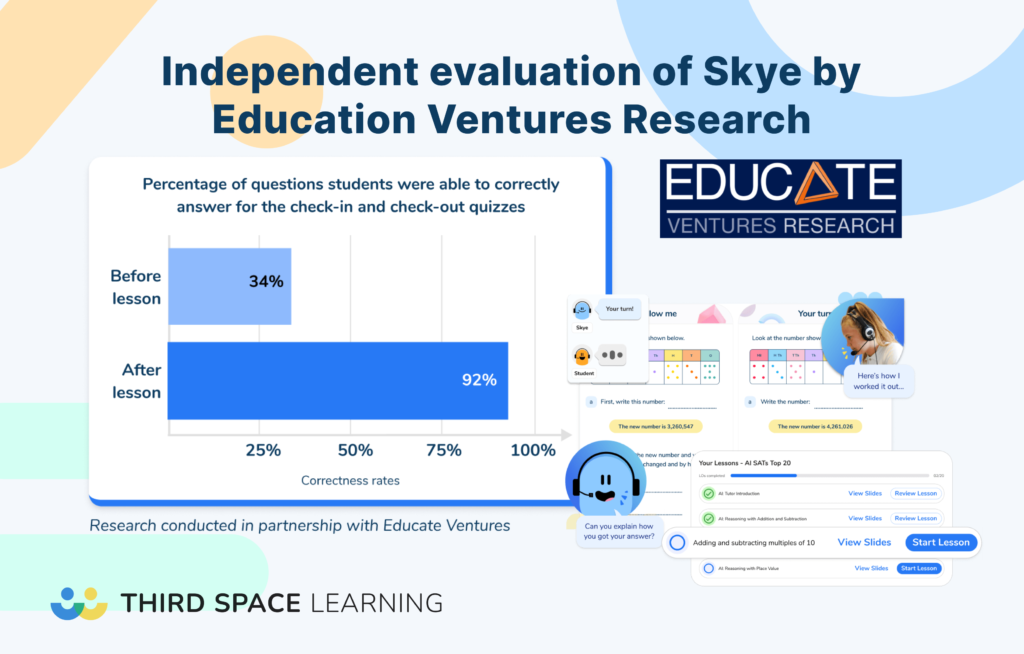
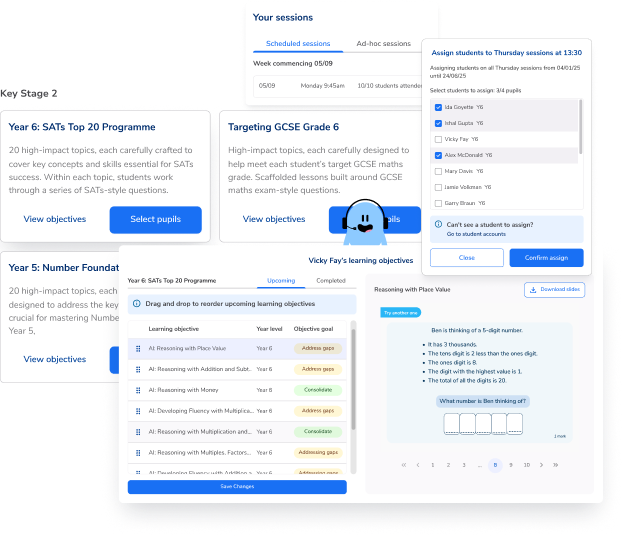
Third Space Learning provides targeted one-on-one maths tutoring, personalised to each student’s individual needs. Students work with one consistent AI tutor, Skye, in a supportive, interactive learning environment. Schools pay one annual fee for unlimited high-dosage tutoring with unlimited students, selecting the dosage and scheduling that works for their learners.
Most schools choose 3 x 30-minute weekly tutoring sessions to meet high-dosage tutoring requirements. After identifying target students, schools select personalised, national curriculum-aligned learning programmes. Skye adapts teaching in real time, offering personalised instruction that responds to each student’s understanding during every session.
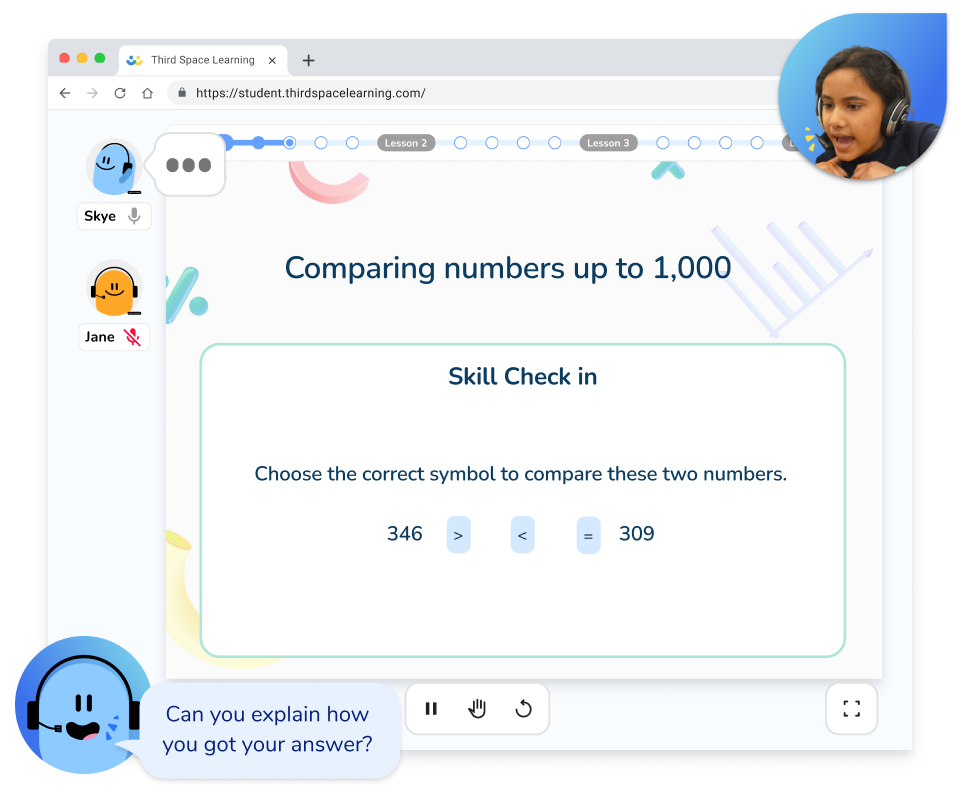
Students complete skill check-in and checkout questions that track learning throughout every session. Collected progress data provides on-demand reports showing topics covered, skills practised, and student learning gains. Reports are available to school leaders and teachers, supporting data-driven decision-making across the school.
Funding high-impact tutoring
Pupil premium
Pupil premium funding is specifically designed to improve outcomes for disadvantaged students and is one of the most common funding routes for high-impact tutoring programmes. Schools can use pupil premium to fund high-dosage tutoring that accelerates student learning and closes achievement gaps for eligible students.
Recovery premium and government funding
The recovery premium has provided additional government funding for schools to deliver evidence-based interventions, including high-impact tutoring and other intensive interventions. Schools should check current government allocations to determine what specific funding is available for high-dosage tutoring programmes.
School-led tutoring grants
The National Tutoring Programme introduced school-led tutoring grants that allow schools to fund high-dosage tutoring delivered by their own staff. Although the NTP has evolved, the principle of school-led tutoring remains key to the education landscape, and schools continue to access similar funding routes for high-impact tutoring.
Multi-academy trust and partnership approaches
MAT leaders and local authorities have found creative solutions for funding high-impact tutoring: pooling resources across schools, partnering with universities to provide university student tutors, and redirecting budgets towards high-dosage tutoring as a priority intensive intervention. Community partnerships with local businesses and charitable foundations can also provide additional funding for tutoring programmes that benefit students.
high-impact tutoring FAQs
High-impact tutoring offers personalised instruction that directly addresses individual students’ needs across year groups and subjects. When implemented effectively, high-impact tutoring leads to improved student achievement, builds student confidence, and fosters positive attitudes towards learning among students. Students who receive high-impact tutoring also demonstrate improved school attendance and engagement with their wider education. For any school looking to accelerate student learning at scale, high-impact tutoring is one of the most effective approaches available.
High-impact tutoring means intensive, evidence-based tutoring delivered one-on-one or in small groups of three or fewer students. It is high-dosage tutoring requiring three or more weekly sessions, with trained tutors using high-quality instructional materials. The term emphasises that tutoring must not only be frequent (high dosage) but also effective – with quality interactions, strong relationships, and personalised instruction that drives student outcomes and accelerates student learning.
Five evidence-based strategies for improving student achievement include: high-dosage tutoring with three weekly sessions in small groups or one-on-one; data-driven instruction using regular assessment to inform teaching; constructive feedback and metacognition to develop independent student learners; collaborative learning where students work together in small groups; and fostering high expectations for all students. Consistent implementation of these strategies across the school year develops student academic success and lifelong learning skills.
High-dosage tutoring refers specifically to the frequency and intensity of tutoring – at least three sessions per week. High-impact tutoring encompasses high-dosage delivery but also includes the quality of teaching, the strength of tutor–student relationships, curriculum alignment, and data-driven progress monitoring. All high-impact tutoring is high dosage, but not all high-dosage tutoring is necessarily high-impact – the quality of small group instruction and teaching matters as much as frequency for students’ learning outcomes.
In small group instruction, one tutor works with two or three students simultaneously. Students benefit from peer interaction and collaborative learning while still receiving personalised instruction. Effective small group tutoring sessions require careful grouping so students share similar learning needs. Small groups allow tutors to give each student focused attention while also leveraging the benefits of students learning from each other. High-impact tutoring in small groups has been shown to be nearly as effective as one-on-one tutoring for students, while being more cost-effective for schools.
The content in this article was originally written by Christi Kulesza at Third Space Learning and has since been revised and adapted for UK schools by Former primary school teacher and Third Space Learning content editor Charlotte Grubecki.

DO YOU HAVE STUDENTS WHO NEED MORE SUPPORT IN MATHS?
Skye – our AI maths tutor built by teachers – gives students personalised one-to-one lessons that address learning gaps and build confidence.
Since 2013 we’ve taught over 2 million hours of maths lessons to more than 170,000 students to help them become fluent, able mathematicians.
Explore our AI maths tutoring or find out about one to one tuition for your school.