

For the first time, I’m not choosing which students get maths intervention

65% disadvantaged students, starting points well below the national average, and not enough skilled tutors to go around. Here’s how one four-school trust is using AI maths tutoring to stop choosing who gets intervention – and why it’s already changing what their maths department can do.
Chrissy, Head of Maths and Associate Assistant Principal at Bournville, shares how Bournville School and the wider Fairfax Academy Trust are using Third Space Learning’s AI maths tutor Skye to deliver personalised intervention at scale.
The problem we were trying to solve
At Bournville, 65% of our students are disadvantaged, and our Key Stage 2 starting points sit well below the national average, sitting at 98-99, depending on the year group. Not only is that below the national average scaled score of 105 (for 2025) in maths, but it’s also below the expected standard.
Like most heads of maths, I was facing a struggle; there’s only one of me, only so many skilled tutors to go around, and a budget that usually decides who gets GCSE intervention support rather than who needs it. The result is eight to ten fixed places per term, usually reserved for year 11 borderline students. Wouldn’t it be lovely if we didn’t have these constraints?
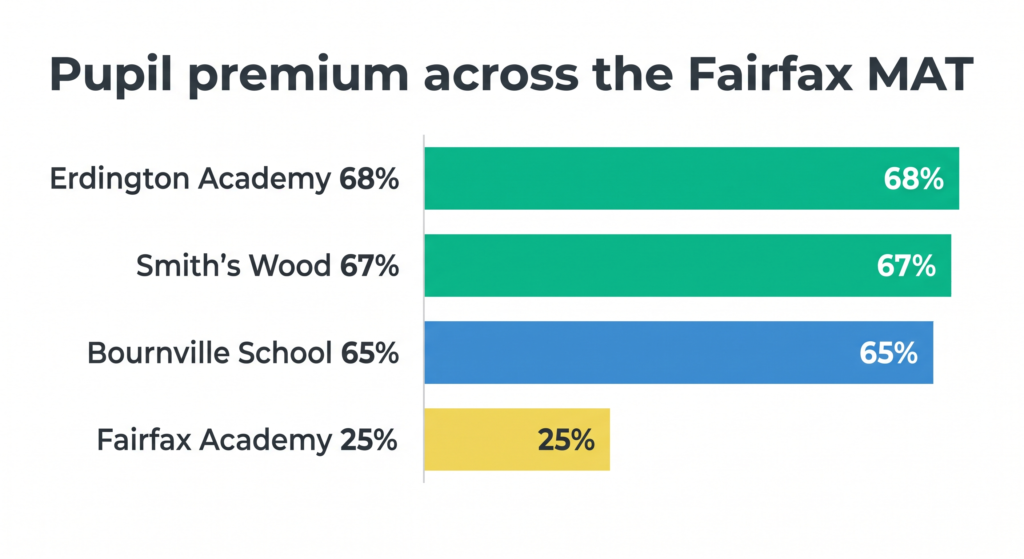
When we looked around at one-to-one tutoring, it was cost-restrictive. We simply couldn’t put it in place the way we wanted to as a trust where three out of four schools have 65% or more pupil premium students.

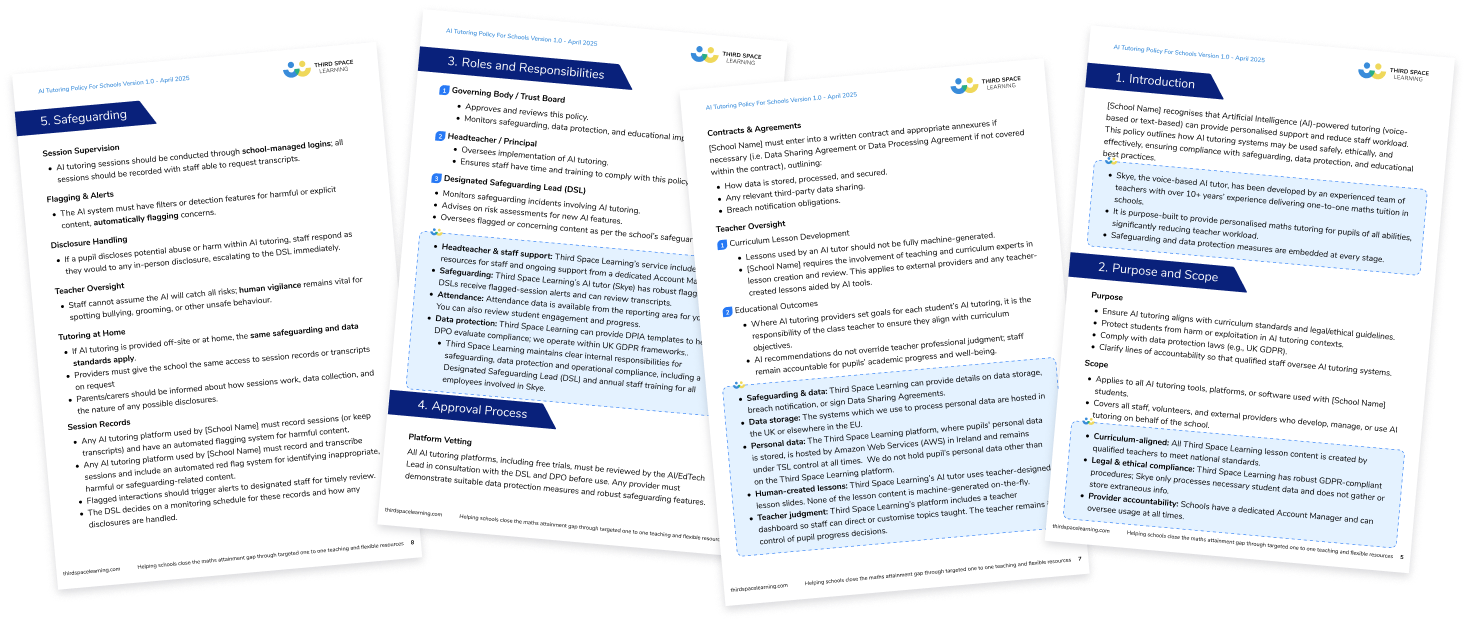
AI Tutoring Policy for Schools
A practical framework to help you integrate AI tutoring and meet data protection and safeguarding requirements – includes an editable policy template.
Download Free Now!Pupil premium across the Fairfax MAT
- Bourneville School: 65%
- Erdington Academy: 68%
- Smith’s Wood: 67%
- Fairfax Academy: 25%
Why we chose AI tutoring as a MAT
When Natalie, our Academy Improvement Officer, first showed Third Space Learning’s AI maths tutor Skye to the schools in our trust, it was genuinely exciting. For the first time, we could see a route to supporting large numbers of students across all four schools without the cost scaling per pupil.
You pay once, and you can swap students in and out across year groups as needs change.
What reassured me as a head of maths was that experienced maths teachers had clearly designed the AI tutoring content. The diagnostic questions, the scaffolding, the check-in and check-out data – it all felt like it had been built by people who’ve stood in front of a classroom. I wasn’t about to hand my students over to something I didn’t trust.
How I set up the AI tutoring in our classrooms
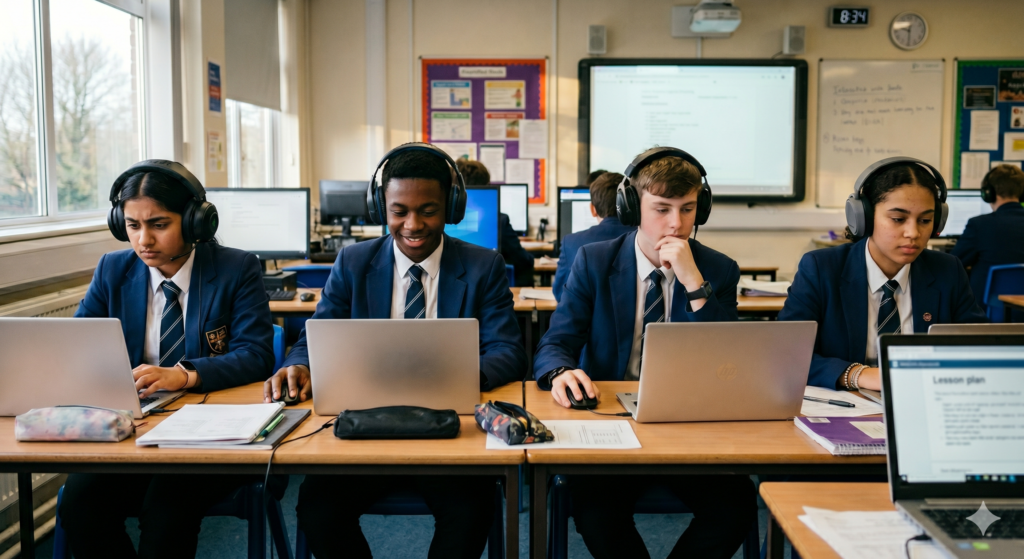
We started using the AI maths tutoring with year 11 in October. I pulled 15 students together in three target GCSE grade bands: five pushing for a grade 4, five pushing for a grade 5, and five pushing for a grade 7.
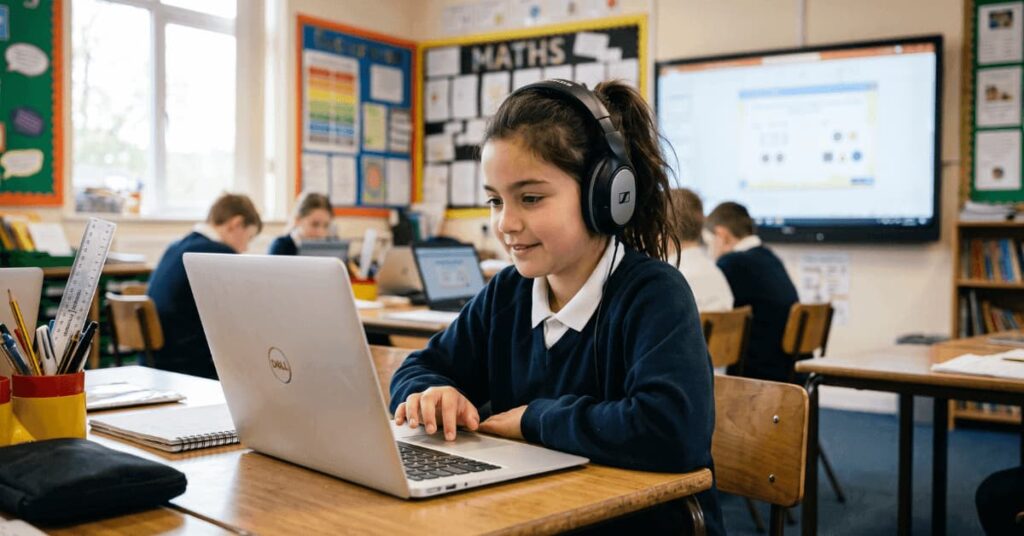
They come in four mornings a week during form time. With the novelty of their gaming headsets on, they log in for half an hour and crack on. Our students loved having their own tutor and working online rather than in-person or on paper. Being online meant they were more engaged right from the start, and once they got over the awkwardness of talking to the computer, they settled really quickly.
How each lesson with the AI tutor works
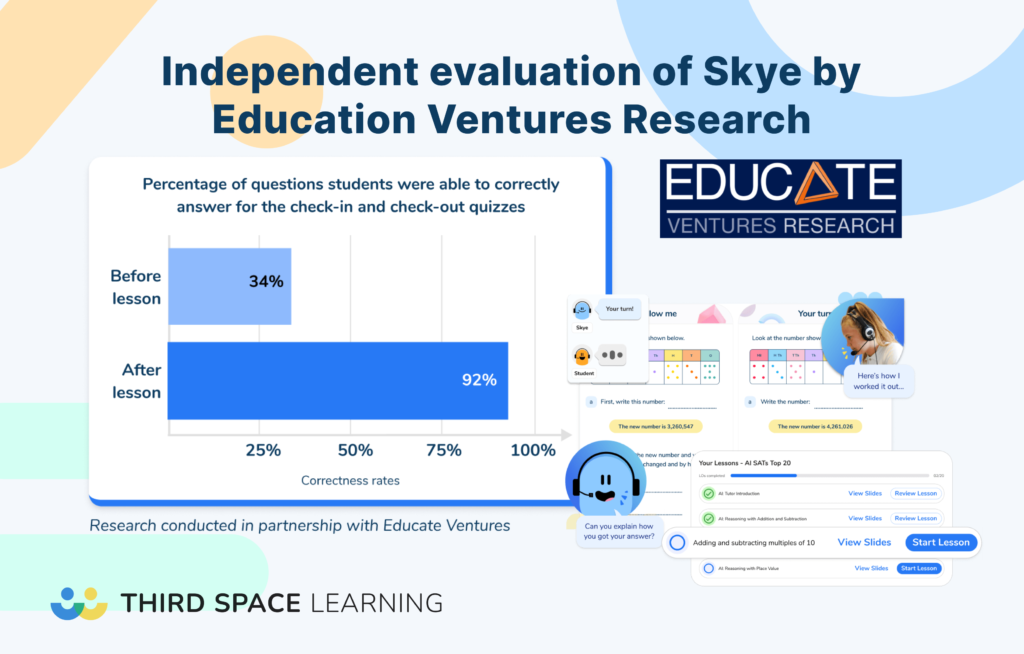
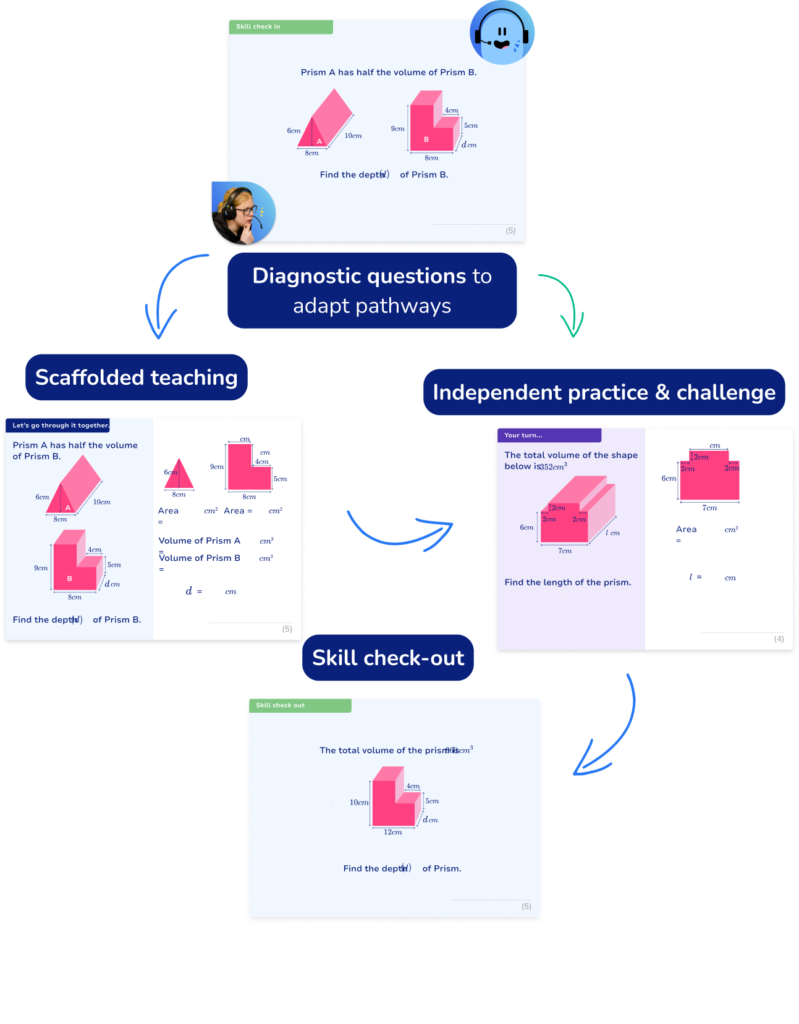
The scaffolding is the clever bit. Every student starts with a skill check-in diagnostic question. If they get it right, they skip straight to independent practice – no time wasted modelling something they already know. If they get it wrong, Skye doesn’t tell them “that’s wrong”. It acknowledges what they got right, identifies the misconception, and guides them through a “follow me, your turn” sequence until they’re ready for independent practice and a check-out question.
So in one room, every student is working on something different. That’s what traditional intervention could never do at anywhere near the same level of affordability. Even on my best day, I can’t get to the student in the corner with her misconception while I’m supporting five other pupils.
Impact of the AI tutoring so far
We’re only ten weeks in, and mocks are still being marked, so I don’t have exam data yet. But the indicative numbers tell me everything I need to know about Skye’s impact. Average student satisfaction is sitting at 3.8/5 – and honestly, if my students rated me daily, I’m not sure I’d always get 3.8!
What matters most to me is that students come in on a Monday unable to do a skill, and by the end of the 30-minute session, 80% of them can. That’s the clearest signal this is working. And, in the exam data, of course, I’ll be able to look at how this impacts their retrieval over time.
There’s a confidence element, too. Students are walking into period three maths, telling me, “I did this this morning, I know what to do now.” That shift in disposition is hard to measure, but you can feel it.
Safeguarding the students with AI tutoring
Before any of this went live, we worked through a full Data Impact Assessment. Two things reassured us.
First, Skye is a closed AI system – students’ voices and data don’t drift off into the wider internet.
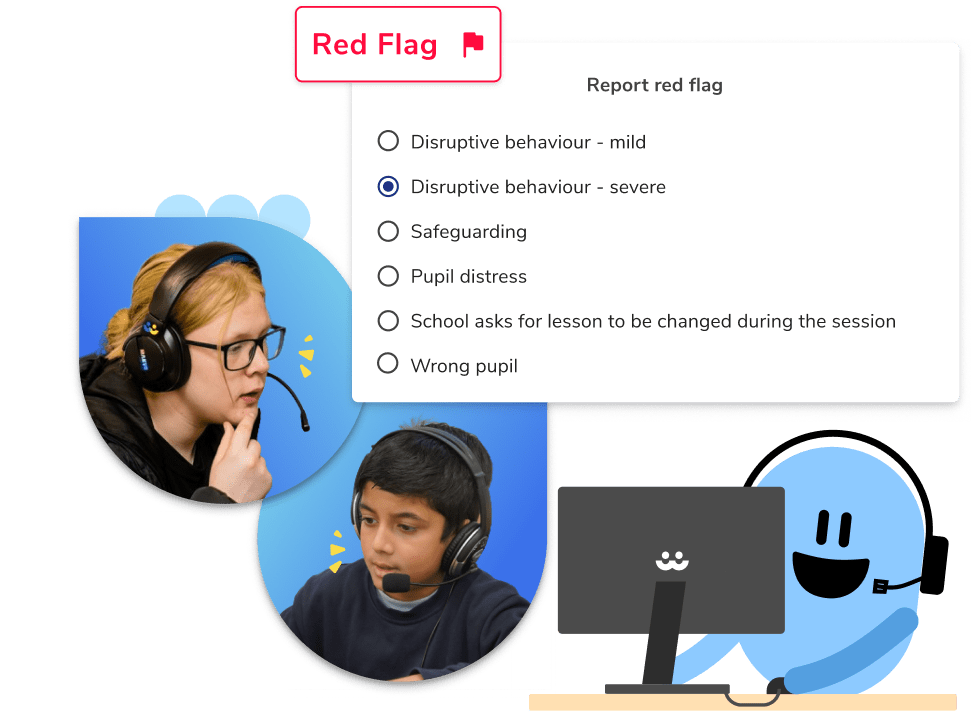
Second, every session is recorded, and there’s a red flag system that alerts us if a student says anything concerning, whether they’re in school or using it at home.
One year 11 student tried to test it by asking Skye, “What’s your favourite film?” Skye just looped back to the maths task. That moment reassured me more than any policy document – and it helped me reassure parents.
None of this was box-ticking. The DfE is clear that schools should weigh up whether an AI tool’s benefits outweigh the risks before adopting it, keep personal data out of these tools, and sit any AI use firmly within their existing safeguarding and data protection duties. Working through the Data Impact Assessment, confirming Skye is a closed system and checking the red-flag monitoring was live is exactly that process in practice – we made a deliberate, considered decision rather than drifting into it.
What we’ve learned about scaling the AI tutoring across the MAT
Across our four schools, two have scaled quickly, and two have taken a bit longer due to logistical hurdles. Bournville and Smithwood Academy in Solihull both had heads of department who committed early, form-time slots that weren’t already spoken for, and a spare computer room in the mornings. Smithwood has already expanded the AI maths tutoring to its year 10 students.
Of the two schools in the trusts that have had fewer students benefiting from the AI tutoring, the larger school has struggled most in getting access to computer rooms and laptops – their computer rooms are all occupied by tutor groups, and their laptops have been allocated to a literacy programme.
The lesson from this is that if you’re planning to implement this, think about your infrastructure in the summer term, not in September.
If you aren’t sure you have the tech in school, don’t give up, as there are always alternative routes and workarounds. One of our schools, fFairfax Academy, is rolling Skye out to students at home instead, because they struggled to find space during the school day and parental buy-in there is strong.
What’s next
I’m already planning for next year. The ambition is three concurrent blocks – year 11, year 10, and year 7. Year 7 is the exciting one. If we can use Skye to close foundational gaps in year 7, we’re not fighting fires in year 10 and year 11 further down the line.
Ofsted inspectors at Smithwood asked specifically about closing foundational knowledge gaps, so this feels like exactly the right direction.
For the first time in my career, I’m not having to choose which students get intervention. It really feels like the AI tutoring with Skye changes what a maths department can do.

DO YOU HAVE STUDENTS WHO NEED MORE SUPPORT IN MATHS?
Skye – our AI maths tutor built by teachers – gives students personalised one-to-one lessons that address learning gaps and build confidence.
Since 2013 we’ve taught over 2 million hours of maths lessons to more than 170,000 students to help them become fluent, able mathematicians.
Explore our AI maths tutoring or find out about the AI tutor for your school.