

How To Reduce Your Students’ Exam Anxiety: Practical Strategies From An Experienced Head Of Maths

Exam anxiety affects around 1 in 6 GCSE students (Putwain & Daly, 2014). In maths, the effect is compounded by the existing pressure of maths anxiety. As a maths lead, you’re not just managing content delivery and revision schedules in the weeks leading up to exams. You’re also managing the emotional reality of a cohort where some students will underperform not because of what they know, but because anxiety affects performance before they’ve written a single answer.
While 79% of school leaders have noticed a general increase in stress, anxiety, and panic among their students, 81% of school leaders worry more about pupils’ mental health during assessment periods than before. This remained a constant theme in our latest GCSE maths teacher survey.
This article sets out what exam anxiety actually is, why it hits harder in maths, and what schools and teachers can do about managing exam stress – before, during, and after tests.
Stay updated for 2026 GCSE season
Join our email list to be alerted to any new changes to GCSE maths exams in 2026.
We’ve got all the GCSE dates 2026 and we will be reviewing the contents of each of the GCSE maths papers in 2026 and taking a good look at the GCSE results 2026 in August.
Key takeaways:
- Exam anxiety affects around 1 in 6 GCSE students (Putwain & Daly, 2014), and in maths the effect is compounded by existing maths anxiety
- Exam stress and exam anxiety are not the same thing – and treating them differently matters for the support you offer
- The strategies that work fall into three phases: preparation before exams, coping techniques during tests, and pastoral follow-up after
- Building exam familiarity, teaching effective study habits, and promoting self-care are the highest-impact approaches for GCSE maths leads
- Students who feel anxious are not less able – they need a structured toolkit, not reassurance alone
- Schools can significantly reduce anxiety’s impact on attainment through consistent, low-stakes practice and a clear revision plan
What is exam anxiety?
Exam anxiety is a feeling of unease, such as worry or fear, around the prospect or experience of taking exams (NHS). It can be mild or severe, and can produce physical, mental, and behavioural symptoms that – when left unaddressed – negatively affect attainment.
It is worth distinguishing between stress and anxiety, as the two are often used interchangeably but are not the same. Stress refers to feeling under pressure; anxiety occurs when a student feels unable to cope with that pressure. Both are common responses for young people taking exams, but anxiety is the more disruptive of the two and requires more targeted support.
Feeling some degree of anxiety is normal when faced with a high-pressure situation. In fact, when the body experiences stress, it releases hormones such as adrenaline and cortisol that can provide energy, support decision-making, and allow clearer thinking. These can be useful before sitting an exam. The problem arises when that response becomes disproportionate – when students feel anxious to the point where their ability to concentrate, recall information, and perform is undermined.
Putwain and Daly (2014) found that in a class of 30, around five students are likely to experience test anxiety. Across a GCSE cohort, that represents a significant number of students whose results may not reflect their true ability.

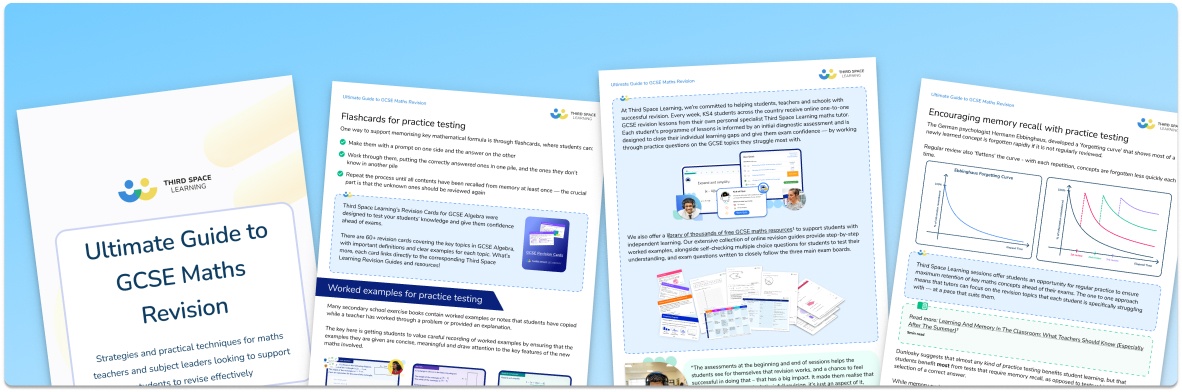
Ultimate guide to GCSE maths revision
Strategies and practical techniques for maths teachers and subject leaders to support students to revise effectively and manage exam anxiety.
Download Free Now!What causes exam anxiety?
Although more prevalent around exam season, test anxiety can occur at any point in the school year – including during lower-stakes assessments such as end-of-unit tests or mocks. Students’ perceptions of the importance of a particular test may differ significantly from those of the teacher. They may worry about disappointing parents, moving sets, or falling behind peers.
Common causes of exam anxiety include:
- Lack of preparation – both subject knowledge and exam technique
- Fear of failure and self doubt
- Internal and external pressure to perform
- Poor stress management and self-care habits
- Lack of confidence in their own ability
- Previous difficult experiences with tests and exams
- External factors already increasing stress levels – for example, changes to family circumstances or caring responsibilities
- Existing mental health conditions
Understanding what is driving a student’s anxiety makes it easier to offer support that is actually useful. A student whose anxiety stems from inadequate preparation needs a different response or resource than one whose anxiety is rooted in perfectionism or an existing mental health condition.
Exam anxiety and maths
Exam anxiety can be subject-specific, and maths is particularly vulnerable. Unlike other subjects, it is socially acceptable to describe yourself as ‘bad at maths’ – students are exposed to this framing at home and in school from an early age, which can entrench maths insecurity long before GCSE.
This makes maths anxiety, a stress response triggered by doing maths or even thinking about it, more likely to develop. Although research suggests maths anxiety is more prevalent among girls than boys (Baxter et al., 2014), it affects students across all attainment levels. Students who generally achieve well in maths can still experience significant anxiety.
Maths anxiety and test anxiety can become interdependent, creating a cycle that is difficult to break:
- Students experience anxiety around maths testing
- This leads to poor test performance
- They develop negative perceptions about their ability
- Anxiety increases ahead of the next assessment
Breaking this cycle requires building confidence alongside subject knowledge – not simply pushing harder on revision. The fight-or-flight response triggered by anxiety can cause physical reactions, including increased heart rate and faster breathing, which make it harder for students to concentrate and recall information under timed conditions.Exam anxiety and maths
How to recognise exam anxiety
Students who experience exam stress and anxiety can show a wide range of symptoms. Some are easier to spot than others. Sharing this information with students directly helps them recognise anxiety in themselves – and to understand that what they feel is normal and manageable with the right support.
Physical symptoms of exam anxiety
- Rapid heartbeat and/or breathing
- Shaking, feeling restless or tense
- Stomach pain or nausea
- Headaches and dizziness
- Changes to sleeping patterns (insomnia, feeling unusually tired, sleeping more)
Mental symptoms of exam anxiety
- Difficulty concentrating, racing thoughts
- Feelings of anxiety which may extend to other areas of life
- Negative thoughts – feeling overwhelmed or unable to cope
- Depression and withdrawal
Behavioural symptoms of exam anxiety
- Sudden changes to behaviour, unlike their “usual” patterns
- Restlessness
- Avoidance of stressors (e.g. not revising, not attending exams)
- Lack of motivation
- Lack of enjoyment in other activities, particularly recreational activities or hobbies
Significant changes in behaviour are often the most visible early indicator. A student who stops engaging with revision, withdraws from friends, or begins to feel stressed about school in a general sense may need support before they reach the point of panic during exams.
What is the impact of exam anxiety?
The relationship between exam anxiety and performance is generally negative: higher levels of anxiety are associated with lower academic achievement. When anxiety is perceived as a threat rather than a challenge, it can inhibit memory retrieval – making it harder for students to recall what they know even when they have revised thoroughly. A student who cannot perform to the best of their ability may receive a result that does not reflect what they are capable of, affecting their post-16 options and future prospects.
Less visible are the effects on a student’s well-being. Left without support, prolonged exam anxiety can keep the body in a near-constant state of fight-or-flight. Over time, high levels of cortisol and other stress hormones have significant negative effects on coping, sleep, appetite, concentration, and mood.
When does anxiety become a problem?
Not all anxiety requires intervention. A small amount of pressure or exam stress can sharpen focus and motivate revision. The problem arises when anxiety becomes chronic – when students are worrying about exams weeks before the season begins, when sleep is regularly disrupted, or when avoidance behaviour sets in.
At that point, exam anxiety is no longer primarily a performance issue, it is a student wellbeing issue. Schools should have a clear referral pathway to pastoral care or the safeguarding team for students whose anxiety extends beyond what revision support and coping strategies can address.
Key signs that a student may need wider mental health support:
- Persistent worry about exams that extends into daily life
- Significant changes to sleep, appetite, or energy
- Avoidance of school, lessons, or exams altogether
- Signs of panic during low-stakes assessments, not just high-stakes ones
This is not a comprehensive list. Use your professional judgement and refer to your school’s pastoral and safeguarding policies where appropriate.
8 strategies for reducing exam anxiety before exams
1. Build exam familiarity
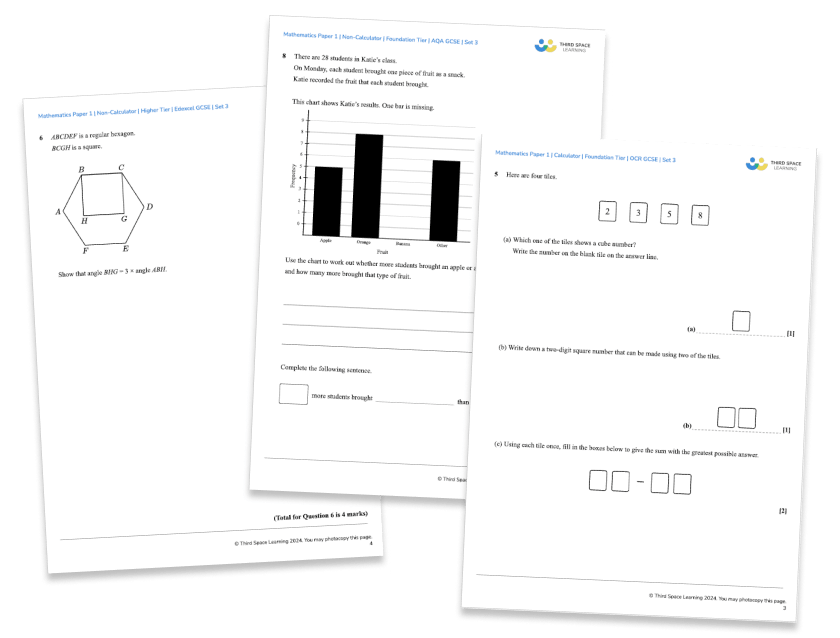
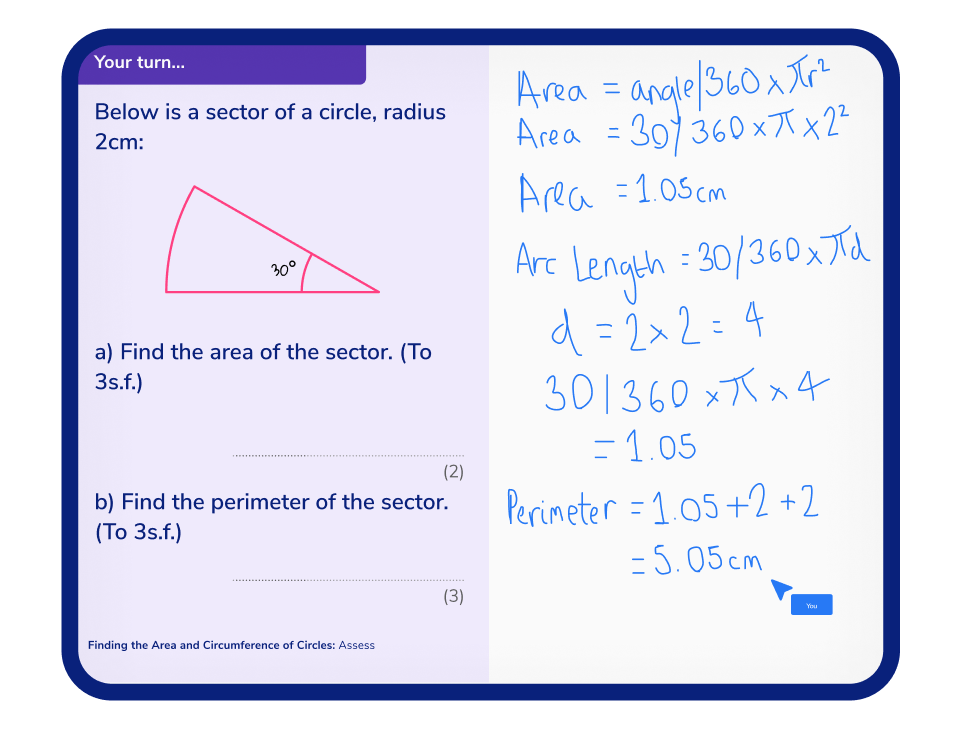
Students who feel stressed by the format and structure of the exam are more likely to feel anxious before they have answered a single question. Introducing past papers and exam-style questions into lessons throughout the year, not just in the weeks leading up to exams, builds familiarity and reduces the novelty of the exam environment.
Working in timed conditions also helps. Regularly working through the first five or ten questions of a paper within a set time limit replicates the exam setting in a low-stakes environment, without the pressure of full test conditions.
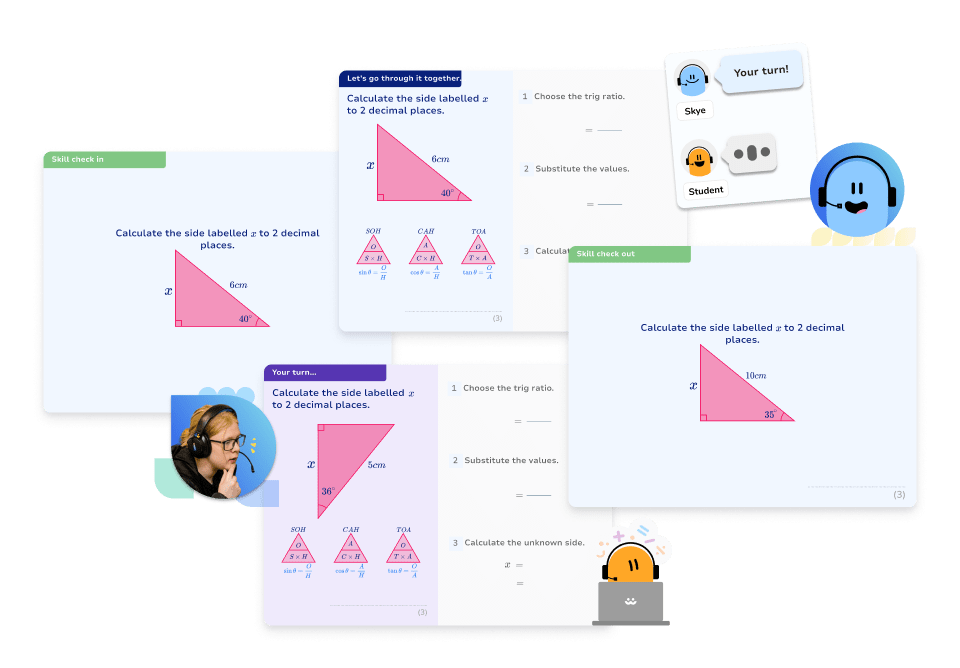
Skye, the AI maths tutor, works one-to-one with GCSE students using exam-style questions and challenge questions that require students to apply their knowledge in unfamiliar contexts – the kind of application that feels overwhelming under pressure if students haven’t practised it in a supported setting.
Read more:
2. Support students to take ownership of revision
Many students struggle to manage revision independently, particularly those without support at home. A structured revision plan reduces anxiety by giving students a sense of control over their preparation – they know what they need to do, when, and in what order.
Ensure students are clear on which topics to prioritise. Practising content they already know can create a false sense of security. Show them how to identify genuine gaps using recent assessment feedback and use that to inform their revision plan.
Teach students how to create and use a revision timetable, and dedicate lesson time to this in the weeks leading up to exam season. Students who have a plan are better equipped to manage stress before it builds into something more difficult to handle.
3. Teach effective study habits
Don’t leave revision techniques too late; help students develop study skills and understand how to revise effectively in KS3, if not before.
Introduce students to the concept of cognitive overload and explain why cramming and leaving things until the last minute does not work. Encourage students to practice little and often.
Model how to revise for GCSE and how to revise for maths using effective revision strategies.
- Focus on doing maths rather than reading notes to maximise knowledge retention.
- Leave phones and distractions in another room, lock them away if need be.
- Use timers to help get a set amount of undistracted revision completed.
- Take regular breaks, move away from your desk and then return to another set period of revision.
4. Build confidence and self-belief
Confidence is one of the most effective antidotes to exam anxiety. Both maths anxiety and test anxiety are often rooted in self-doubt and a fear of failure. Setting students up to experience success – particularly students who typically feel overwhelmed by maths – does more than subject knowledge revision alone.
Careful sequencing of topics in lessons matters here. Selecting content that gives students the opportunity to experience success before moving to more challenging material builds confidence in their own ability and in the teaching relationship. Students who trust that they can get things right are better able to stay calm when a question feels difficult.
5. Implement relaxation techniques
Relaxation techniques help calm the fight-or-flight response and allow students who feel anxious to regain control. They are particularly useful for more extreme anxiety reactions, including panic attacks. Crucially, they can be used before, during, and after exams.
Not all techniques will work for all students. It is worth introducing a range and allowing students to find what helps them. A simple breathing technique to start with:
- Four count – breathe in for a count of four, hold for a few moments, then out for a count of four
- Star breathing – trace one hand with the index finger, breathing in on the way up and out on the way down
- Figure of 8 – trace a figure of 8 on the inside of the forearm, breathing in and out with each loop
Mindfulness, observing the present moment without judgement, can also help students release tension and reduce anxiety. The NHS and MIND charity both offer accessible guidance that can be shared directly with students.
6. Listen to music
Listening to music can help distract from unhelpful thought processes and may activate pleasure centres in the brain, releasing dopamine. For students who feel stressed before exams, building a short wind-down or focus playlist into their revision routine is a simple, low-effort strategy.
7. Take a technology break
Social media and constant connectivity can exacerbate anxiety during exam season by increasing the information students absorb and the number of stimuli requiring a response. Encouraging students to take regular breaks from their phones, even for a few moments before a revision session, gives the brain space to concentrate.
Some schools have introduced voluntary digital detox programmes in the lead-up to GCSE season. Half of Year 11 pupils at Michaela School volunteered to hand in their phones until after their GCSE exams. This may not be the right approach for every school, but it illustrates how seriously some settings are taking the link between technology use and exam stress.
8. Promote self-care
Students who are operating at a high level of systemic stress are more likely to experience anxiety. Self-care strategies work by reducing cortisol and allowing the body to return to a more natural equilibrium. As a form tutor, maths lead, or pastoral contact, you are well placed to reinforce these messages in the weeks leading up to exams.
Key self-care strategies to promote to students:
Exercise
Regular physical activity decreases muscle tension, raises heart rate in a controlled way, and releases serotonin and dopamine – hormones that counteract the negative effects of stress. Even a short walk between revision sessions can help to reduce anxiety and improve focus.
Get a good night’s sleep
A good night’s sleep is one of the most important factors in managing exam stress. Sleep regulates cortisol production and consolidates learning. Students should aim for around eight hours a night. Phones and tablets outside the bedroom make this significantly more achievable. Regularly missing sleep not only increases anxiety, but it also undermines the revision they have done.
Diet and hydration
A balanced diet and adequate water intake help keep blood sugar stable, which maintains consistent energy and mood. Energy drinks, processed food, and excess sugar may provide a short-term boost but often exacerbate anxiety and reduce concentration.
Social connection and hobbies
Social connections can help alleviate feelings of anxiety during exam periods. Encourage students to maintain time with friends and to continue with activities they enjoy. Participating in hobbies and recreational activities reduces cortisol, provides perspective, and makes revision more sustainable.8. Promote self-care
How to cope with exam anxiety during maths tests
For optimal performance and maximum marks, students need to stay calm during exams. The techniques below address both the physical symptoms of anxiety and the practical management of exam time. Share these explicitly with students during revision lessons and mock preparation – they should be practised before the exam, not introduced for the first time on the day.
Stay calm and focused
Exam anxiety during tests can often escalate quickly, producing significant physical symptoms including shaking, rapid heart rate, nausea, and dizziness. Students need strategies to get these symptoms under control before attempting to continue with the paper. Suggest the following:
- Use a deep breathing technique – even a moment of controlled breathing can lower heart rate and reduce the sense of panic
- Use positive self-talk – remind yourself of what you do know, not what you are unsure of
- Focus on a nearby object – examine something on the desk to distract the brain and interrupt the anxiety response
- Visualisation – spend a few moments picturing a situation that evokes a calm or positive response
Explain to students that it is far better to take a short pause and re-centre than to press on through the paper when they feel overwhelmed. A minute spent calming down is not a minute wasted.
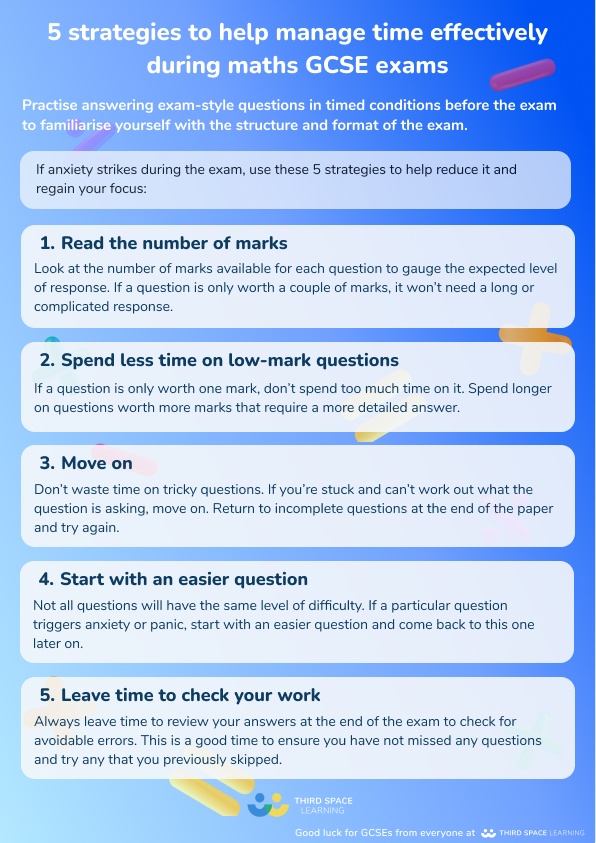
Manage exam time effectively
Teach students how to use exam time strategically during revision to reduce anxiety about time pressure on the day:
- Use the mark allocation to gauge how much time and effort each question warrants. A two-mark question does not need a lengthy response
- Do not spend too long on low-mark questions. If you have spent a few moments on a one or two mark question without progress, move on
- Move on if stuck and return to incomplete questions at the end
- Start with an easier question if a particular question triggers anxiety – build momentum first
- Leave time at the end to check single-mark questions for avoidable errors
Approach questions strategically
Longer problem-solving questions can feel overwhelming. Teach students to approach them systematically:
- Identify command words – ‘factorise’, ‘evaluate’, ‘prove’ each tell students what form their answer should take
- Read the question carefully, then re-read it before answering
- On calculator papers, record the method used as well as the answer to gain full marks
- For questions with a lot of information, tick off each piece of data as it is used
Work through blank mind moments explicitly with students. Explain that it is normal to experience them, regardless of how much revision has been done, and that the right response is to move on rather than to try to force the answer. When students return to a question, encourage them to mind map related concepts to find a way around the block.
Reassure students that they do not need to aim for perfection. A GCSE maths paper contains over 20 questions. Struggling with one question is not going to determine the result.
When should you seek additional help?
The strategies in this article will support students with mild or moderate exam anxiety, particularly where it is linked to exam season rather than occurring year-round.
If a student’s anxiety is affecting their daily life – persistent worry about exams outside of school, significant changes to sleep or appetite, or anxiety that has developed into depression or withdrawal – they may be experiencing an anxiety disorder and require professional support.
Depending on your school’s policies, this may mean referring to the student’s form tutor, wider pastoral team, SENCO, or safeguarding lead. If you are unsure, err on the side of referring sooner rather than later. While educators can help teach young people ways to manage stress and anxiety related to exams and support them in developing coping strategies that work for them, student wellbeing is not something to manage in isolation as a maths teacher.
Exam anxiety can have a significant and lasting impact on a student’s mental health and attainment if left without support. Be alert to significant or sudden changes in behaviour in the weeks leading up to exams, and remind students that they do not need to cope with these feelings alone.
Supporting GCSE maths revision with one-to-one tutoring
One of the most effective ways to reduce exam anxiety is to ensure students are genuinely well-prepared. Students who have had consistent, structured practice – including exam-style questions with scaffolded support – are more likely to feel confident going into the exam room.
Skye, the AI maths tutor, offers one-to-one GCSE maths tutoring built on five separate programmes for target grades 3–7, using exam-style questions drawn from past paper analysis. Sessions are available before, during, and after school, with no per-session fees, making it easier for schools to offer consistent support to the students who need it most without increasing teacher workload.
Exam anxiety FAQs
To help overcome exam anxiety, it can help to perform relaxation techniques, ensure you are well prepared for the exam and revise the topics you need extra support with. Eat a well-balanced diet and drink plenty of water to fuel your brain in the best way possible to prepare you for your exams.
Use relaxation techniques such as deep breathing to help relax before or during an exam. Move onto an easier question if you are stuck and come back to the harder questions at a later point in the exam. Focus on an object you can see until the anxiety subsides and then return to the question.
Test anxiety can occur for many reasons. It may be linked to fear of failure, high expectations, pressure to perform or perfectionism. There are many methods to reduce panic during exams such as being well prepared, adequate revision and a well-balanced diet.

DO YOU HAVE STUDENTS WHO NEED MORE SUPPORT IN MATHS?
Skye – our AI maths tutor built by teachers – gives students personalised one-to-one lessons that address learning gaps and build confidence.
Since 2013 we’ve taught over 2 million hours of maths lessons to more than 170,000 students to help them become fluent, able mathematicians.
Explore our AI maths tutoring or find out how our GCSE maths tutoring programmes could support students in your school.


![GCSE Maths Marking Decoded: How to Train Your Department and Boost Student Exam Performance [Video]](https://thirdspacelearning.com/wp-content/uploads/2026/02/Youtube-thumbnail_-GCSE-maths-marking-decoded-1-180x160.png)