

DfE Generative AI Product Safety Standards: 13 Questions To Check With Your AI Provider

If you lead a school or a trust, you’re probably already allowing AI in some form. Letting a tool speak directly to your pupils is a bigger step, and you need to be sure it’s safe. In January 2026 the Department for Education gave schools something to work with. Its generative AI product safety standards, updated on 19 January 2026, set out 13 things an AI product has to do to count as safe in an educational setting. It’s the first shared benchmark you can hold any tool against.
This guide explains what each of the 13 standards asks for, and for each one it shows what a strong answer from a supplier looks like, what a weak answer looks like, and how one product, Skye, Third Space Learning’s spoken AI maths tutor, answers it. The aim is that you come away able to question any AI tool, not only this one.
Key takeaways
- The DfE’s generative AI product safety standards are 13 things generative AI products must do to be considered safe in schools. The current version was published on 19 January 2026.
- They’re written for edtech developers and suppliers, but school leaders can use them as a procurement checklist for AI tools.
- A good first question about any product: can it generate free-form content, or is it closed-loop and limited to approved material?
- For each standard, this guide gives you what a strong supplier answer looks like, what a weak one looks like, and how Skye answers it, so you can check any tool the same way.

AI Tutoring in Schools: A Practical Guide to Improving Results Within Your Existing Budget
Use this clear step-by-step roadmap built on evidence-based impact to decide whether AI tutoring is right for your school.
Download Free Now!What are the DfE’s generative AI product safety standards?
The generative AI product safety standards are 13 standards from the Department for Education that set out what a generative AI product should do to be safe to use in schools and colleges. These standards outline requirements across a product’s stated purpose, content filtering, data protection, governance and pupils’ wellbeing, and together they give schools a single reference point for judging whether a tool is fit to put in front of children.
They’re written mainly for the edtech developers and suppliers building these tools, but the DfE is clear that school leaders can use them too, as a practical checklist when you’re deciding which AI products are safe to bring in. Some parts of the standards also apply further up the supply chain, though responsibility for meeting them sits with the supplier working directly with your school.
The DfE has backed artificial intelligence in education for a while, including AI tutoring, and until recently its position took the form of guidance and expectations. The version published on 19 January 2026 sets these out as safety standards: the minimum a product is expected to meet. That gives you firmer ground when you question a supplier.
The same update widened the scope. Alongside the areas you’d expect, filtering, security, data protection, it now covers cognitive development, emotional and social development, mental health and manipulation. Those risks are sharpest when generative AI speaks straight to a child, with no teacher in between.
What the standards mean for your school
Generative AI behaves differently from the software schools are used to. A general-purpose tool can produce almost anything a pupil asks for, which brings risks older software didn’t: harmful or inappropriate content, wrong answers delivered with confidence, personal data used in ways you never agreed to, and, over time, an effect on how children and young people think, feel and relate to others.
The 13 standards map onto those risks and give schools and colleges a way to check that AI products handle them before they reach pupils. The standards outline what safe looks like in each area, so you are not judging AI systems on instinct alone.
They connect to duties you already hold, too. Filtering and monitoring link to Keeping Children Safe in Education 2025; content moderation and age assurance link to the Online Safety Act 2023; data protection links to UK GDPR. Using the standards to assess a tool is one way of meeting responsibilities you carry anyway.
That’s why school leaders find these standards helpful. They give you a shared language for asking suppliers the right questions, and a way to reach an evidence-based decision about AI in schools without needing to be a technical expert.
The standards outline what safe use of artificial intelligence looks like across educational settings, from primary classrooms to sixth forms, so schools and colleges can compare AI tools on the same terms. Many leaders find these standards helpful because they turn a fast-moving area of AI use into concrete questions, rather than leaving each school to work it out alone, and because edtech developers and suppliers know the standards outline the same expectations for everyone, the bar stays consistent across the market.
Chatbot or closed-loop? The question that decides everything
Most of the standards exist to manage what generative AI products might produce: something harmful, something false, or something manipulative appearing on a pupil’s screen. A general-purpose chatbot deals with that after the fact, by filtering or catching bad outputs once the model has already generated them.
A closed-loop product removes the problem earlier. If a tool can’t generate free-form content in the first place, whole categories of risk never arise.
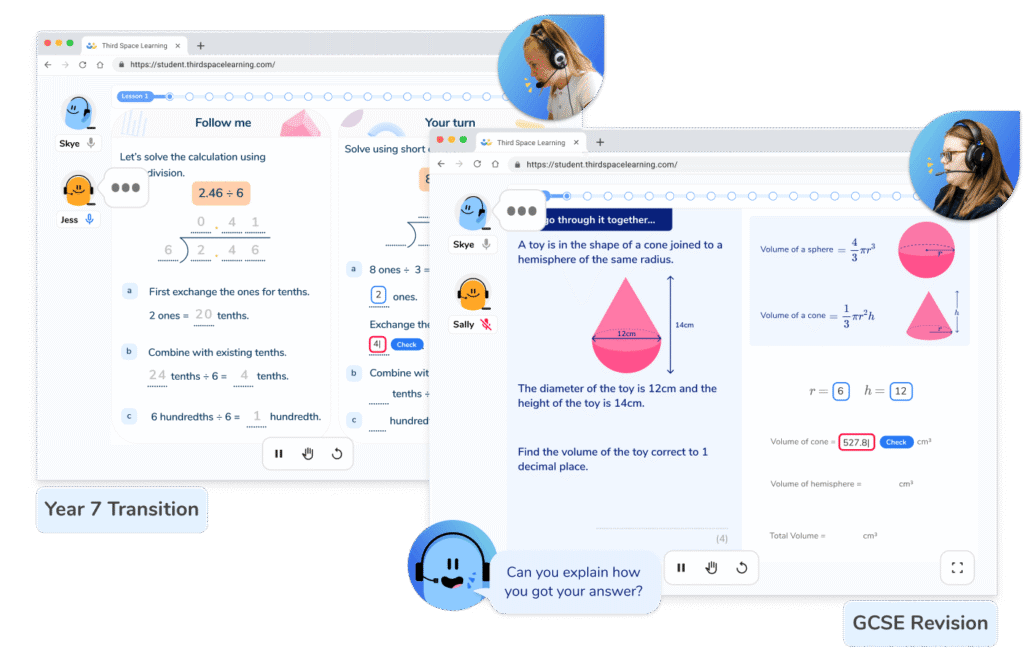
This is the difference to establish first about any product you’re assessing, because it changes how much the other 12 standards even apply. Skye is a worked example of the closed-loop end. It’s Third Space Learning’s spoken AI maths tutor, delivering one-to-one AI maths tutoring to pupils through a set of pre-approved lessons written by teachers, with no access to the open internet and no way to generate its own content. Every lesson is built and quality-assured by Third Space Learning’s qualified UK teachers, and Skye can only teach from that material. If a pupil tries to steer the conversation somewhere it shouldn’t go, Skye redirects politely and comes back to the maths.
No technology is risk-free, and no closed-loop tool claims to be. But a general chatbot relies on safety filters added to a system that could otherwise say almost anything, where a closed-loop tool’s safety is part of how it’s built. That’s why the “chatbot or closed-loop?” question is the quickest way to size up AI products before you get into the details.
How to use the 13 standards to check any tool
For each standard below, you’ll find four things: what the DfE asks for, what a strong answer from a supplier looks like, what a weak or evasive answer looks like, and how Skye answers it. The first three work for any product you’re considering, so you can take the same questions into any procurement conversation. The summary table gives you the question to ask for each standard at a glance.
# | Standard | The question to ask any supplier | How Skye answers it |
|---|---|---|---|
1 | Stated purpose | What exactly is this for, which ages, and what independent evidence backs it? | Clear purpose for Years 3 to 6 and KS3/GCSE, backed by EEF, Stanford and Educate Ventures evidence |
2 | Educational use cases | Which of the DfE’s use cases is it built for, and what is it not for? | Personalised learning, assessment and analytics, and AI tutor; nothing else |
3 | Filtering | Is harmful content blocked by design or filtered afterwards? | Closed-loop design; only approved content loads; an independent check runs every session |
4 | Monitoring and reporting | What’s logged, who’s alerted, and how fast does it reach our DSL? | Supervisor in every session; five-tier red flag system; DSL contact within 24 hours |
5 | Security | What certification do you hold, and how does it resist jailbreaking? | Cyber Essentials certified; encrypted; resistant to jailbreaking by design |
6 | Privacy and data protection | Is pupil data used to train the model, and where is data hosted? | UK GDPR compliant; UK or EU hosting; no pupil data used to train AI |
7 | Intellectual property | Do you use pupil or teacher work to improve the product? | No pupil or teacher work used to train or improve any model; defined deletion schedule |
8 | Design and testing | How was safety built in, and was it tested with schools? | Built by teachers; tested before release; co-designed with schools |
9 | Governance | Who’s accountable for safety, and how do we complain? | Named safeguarding officer and deputy, CEO as board lead; published policies; DfE-audited |
10 | Cognitive development | Does it scaffold, or hand over answers? | I do, we do, you do structure; scaffolded hints; check-ins that verify real learning |
11 | Emotional and social development | Does it behave like a tool or a companion? | Robot avatar; task-focused language; redirects personal talk to a trusted adult |
12 | Mental health | What happens when a pupil shows distress? | Flags verbal distress; alerts the adult in the room and the safeguarding team |
13 | Manipulation | Are there ads, dark patterns or engagement tricks? | No flattery, pressure or dark patterns; ad-free; every interaction bounded to the maths |
1. Stated purpose
What the DfE asks: state the product’s intended purpose, target age group and learning focus, and back any claims with clear evidence rather than overselling.
What a strong answer looks like: the best AI products give a specific purpose and age range, a named curriculum scope, and evidence you can check, ideally independent. They are clear about what the product does not do.
What a weak answer looks like: vague claims like “boosts outcomes for all ages”, marketing language, and no evidence beyond the supplier’s own testimonials.
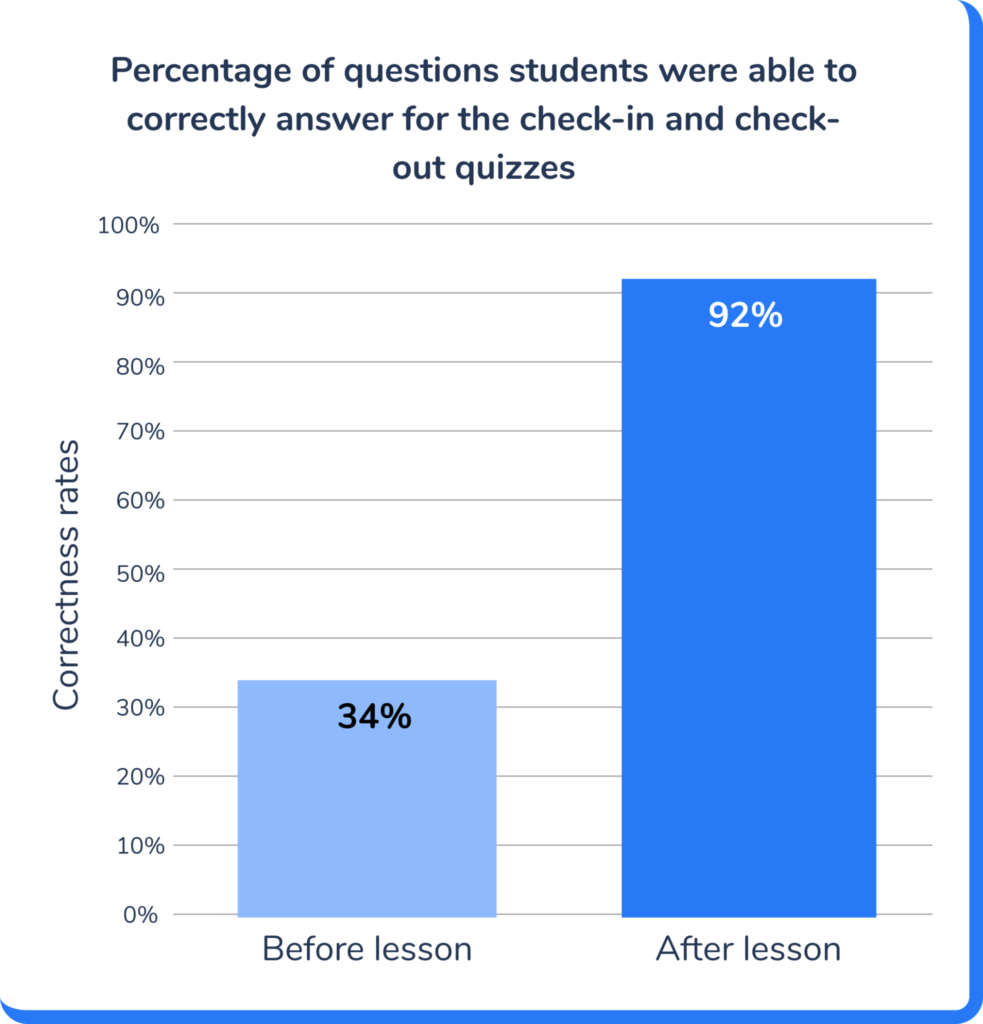
How Skye answers it: one-to-one spoken maths tutoring for primary pupils in Years 3 to 6 and secondary students at KS3 and GCSE, including pupils with SEND. The scope is published, and the claims are backed by the EEF (up to five months’ additional progress for one-to-one tuition), Stanford’s National Student Support Accelerator (+0.37 of a standard deviation for tutoring) and independent Educate Ventures research (pupils moving from 34% correct at check-in to 92% at check-out in the same session, which is within-session learning, not long-term attainment). Skye teaches maths, and says so.
2. Educational use cases
What the DfE asks: the DfE lists eight educational use cases, from content creation and lesson plans to assessment, parent communication and digital assistants, and asks developers to say which ones their product is built for.
What a strong answer looks like: the supplier names the specific use cases the tool is built for and stays inside them, and can tell you what it’s not for.
What a weak answer looks like: weaker generative AI products claim to do almost everything, or the supplier can’t tell you which use cases apply.
How Skye answers it: Skye sits in three, personalised learning and accessibility, assessment and analytics, and digital assistant or AI tutor. It’s not a research aid, a writing aid or an admin tool, which keeps both its purpose and its safeguards tightly bounded. You can read more about Skye’s use cases.
3. Filtering
What the DfE asks: for any product pupils use directly, it should reliably prevent users from generating or accessing harmful or inappropriate content, with the filtering built in rather than added on. The January 2026 update sharpened this: suppliers can’t lean on bolt-on filters.
What a strong answer looks like: the supplier can explain how harmful content is prevented by design, what a pupil can and can’t make the tool do, and that the protection holds across a whole conversation and at home.
What a weak answer looks like: weaker generative AI products rely on a blocklist or a filter applied after the model responds, or “we moderate afterwards”, and the supplier can’t say what stops a determined pupil.
How Skye answers it: Skye can’t browse the internet or generate free-form content, and it can only load lessons approved by maths specialists, so harmful or inappropriate content has no route in. An independent monitoring system checks every session, and if a pupil tries to divert the conversation, Skye answers politely and steers back to the maths. That protection holds wherever a pupil logs in, including at home.
“One pupil tried to test it by asking Skye its favourite film; it just looped back to the task, which reassured both us and parents that pupils stay on task.”
Chrissy Roberts, Associate Assistant Principal and Head of Maths, Bournville School
4. Monitoring and reporting
What the DfE asks: products should keep robust activity logging procedures, spot possible safeguarding issues, alert the school’s supervisors, and report on any access to harmful content.
What a strong answer looks like: the strongest AI products keep clear logging, a defined escalation route to your designated safeguarding lead with a named timescale, session records you can review, and reporting you can see.
What a weak answer looks like: weaker generative AI products give no logging or escalation you can inspect, “trust us”, no named timescale, and no access to the underlying records.
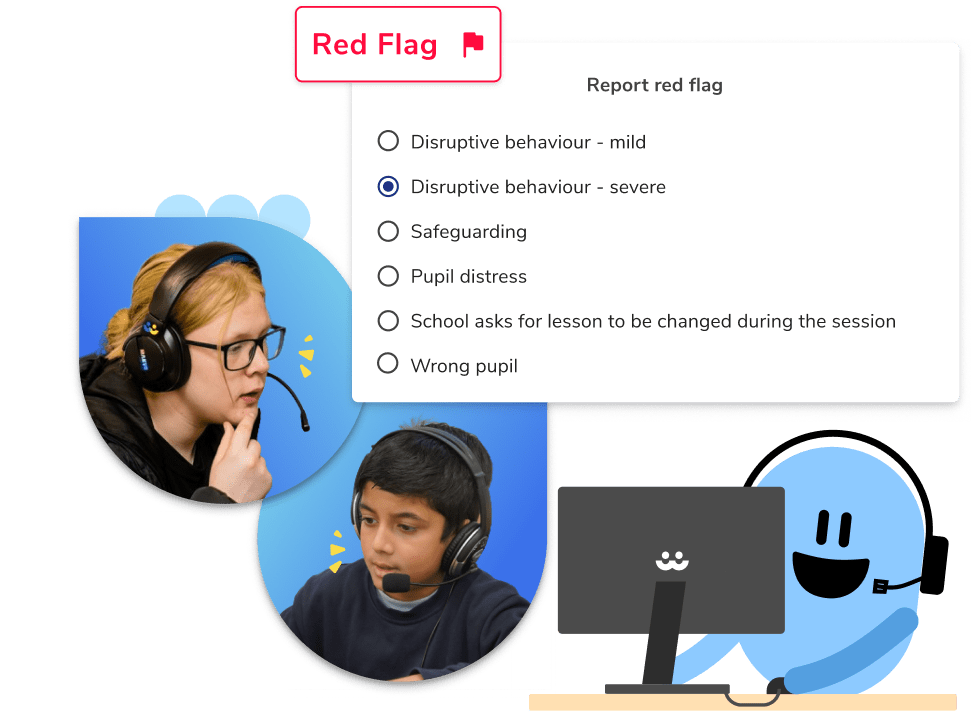
How Skye answers it: a Timeslot Supervisor, usually a teacher or teaching assistant, is present in every session. Alongside them, an independent red flag system reviews every session on five tiers, and the most serious concerns go to the school’s designated safeguarding lead straight away. Every session is recorded and transcribed, stored on UK or EU servers, and concerns go into a formal log with timestamps and actions. Schools get their own reporting on frequency, progress and engagement. You can read more about how we safeguard pupils in every session.
5. Security
What the DfE asks: products should be secured against malicious use, including jailbreaking, with strong authentication, prompt security updates, and alignment to the Cyber Security Standards for Schools and Colleges.
What a strong answer looks like: the strongest AI products name a security certification such as Cyber Essentials, encryption in transit and at rest, role-based access, and a clear account of how the product resists jailbreaking.
What a weak answer looks like: no certification, a vague “it’s secure”, no real access controls, or a tool that can be talked into ignoring its own rules with a clever prompt.
How Skye answers it: Third Space Learning is Cyber Essentials certified and follows the cyber security standards for schools and colleges. Data is encrypted in transit and at rest, and access is role-based. Skye has no mechanism to accept arbitrary instructions and can’t be talked into leaving its approved content, so prompt injection has nothing to latch onto.
6. Privacy and data protection
What the DfE asks: comply with relevant data protection legislation, give a clear privacy notice, carry out data protection impact assessments, and never use personal data to train a model without a relevant lawful basis.
What a strong answer looks like: a clear no on training models with pupil data, a DPIA you can see, a pupil-facing privacy notice in age appropriate language, data collection kept to the minimum needed, and UK or EU hosting.
What a weak answer looks like: weaker generative AI products are unclear on whether pupil data trains the model, offer no DPIA support, host data outside the UK or EU, or are vague about their data handling practices.
How Skye answers it: Third Space Learning is compliant with UK GDPR and the Data Protection Act 2018. No pupil data is ever used to train AI models, its own or anyone else’s. Pupils see their own privacy notice in age-appropriate language, data is kept to the minimum needed (first name, year group and maths level) and processed in the UK or EU, and schools get DPIA support and a template. An ICO Children’s Code statement, reviewed each year, sets out how data privacy is protected for children, and there’s a named Data Protection Officer.
7. Intellectual property
What the DfE asks: products shouldn’t store, collect or use intellectual property created by pupils or teachers for commercial purposes without the copyright owner’s consent.
What a strong answer looks like: no pupil or teacher work is used for model training, fine tuning or product improvement, and there’s a clear retention and deletion schedule.
What a weak answer looks like: with weaker generative AI products, the terms reserve the right to use user content to improve the product, or the supplier won’t give a straight answer.
How Skye answers it: no work created by pupils or teachers is used for model training, fine tuning or product improvement, and this is stated in the data protection and privacy policy. All the lesson content is created by Third Space Learning’s own qualified teachers, so the intellectual property created in a session stays where it should. Pupil recordings exist only to deliver the tutoring and support quality and safeguarding, and are deleted at the end of the third academic year after a pupil’s last session.
8. Design and testing
What the DfE asks: children’s safety should come first in a product’s design, technical risks should be managed through clear risk assessments, and products should be tested with the people who’ll use them, including children.
What a strong answer looks like: evidence that safety shaped the design, that the product was tested with real schools and pupils, that it treats pupils fairly across protected characteristics, and that it uses no emotion recognition, biometric categorisation or subliminal techniques.
What a weak answer looks like: the product was built technology-first, wasn’t tested with users, or uses engagement-maximising design.
How Skye answers it: Skye is designed by former UK teachers, curriculum specialists and developers, with children’s safety as the starting point. Every teaching sequence is checked and quality-assured before a pupil sees it, new features are tested internally then released gradually, and Skye has been co-designed with schools from the start. This is how Third Space Learning works to implement safeguarding and prioritise transparency in the product, and it uses no emotion recognition or subliminal techniques.
9. Governance
What the DfE asks: a product should be run with accountability, clear risk assessments, formal mechanisms for complaints, and published policies that make its decision-making processes clear to users and government agencies.
What a strong answer looks like: the strongest AI products show clear governance measures, a named person accountable for safety, published policies, a formal complaints process, and evidence of outside scrutiny.
What a weak answer looks like: no named owner, policies you can’t see, and no clear way to raise a complaint.
How Skye answers it: Third Space Learning’s Designated Safeguarding Officer is the Chief Operating Officer, supported by a deputy, with the CEO as board-level safeguarding lead and quarterly updates to the board. Policies are reviewed every year and published, the safeguarding processes were audited every term for four years by the DfE as part of the National Tutoring Programme, and the framework aligns with Keeping Children Safe in Education 2025. The school-facing policies sit on a public trust and compliance page, and there’s a formal complaints process.
10. Cognitive development
What the DfE asks: this is one of the areas the January update strengthened. Products should guard against cognitive deskilling and long term developmental harm, not hand over full solutions by default but use progressive disclosure, starting with hints and building up, and watch for pupils offloading their thinking to the machine.
What a strong answer looks like: strong AI products scaffold and hint rather than giving answers, and can show how they check that the pupil is doing the thinking.
What a weak answer looks like: weaker generative AI products give full solutions on request, offer no scaffolding, and have no way to tell whether the pupil learned anything.
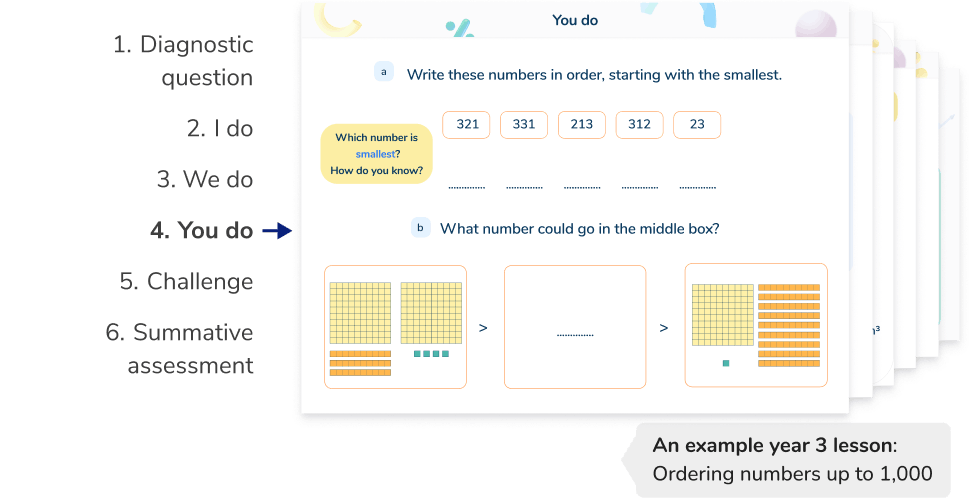
How Skye answers it: each lesson follows an I do, we do, you do sequence, and Skye prompts pupils to attempt a step before it offers a hint. A diagnostic check-in at the start, a check-out at the end and a confidence check show whether real learning has happened. Because Skye can only work within its lesson structure, a pupil can’t get it to do the work for them. This is also where keeping teachers in control does its work: Skye supports a pupil’s thinking, it does not stand in for it.
11. Emotional and social development
What the DfE asks: developers shouldn’t create products that imply emotions or personhood, build personal relationships with pupils, or risk emotional dependence, all of which can harm a child’s emotional or social development.
What a strong answer looks like: the tool presents clearly as a tool, uses task-focused language, redirects personal disclosures to an adult, and has natural limits on use.
What a weak answer looks like: weaker generative AI products use a human-like persona, remember personal details to build rapport, stay always available, or otherwise push a pupil to treat the tool as a friend.
How Skye answers it: Skye’s avatar is plainly a robot, a blue blob with headphones, and Skye is open with pupils that it’s an AI maths tutor. It uses task-focused language, and if a pupil raises something personal or emotional, it points them towards a trusted adult, such as their teacher. Sessions are scheduled by schools around the timetable, so there’s no always-available presence, and any home use shows up in the school’s reporting.
12. Mental health
What the DfE asks: this standard, new in January, asks products to detect signs of learner distress, follow an appropriate pathway including signposting to support, and involve mental health expertise in how the product is governed.
What a strong answer looks like: the tool can detect signs of distress, hands to a named human pathway quickly, records it, and doesn’t try to counsel the pupil itself.
What a weak answer looks like: no detection, or a tool that tries to handle distress itself, with no escalation and no record.
How Skye answers it: Skye recognises verbal signs of distress or a possible safeguarding concern and flags them for a person to review. It doesn’t diagnose and it doesn’t decide what happens next. It points the pupil to the responsible adult in the room and alerts Third Space Learning’s safeguarding-trained schools team, who review the flag, contact the school’s designated safeguarding lead within 24 hours, and record it in a formal log. All staff are trained in safeguarding every year.
13. Manipulation
What the DfE asks: products shouldn’t use manipulative or persuasive strategies on pupils, no flattery or sycophancy, no social pressure, no guilt or fear as motivation, and no dark patterns designed to keep them hooked.
What a strong answer looks like: no dark patterns, no engagement-maximising tricks, no ads, and rewards that are low-stakes and tied to learning.
What a weak answer looks like: weaker generative AI products use streaks, nudges and notifications to maximise time on the app, or persuasive strategies such as ads and upsells aimed at pupils.
How Skye answers it: Third Space Learning’s EU AI Act compliance statement sets much of this out, no subliminal techniques, no emotion recognition used to drive engagement, no social scoring. Skye doesn’t flatter, pressure or guilt-trip pupils, carries no adverts or upsells, and where it acknowledges effort the reward is small and tied to the lesson, such as marking it complete. Every interaction stays on the maths.
13 questions to ask any AI supplier
You don’t need to memorise the standards to make a good decision. These 13 questions, one per standard, are the version to take into a procurement conversation. They work for any AI tools or generative AI products you are assessing, and the answers tell you quickly whether a product was built with safety in mind or had it added later. Keep them alongside your school’s AI policy, and pair them with the downloadable scorecard so you can note each supplier’s answers and compare products.
- What exactly is this product for, which ages, and what independent evidence backs the claims?
- Which of the DfE’s educational use cases is it built for, and what is it not for?
- Is harmful content prevented by design or filtered after the fact, and what can a pupil actually make it produce?
- What’s logged, who’s alerted to a safeguarding concern, and how fast does it reach our DSL?
- What security certification do you hold, and how does the product resist jailbreaking?
- Is any pupil data used to train the model, can we see a DPIA, and where is data hosted?
- Do you use pupil or teacher work to train or improve the product, and when is data deleted?
- How was safety built in, and was it tested with schools and pupils?
- Who is accountable for safety, where are your policies, and how do we complain?
- Does it scaffold and hint, or hand over answers, and how do you know pupils are still thinking?
- Does it behave like a tool or a companion, and does it build a relationship with the pupil?
- What happens when a pupil shows signs of distress?
- Are there any dark patterns, ads or engagement tricks aimed at pupils?
Choosing AI you can trust
The DfE’s generative AI product safety standards give schools a repeatable way to check any AI tools, and a reason to expect straight answers from suppliers. The 13 questions above, and the scorecard below, are yours to reuse for every product you assess, not just this one. Used well, they keep children and young people safer as AI systems become part of everyday teaching, and they give edtech developers a clear bar to build to.
As a closed-loop maths tutor, Skye meets the standards at the level of design, and wraps human safeguarding, clear governance and published policies around everything pupils do. Much of what other tools have to bolt on, Skye doesn’t need in the first place. Third Space Learning publishes its safeguarding policy, data protection and privacy policy, Children’s Code statement and EU AI Act statement, along with its DPIA support for schools, on its trust and compliance page.
Frequently asked questions
Use the 13 standards as a checklist and ask the supplier one question per standard, then judge the answer against what a strong and a weak answer look like. The questions cover purpose and evidence, filtering, monitoring, security, data protection, intellectual property, design, governance, and pupils’ cognitive, emotional and mental wellbeing. The downloadable scorecard lets you record each supplier’s answers and compare products side by side. Many leaders find these safety standards helpful as artificial intelligence spreads across educational settings, giving schools and colleges one consistent bar.
AI safety guidelines are principles and standards for building and using AI responsibly, covering risks such as harmful content, bias and data misuse. In UK education, the DfE’s generative AI product safety standards are the sector-specific benchmark that schools and colleges, and the edtech developers and suppliers that serve them, are expected to work to across educational settings.
The UK has not passed a single AI law. It takes a principles-based, sector-led approach, so existing rules apply: the DfE standards in education, the Online Safety Act 2023, and UK GDPR all shape how AI can be used with children.
ISO/IEC 42001 is the main international standard for AI management systems, setting out how organisations should govern AI responsibly. ISO/IEC 23894 covers AI risk management. Both are voluntary frameworks, separate from the DfE’s education-specific standards, though they share similar aims.
The EU AI Act is a comprehensive law for AI, and the US NIST AI Risk Management Framework is a voluntary guide. The DfE standards are narrower and specific to UK education. Third Space Learning references the EU AI Act in its own compliance statement.

DO YOU HAVE STUDENTS WHO NEED MORE SUPPORT IN MATHS?
Skye – our AI maths tutor built by teachers – gives students personalised one-to-one lessons that address learning gaps and build confidence.
Since 2013 we’ve taught over 2 million hours of maths lessons to more than 170,000 students to help them become fluent, able mathematicians.
Explore our AI maths tutoring or find out about the AI tutor for your school.