

The Top 20 SATs Revision Topics For 2026 [Video]

Find out what the top 20 SATs revision topics are for 2026. Terri Higgins and Charlotte Grubecki discuss what the top 20 SATs revision topics are and how to break them down into manageable, bite-sized revision lessons for your Year 6 pupils.
Welcome everyone, and thank you for joining us today.
Today’s session is all about the Top SATs revision topics for 2026. Along with an analysis of the Top 20 topics, you can access exclusive resources, including SATS diagnostic questions and answers, complete with a RAG-style analysis, and the first three lessons from our SATs booster programme in our SATs resource pack.
We’ll also mention some of our most popular free resources along the way, and you can download these yourself with a free Third Space Learning Maths Hub account.
For those of you who aren’t familiar with Third Space Learning, we provide one to one AI maths tutoring for schools, and along with delivering thousands of one to one Year 6 maths sessions, we’ve analysed every SATs paper over the past eight years.
That combined experience has helped us pinpoint the top 20 SATs topics with the highest mark potential to help pupils achieve a scaled SATs score of 100.
These topics shape our own SATs booster programme. And when taught well and sequenced strategically, they give pupils the strongest foundation for success.
Discover how AI tutor, Skye, can improve your students’ confidence and maths results.
Get in touch to arrange a free AI maths tutoring session.
Try a free sessionIn the next 30 minutes, we’ll cover which Key Stage 2 maths topics appear most frequently in the SATS papers, which offer the highest mark potential, and how they shape the top 20 SATs revision topics.
We’ll also cover how you can structure your revision lessons to deliver impact while reducing cognitive load and building pupil confidence, all without adding to your workload.
Before we start, let’s introduce ourselves. I’m Charlotte, and before joining Third Space Learning, I was a primary school teacher for six years, mostly in Year 6, and I’m now the content editor here. My main role is to keep our content up to date and aligned with the latest pedagogy.
Joining me today is Terry, our primary curriculum lead.
Hi everyone, I’m Terry. Along with my team, I write and review all of the primary lessons and the programmes that our AI tutor Skye delivers to our pupils.
Before working at Third Space, I was also a primary school teacher for around ten years, and again worked mainly in Year 6.
Key Stage 2 maths content in the SATS papers
To start us off, Terry is going to walk us through how Key Stage 2 maths content typically appears in the SATS papers and what that means for planning focused, high-impact revision.
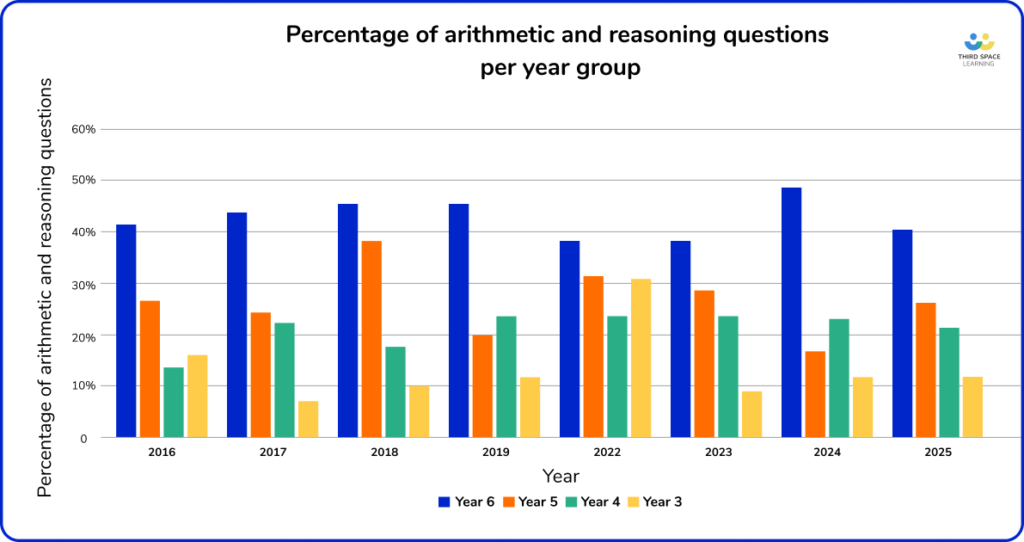
Looking at this graph from our SATs question level breakdown, we see that year on year, Year 6 content always makes up the majority of the paper. That’s consistent every single year.
The only change is that in 2022, the first SATS papers pupils sat straight after COVID. Obviously, pupils had gaps, and then in 2024, you see quite a sharp increase again in the Year 6 coverage, which was when it was assumed that those gaps were closed.
What we can take from that data is that it is really important to focus on making sure that when you start your revision plan, those Year 6 concepts are covered because they do get the most coverage on the papers.
But the thing to think about is that in order for pupils to really be secure with the Year 6 concepts and be able to grasp them properly, they must have those lower Year 3 and 4 concepts secure.
Lower Key Stage 2 concepts
Trying to teach Year 6 concepts in isolation isn’t necessarily going to give them the best chance of fully understanding them.
It’s worth making sure that your revision is balanced into a sequence that allows them to grasp and understand.
And that links also to how the papers are physically structured. The SATs reasoning papers will always start with Year 3 and 4 content, then get progressively harder, with that really tricky Year 6 content towards the back of the paper.
Focus pupils
When I was teaching, a lot of the focus pupils I worked with were those right on the cusp of expected. They’d be getting 98, 99 and needed that boost to get a scaled score of 100.
The reality for those pupils is that they are always going to find the reasoning paper tricky, and they likely won’t complete the whole paper because they’re finding it hard.
Their best chance of maximising those marks is to really nail those first 10 to 12 questions, because that’s where they’re more likely to pick up their marks.
That’s why it is super important that the Year 3, 4 and 5 content is really secure, even though it doesn’t get quite as much coverage as Year 6.
And when I was teaching as well, I’d also want that group of pupils to focus on the content domains where they could pick up the most marks most easily.
Which content domains contribute the most marks?
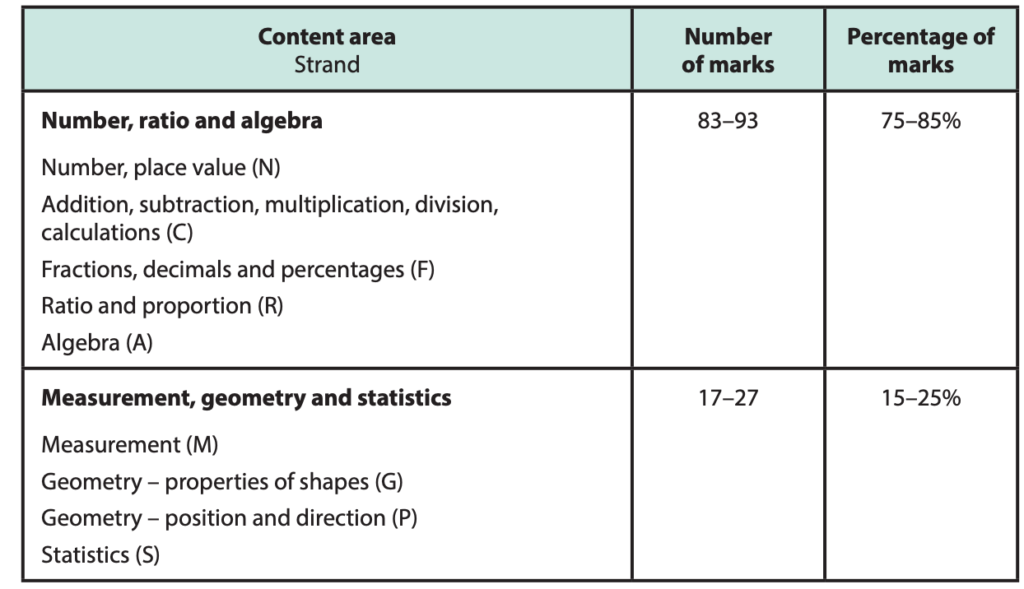
This table is what SATs test developers use when they’re creating the questions for the tests. They’re told that a certain percentage of marks needs to come from the first strand: number, ratio and algebra, and then the second strand: measurement, geometry and statistics.
That’s consistent every year. The papers will always look the same, and I don’t think there’s necessarily any surprises there for teachers.
But what is surprising is actually how high that percentage is, with 75 to 85% of the marks coming from that first strand: number, ratio and algebra. In comparison, only 15 to 25% come from measurement, geometry and statistics.
If you put that into perspective, pupils need between 50 to 55% to get expected. So if you only covered the areas in that first strand, and pupils got most of those questions right, and you didn’t even touch the areas in the second strand, they could still pass. When you’re trying to prioritise revision, those are definitely high-priority areas.
Reasoning and arithmetic paper breakdown
Another thing worth noting is that in both the reasoning and arithmetic papers, you’re guaranteed at least one question from that first strand – multiple, more likely.
But with measurement, geometry and statistics, it’s more of a mystery what will come up.
Some years, there hasn’t been anything on 3D shapes, some years, nothing on area.
Ideally, you’d get full curriculum coverage before SATs, of course, but time gets tight.
It’s worth considering how much of your revision time you want to spend on topics that may not even come up, and if they do, aren’t going to carry many marks, compared to the guaranteed high-priority areas.
On that point of revision time being tight, in our annual SATs survey, a lot of teachers tell us they either don’t have time for revision or just about have time.
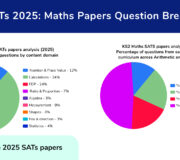
Bearing in mind that 75 to 85% of marks come from number, ratio and algebra, and that 34% of questions in the 2025 SATs came from calculation, how can teachers use this to guide them?
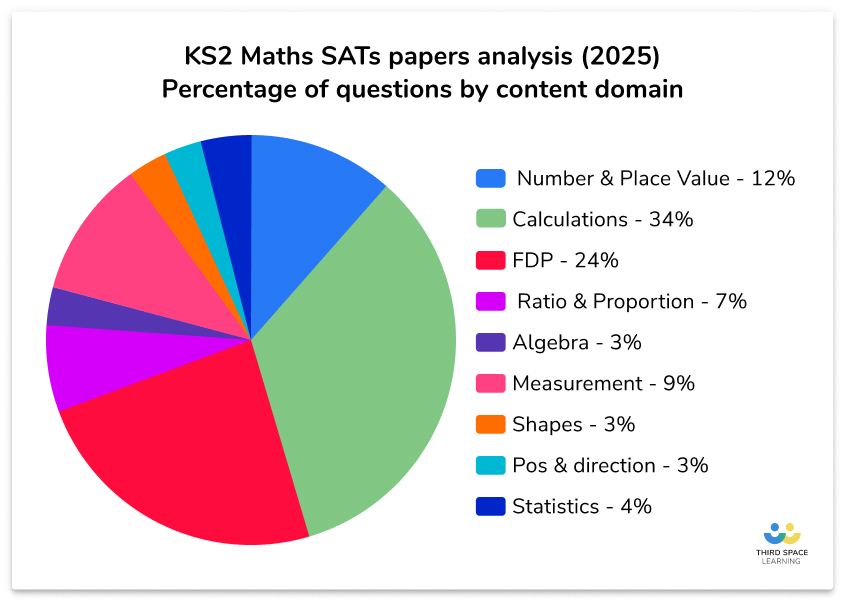
Calculation is such a significant area to focus on because not only does it make up so much of the paper, but it’s fundamental across so many other questions. Pupils often need calculation skills even when the question isn’t explicitly about calculation.
It’s useful to mention the arithmetic paper here because it has such a predictable formula each year. You always get long multiplication for two marks, long division for two marks, multiplying by 10 and 100 – it’s the same each year with different numbers.
For pupils pushing for the expected standard, the reasoning paper is much more unpredictable and harder. But the arithmetic paper is a great chance for them to maximise marks, because we can teach the effective methods they need.
They could be getting 40 out of 40, which leaves breathing room for the reasoning papers. Time must be set aside to make sure fluency and arithmetic skills are secure.
On the topic of structure, for anyone looking for free SATs practice papers, you can access six SATs practice papers for free.
The top 20 SATs revision topics: 2026
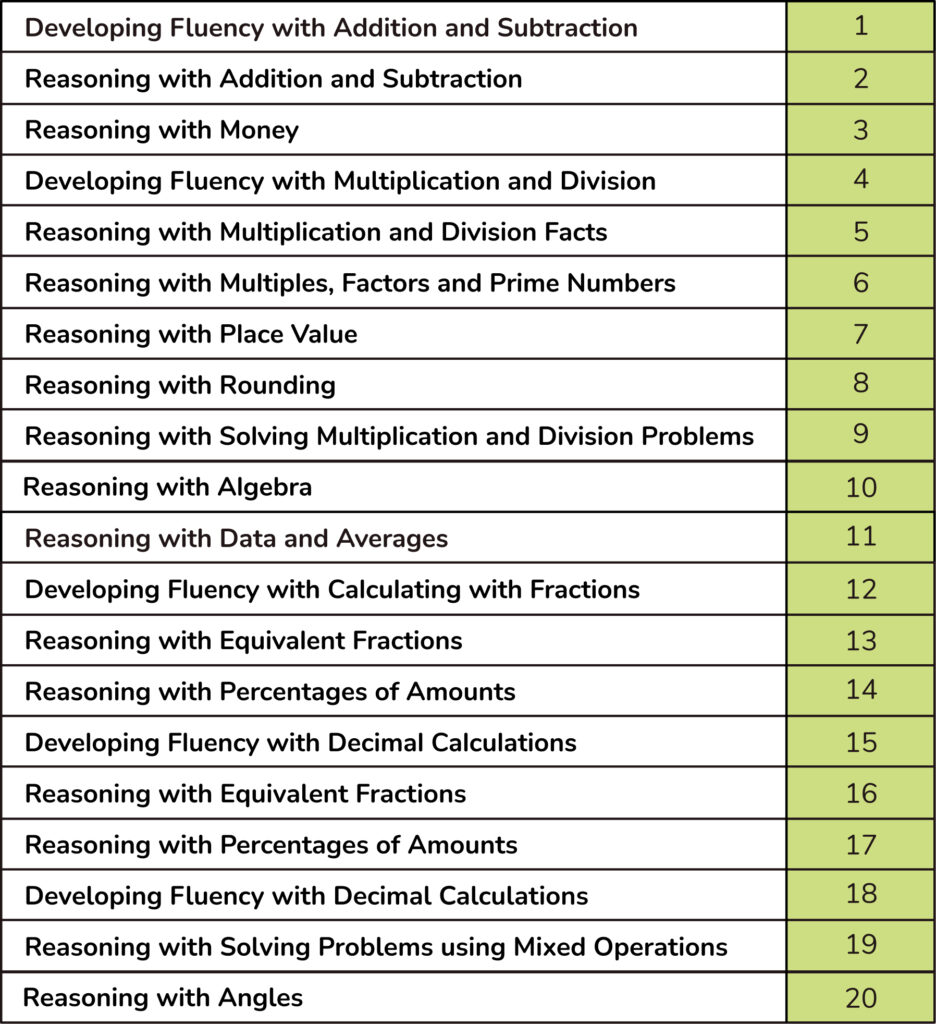
Making time for fluency is one of the key principles behind how we structured the top 20 topics.
These are the top 20 areas, and those of you familiar with Skye will recognise them as the basis of our SATS revision programme. We split them into fluency and reasoning.
There will always be at least one question on all of these areas, and most will come up multiple times.
When creating this order, we used two main principles:
- Balance of coverage and coherence,
- Balancing fluency and reasoning.
If you went purely by mark allocation, you’d put solving problems with mixed operations at number one. But in a coherent teaching sequence, pupils need fluency with addition, subtraction, multiplication and division first. So these topics are sequenced to build understanding.
The second principle is balancing fluency and reasoning.
Sometimes there’s an assumption that pupils should already be fluent, but many don’t have efficient strategies. Always put the fluency lesson just before the reasoning lessons that depend on it.
For example, fluency with addition and subtraction comes first, then reasoning questions involving addition, subtraction, and money. You need fluency skills to apply to reasoning.
Breaking down the top 20 SATs revision topics
These top 20 topics are a great starting point, and it’s helpful to see them split into fluency and reasoning, but they feel quite broad. For example, reasoning with addition and subtraction covers many question types. What can teachers do to break this down further?
This year, we’ve broken the 20 topics down into 60 mini-lessons. Each isolates one specific skill, so pupils aren’t juggling multiple methods at once.
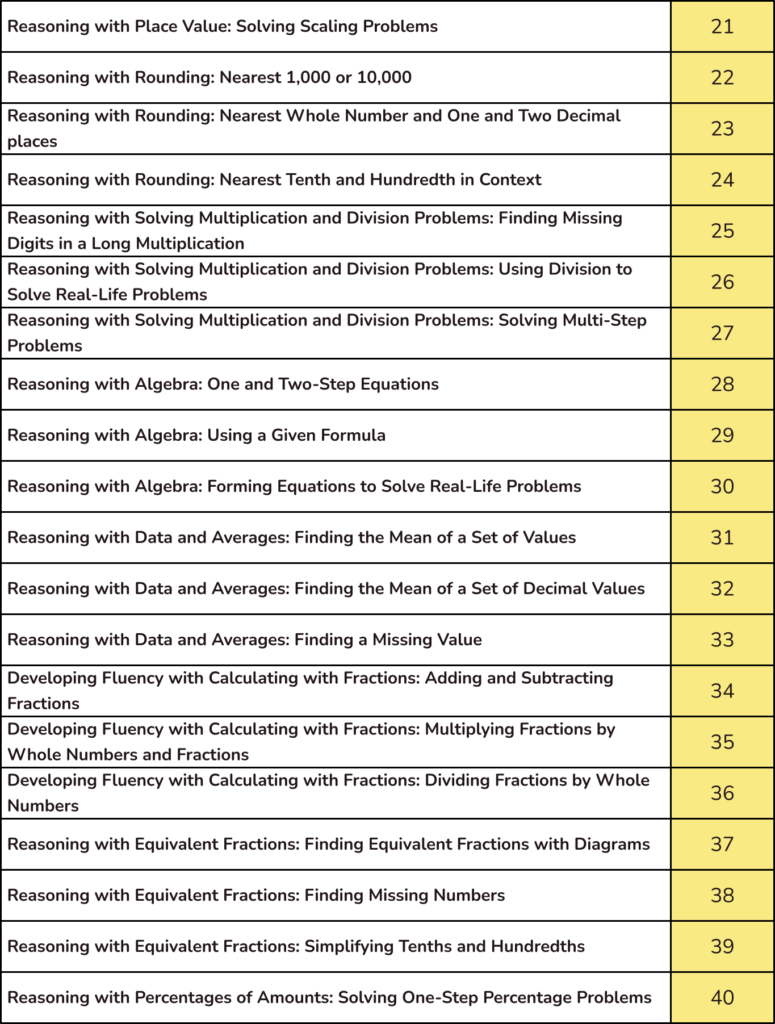
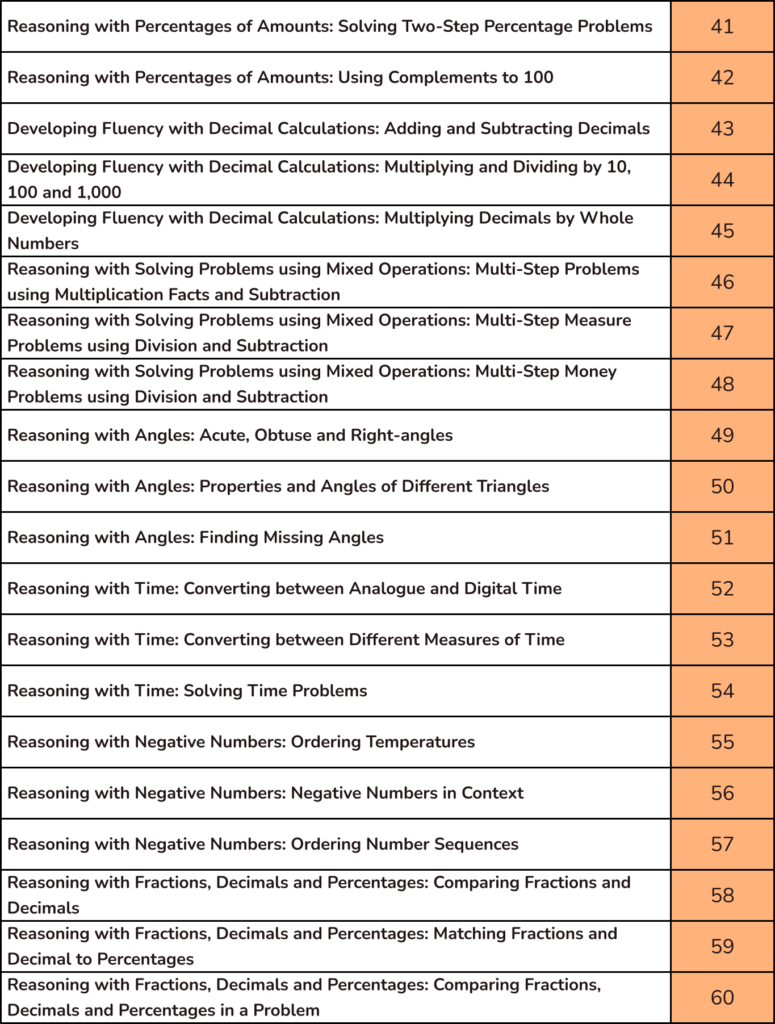
When I was teaching, my go-to revision method was grouping every addition and subtraction question – arithmetic, reasoning, everything. But those questions are different in nature and require different approaches. It’s more beneficial to group them into specific skills.
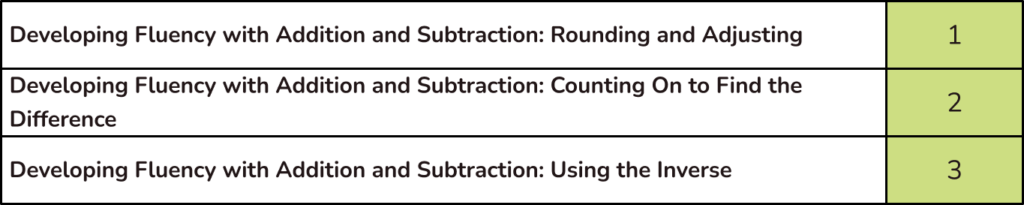
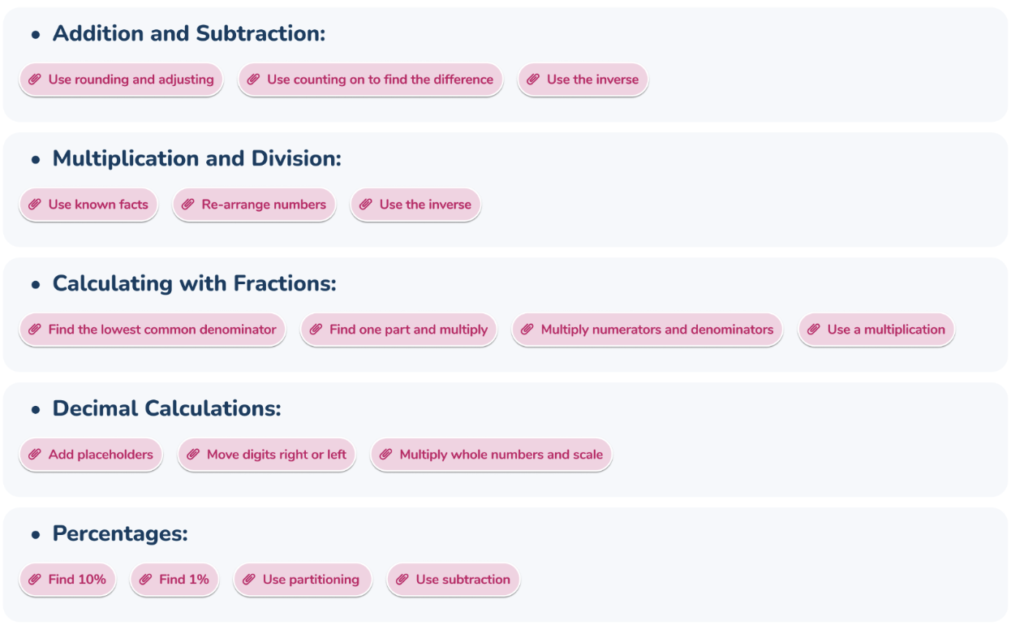
For example, the first three lessons develop fluency with addition and subtraction, but each focuses on a different method:
- rounding and adjusting
- counting on to find the difference
- using the inverse
This makes lessons shorter, more focused, and more achievable.
In tutoring sessions, we noticed pupils becoming frustrated with longer lessons that felt never-ending. Splitting them into shorter lessons helps pupils feel progress and grasp concepts more clearly.
Breaking concepts down reduces cognitive load
Beyond that, are there other methods you’ve used in these SATS lessons that teachers can replicate?
Yes, quite a lot of things that are quite easy.
The first is focusing on a single most effective method, rather than showing every possible approach. That helps pupils really understand what they’re doing, instead of flitting between methods.
To manage the redundancy effect, making sure only relevant information is on screen at any moment, we use blurring, gradually revealing information as it becomes relevant.
We also use a predictable lesson structure. Every lesson follows the same pattern, so pupils know what to expect and can focus on the maths rather than the format.
Based on that, I have two questions:
- What pattern do these predictable lessons follow?
- How can teachers replicate it without hours of planning?
Every lesson starts with a skill check-in question, answered independently. That shows how much support the pupil needs. If they get it wrong, we break the question down, explore the concepts, and scaffold the method.
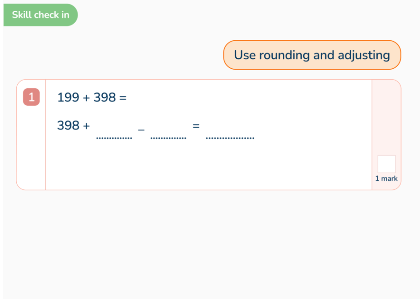
Then pupils practise similar questions with limited support.
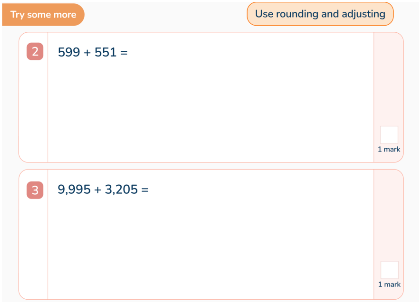
Every lesson ends with a skill checkout, again answered independently.
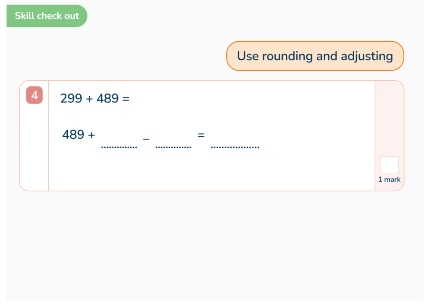
The skill check-out gives a clear endpoint to compare with the check-in. It also allows adaptive pacing.
If pupils get the check-in correct, they may not need as much scaffolding and can move on quickly. If they struggle, more modelling is needed.
Pupil confidence
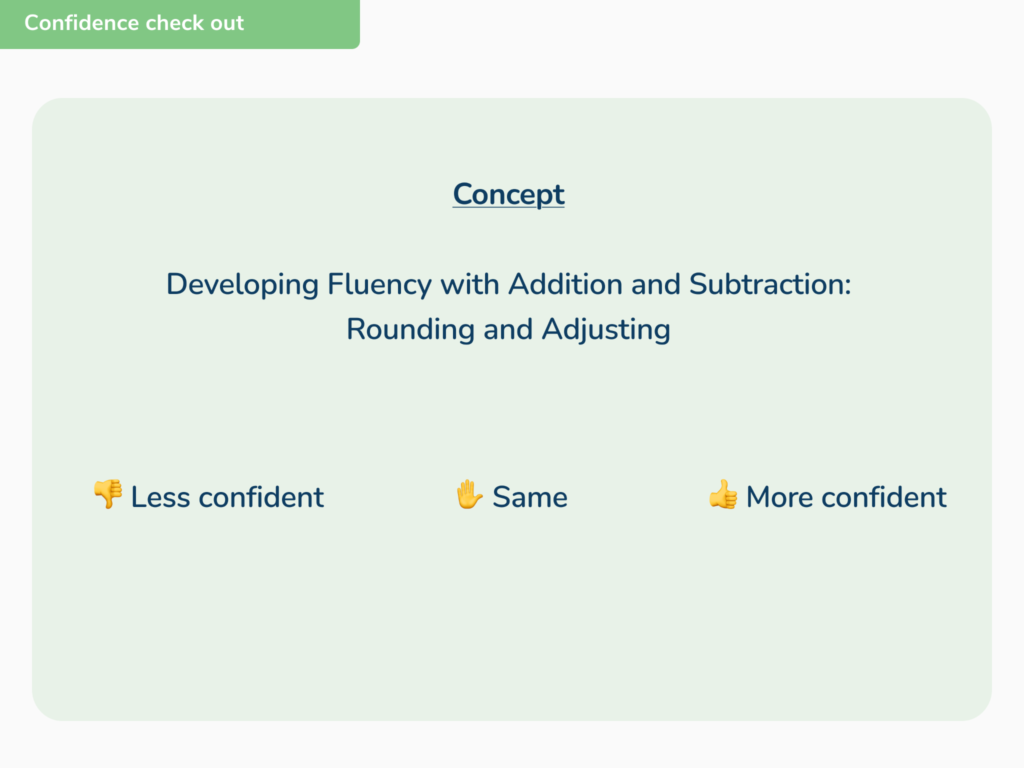
It also helps to check pupil confidence, even when answers are correct. In every lesson, pupils report how confident they feel at the end compared to the start. If confidence is low, it flags that something isn’t landing properly.
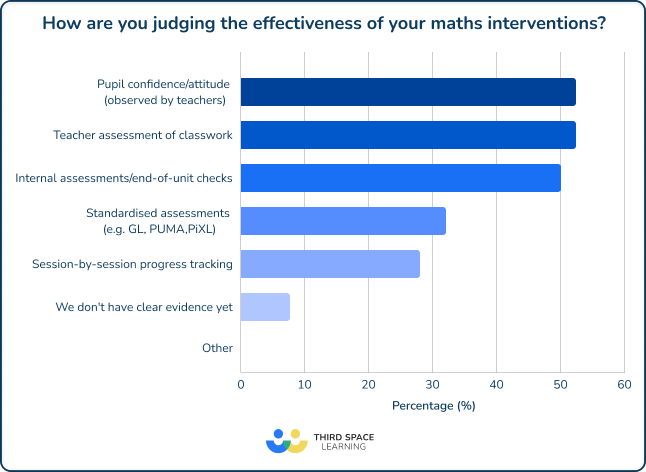
52% of schools monitor progress through confidence checks like traffic lights or thumbs up/down.
That’s subjective, though. What’s a more objective way to track progress?
Skill check-ins and checkouts give concrete evidence. It shows whether pupils could do it at the start and whether they can do it at the end.
Teachers also receive reports tracking this session to session. It helps make quick decisions: do we move on, or do we need another day on this?
SATs revision strategies
Are there any SATS strategies teachers should explicitly model during revision sessions?
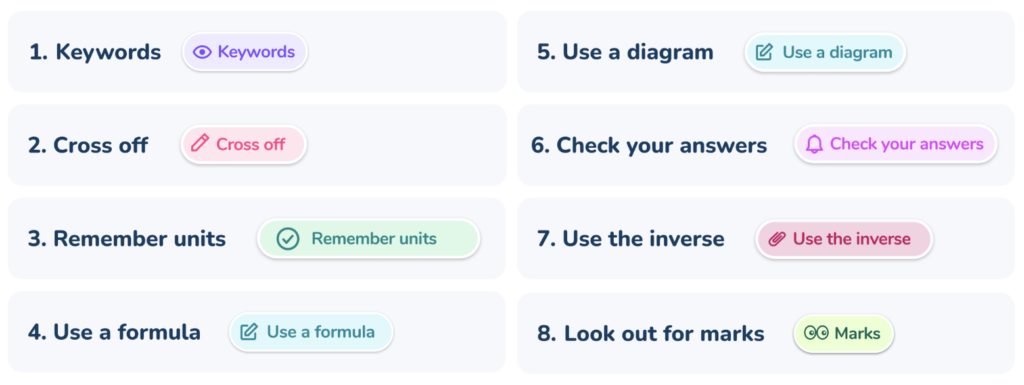
In reasoning lessons, we encourage strategies like:
- isolating keywords
- identifying operations
- including units
- checking answers
- looking for marks
Pupils don’t always do these automatically.
From marking SATS papers, method marks can only be awarded if every calculation is shown. Pupils can’t just write random numbers and hope the marker assumes the process.
Even if they can do it in their head, if there’s a method mark, write everything down.
Checking answers also matters; pupils often make transcription errors, like copying the wrong answer into the box. Or misreading numbers in the question.
Small things make a big difference.
In fluency lessons, focus more on efficient methods, like rounding and adjusting instead of column addition, or finding the lowest common denominator when adding fractions.
These help pupils work efficiently in the 30 minutes they get.
You can download all of these SATs strategies as a poster. And the free SATs papers, pupils can use those to practise strategies, even taking on the role of the marker. There are also SATs worked examples on the Third Space Maths Hub.
Adapting SATs revision for your cohort
Each cohort is unique, so you may want to adjust the order of topics to suit your pupils.
To help you decide when to start and what order to follow, we’ve created a SATS diagnostic assessment and RAG analysis based on these top 20 topics.
You can also use the first three lessons from our SATS booster programme to kickstart your planning.
You can access the resources on the Third Space Maths Hub. If you don’t already have one, you can create a free maths hub account for access to hundreds more resources.
And if you’re interested in finding out more about Skye, our AI maths tutor, you can get in touch by emailing hello@thirdspacelearning.com or registering your interest to try Skye for free online.
Good luck with your SATS revision, and we hope these resources help your pupils feel confident and prepared.

DO YOU HAVE STUDENTS WHO NEED MORE SUPPORT IN MATHS?
Skye – our AI maths tutor built by teachers – gives students personalised one-to-one lessons that address learning gaps and build confidence.
Since 2013 we’ve taught over 2 million hours of maths lessons to more than 170,000 students to help them become fluent, able mathematicians.
Explore our AI maths tutoring or find out about year 6 SATs for your school.