Kansas Math Standards: Aligned Lessons, Tests, Resources and Tutoring for Every Grade
Math lessons, resources and tutoring aligned to the Kansas Mathematics Standards (KCCRS) and the Kansas Assessment Program (KAP)
Standards-aligned lessons and practice materials for every grade, from kindergarten through high school
Built on the Common Core framework and matched to Kansas grade-level expectations, from counting and cardinality to ratios, proportional reasoning and early algebra
Understanding the Kansas math standards
The Kansas Mathematics Standards, also called the Kansas College and Career Ready Standards (KCCRS), set out what students should know and do at each grade level. The State Board of Education adopted the current 2017 version in August 2017, updating the 2010 set. Districts use them to build curriculum, and the state tests students through the Kansas Assessment Program in grades 3–8 and grade 10.
Math results in Kansas and the case for support
Kansas fourth-graders scored an average of 237 on the 2024 NAEP math assessment, level with the nation, with 40% at or above NAEP Proficient. In grade 8, the average was 274, again around the national figure, but only 26% reached Proficient. At both grades, the differences by income are stark: economically disadvantaged students scored 27 to 28 points lower than their peers – a gap that has barely moved since 2000. On the KAP itself, each student is placed in one of four performance levels, so a school can see which students sit below grade-level expectations and need more instruction time.
Those numbers are the honest case for regular, low-cost one-on-one support. The children furthest behind most need frequent, targeted instruction, and are least likely to get enough of it. Affordable tutoring means that support can run often enough to matter – more sessions, more practice materials, more time on the exact skills each child has not yet mastered.
Key features of the Kansas math standards
Math instruction is driven by research on how students learn and aligned to Kansas grade-level expectations.
A clear K–12 progression moves students from counting and number sense to fractions, algebraic reasoning, and high school functions.
The 8 mathematical practices build the reasoning and problem-solving skills students need for success at every grade.
Domains, clusters, and standards give teachers a structured map of what to teach and when, supported by progression documents and flip books for planning and intervention.
Real-world contexts run through the content, so students learn to identify patterns and apply math to situations beyond the classroom.
How Third Space Learning aligns to the Kansas math standards
Our lessons scaffold the standards content, moving students from first understanding to fluent, independent work and toward success on grade-level content.
Each one-on-one session aligns to grade-level standards and to what a class is learning that week.
Skye tracks each student’s progress and shows where understanding is secure and where it is not.
Progress is monitored against state grade-level expectations and KAP readiness, so success is measured against the same content the state assesses.
“As administrators, we’re always looking for that silver bullet, and this is pretty close. One-on-one interaction is what so many kids need, but providing that kind of instruction simultaneously just isn’t normally possible in school. With Third Space Learning, it is.”

Ryan Lucas
Principal, Governor’s Ranch Elementary School Colorado
Kansas-aligned math tutoring
Our AI math tutor delivers lessons built by math experts and aligned to the Kansas math standards (KCCRS), including KAP preparation.
Learn moreKansas-aligned math lessons
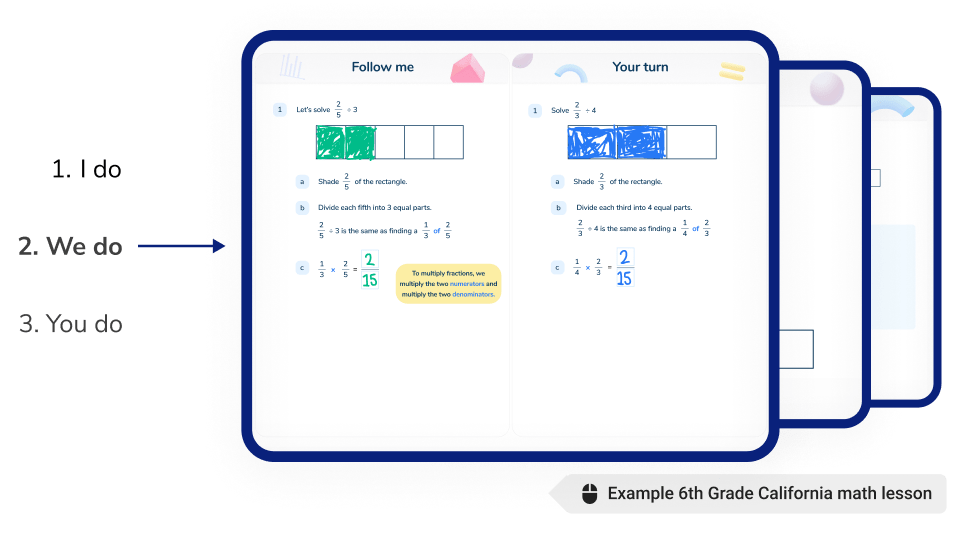
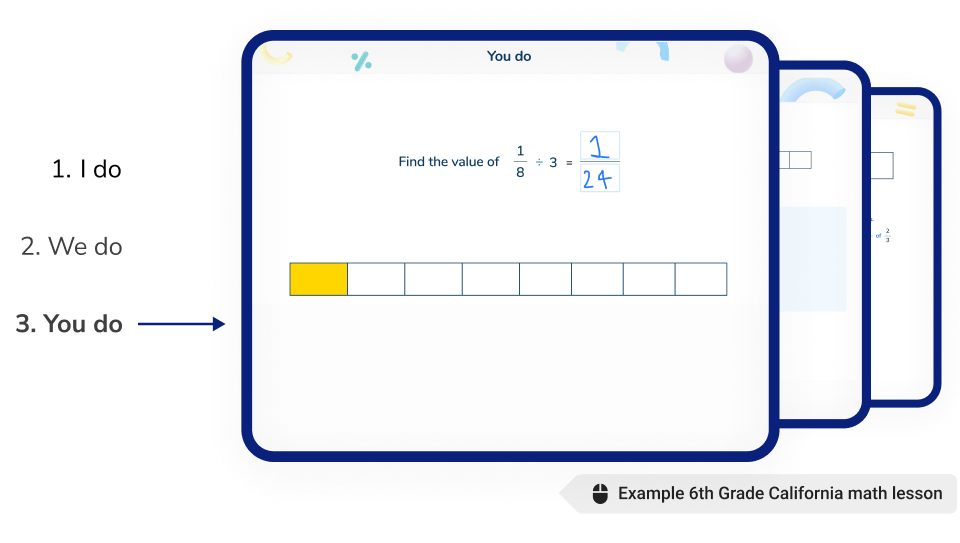
Lessons follow the state’s structured progression, helping students develop number sense, procedural skill, and problem-solving strategies at each grade level.
Download sample lessons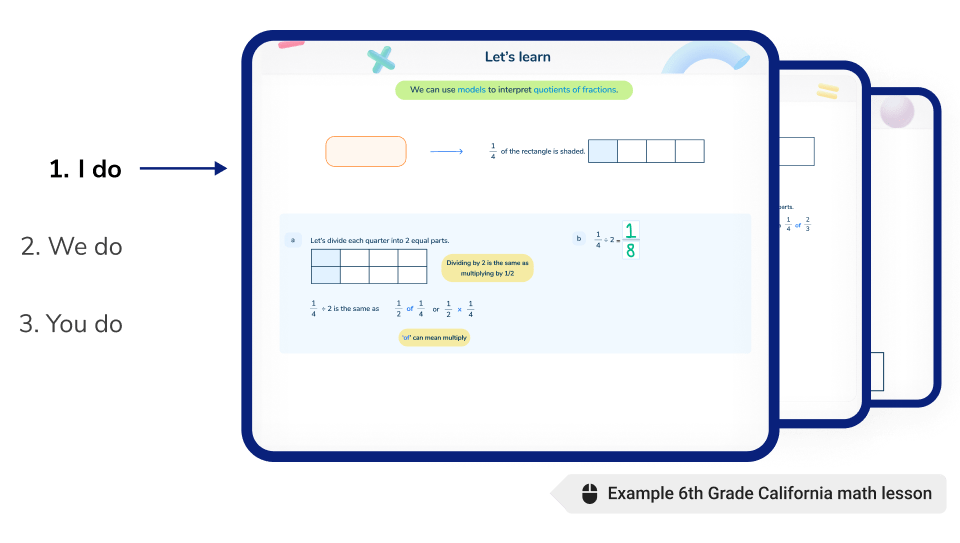

Kansas-aligned assessment preparation
Practice materials mirror the KAP format, so students meet the question types before test day.
Explore free state tests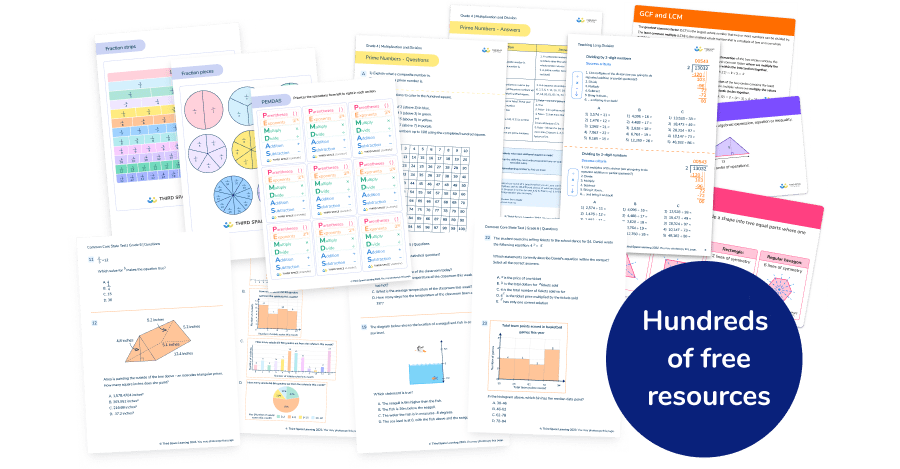
Math resources for Kansas educators
Our collection includes lesson slides, word problems, practice questions, and instructional materials aligned to the standards, so students build the skills each grade expects.
Explore resources
Grade-level Kansas standards overview
Find Kansas-aligned tutoring, resources, and KAP practice materials for each grade below.
Kansas standards for elementary school
Kindergarten math
Counting and Cardinality: count and represent numbers to 20
Operations and Algebraic Thinking: addition and subtraction within 10
Number and Operations in Base Ten
Measurement and Data: sort objects and compare measurements
Geometry: identify and describe shapes
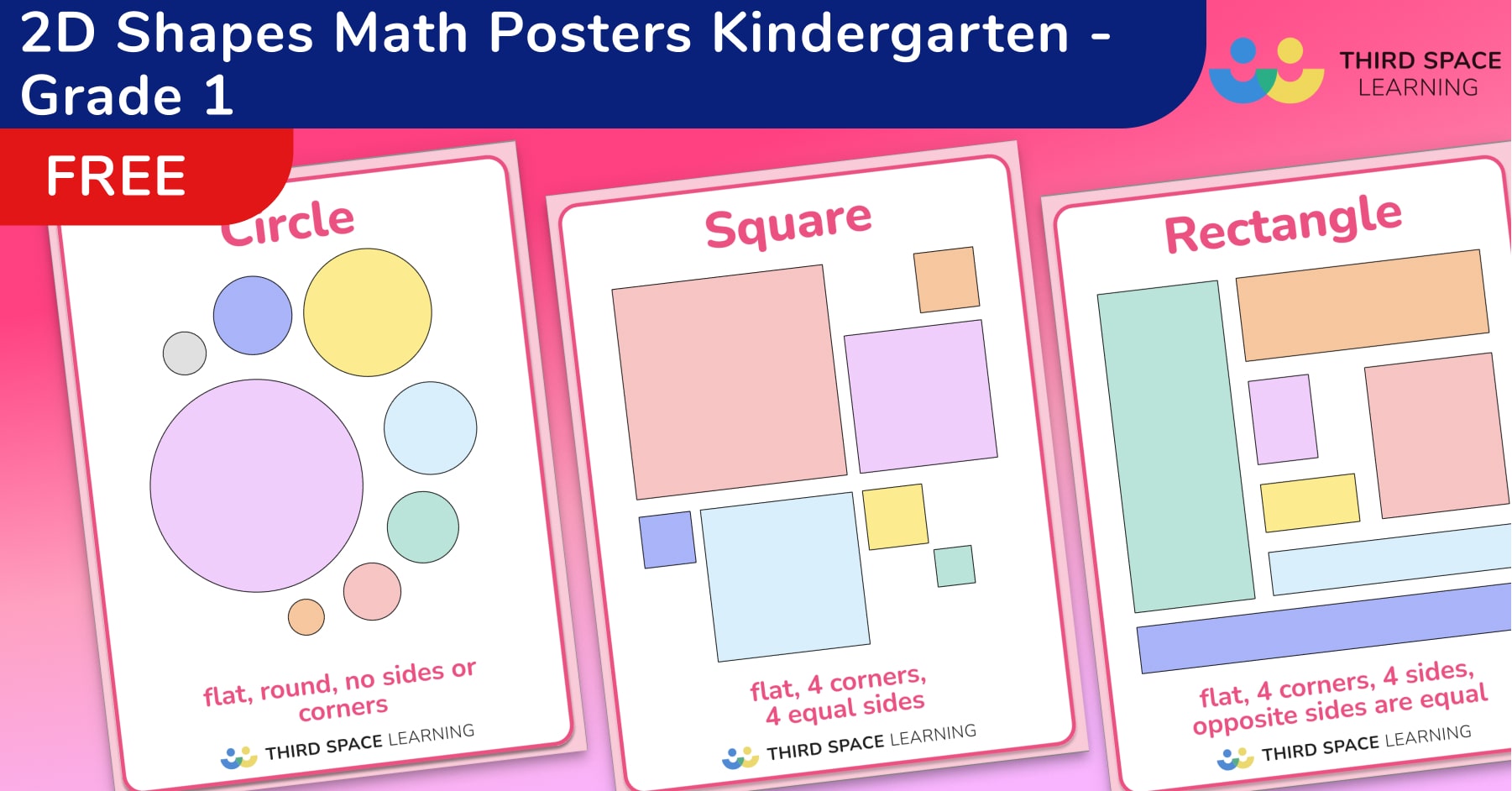
2D Shapes Math Posters Kindergarten – Grade 1
These math posters are designed to display key information on 2D Shapes for Kindergarten and Grade 1.
Download freeGrade 1 math
Operations and Algebraic Thinking: addition and subtraction within 20
Number and Operations in Base Ten: place value to tens
Measurement and Data
Geometry

1st Grade Math Curriculum Toolkit: Guidance, Tips, And Resources For Elementary Teachers
Expert insights and resources for mastering your teaching of the 1st grade math curriculum. All free. Share with a 1st grade teacher.
Download freeGrade 2 math
Operations and Algebraic Thinking: fluency with addition and subtraction
Number and Operations in Base Ten: place value to hundreds
Measurement and Data
Geometry: shapes and their properties
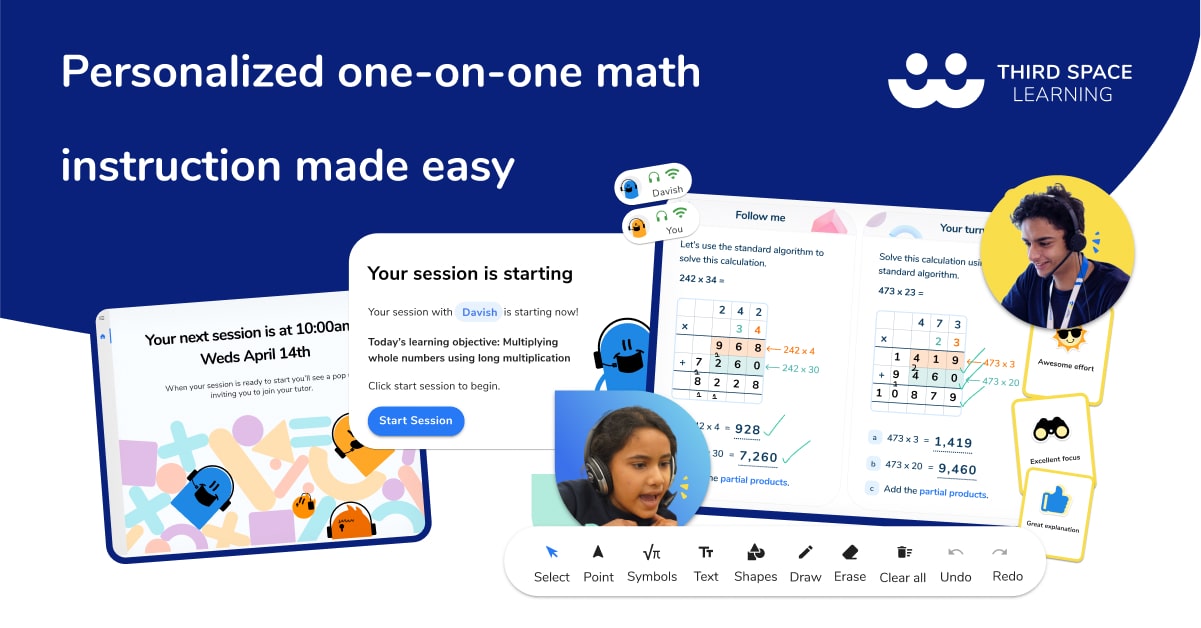
Grade 2 Math Tutoring
Differentiated one-on-one online math tutoring programs to help students master math skills in 2nd – 8th grade.
Learn more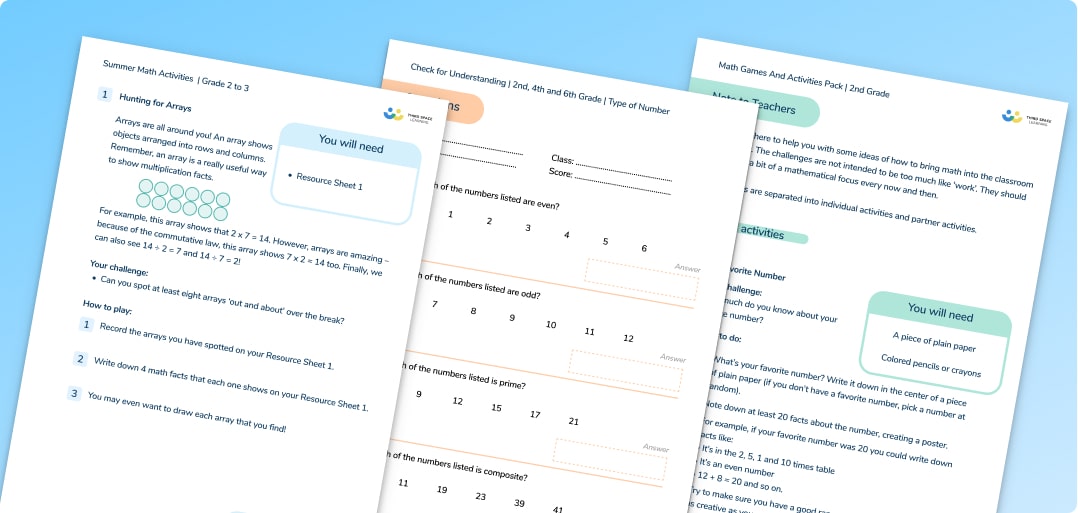
Free 2nd Grade Math Resources
Discover free 2nd-grade math resources, including worksheets and activities, aligned with educational standards to enhance student learning experiences.
Explore resourcesGrade 3 math
Operations and Algebraic Thinking: multiplication and division
Number and Operations in Base Ten
Number and Operations – Fractions
Measurement and Data
Geometry
Grade 3 Math Tutoring
Differentiated one-on-one online math tutoring programs to help students master math skills in 2nd – 8th grade.
Learn more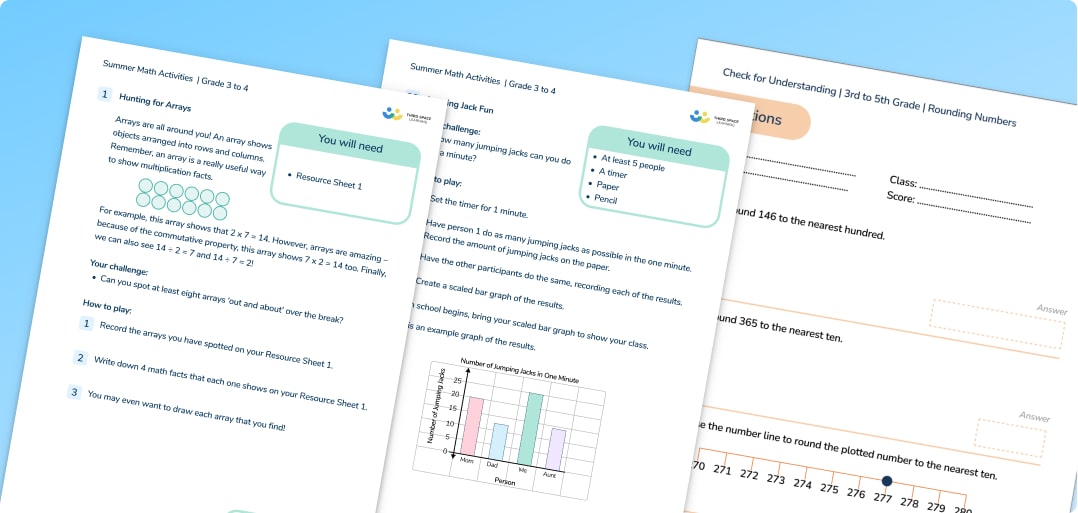
Free 3rd Grade Math Resources
Enhance your 3rd-grade math lessons with free resources, including worksheets and interactive activities, aligned with educational standards.
Explore resourcesGrade 4 math
Operations and Algebraic Thinking
Number and Operations in Base Ten: multi-digit multiplication
Number and Operations – Fractions
Measurement and Data
Geometry
Grade 4 Math Tutoring
Differentiated one-on-one online math tutoring programs to help students master math skills in 2nd – 8th grade.
Learn more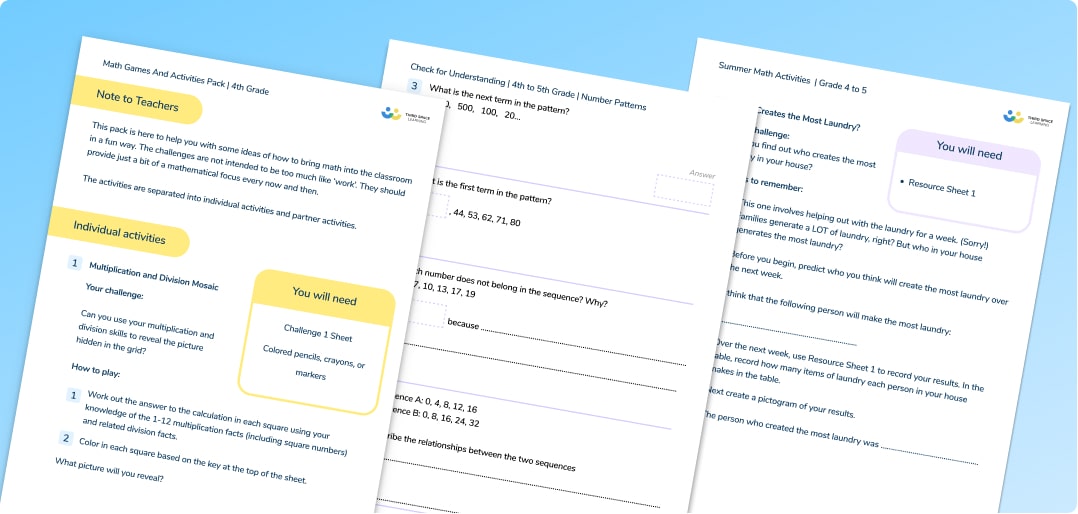
Free 4th Grade Math Resources
Explore free 4th-grade math resources, including worksheets and activities, designed to align with educational standards and enhance student learning.
Explore resourcesGrade 5 math
Operations and Algebraic Thinking
Number and Operations in Base Ten: decimals
Number and Operations – Fractions
Measurement and Data
Geometry
Grade 5 Math Tutoring
Differentiated one-on-one online math tutoring programs to help students master math skills in 2nd – 8th grade.
Learn more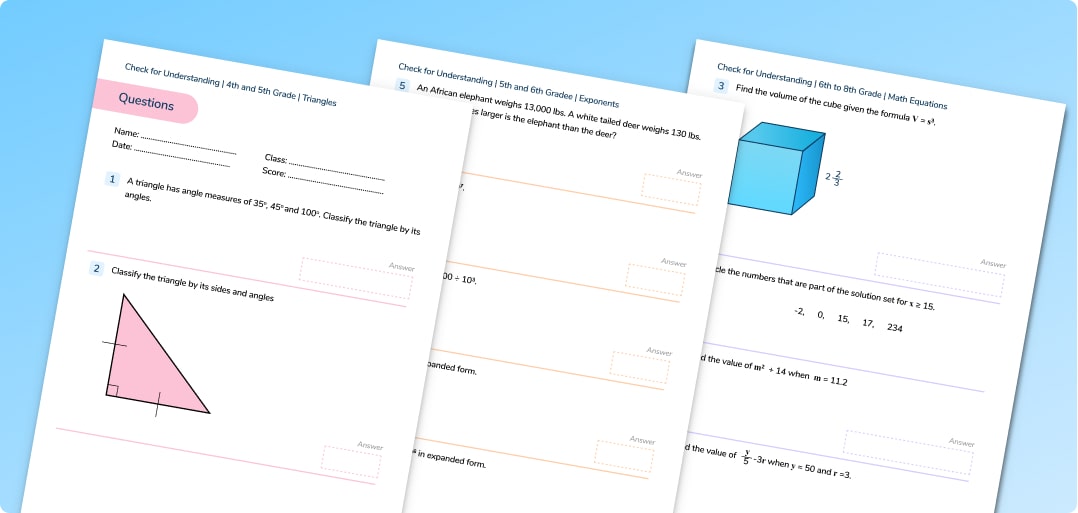
Free 5th Grade Math Resources
Access free 5th-grade math resources, including worksheets and activities, aligned with educational standards to support your students' learning.
Explore resourcesKansas standards for middle school
Grade 6 math
Ratios and Proportional Relationships
The Number System
Expressions and Equations
Geometry
Statistics and Probability
Grade 6 Math Tutoring
Differentiated one-on-one online math tutoring programs to help students master math skills in 2nd – 8th grade.
Learn more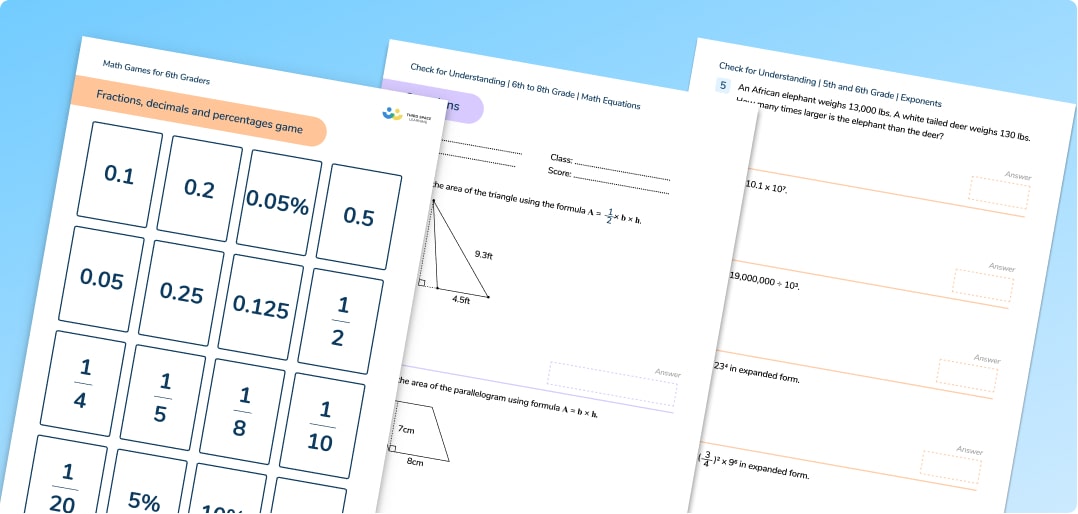
Free 6th Grade Math Resources
Discover free 6th-grade math resources, including worksheets and activities, to align with educational standards and enhance student learning.
Explore resourcesGrade 7 math
Ratios and Proportional Relationships
The Number System
Expressions and Equations
Geometry
Statistics and Probability
7th Grade Math Tutoring
Differentiated one-on-one online math tutoring programs to help students master math skills in 2nd – 8th grade.
Learn more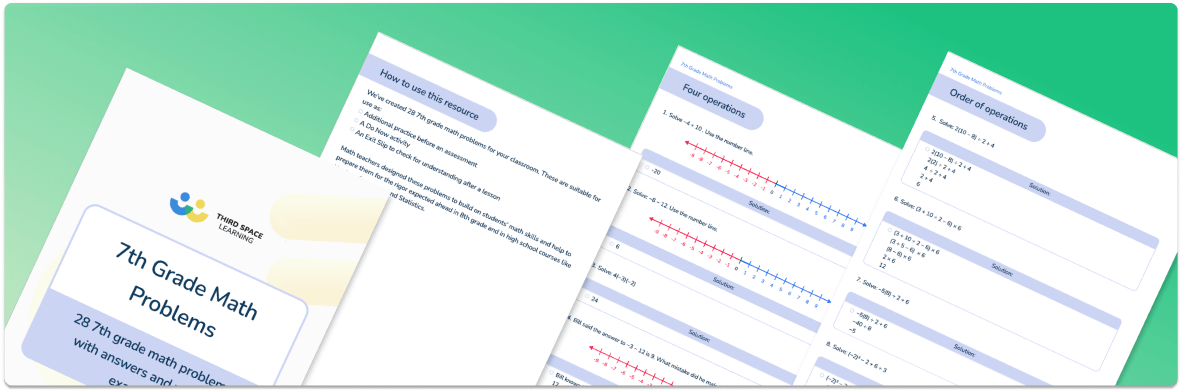
Free 7th Grade Math Resources
Enhance your 7th-grade math lessons with free resources, including worksheets and activities, aligned with educational standards.
Explore resourcesGrade 8 math
The Number System
Expressions and Equations
Functions
Geometry
Statistics and Probability
8th Grade Math Tutoring
Differentiated one-on-one online math tutoring programs to help students master math skills in 2nd – 8th grade.
Learn more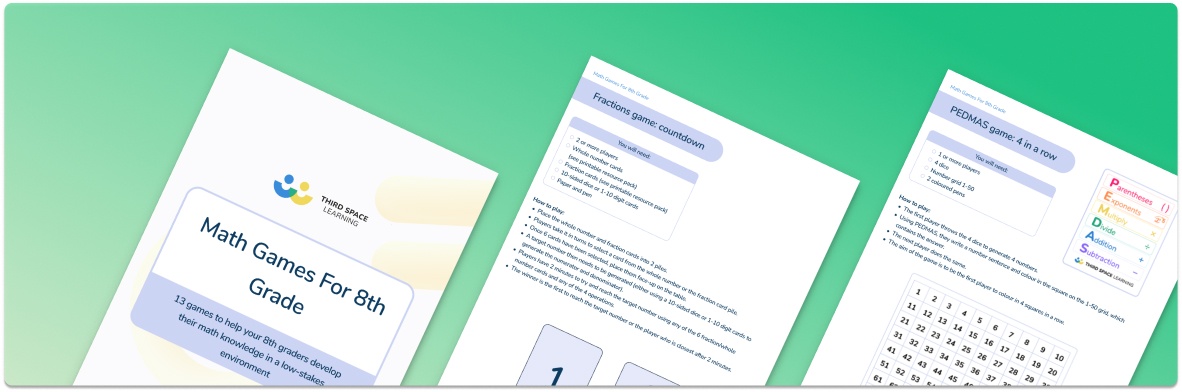
Free 8th Grade Math Resources
Explore free 8th-grade math resources, including worksheets and activities, designed to align with educational standards and prepare for high school.
Explore resources
Does your school follow common core curriculum math standards?
Support all your math teachers and students with Third Space Learning
Skye’s lessons are built by educators who know the standards, so instruction aligns to state grade-level expectations.
All practice materials align to KAP expectations for test preparation.
Affordable, one-on-one math tutoring means every student who needs support can get it regularly, not just a few.
Because it is low cost, that one-on-one help can run as high-dosage tutoring – frequent sessions that build understanding over time, which is what makes it high-impact.
Flexible scheduling supports intervention, acceleration, and differentiated instruction across your districts.
📢 Standards-aligned, expert-built, one-on-one for every student. Discover how affordable, Kansas-aligned math tutoring can help close the gap – book a consultation today!
Frequently asked questions
What are the Kansas math standards called?
Kansas calls its standards the Kansas Mathematics Standards, also known as the Kansas College and Career Ready Standards (KCCRS). The current version dates from 2017, updating the 2010 set. You can read them on the Kansas State Department of Education site: community.ksde.gov/math/KansasMathStandardsDocuments.aspx
Which grade levels do the Kansas Mathematics Standards cover?
They cover every grade from K through 12. Elementary grades focus on counting, place value, and the number sense behind arithmetic and fractions. Middle school adds ratios, proportional relationships, expressions, and early algebra. High school organizes content into six conceptual categories, from number and quantity to modeling and statistics, and students learn to generalize the patterns behind the math they meet in real-world situations.
How are the Kansas standards structured?
The Kansas standards have two parts: the 8 Standards for Mathematical Practice and the content standards. The content standards are organized into domains, clusters, and individual standards, with a clear progression from one grade to the next. Kansas also publishes 15 learning progressions that describe how each topic develops across the grade levels, plus Mathematics Flip Books that unpack every standard for teachers.
Does Kansas use Common Core math?
Kansas built its standards on the Common Core framework but keeps its own name, the KCCRS. In practical terms, schools teach the same core concepts – place value, operations, fractions, ratios, and algebra – in a structured progression, and the domains and 8 mathematical practices match the Common Core structure. For a family or educator moving between states, that shared foundation makes the transition easier.
What is the Kansas Assessment Program?
The Kansas Assessment Program (KAP) is the state test that measures how well students meet the standards. Math is tested in grades 3–8 and grade 10. Each student receives a scale score and one of four performance levels, from limited (Level 1) to advanced (Level 4). Those levels show how securely a child has mastered grade-level content, and Level 1 and Level 2 results are a clear signal that they need more support and practice time before the next assessment. Our practice materials mirror the KAP question types so the class meets those situations before test day.
How does Third Space Learning support the Kansas standards?
Our AI math tutor delivers one-on-one lessons built by math experts and aligned to the KCCRS. Each session scaffolds grade-level content, tracks progress, and prepares students for the Kansas Assessment Program. Because the tutoring is affordable, districts can run it as high-dosage support for every student who needs it.
Where can I find the standards and support materials?
The 2017 Kansas standards, the 15 learning progressions, and the Mathematics Flip Books are published by the Kansas State Department of Education at community.ksde.gov/math. Between them, these education documents pair each standard with the research, worked examples, and instructional strategies that show what it means in the classroom – the standard and the materials to teach it, in one place.