



The Ofsted Toolkit: Essential Insights for Effective Inspections

In November 2025, the Ofsted toolkit came into effect, replacing the old handbook with more detailed and practical operating guides for leaders and inspectors. Its purpose is to support and provide inspection transparency to school leaders, senior leadership and teachers across state-funded schools and further education providers.
For leaders, the school inspection toolkit aims to make Ofsted inspections less burdensome by demystifying evaluation areas and promoting better outcomes for children, driving continuous school improvement. Along with the inspection framework, the toolkit encourages schools to utilise the document for self-evaluation and aims to prepare them for Ofsted inspection readiness.
For inspectors, the operating guides provide them with a guide and clear criteria for more consistent evaluations. And for parents, particularly through the new report cards, the new inspection framework provides a clearer picture of the quality of education within settings and their focus areas.

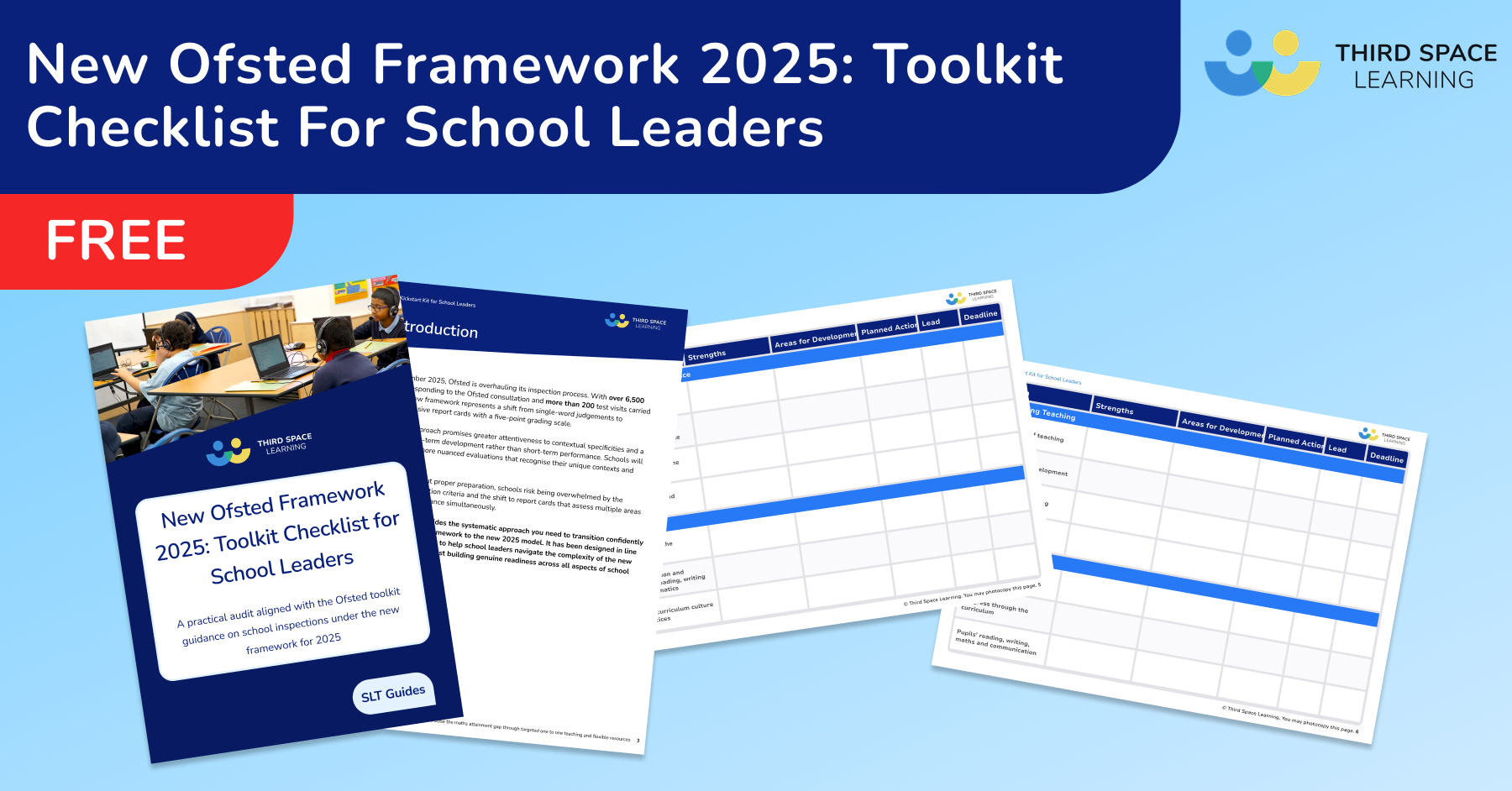
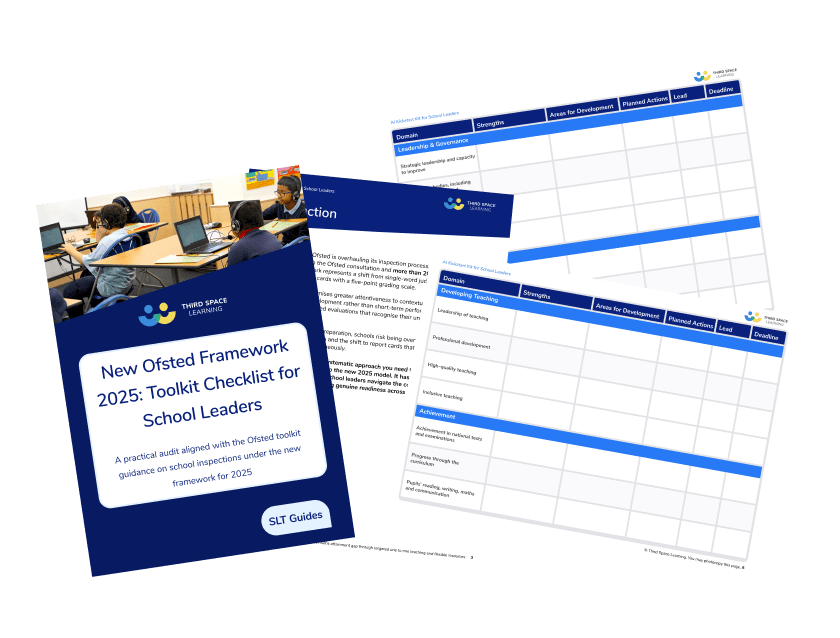
New Ofsted Framework Toolkit Checklist
A practical audit aligned with the Ofsted toolkit guidance on school inspections under the new framework. Includes practical tips and an actionable checklist.
Download Free Now!Key takeaways
- Inspection toolkits are integral for school leaders to use as a self-evaluation tool. All school leaders, including governance, are essential to a successful inspection and can utilise the inspection toolkit to prepare for an Ofsted inspection.
- New report cards have replaced single-word gradings with a more detailed colour-coded 5-point grading scale. Report cards will include narrative summaries, include multiple judgement areas and show how a school performs in different parts of their provision.
- Ofsted works in the best interest of children to raise standards in education. The education inspection framework promotes high standards for inspectors to ensure that every child’s safety, well-being and potential is met through embedding inclusive cultures and removing barriers, especially for disadvantaged learners and those with SEND, to ensure they have better life chances. This includes providing an ambitious curriculum that is accessible to all.
School inspection toolkit
Ofsted’s school inspection toolkit is a comprehensive resource designed to support schools in preparing for inspections. The Ofsted inspection toolkit focuses on 11 evaluation areas, such as leadership, curriculum, and pupil outcomes. Schools are encouraged to use the toolkit as a self-evaluation auditing tool.
The new inspection toolkit replaces the older inspection handbook to provide transparency and consistency in how schools are evaluated. Ofsted’s toolkit provides guidance on how to gather evidence and demonstrate good practice, including strategies for supporting disadvantaged learners and SEND learners.
Key changes to Ofsted inspections from November 2025
From November 2025, there are some key changes to the new Ofsted inspection framework. These changes can be found in the new education inspection framework and toolkit.
Below is a summary of some of the changes introduced in November 2025.
New Ofsted inspection framework
- School inspections focus on specific areas of concern.
- Inspectors evaluate the effectiveness of provision and the impact on pupil outcomes.
- Inclusion is an emphasis throughout all evaluation areas, as well as being a standalone inspection area.
- Senior leadership teams must be prepared to discuss their strategies and approaches, with a focus on high expectations, inclusion, and well-being.
- Inspectors look for embedded, purposeful practice.
- Report cards replace the previous Ofsted reports
Report cards
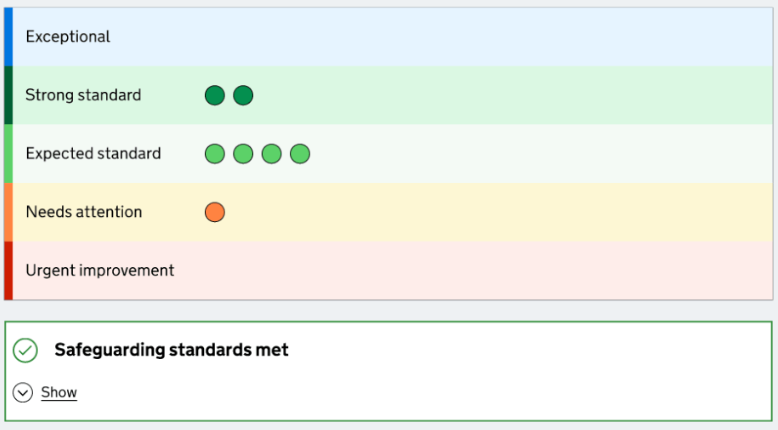
Schools and parents receive post-Ofsted inspection report cards, which include:
- Contextual data about a school to support more nuanced reports
- A 5-point grading scale across a range of evaluation areas
- A narrative summary of each grading
- Safeguarding will be deemed ‘met’ or ‘not met’ and will not receive an individual grade
- Ofsted expects most schools to be graded within the ‘expected standard’, and so toolkits are structured around this standard

Disadvantaged pupils
An increased focus on raising the standards for disadvantaged groups:
- Inclusion is a standalone evaluation area and an underpinning theme across other areas
- Senior leadership and leaders will need to show how they ‘spot’ needs early and adapt teaching accordingly
- Leaders will need to show how they account for the specific needs of pupils
- Inspectors will be looking for evidence of how schools support disadvantaged children and those with SEND
Safeguarding
An enhanced focus on safeguarding:
- More rigorous evaluation of safeguarding culture, leadership, staff knowledge (training), and the effectiveness of early help and intervention systems
- Safeguarding is assessed across the evaluation areas and deemed as ‘met’ or ‘not met’
- Schools receiving ‘not met’ in safeguarding will trigger monitoring and be placed in a category of concern
- Inspectors are looking for evidence of effective safeguarding that has a positive impact on pupil outcomes and safety
Well-being
Well-being is a core evaluation area within professional development, in addition to resilience and mental health. In the new education inspection framework, there is a clear dedicated focus on both workplace and pupil well-being.
Main evaluation areas
In academies and state-funded schools, the following evaluation areas are assessed:
- Safeguarding
- Inclusion
- Curriculum and teaching
- Achievement
- Attendance and behaviour
- Personal development and well-being
- Leadership and governance
- Early years and sixth form within schools, where applicable
Early years
Early years settings see significant changes in evaluation areas. The following eight new evaluation areas have been outlined:
- Leadership and management
- Curriculum
- Developing teaching
- Achievement
- Behaviour, attitudes and establishing routines
- Children’s welfare and wellbeing
- Inclusion
- Safeguarding
Post-16 provisions
In Post-16 provisions, all settings are assessed against leadership and management, safeguarding, inclusion, and contribution to skills needs. Additionally, each specific provision type is assessed against quality of education (incorporating curriculum, teaching, and training) and personal development (including achievement, participation, and development).
What the Ofsted inspection toolkit says about each evaluation area
Safeguarding
Ofsted inspectors evaluate safeguarding as a culture of vigilance, not a checklist, looking closely at staff training, leadership oversight, pupil welfare, and the accuracy and use of records. They expect all staff to understand safeguarding responsibilities, recognise signs of concern, and act promptly, with leaders ensuring systems are robust and regularly reviewed.
Evidence includes safeguarding training logs, the single central record, referral records, staff and pupil interviews, and curriculum content that supports pupil safety. Typical concerns raised during inspections include inconsistent staff understanding, poor record-keeping, delays in follow-up, or safeguarding being seen as the responsibility of a few individuals rather than everyone.
Next steps usually focus on strengthening leadership oversight, improving staff confidence through training, and ensuring safeguarding procedures are consistently applied and monitored.
Inclusion
Inspectors look for how well the school meets the needs of SEND learners, disadvantaged pupils, and vulnerable groups, with a strong emphasis on access to an ambitious curriculum for all.
Leaders are expected to demonstrate clear strategies for inclusion, including early identification, appropriate adaptations, and targeted support without lowering expectations.
Evidence includes provision maps, pupil progress information, case studies, curriculum plans, and discussions with pupils, staff, and parents. Inspectors may raise concerns where support is overly reliant on withdrawal, expectations are reduced, or leaders cannot clearly explain the impact of interventions.
Next steps typically involve improving evaluation of provision, strengthening inclusive classroom practice, and ensuring leaders can articulate how inclusion strategies improve outcomes and well-being.
Curriculum & Teaching
Inspectors focus on whether the curriculum is well-sequenced, ambitious, and coherently planned, enabling pupils to build knowledge and skills over time. They evaluate teaching quality by looking at how well teachers understand the curriculum, adapt teaching, and check pupils’ understanding to support progression.
Evidence includes curriculum intent statements, progression maps, lesson visits, pupil work, and subject leader monitoring. Common concerns include gaps in sequencing, inconsistency between classes or subjects, and subject leaders lacking oversight or confidence.
Outcomes and Achievement
Inspectors assess outcomes by considering what pupils know, understand, and can do, rather than relying solely on published data. Outcomes are reflected through inspection judgements and narrative reporting, showing how effectively the curriculum and teaching translate into progress and readiness for the next stages.
Evidence includes pupil work, assessment information, lesson observations, and discussions with pupils and teachers. Concerns may arise where outcomes do not reflect curriculum ambition, where gaps persist for key groups, or where leaders rely too heavily on data without understanding learning.
Behaviour and Attitudes
Inspectors look for calm, orderly environments where routines are well-established, expectations are clear, and pupils feel safe and supported. They evaluate attendance, punctuality, behaviour regulation systems, and how well the school supports pupils who struggle to manage behaviour.
Evidence includes attendance data, behaviour records, observations around the school, and pupil voice. Typical concerns include inconsistent application of behaviour policies, high levels of persistent absence, or a lack of effective support for pupils with additional needs.
Personal Development & Well-Being
Inspectors assess how well the school supports the whole child, including character development, confidence, resilience, and preparation for life beyond school. They look at enrichment opportunities, personal, social and health education, leadership roles for pupils, and how safeguarding is embedded within personal development.
Evidence includes curriculum plans, enrichment participation data, pupil voice, and examples of wider opportunities. Concerns may be raised if provision is narrow, not accessible to all pupils, or lacks a clear impact.
Leadership & Governance
Inspectors evaluate the effectiveness of leadership and governance through the clarity of oversight, strength of accountability, and fulfilment of non-negotiable responsibilities, particularly safeguarding, curriculum quality, and inclusion.
Leaders and governors are expected to know the school well, set high expectations, and provide both challenge and support, ensuring statutory duties are met and improvement priorities are clearly defined.
Evidence includes minutes of meetings, monitoring records, performance management systems, and discussions with leaders and governors. Common concerns arise where governance lacks impact, oversight is overly reliant on reports without challenge, or leaders cannot demonstrate how decisions improve outcomes.
Early Years Provision
Inspectors assess early years provision by considering how well children are supported to develop across all areas of learning, with particular emphasis on communication and language, personal development, and readiness for the next stage of education. They evaluate the quality of the EYFS curriculum, the learning environment, and the effectiveness of adult interactions in supporting progress.
Evidence includes curriculum planning, observations of practice, children’s learning records, and discussions with staff and parents. Concerns may be raised where expectations are too low, the environment does not support learning effectively, or assessment is not used to inform teaching.
Evidence & Documentation
Inspectors expect leaders to use evidence purposefully, focusing on how systems support improvement rather than generating unnecessary workload. Leaders should gather evidence from everyday practice, organise it clearly, and use it to identify strengths and areas of concern.
Evidence may include curriculum documents, assessment information, monitoring records, safeguarding logs, and stakeholder voices. Common concerns include over-documentation, poorly organised systems, or leaders being unable to explain how evidence informs decision-making.
Role-specific responsibilities
Before inspections, different roles must be prepared in different ways. Below gives an outline of key staff who will be an essential piece of the new framework inspection process.
Senior leadership
The senior leadership team needs to be proactive in the strategic oversight of the school, demonstrating why and how school improvement leads to better outcomes for every child. A key element of inspection preparation will be self-evaluating against the report cards, Ofsted questions and toolkits.
Subject leaders
Subject leaders will be essential to showcase the quality of education through curriculum expectations and evidencing how it underpins the school’s improvement plan. Subject leaders will need to provide concrete evidence of progress and impact that shows sustained improvements.
SENCo / inclusion lead
Inclusion is a key evaluation area; the SENCO will need to ‘show’ and evidence the impact of interventions, demonstrating tangible outcomes as an integral part of proving how the school ensures a high-quality, ambitious education for all pupils.
Preparation for inspection should involve audits and robust documentation that ensures clear provision and practices for SEND and vulnerable learners.
Governors and trustees
As part of the Leadership and Governance evaluation area, governors and trustees will need to demonstrate that they are collaborating with leaders to ensure a high-quality, inclusive education is being delivered to all pupils.
During the inspection, they will meet with inspectors to demonstrate the impact, ensuring that governance documentation is up to date and accessible to evidence effective monitoring.
Early years leaders
Early years leaders will need to utilise the Ofsted toolkits to ensure that practice aligns with the revised EYFS framework. Moving away from ‘preparing for inspections’, leaders will need to demonstrate that high-quality practice is embedded and focused on building strong relationships, inclusion, rich language and parental engagement, ensuring that all children thrive.
Settings and phases
Primary schools
Ofsted recognises the pressures that primary schools are currently facing, particularly with limited staffing; however, when Ofsted inspects, they do expect schools to be realistic and purposeful. This means that curriculum coverage may prioritise breadth over depth, reading (a key Ofsted focus) is prioritised with rapid support and early maths is shown with consistency and clear progression, where structured schemes are supported where staffing is low.
Secondary schools
Ofsted is clear that inspections are not data-driven but focused on curriculum intent, implementation and impact. Expect core inspection activity to be departmental deep dives, gaining evidence from meeting subject leads, lesson observations and pupil discussions.
A core message that ofsted are delivering is that curriculum breadth is a major secondary focus with inspectors looking for a broad and balanced curriculum and how leaders hold staff to account without increasing workload.
Early years providers
In early years providers, inspectors will prioritise safeguarding and welfare with an added focus on inclusion and how this is felt in the classroom, playground and within outcomes. The early years inspection toolkit is explicit in early years being graded separately with its own evaluation area, laying out how inspectors will make their judgement.
Special schools
Special schools will be inspected under the same quality of education lens, but expectations will be that education is bespoke, with a clearly designed curriculum model where adaptations are embedded, and assessment informs teaching.
Multi-academy trusts
Ofsted wants to see how multi-academy trusts are adding value to schools. Examples of this are where coherent shared systems, clear guidance and strong governance improve education. Ofsted is not looking for compliance but purposeful, proportionate systems that improve education across the trust.
Self-audit and action planning
Inspectors are looking for how leaders know, what they do about it, and the difference it makes. A strong self-audit should:
- Be honest, evidence-led, and evaluative
- Align directly to EIF judgement areas and toolkit prompts
- Identify impact on pupils, not just actions taken
- Lead clearly to prioritised improvement planning
Below is an example of a self-audit template to follow.
Area | Evaluation |
Judgement Area | e.g. Quality of Education |
Key Ofsted Toolkit Prompts | Curriculum ambition, sequencing, assessment, SEND |
Intent | What are we trying to achieve and why? |
Implementation | How consistently is this delivered? |
Impact | What difference does it make to pupils? |
Strengths | What is working well? |
Concerns / Risks | What limits impact? |
Evidence Sources | How do we know? |
Priority Actions | What needs to improve? |
Ofsted looks for a few high-impact priorities, clear ownership, measurable impact and regular review and adaptation. To use the toolkits effectively for self-audit, the following steps are purposeful:
- Pre-audit evidence gathering
- Leadership self-evaluation session
- Middle leader contributions
- Governor/trust validation
- Translate directly into SIP priorities
The table below shows how leaders can use the toolkit to align their self-audit with the evaluation areas.
Evaluation Area: Quality of Education | ||||
Key Toolkit Prompts
| ||||
Self-Audit Questions
| ||||
Good Practice Indicators
|
Evaluation Area: Behaviour and Attitudes | ||||
Key Toolkit Prompts
| ||||
Self-Audit Evidence
| ||||
Good Practice Model
|
Next steps after an Ofsted inspection
After the inspection, leaders receive initial verbal feedback outlining provisional judgements, areas of strengths and areas for improvement. This is indicative and not final, but gives leaders an opportunity to take notes and seek clarification.
A draft report is issued with a short window for leaders to ensure factual accuracy; it is not an opportunity to challenge judgement.
School leaders and early years providers receive a report outlining the findings and recommendations for improvement. The Ofsted report includes a grading system, with a range of grades from outstanding to inadequate, and guides areas for development.
The most important thing is to communicate this with staff, parents and the community promptly and transparently.
School leaders and early years providers must be prepared to implement changes and improvements, with a focus on good practice and best practice in teaching and learning. As best practice, use the report as a developmental tool and not a criticism.
The inspection process includes a focus on follow-up inspections, with inspectors evaluating the progress made in addressing areas for improvement.

READ MORE:
- How Will Ofsted Inspect Your Tutoring?
- Teachers’ Guide To The Ofsted Maths Research Review
- At-A-Glance Guide And Preparation Toolkit For Maths Leaders Expecting An Ofsted Visit
- Ofsted Mathematics Subject Report: Coordinating Mathematical Success
- Ofsted Inspections and AI: What School Leaders Need To Know
Ofsted toolkit FAQs
What does the inspection toolkit include?
The inspection toolkit provides guidance for inspectors and schools following the new education inspection framework. It sets out the areas that will be evaluated and graded on inspections under section 5 and 8 of the Education Act.
How do inspectors use the school inspection toolkit during a visit?
Inspectors are to use the school inspection toolkit as a guide along with their professional curiosity and compassion to gather evidence to reach fair and accurate grades.
How much evidence should a school prepare?
A key drive of the new education inspection framework is Ofsted ensuring that inspections are not burdensome and schools do not need to provide additional evidence specifically for the inspection.
What are the key differences for early years?
In early years settings, there’s greater scrutiny on how providers identify additional needs early and adapt teaching approaches to ensure inclusion for all children, especially those with SEND. Additionally, from April 2026, the current 6 year cycle inspection cycle will reduce to a 4 year cycle. New providers will be inspected within 12-18 months of registration. In early years, Attendance and Behaviour have the addition of Attitudes and Personal Development and Well-being is accompanied by the addition of Establishing Routines.
How can leaders prepare for special measures risk?
School leaders are encouraged to use early years inspection toolkit and toolkits for maintained schools to complete a self-audit to address strengths and weaknesses.

DO YOU HAVE STUDENTS WHO NEED MORE SUPPORT IN MATHS?
Skye – our AI maths tutor built by teachers – gives students personalised one-to-one lessons that address learning gaps and build confidence.
Since 2013 we’ve taught over 2 million hours of maths lessons to more than 170,000 students to help them become fluent, able mathematicians.
Explore our AI maths tutoring or find out about school tutors for your school.