

10 Benefits of Online Tutoring Every School Leader Should Know

The benefits of online tutoring are well established – but they matter more now than ever. With the National Tutoring Programme gone, the Sutton Trust reports that 58% of schools have reduced or dropped tutoring altogether. For schools still committed to one-to-one support, online delivery solves most of the problems that forced others to stop.
So what are those problems? Traditional in-person tutoring works – the evidence is clear on that. But it comes with practical headaches that school leaders know all too well: finding reliable tutors in your area, fitting sessions into already packed timetables, and justifying the cost to governors. Online tutoring removes most of those barriers. Students get the same one-to-one attention, but schools get more flexibility, better access to expert tutors, and lower costs.
And the landscape is shifting again. AI tutoring is opening up new possibilities – the DfE announced in January 2026 that it would pilot AI tutoring tools for 450,000 disadvantaged pupils. For schools already using online tutoring, this is confirmation of what they already know: online delivery works, and it’s only getting better. For those still weighing up the options, this article takes a closer look at the benefits of online tutoring.
Key takeaways
- Online tutoring gives schools flexible, cost-effective access to expert tutors – without the scheduling and geographical constraints of in-person tutoring.
- The EEF finds that one-to-one tuition can deliver up to five additional months of progress when well-implemented.
- Online tutoring platforms offer built-in safeguarding, progress monitoring and interactive tools that support both pupils and teachers.
- With 58% of schools reducing their tutoring offer post-NTP (Sutton Trust, 2026), online delivery offers a scalable way to maintain provision.
- AI tutoring is now part of the picture – the DfE is piloting AI tutoring tools for disadvantaged pupils from 2027.
What is online tutoring?
Online tutoring is real-time, one-to-one or small group instruction delivered over the internet through a virtual classroom or online platform. A tutor and student connect via audio, screen sharing and interactive tools – such as online whiteboards – to work through lessons together to improve confidence and academic success.
It is not the same as watching pre-recorded videos or using a homework help app. In an online tutoring session, the tutor responds to the student in the moment, adapting the teaching to suit their pace and understanding. All that is needed is a reliable internet connection and a desktop, laptop or tablet.
Is online tutoring effective? What the evidence says
School leaders do not have time for solutions that might work. They need to know what the research actually shows – and for online tutoring, the evidence is strong.
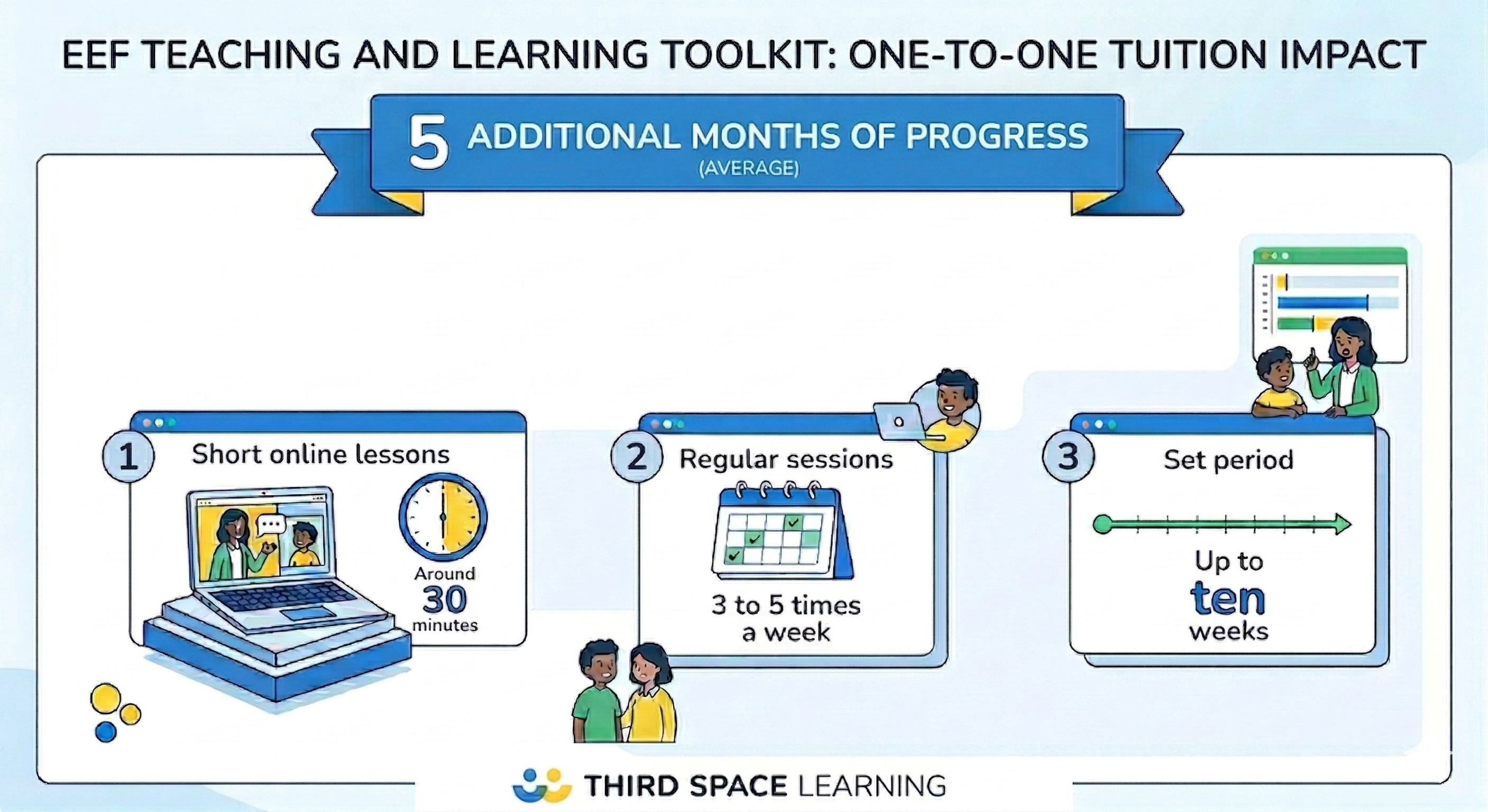
The EEF’s Teaching and Learning Toolkit, drawing on 123 studies, finds that one-to-one tuition delivers an average of five additional months of progress. The effect is strongest when online lessons are short and regular – around 30 minutes, three to five times a week, over a set period of up to ten weeks. Crucially, the evidence suggests that online tutoring is just as effective as in-person tutoring, provided the technology is sound and the tutor is well-trained.
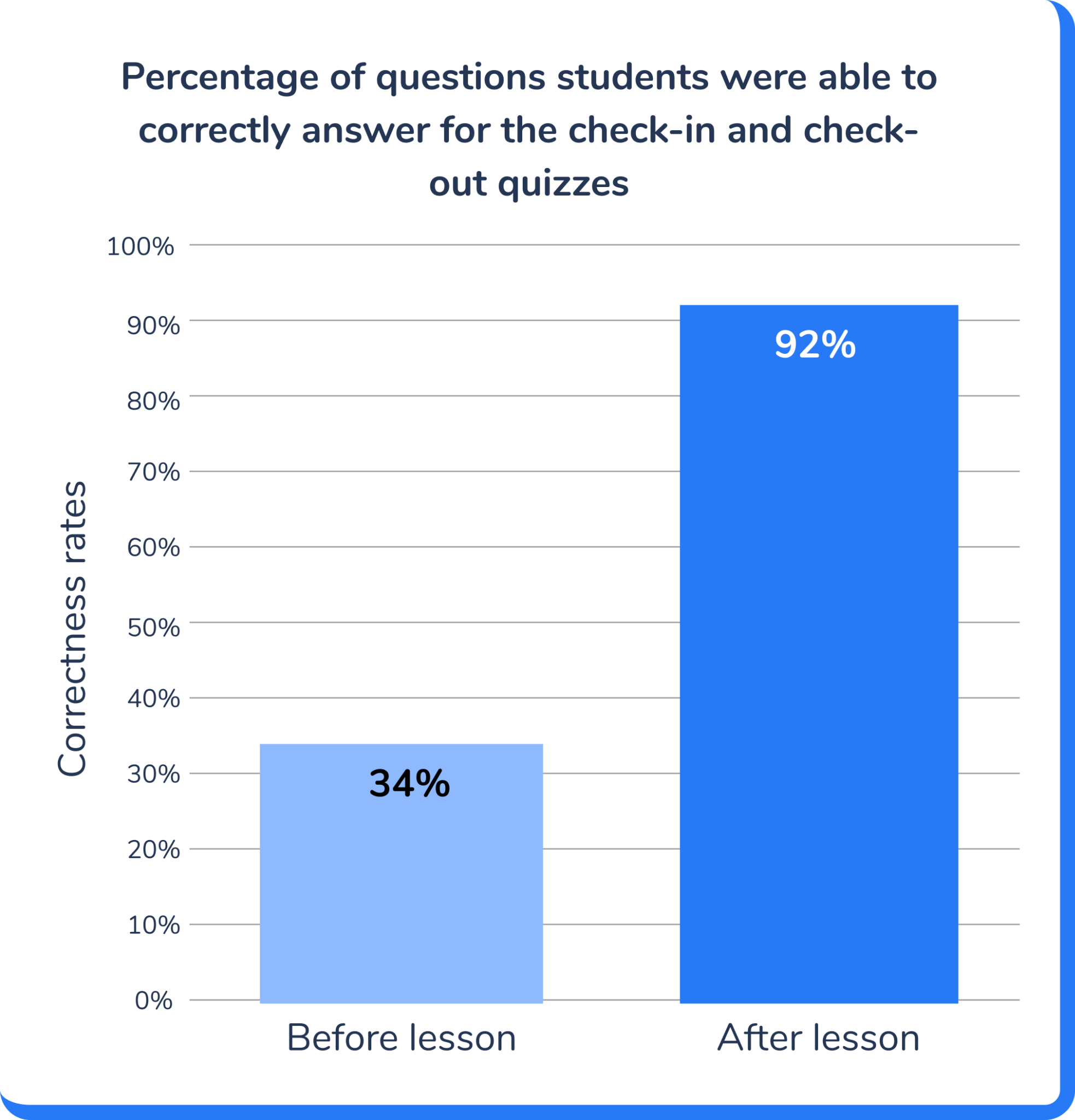
Third Space Learning’s own data reinforces this. Students receiving one weekly session achieved seven months of maths progress in just 14 sessions. 92% of pupils successfully completed the post-session quiz, compared with 34% before the session, and 64% reported increased confidence by the end. For a deeper look at the research, the EEF tutoring report breaks down what makes tutoring effective and what schools should look for.
The short answer: online tutoring works. But it works best when it is one-to-one, curriculum-aligned, and focused on the individual learner’s needs.
10 key benefits of online tutoring
Whether a school is looking to replace in-person tutoring or expand its existing provision, online tutoring offers clear advantages. Here are 10 key benefits of online tutoring that school leaders should consider.
1. Flexible scheduling that fits around school life
School timetables leave little room for extras. Between assemblies, break duties and curriculum time, finding a consistent slot for tutoring in schools is a genuine challenge – and that is before factoring in tutor availability and travel.
Online tutoring removes the travel barrier entirely. Tutors do not need to be on site, which means sessions can run before, during or after school without eating into anyone’s commute. Schools can schedule lessons on desktops, laptops or tablets, and adjust session length and frequency to suit individual pupils. If a student has extracurricular activities on a Tuesday, the slot can move.
This flexibility is especially useful for schools using Pupil Premium funding to target intervention. Where online tutoring vs in-person tutoring once meant compromising on scheduling, online delivery means sessions can fit into the gaps that in-person tutoring simply cannot reach.
2. Access to expert tutors without geographical constraints
One of the biggest benefits of online tutoring is that it removes the postcode lottery of tutor availability. A school in rural Cumbria can access the same expert tutors as a school in central London – something that is almost impossible with traditional in-person tutoring.
This matters. The Sutton Trust’s 2026 research found that 45% of pupils in London had received private tutoring, compared with just 19% in rural areas. Online learning and tutoring help level the playing field, giving students in underserved areas access to experienced tutors and a wider range of subject specialists.
For schools focused on tutoring disadvantaged students, this is significant. It means young people who would otherwise miss out on educational support can access the same quality of teaching, regardless of where they live. Primary school tutoring in particular benefits, since smaller schools in remote areas often struggle to attract specialist tutors locally.
Third Space Learning removes geographical barriers entirely. Schools anywhere in the UK can access curriculum-aligned one-to-one maths tutoring through Skye, the spoken AI maths tutor. Every lesson is built by qualified teachers and maths experts – so whether a school is in inner-city Birmingham or rural Norfolk, pupils receive the same high-quality teaching.
3. Cost-effective tutoring that stretches school budgets
Online tutoring is typically 20–40% cheaper than in-person tutoring. There are no travel expenses to cover, lower running costs for the provider, and many online tutoring services offer subscription models rather than per-session billing, which makes budgeting more predictable.
This cost-effectiveness matters more than ever. Since the National Tutoring Programme ended in 2024, 58% of schools have reduced their tutoring offer (Sutton Trust, 2026). Schools still want to provide tutoring sessions for the pupils who need them – they just need a more affordable tutoring model to do so.
For schools navigating funding tutoring after the NTP, online delivery is one of the most cost-effective ways to maintain provision without sacrificing quality. Many online tutoring platforms also offer flexible payment options, helping schools manage costs across the academic year.
Skye uses a three-stage assessment in every session: a diagnostic Skill Check In at the start, formative assessment throughout, and a Skill Check Out at the end. If a pupil shows mastery at Check In, they skip to independent practice. If not, Skye works through structured “I do, we do, you do” scaffolding – adapting hints based on the specific errors the pupil makes. It is personalised online learning that genuinely responds to the individual, not a one-size-fits-all programme.
4. Personalised learning that targets gaps
Every student arrives at a tutoring session with different gaps, misconceptions and strengths. The best online tutoring works because tutors can adapt their teaching to match the individual, adjusting pitch, pace and content based on what the student actually needs, not what the rest of the class is doing.
This is where online tutoring platforms really earn their keep. Diagnostic assessment at the start of a session identifies where a student is struggling, and ongoing assessment throughout keeps the learning process on track. Tutors can provide tailored support on difficult concepts without the student feeling rushed or held back.
The benefits of one-to-one tutoring are well documented – pupils receive personalised instruction at their own pace, in a way that classroom teaching alone cannot always deliver. Online platforms take this further by using adaptive teaching strategies, where a student’s specific learning gaps shape the lesson in real time.
This personalised approach is particularly valuable for test preparation. Whether pupils are revising for SATs in Year 6 or building GCSE exam technique, online tutoring allows sessions to target the specific topics and question types each student finds most challenging – rather than working through generic revision lists. Tutors can adapt their focus session by session as gaps close, making revision time far more efficient.
5. A low-stakes environment that builds confidence
Some pupils freeze when they are put on the spot in class. Others will not ask a question if they think other students might judge them. It is a familiar problem for teachers – and it is one of the reasons that one-on-one tutoring has such a strong track record.
Online tutoring takes this a step further. The student is in a familiar, relaxed environment, their own classroom or a quiet space in school, working with a single tutor. There is no audience, no pressure to keep up with peers, and no fear of getting it wrong in front of the class.
This matters for self-esteem and long-term engagement. When students feel safe to make mistakes, they are more likely to tackle difficult concepts and ask questions freely. Over time, that builds the kind of confidence that carries back into the classroom. For schools running KS2 tutoring interventions, this low-stakes online learning experience can be the difference between a pupil who shuts down and one who starts to believe they can do it.
6. Increased pupil engagement through interactive tools
A tutoring session does not have to feel like more of the same. Online tutoring uses interactive tools – online whiteboards, screen sharing, audio and visual prompts – that keep students actively involved in the lesson rather than passively listening.
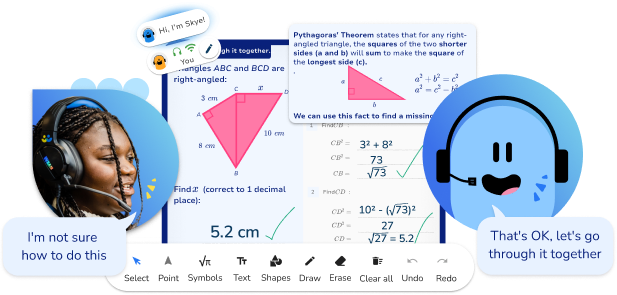
In a virtual classroom, students can draw, type, drag and annotate directly on screen. It is closer to a conversation than a lecture. This kind of active participation helps learners process new information more effectively, and it makes the learning experience more engaging for pupils who might otherwise switch off.
The evidence supports this. The EEF’s Teaching and Learning Toolkit finds that one-to-one tuition can deliver up to five additional months of progress – but only when sessions are well-structured, and pupils are genuinely engaged. Online technology gives tutors the tools to make that happen, turning what could be a dry revision session into something students actually want to turn up for.
7. Progress monitoring that supports accountability
One of the more practical benefits of online tutoring is what happens after the session ends. Many online tutoring platforms automatically generate detailed reports – covering topics taught, skills practised and progress made – without teachers having to lift a finger.
For school leaders, this is gold. Progress data from online tutoring sessions can feed directly into Pupil Premium reviews, governor reports and Ofsted evidence. It takes the guesswork out of answering the question every headteacher dreads: “How do you know your interventions are working?”
Schools that need to demonstrate how Ofsted inspects tutoring provision will find that online platforms make this significantly easier than tracking the impact of an in-person tutor with a notebook and a spreadsheet. Parents, too, can be kept up to date with clear reporting on their child’s progress – something that helps build trust in the school’s approach to educational support.
After every session, schools receive a detailed progress report for each pupil – covering topics, skills practised and progress made. Reports are available on demand, so there is no chasing tutors for updates. Schools can use this data to inform whole-class instruction, evidence impact for Ofsted, or keep parents up to date – all without adding to teacher workload.
8. Safe, monitored sessions with built-in safeguarding
Safeguarding is non-negotiable. Any tutoring provision a school puts in place needs to meet the same standards as everything else – and online tutoring platforms are built with this in mind.
Many online tutoring services record and transcribe every session automatically. Some use audio-only connections rather than video, which removes one layer of risk entirely. If something comes up during a session that raises a concern, the platform can flag it – giving schools a safety net that would be difficult to replicate with a visiting tutor in a corridor.
For school leaders responsible for safeguarding, online tutoring offers a level of transparency and monitoring that in-person tutoring rarely matches. Sessions are logged, content is controlled, and there is a clear audit trail if anything needs reviewing.
Every Third Space Learning session is recorded and transcribed for review. Skye uses an audio-only connection – no video – and can only deliver lesson content that has been pre-approved by TSL’s academic team. If a pupil raises a potential safeguarding concern during a session, Skye automatically flags it and alerts TSL’s designated safeguarding lead. No pupil data is used to train the AI model, and the platform is fully GDPR compliant.
9. Develops pupils’ digital skills alongside subject knowledge
Online tutoring does not just improve a pupil’s maths or English. It also builds the digital skills that young people need beyond school – from navigating an online platform to using interactive tools like shared screens and digital workspaces.
This is a secondary benefit, but it is one that schools can evidence to parents and governors. Pupils who regularly use online technology in a structured learning environment become more confident with digital tools, which supports them across the curriculum and into further education or the workplace.
For schools already thinking about how to build digital fluency into the school day, online tutoring sessions are a low-effort way to give students regular exposure to the tools they will use throughout their education.
10. Scales tutoring to every pupil who needs it
The biggest limitation of traditional tutoring – whether online or in person – is that it is hard to scale. Human tutors cost money for every session, which means most schools can only offer one-to-one support to a handful of pupils, usually those funded through Pupil Premium.
For schools that know more pupils would benefit from tutoring but cannot stretch the budget, this is frustrating. The need is there. The evidence is there. But the maths does not add up when every additional pupil means another per-session cost.
Online tutoring platforms with subscription models help address this – offering unlimited access for a fixed annual fee rather than charging per session. This changes the equation entirely. Instead of rationing tutoring to six or eight pupils, schools can extend provision across whole year groups. It is the difference between patching gaps and building a genuine whole-school approach to intervention.
Bonus benefit: AI tutoring is making online tutoring more accessible than ever
Everything above applies to online tutoring in general. But AI tutoring is changing what schools can expect from online delivery – and not all AI tutoring is the same.
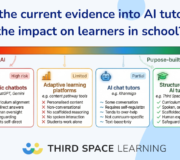
The distinction matters. Generic chatbots that give pupils answers on demand are very different from purpose-built AI tutors that deliver structured, curriculum-aligned one-to-one lessons. The DfE has been clear on where it sees the value – favouring spoken, teacher-led approaches anchored in EEF evidence over chat-based tools that risk pupils offloading the thinking to the AI.
In January 2026, the government announced plans to pilot AI tutoring tools for 450,000 disadvantaged pupils, with the DfE AI tutoring announcement signalling a shift in how it views technology’s role in closing the attainment gap.
This is not about replacing teachers. It is about extending the reach of one-to-one support so that more students can access the tutoring they need, without schools having to choose who misses out.
AI tutoring with Third Space Learning
Third Space Learning’s AI maths tutor, Skye, delivers spoken one-to-one lessons aligned to the national curriculum for KS2 and GCSE. Built by qualified teachers using insights from over 2.1 million human tutoring sessions, Skye guides pupils through structured lessons using a diagnostic Skill Check In, adaptive scaffolding based on specific errors, and a Skill Check Out to track progress over time. Every lesson is teacher-created – Skye cannot generate its own content.
An independent evaluation by Educate Ventures Research, analysing 9,320 sessions, found that pupils improved from 34% accuracy at check-in to 92% at check-out within a single session. 64% of pupils reported increased confidence, and teachers described Skye as a “force multiplier for practice” after classroom teaching.
Third Space Learning is also working with Stanford and Cornell, supported by the Gates Foundation, to build the evidence base for purpose-built AI tutoring at scale.
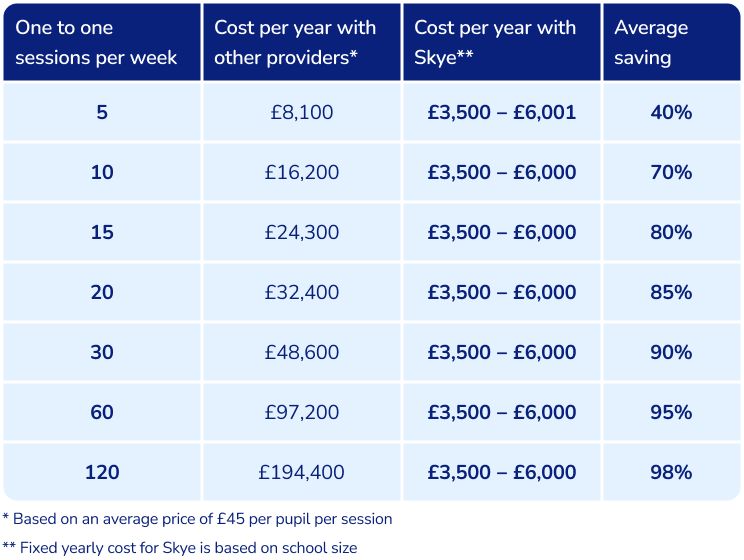
For schools, the model scales in a way traditional tutoring cannot. One fixed annual licence – from £3,500 for primary, £5,000 for secondary – gives unlimited access. Some schools run up to 120 sessions a week, bringing the per-pupil cost down to a few pounds a year.
How to choose an online tutoring provider for your school
Not all online tutoring services are created equal. With a growing number of online tutoring sites and platforms available, school leaders need to know what to look for – and what questions to ask before committing.
Here are the things that matter most:
- Curriculum alignment – Does the provider’s content match the national curriculum? For primary schools, that means KS2 SATs preparation. For secondary, GCSE-aligned content. A qualified tutor delivering off-curriculum material is not going to close the gaps that matter.
- Safeguarding – How are sessions monitored? Are they recorded? What happens if a concern is raised? Any online tutoring platform used in a school setting needs to meet the same safeguarding standards as every other provision.
- Progress reporting – Can the school access clear, usable data on what each student has covered and how they are progressing? The best providers make this automatic – no extra workload for teachers.
- Cost model – Is pricing per session, per student, or per school? Subscription models with unlimited access tend to offer better value than pay-as-you-go, especially for schools looking to scale tutoring across year groups.
- Tutor quality – Who is delivering the sessions? Are tutors trained, experienced, and subject-specialist? For AI tutoring platforms, who built the content and how is quality assured?
For schools comparing options, our guide to the best online tutoring websites in the UK is a good starting point.
Want to see how online maths tutoring could work in your school? Find out more about Third Space Learning’s one-to-one tutoring for primary and secondary schools.
Removing barriers with online tutoring
The case for online tutoring in schools is practical, not theoretical. It removes the barriers that make in person tutoring difficult to sustain – the cost, the scheduling, the geographical limitations – and replaces them with something more flexible, more scalable and easier to evidence.
For school leaders weighing up their options, all the benefits of online tutoring point in the same direction: better access for students, less strain on budgets, and clearer data on what is actually working. And with AI tutoring now making one-to-one support available at a scale that was not possible even two years ago, the gap between what schools need and what they can afford is closing.
The schools already using online tutoring are not looking back. The question for everyone else is how long they can afford to wait.
Frequently asked questions
The EEF’s Teaching and Learning Toolkit finds that one-to-one tuition delivers an average of five months’ additional progress, and the evidence shows online tutoring is just as effective as face-to-face when sessions are well-structured and the tutor is well-trained.
Pupils need a reliable internet connection and a suitable device, and some may take a little time to adjust to learning on screen. In practice, most schools find these are easy to manage – and the flexibility, access to specialist support and measurable progress data far outweigh the drawbacks.
The research suggests it is. What matters most is the quality of the tutor, the structure of the lesson, and whether the teaching is adapted to the individual student’s needs. Online tutoring has the added advantage of built-in progress tracking and session recording, which makes it easier for schools to monitor quality.
It varies by provider and model. Online tutoring is typically 20–40% cheaper than in-person tutoring because there are no travel costs or venue overheads. Some online tutoring platforms charge per session, while others offer annual subscriptions with unlimited access, which tends to be more cost-effective for schools looking to scale provision across multiple year groups.
Not much. Most online tutoring services work on a desktop, laptop or tablet with a reliable internet connection. Some platforms also support mobile devices. Schools do not usually need any specialist hardware – a standard school device with a headset is enough for most online tutoring sessions.

DO YOU HAVE STUDENTS WHO NEED MORE SUPPORT IN MATHS?
Skye – our AI maths tutor built by teachers – gives students personalised one-to-one lessons that address learning gaps and build confidence.
Since 2013 we’ve taught over 2 million hours of maths lessons to more than 170,000 students to help them become fluent, able mathematicians.
Explore our AI maths tutoring or find out about online maths tuition for your school.