

Affordable Tutoring: How to Find High-Quality Maths Support That Fits Your School Budget

Affordable tutoring is no longer optional for schools working to close the attainment gap in maths. In 2023/24, there was an 18 percentage point maths attainment gap between disadvantaged and non-disadvantaged students at KS2. At GCSE, this rose to 26 percentage points. In 2025, only 39.8% of disadvantaged students achieved a strong pass (grade 5 or above) in maths.
Whether you’re preparing pupils for SATs, supporting GCSE students, or closing foundational gaps across multiple year groups, the question is the same: how do you provide individualised support at an affordable cost?
Post-NTP, schools can’t rely on external funding streams to deliver tutoring at scale. The challenge isn’t just finding affordable provision – it’s finding affordable provision that actually works.
This guide examines what affordable tutoring actually costs in 2025/26, how to evaluate quality against price, and why innovative delivery of tutoring is making high-impact support accessible to every pupil who needs it.
Affordable tutoring:
- Affordable tutoring can close maths attainment gaps, but “affordable” means different things: per-hour cost, scalability, and staffing overhead all matter
- Traditional private tutors cost £30–50/hour; online platforms are cheaper but still require significant coordination for whole-cohort intervention
- AI tutoring (like Skye) offers one-to-one support at under £6/hour per pupil, with unlimited scale and no DBS/staffing burden
- Quality indicators remain essential: curriculum alignment, safeguarding, teacher-designed content, and measurable impact

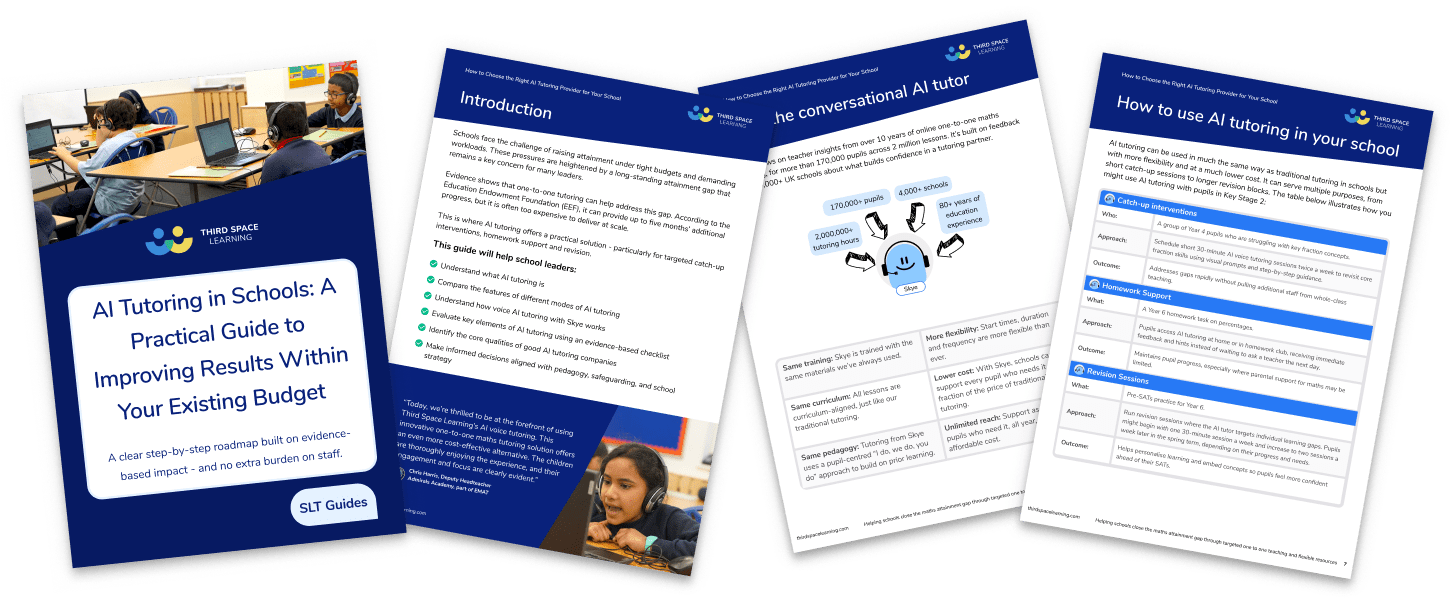
AI Tutoring in Schools: A Practical Guide to Improving Results Within Your Existing Budget
Use this clear step-by-step tutoring roadmap to discover the essential features and core qualities of effective and affordable AI tutoring and clear examples of how to integrate AI tutoring in your school setting.
Download Free Now!What does ‘affordable tutoring’ actually mean for schools?
Affordable means more than price per hour. When evaluating affordability, consider three factors: hourly rate, total cost at scale, and the coordination burden on your staff.
Understanding per hour costs
Traditional private tutors typically charge £30–50 per hour. Online tutoring platforms are slightly cheaper at £15–25 per hour. AI maths tutoring costs under £6 per hour per pupil.
Hourly rates don’t capture the full picture.
Why scalability matters for schools
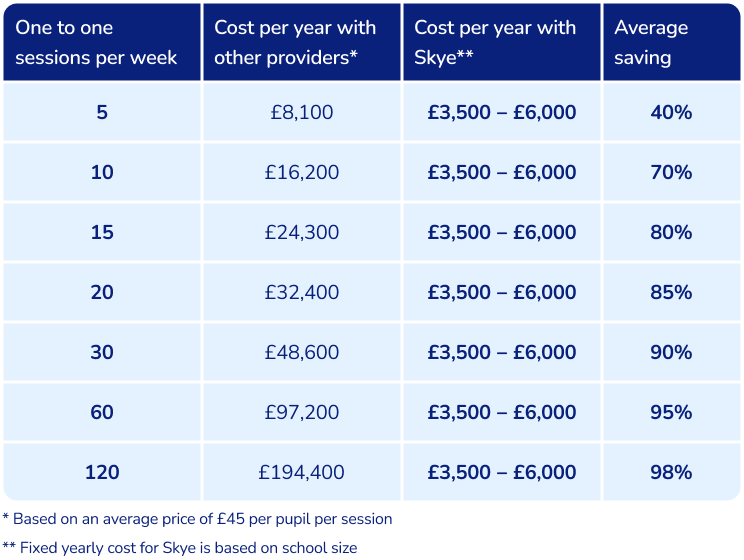
If you’re supporting 30, 60, or 100+ pupils across multiple year groups, even low rates add up fast. For example, 50 pupils receiving just a few lessons each (10 hours total) equals 500 hours:
- Private tutor: £15,000–£25,000
- Online tutoring platform: £7,500–£12,500
- AI tutoring with unlimited access: £3,500–£6,000 per year
The difference becomes significant when you’re delivering whole-cohort intervention rather than targeted support for a handful of pupils.
Staffing overhead and coordination time
Even lower-cost tutoring options require staff time. Someone needs to find a tutor, handle tutor matching, coordinate scheduling, monitor quality, and manage safeguarding checks for human tutors.
This coordination burden is manageable for small-group intervention. It becomes unsustainable at scale.
Cost per outcome: measuring impact
The most affordable tutoring is the kind that delivers measurable progress within your budget. Consider the return on investment: how much progress are pupils making per pound spent?
A slightly higher hourly rate that delivers faster progress can work out cheaper than low-cost tutoring that takes twice as long to show impact.
5 ways to evaluate affordable tutoring options
Before choosing a provider, assess them against these five quality indicators. These apply whether you’re considering human tutors or AI platforms.
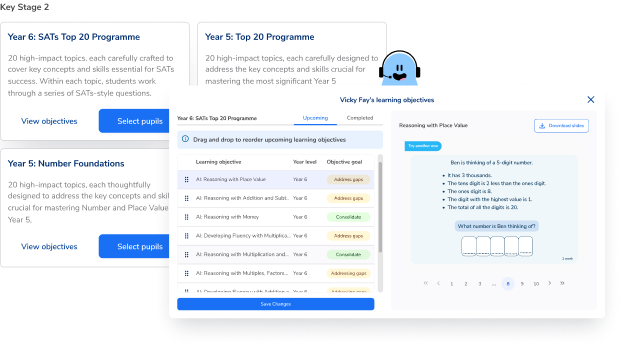
1. Curriculum alignment for UK schools
Does the tutoring map to specific KS2, KS3, or GCSE objectives? Are lessons matched to what pupils are learning in class, or is it generic content?
For SATs preparation or GCSE revision, curriculum alignment isn’t optional. Pupils need support with the actual topics they’ll face in exams, whether that’s maths, science, physics, or chemistry.
2. Qualified tutors and subject knowledge
Are lessons designed by qualified teachers or subject specialists? For human tutors, check their credentials and teaching experience. All tutors at reputable platforms should hold enhanced DBS checks.
For AI tutors, find out whether the content is created by education professionals or software developers. Teaching experience matters for popular subjects like maths, science, and English tuition.
3. Safeguarding standards
For human tutors, this means enhanced DBS checks and safer recruitment protocols. For AI platforms, look for built-in safeguarding, full staff visibility into sessions, and no one-to-one video calls with external adults.
You need to know exactly who the pupils are interacting with.
4. Progress tracking and measurable outcomes
Can you see a measurable impact on pupil attainment? What data do you receive? How will you know whether the tutoring helps children achieve their target grades?
Without progress data, you’re spending money on provisions that might not be addressing the right gaps or building confidence.
5. Setup requirements and ongoing support
What’s the burden on your staff to implement and monitor the tutoring? Does the provider offer training and ongoing support?
How easy is tutor matching for human tutors – can you find the perfect tutor for each child’s needs, or is pupil onboarding straightforward for platforms?
The cheapest option isn’t always the most affordable when you factor in coordination time. Finding a great tutor shouldn’t require excessive coordination.
When traditional online tutoring works well
Traditional online tutoring delivers effective support in specific contexts. Before dismissing it as too expensive, consider where it genuinely excels.
Where online lessons work best
Online tutoring is a strong option for small-group or targeted intervention with 5–15 pupils. It’s particularly effective for exam technique and paper practice, especially at GCSE higher tier or A level, where pupils benefit from working through specific topics with experienced tutors.
Some pupils benefit from building a relationship with the same tutor over time. For complex reasoning in subjects like physics or chemistry, having the right tutor who can explain things in multiple ways makes a difference.
What online tutoring platforms offer
You get qualified tutors with subject knowledge. Sessions happen via live video chat with an interactive whiteboard where pupils can upload documents. Pupils learn at their own learning pace during sessions.
Many platforms offer top tutors and handpicked tutors across popular tutoring subjects. Tutor matching experts help find the perfect tutor for each pupil. Some offer a free meeting to assess fit before committing.
The scalability challenge with online tuition
Scaling up creates difficulties. For schools supporting 30, 60, or 100+ students across multiple year groups, even the most cost-effective online tuition quickly adds up in both budget and coordination time.
You’re managing tutor availability, scheduling sessions around the school day, monitoring quality across multiple tutors, and ensuring safeguarding protocols are followed. Per-pupil costs remain high for whole-cohort intervention.
When online tutoring is right for your school
If you’re running a targeted intervention with a small group and have the capacity to coordinate logistics, traditional online tutoring remains a strong option.
When face to face tutoring makes sense
Some schools still prefer person tutoring vs online tutoring for building relationships. However, online learning offers greater flexibility and lower costs while maintaining quality through experienced tutors and interactive whiteboards.
AI maths tutoring: how it works and why it’s affordable
What if you could deliver one-to-one tutoring without the scheduling, cost or recruitment barriers? AI maths tutoring represents a fundamental shift in what “affordable” can mean for schools. For the first time, schools can provide one-to-one maths support for every child who needs it, without the usual cost or staffing barriers.
When we heard about the introduction of the AI programmes, it was a game-changer! It’s allowed us to get more children onto the programme because it’s so affordable and more flexible.
David Gooding, Assistant Headteacher, Harrison Primary School
What is AI maths tutoring?
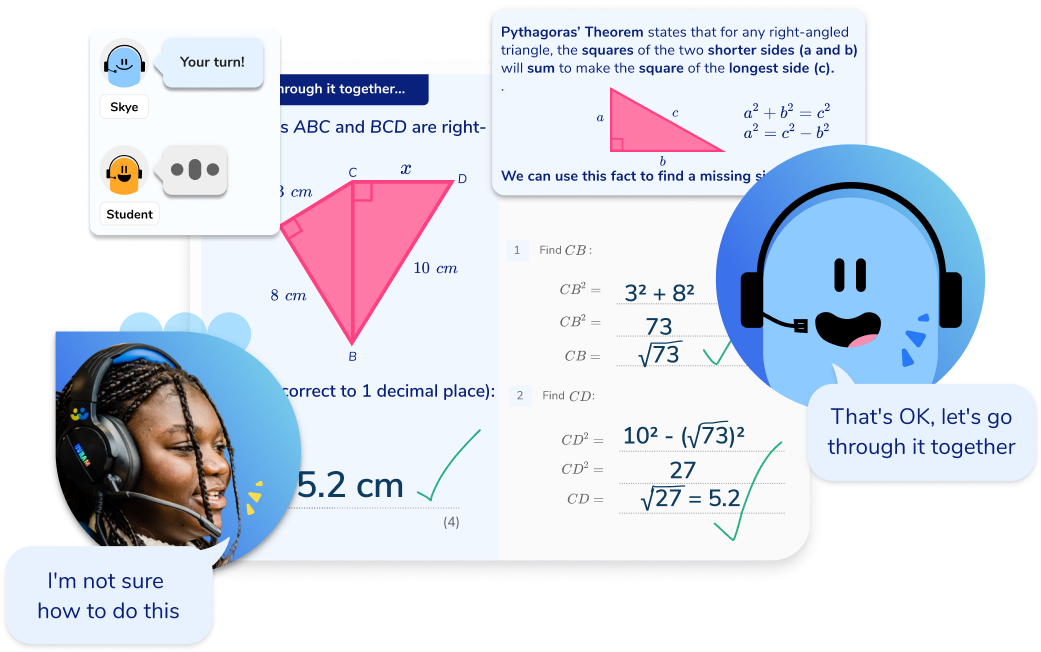
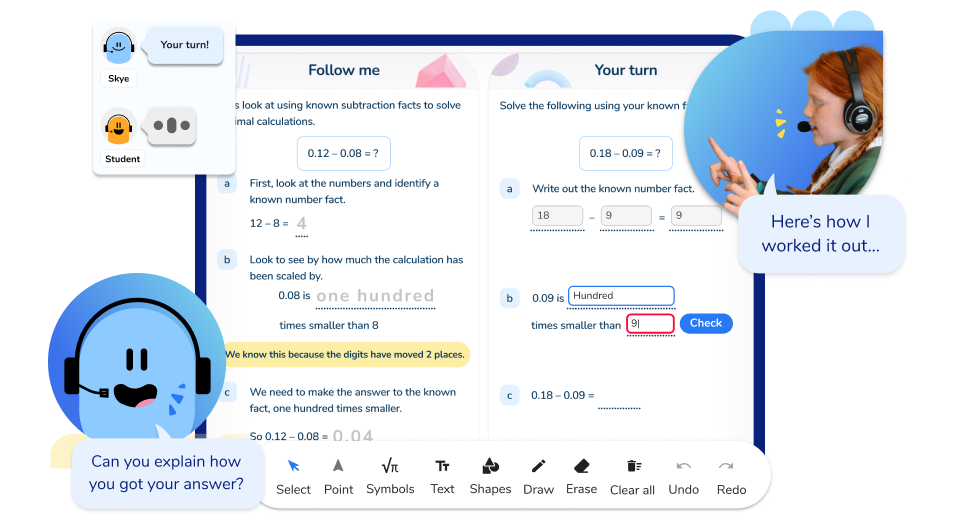
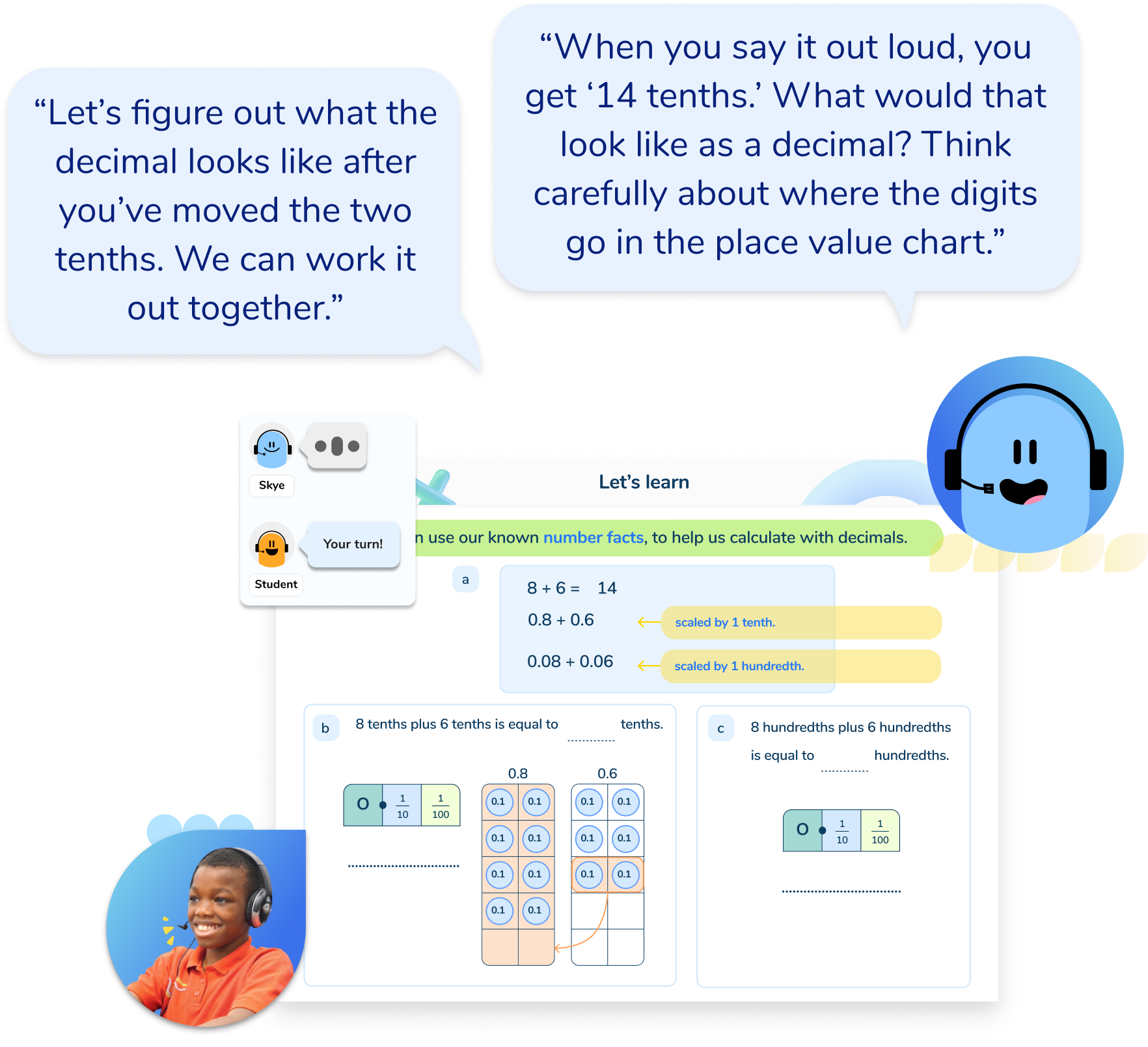
AI tutoring delivers online lessons through real-time spoken interaction. Pupils work with an AI maths tutor that listens, responds, adapts to their pace, and provides explanations.
Pupils speak answers aloud and receive instant feedback. They work through problems on an interactive whiteboard. Content is curriculum-aligned (KS2 through GCSE) and created by qualified teachers. Pupils learn at their own pace.
Key features of AI online tutoring
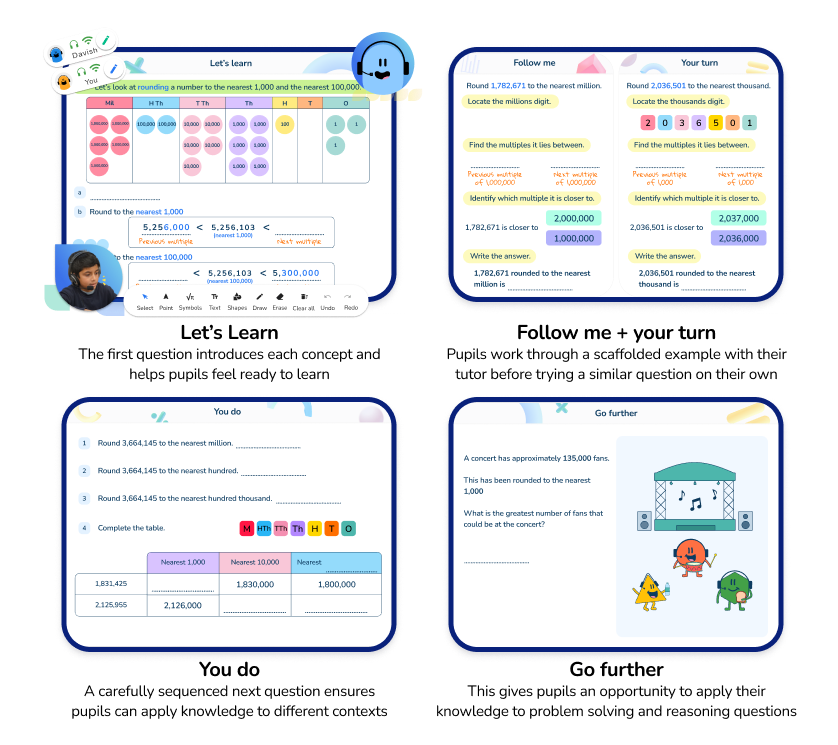
Key features include an interactive whiteboard for working through problems visually, verbal reasoning with spoken feedback rather than just multiple choice, and adaptive difficulty that responds to pupil understanding.
It’s suitable for SATs preparation, GCSE foundation and higher tier, A level support, or building confidence with foundational gaps. Explore AI maths tutoring use cases to see how schools are implementing this approach.
Why AI tutoring is affordable at scale
Per-pupil costs can sit under £6 per hour. Unlimited access models typically cost under £3,500 per year for an entire school, with no per-session limits or pupil caps.
One AI tutor supports thousands of students simultaneously. There’s five-minute scheduling flexibility for lessons during school, after school, or at home. Schools rotate pupils based on need without renegotiating contracts.

Reduced staffing overhead
You don’t need tutor matching or recruitment. No enhanced DBS checks required – it’s platform-based with full staff visibility. After initial setup, coordination time is minimal.
How AI tutoring compares to traditional options
|
Factor |
AI tutoring |
Online tutoring platform |
Private tutor |
|---|---|---|---|
|
Cost per hour |
Typically under £6 |
£15–£25 |
£30–£50 |
|
Scalability |
Unlimited pupils |
Limited by tutor availability |
Very limited |
|
Flexibility |
5-minute scheduling, 24/7 access |
Fixed appointment times |
Fixed appointment times |
|
Staffing overhead |
Minimal (platform-based) |
Moderate (coordination needed) |
High (recruitment, scheduling) |
|
Setup time |
One-off platform setup |
Ongoing tutor matching |
Significant recruitment time |
|
Safeguarding |
Platform-based, no DBS needed |
Enhanced DBS required |
Enhanced DBS required |
|
Quality consistency |
Consistent (teacher-designed content) |
Variable by tutor experience |
Variable by tutor experience |
For a detailed comparison, see our analysis of traditional vs AI tutoring. Understanding the differences between voice-based AI maths tutoring and text-based approaches can also inform your decision.
Skye: AI tutoring built by teachers for schools
Skye, Third Space Learning’s AI maths tutor, demonstrates what this looks like in practice. Built by qualified teachers and proven effective in UK schools, it delivers structured, conversational lessons aligned to national curriculum objectives.
This makes one-to-one maths support financially viable for the first time, helping children build confidence and achieve better grades.
Knowing which type of affordable tutoring is right for your school
Choose your tutoring approach based on intervention scale, budget, and staffing capacity – not just price per hour.
Small-group targeted intervention (5–15 pupils)
Traditional online tutoring works well for small groups needing just a few lessons or longer support. Budget: £1,000–£3,000. Ideal for pupils needing exam technique or stability with the same tutor.
Whole-cohort support (30+ pupils across multiple year groups)
AI tutoring provides scalability without cost inflation. Coordination drops to minimal levels. Budget: under £3,500 per year for unlimited access. Works when pupils need flexible access rather than fixed appointments.
Exam technique for GCSE and A level
Consider a specialist human tutor for targeted practice at GCSE level or A level in subjects like physics, chemistry, and maths. Use AI tutoring for foundational revision. A blended approach allocates expertise where it adds most value.
Foundational gaps and confidence building
AI tutoring excels at adaptive support. Pupils revisit concepts at their own pace and when needed. Particularly effective for SATs preparation and closing KS2 or KS3 gaps where pupils need to rebuild understanding and confidence in the classroom.
We can also use Skye for same-day interventions. If we have a group of children who haven’t grasped a concept in their morning lesson, we can take them out and get it sorted with Third Space Learning in the afternoon.
Lucia Romeu, Assistant Headteacher, Danegrove Primary School
Multiple use cases simultaneously
Use AI to provide baseline support for all children who need it. This frees up your human tutoring budget for pupils who need specialist input that AI can’t provide.
The most affordable solution is the one that delivers measurable progress within your budget and staffing constraints.
The sessions have been really beneficial both for the Year 6 pupils receiving them but also for my Year 5s. I now have more time to focus on them each week, but I know my Year 6s are still getting that opportunity to work on SATs questions.
Amy Sperrin, Year 5/6 Teacher, Barton Park Primary School
What education leaders should look for in affordable tutoring
Price alone doesn’t determine value. School leaders evaluating affordable tutoring options prioritise these factors.
Quality indicators that matter
Don’t compromise on teaching quality. Content should be designed by qualified teachers with subject knowledge. The best platforms feature top tutors and handpicked tutors who can explain things multiple ways. Our guide on why AI tutors need human expertise explores this principle.
Measuring impact and building confidence
Look for progress data you can track. Evidence of accelerated progress tells you whether tutoring is worth investment. Monitor whether pupils gain both confidence and grades, and whether parents report improvements in their child’s confidence.
Non-negotiable safeguarding standards
Safeguarding remains non-negotiable. For human tutors, this means clear enhanced DBS protocols and safer recruitment. For AI platforms, look for built-in safeguarding, staff visibility into what pupils are learning, and age-appropriate content.
Why teacher-designed content makes the difference
Schools using AI tutoring report that lessons built by qualified teachers, rather than just software developers, show in explanation quality. Read Jodie Lopez’s AI tutoring review and Neil Almond’s experience to see this in practice.
Avoiding false economy
Avoid purely cost-driven choices that undermine outcomes. Watch for these red flags:
- Unqualified tutors with no teaching credentials or subject knowledge
- Generic content not aligned to the UK curriculum
- No progress tracking or impact data
- Poor safeguarding transparency
- No support for implementation or person to contact
Cheap tutoring that doesn’t work costs more long-term. One maths lead said: “We looked at three providers. Price mattered, but finding the perfect tutor or platform meant seeing evidence of impact and knowing content was created by teachers.”
See our comparison of the best AI tutors for guidance.
Popular tutoring subjects
When evaluating affordable tutoring, consider which popular tutoring subjects you need to cover:
Core subjects for primary and secondary
The most popular subjects for tutoring include:
- Maths (from KS2 through GCSE and A level)
- Science (including physics and chemistry at GCSE level)
- English tuition (including creative writing)
Most schools prioritise maths and English tuition for SATs preparation, then expand to science, physics, and chemistry for GCSE level and A level students.
Subject expertise matters
Different subjects have different requirements. Maths tutors need strong subject knowledge across curriculum. Physics and chemistry tutors at GCSE level and A level need deep expertise. All our tutors – whether human or AI – should demonstrate proven teaching experience and ability to explain things clearly to help students learn effectively.
Balancing cost, quality and impact
Affordable tutoring is within reach if you know what to prioritise.
Remember that “affordable” has three dimensions: per hour cost, scalability across your cohort, and staffing overhead for coordination. All three matter when you’re making budget decisions.
Quality indicators apply regardless of cost. Curriculum alignment, safeguarding, teacher expertise, and measurable impact aren’t optional extras. They’re what separates effective tutoring from wasted investment.
AI tutoring makes one-to-one support financially viable for the first time, but only if it’s built by teachers and proven effective in schools. Not all AI tutoring is equal. The difference lies in pedagogical design and evidence of impact on student progress and confidence.
Evaluate providers against the checklist in this article rather than just comparing hourly rates. The most affordable tutoring is the kind that delivers measurable progress within your budget while minimising the burden on your staff.
Quality and affordabilty
Schools shouldn’t have to choose between quality and affordability. AI tutoring provides a way to scale effective, individualised maths support without the usual staffing and cost barriers.
Whether you need support for just a few lessons or whole-year implementation, there are affordable options that maintain quality through qualified teachers, proper safeguarding with enhanced DBS where needed, and evidence-based pedagogy.
If you’re exploring affordable tutoring options for KS2, KS3 or GCSE maths, an AI maths tutor like Skye could be the sustainable, high-impact solution your school needs.
Download our free Guide to AI tutoring to see how voice-based AI is helping UK schools deliver unlimited one-to-one support for less than £3,500 a year.
FAQs
Private tuition typically charges £30–50 per hour. Online tutoring platforms range from £15–25 per hour. AI tutoring costs under £6 per hour per pupil. Rates vary by subject knowledge, skills and teaching experience.
Average hourly rates vary by subject, region, and tutor experience but typically fall between £20–45. Schools often negotiate lower rates for block bookings or when arranging tutoring for multiple pupils across popular subjects.
The most popular tutoring subjects include maths, English, science (including physics and chemistry), and creative writing. For primary schools, maths and English tuition is most common, particularly for SATs preparation. At secondary level, maths, physics, chemistry and other science subjects are popular tutoring subjects, especially at GCSE level and A level.
AI tutoring excels at providing consistent, curriculum-aligned support at scale. Human tutors bring expertise in complex reasoning and relationship-building. For whole-cohort support or foundational gap-filling, AI tutoring provides the scalability you need while helping students learn at their own pace and build confidence.
References
- Education Statistics, Key Stage 2 Attainment 2024-2025 found here: GOV.UK
- Education Statistics, Key Stage 4 Attainment 2024-2025 found here: Education Statistics Service

DO YOU HAVE STUDENTS WHO NEED MORE SUPPORT IN MATHS?
Skye – our AI maths tutor built by teachers – gives students personalised one-to-one lessons that address learning gaps and build confidence.
Since 2013 we’ve taught over 2 million hours of maths lessons to more than 170,000 students to help them become fluent, able mathematicians.
Explore our AI maths tutoring or find out about online maths tuition for your school.