Make a real difference with personalised maths intervention programmes
In every class there are pupils who need extra support to catch up and make progress in maths.
But in a whole class environment, it’s often impossible to address individual misconceptions as they arise – meaning pupils fall further behind.
With Third Space Learning’s maths intervention programmes, pupils receive additional one-to-one tutoring from their personal AI maths tutor, Skye – without any impact on staff workload.
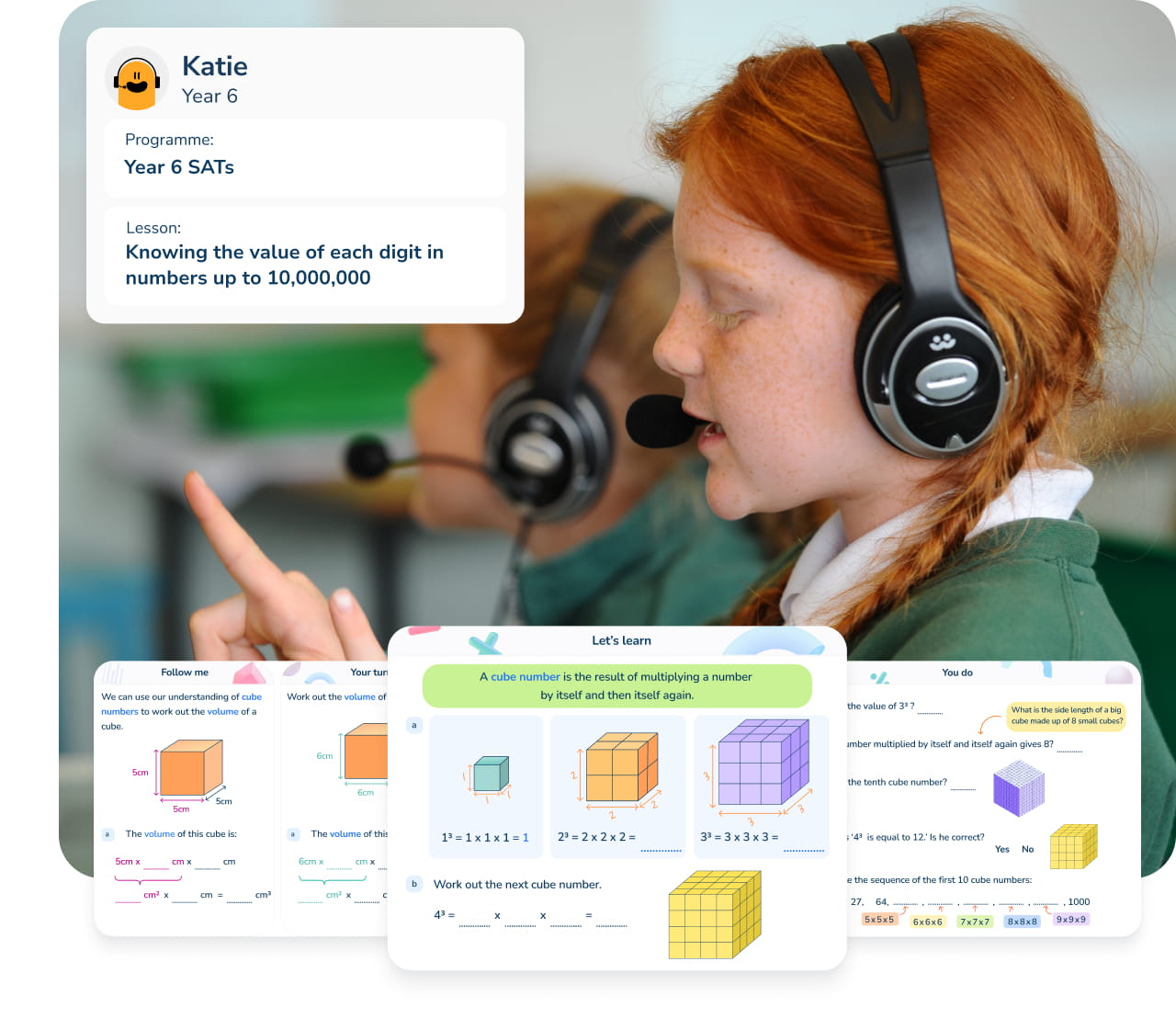
What is a maths intervention programme?
A maths intervention programme is a carefully structured programme of support designed to help children who are falling behind in maths to catch up with their peers. Effective maths intervention programmes identify specific knowledge gaps through diagnostic assessment, then provide focused teaching to address them – whether in small group settings or through one-to-one support.
Research from the Education Endowment Foundation (EEF) consistently shows that one-to-one tutoring has the greatest impact on attainment, particularly for children struggling with core concepts in the KS2 maths curriculum like place value, number sense, and fractions. The goal is to help children master the curriculum at an age-appropriate level, build confidence in their mathematical understanding, and return to whole class teaching better equipped to keep up with their Key Stage peers.

What makes an effective maths intervention?
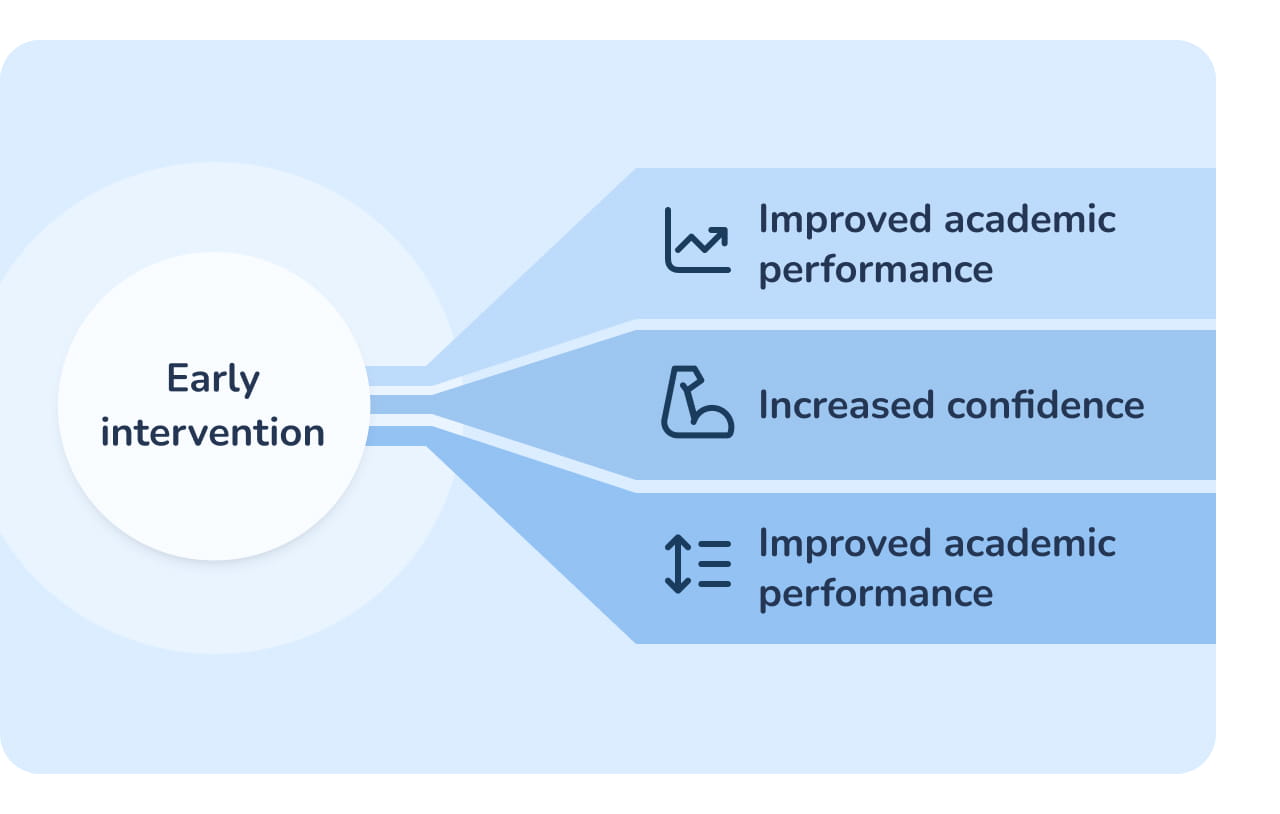
1. Start early and intervene quickly
The Education Endowment Foundation identifies early intervention as one of the most important factors for success. Pupils who receive support as soon as gaps appear – rather than waiting until Year 6 or Year 11 – are far more likely to catch up with their peers.
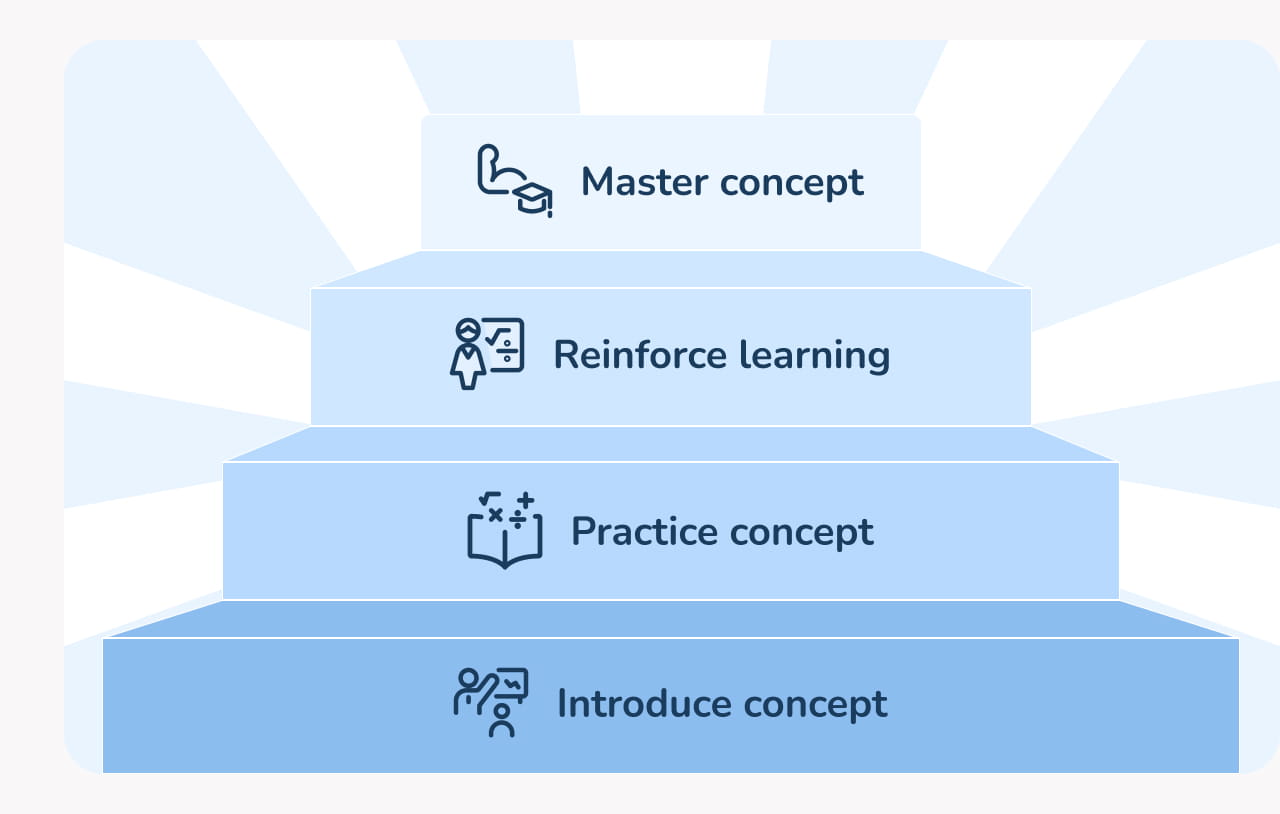
2. Use explicit and systematic teaching
Effective interventions use structured, step-by-step instruction that helps pupils master one concept before moving to the next. This is particularly important for struggling learners, where gaps in mathematical understanding compound over time.
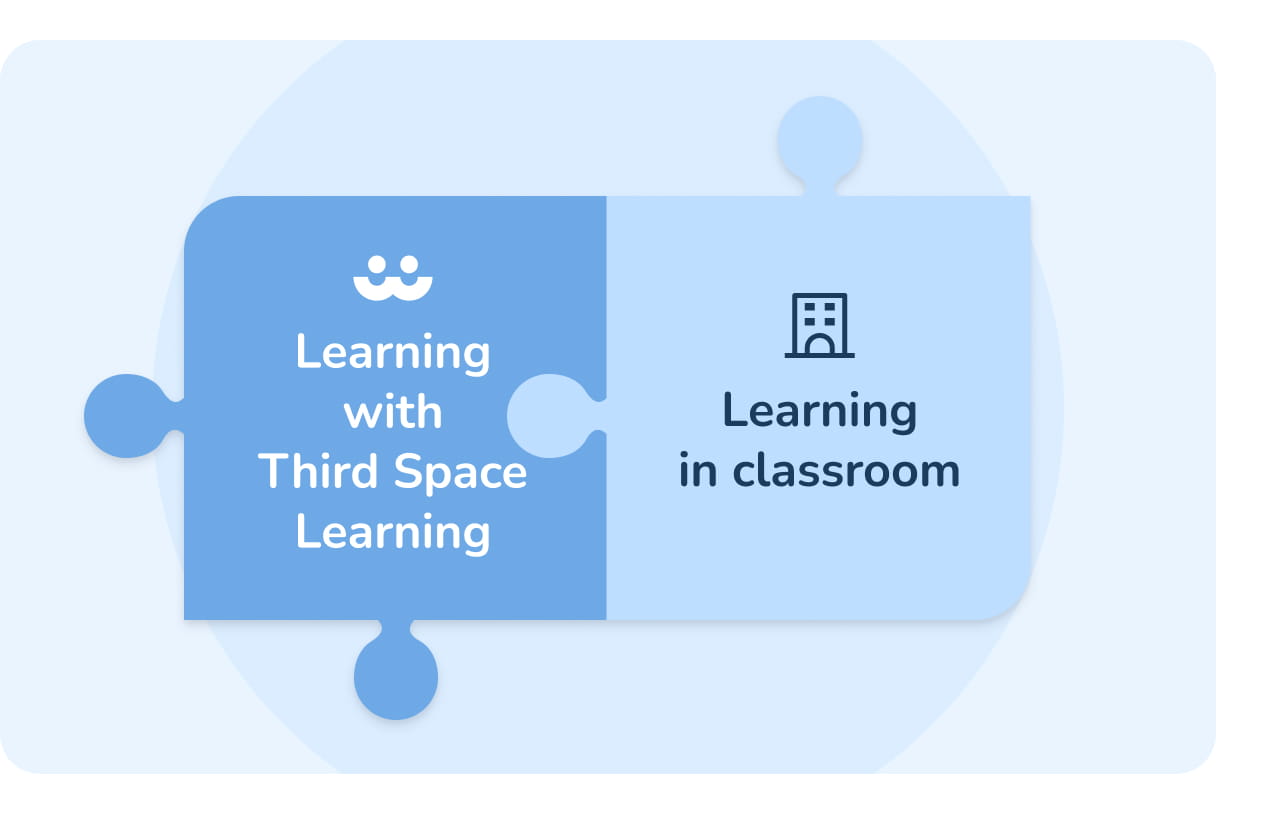
3. Link interventions to whole class teaching
The best maths intervention programmes connect directly to what pupils are learning in the classroom, so they can effectively apply new skills in independent practice and keep up with whole class teaching.
4. Choose the right delivery model
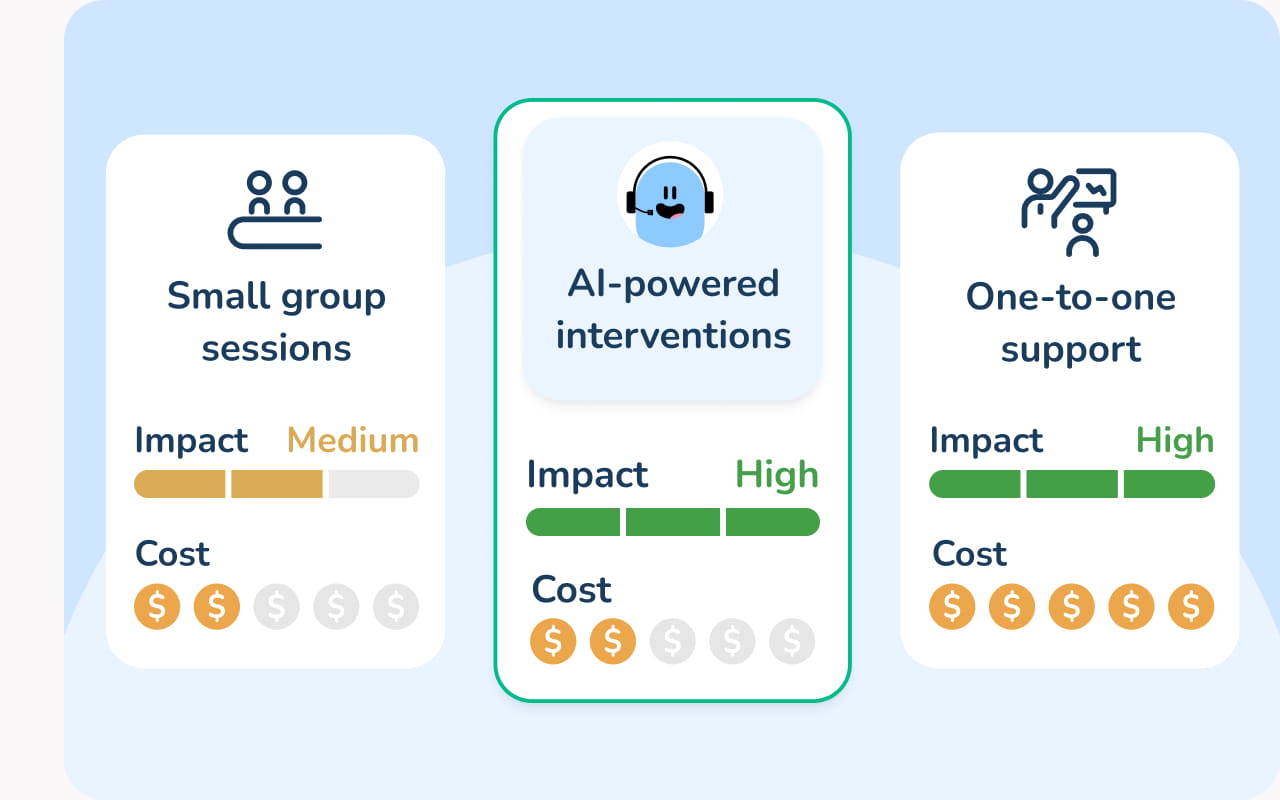
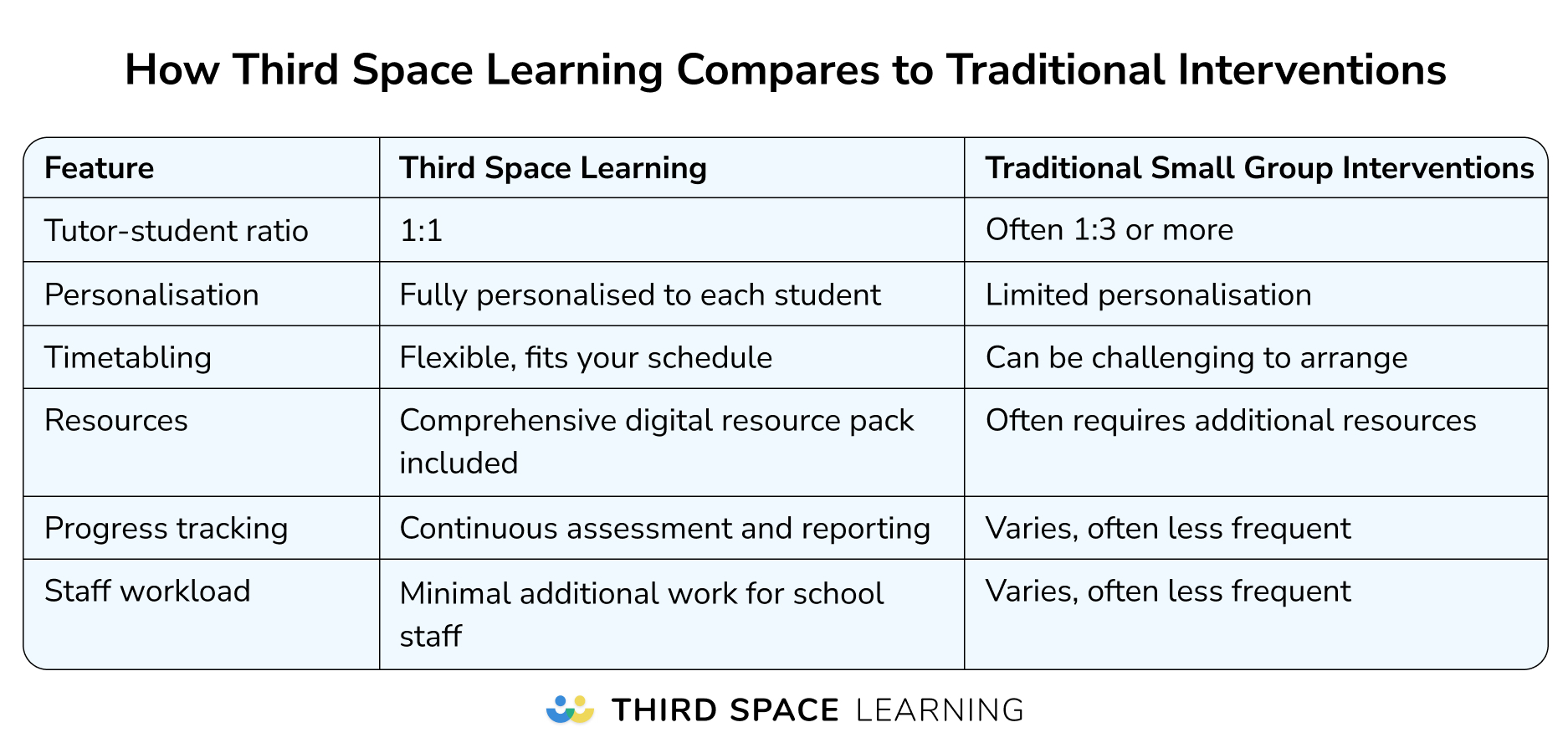
One-to-one support has a greater impact than small group sessions because it allows targeted support for each child’s specific misconceptions. However, one-to-one maths specialists are expensive and difficult to recruit – which is why many schools are turning to AI-powered intervention.
5. Monitor progress and adapt
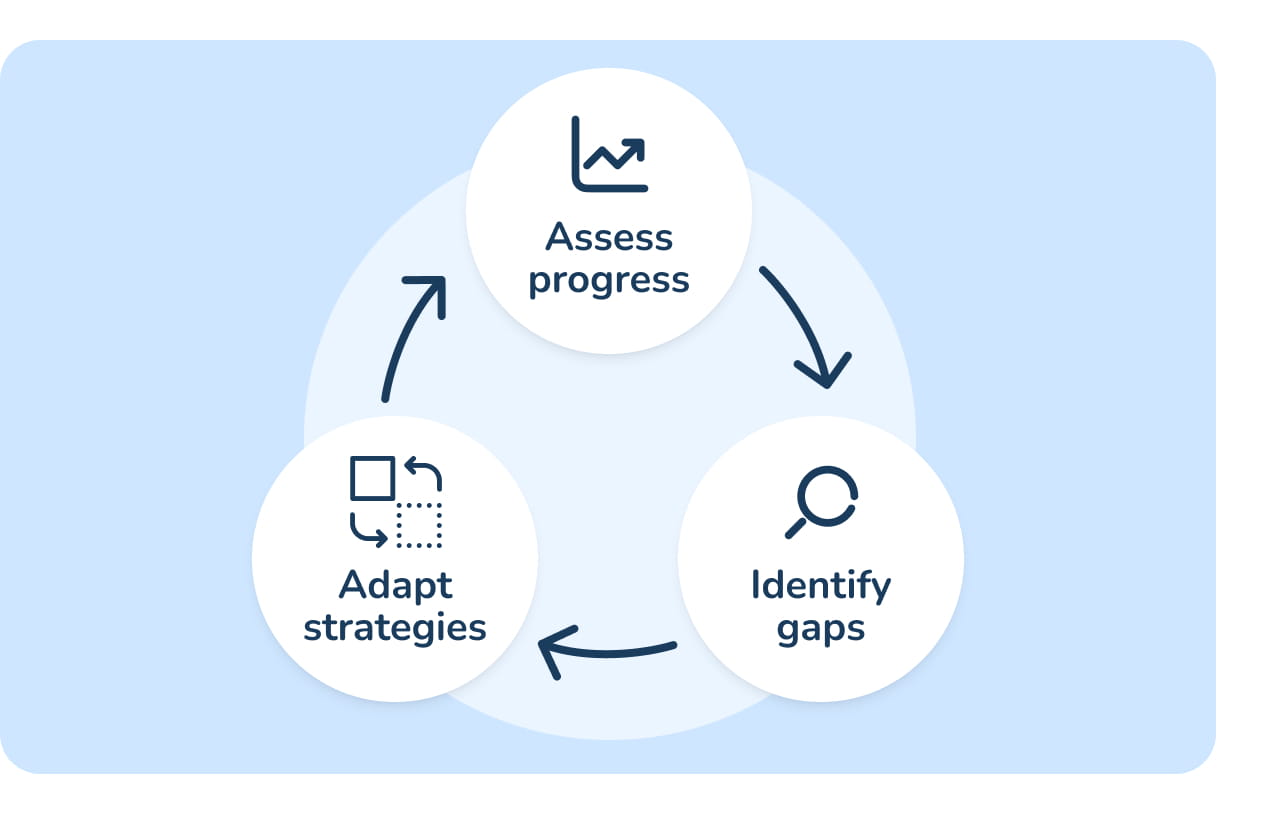
An effective intervention programme works by continuously assessing each pupil’s progress and adapting accordingly. Teachers can use assessment data to identify where pupils need more practice on problem-solving skills or other areas of understanding.
Comprehensive and effective
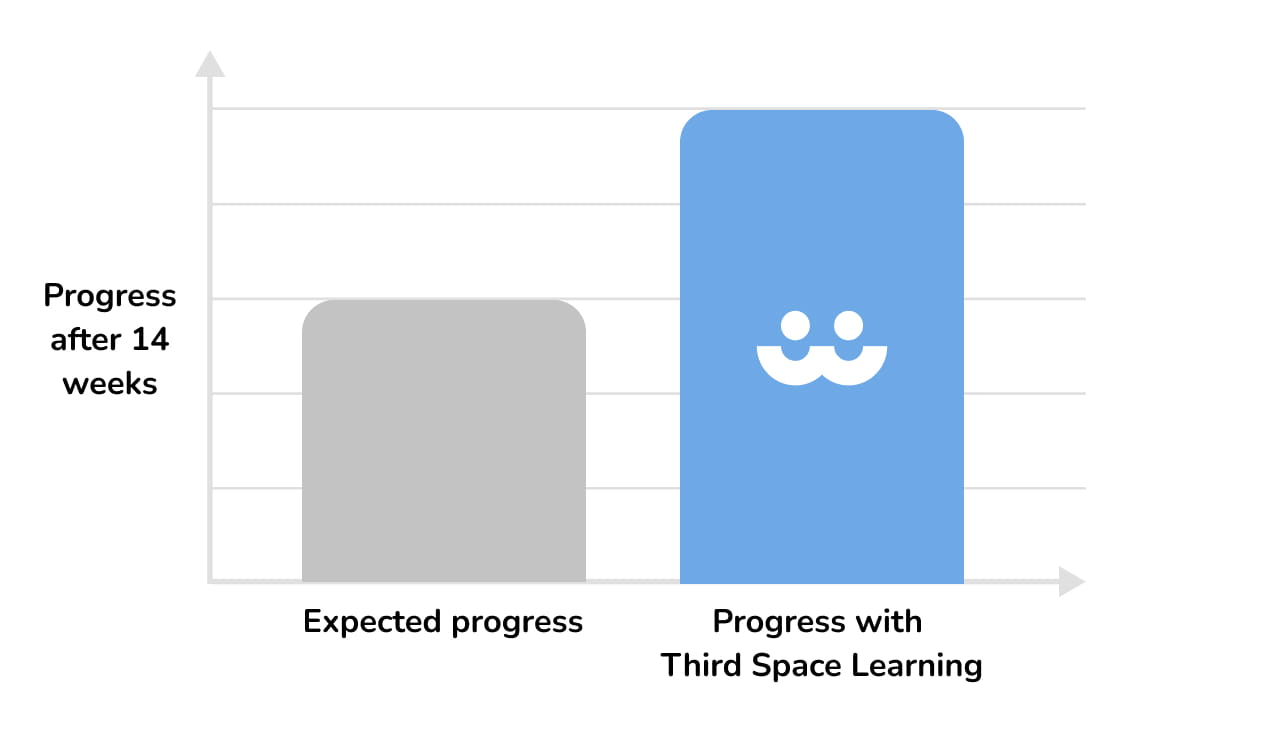
In an independent trial with Rising Stars, pupils receiving one-to-one maths support from Third Space Learning made 7 months’ progress in 14 weeks.
Personalised learning pathways for each pupil based on diagnostic assessment
Covers key topics like place value, fractions, subtraction, and percentages
Helps pupils reach age-related expectations
Aligns with the national curriculum
Supports children with dyscalculia and other mathematical difficulties
Maths intervention programmes for primary and secondary schools
Support primary school pupils to reach age-related expectations
Maths intervention programmes to address gaps across Years 3 to 6 and help prepare children for the KS2 maths SATs papers
Programmes to help KS2 children develop problem-solving skills and build number sense
SATs revision programme to build confidence and familiarity with SATs-style questions
Early intervention from Year 3, supporting children who are struggling with foundational mathematical concepts before gaps widen
Ensure secondary school students are secure in maths from KS3 to KS4
Maths intervention programmes to support students as they progress through KS3
Personalised support to boost maths progress for students in Year 10 and Year 11, with a focus on reaching target GCSE grades
Expert-created curriculum lessons covering rounding to decimal places, expanding double brackets, working with prime factorisation, and more
Helping students at risk of not meeting their target GCSE grade
“It really helps children who are a bit unsure about maths. It’s brilliant at giving children confidence and the chance to be honest and open in a one-to-one setting.”

Sally Maddison, Headteacher – Sir John Sherbrooke Junior School
Sir John Sherbrooke Junior School
Same day maths interventions that fit your timetable
One of the biggest barriers to running effective maths interventions is finding time in the school day. Many schools need same day maths interventions that happen alongside regular teaching – without pulling staff away from classes or eating into valuable preparation time.
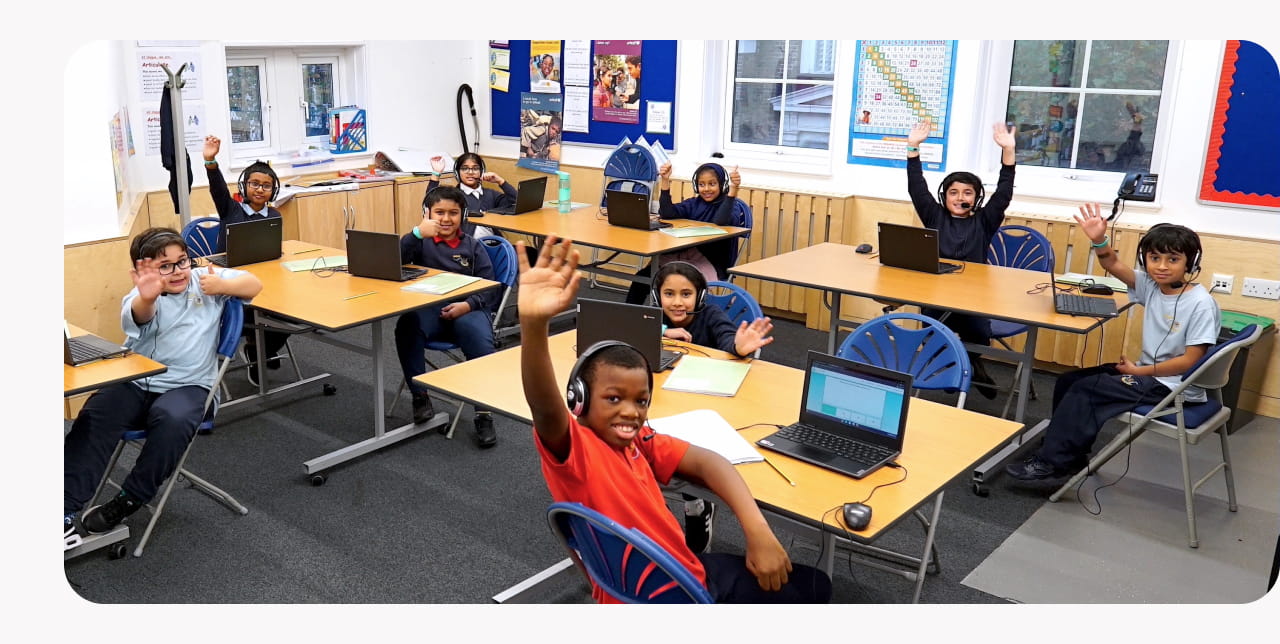
Schools pick a timeslot that works, pupils log on with a headset, and Skye delivers a one-to-one intervention session – with minimal preparation time for staff. Schools can run same day maths interventions to support children across 10, 20, or even 30 pupils at once, without any impact on teaching assistants or classroom teaching.

Why choose Third Space Learning’s maths intervention programmes
Guided by diagnostic assessment and teacher insight
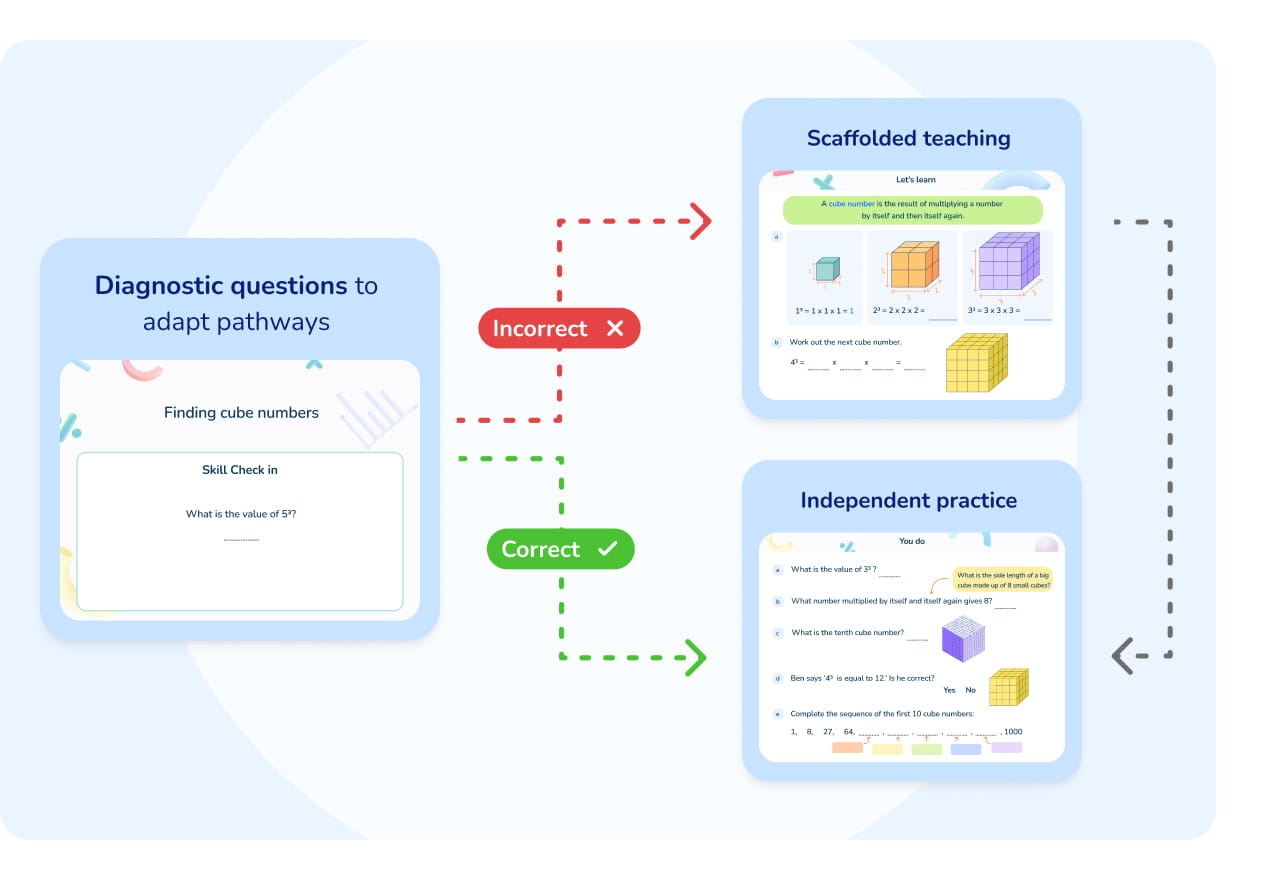
All pupils start with an initial assessment to identify where they need the most support. Skye, the AI maths tutor, then uses formative assessment during each lesson to scaffold and support children along their individual learning pathway – helping children address the specific gaps and misconceptions holding them back.
Built for school budgets
According to the EEF, one-to-one tutoring is one of the most effective ways to raise attainment – but it’s often expensive for schools. During the NTP Third Space Learning was most affordable DfE-approved one-to-one tutoring provider and we are now offering personalised support for pupils at a price much lower than other providers charge for small group sessions. It’s low-cost intervention that helps schools raise attainment without breaking their budget.

Designed by maths specialists
One of the biggest barriers for primary and secondary schools is the lack of maths specialists in England – especially when they have 10 or more children who need extra support. Skye, our AI maths tutor, has been trained by expert teachers and specialists to closely replicate the experience of each child having a dedicated tutor when they need it.
Easy to timetable and implement
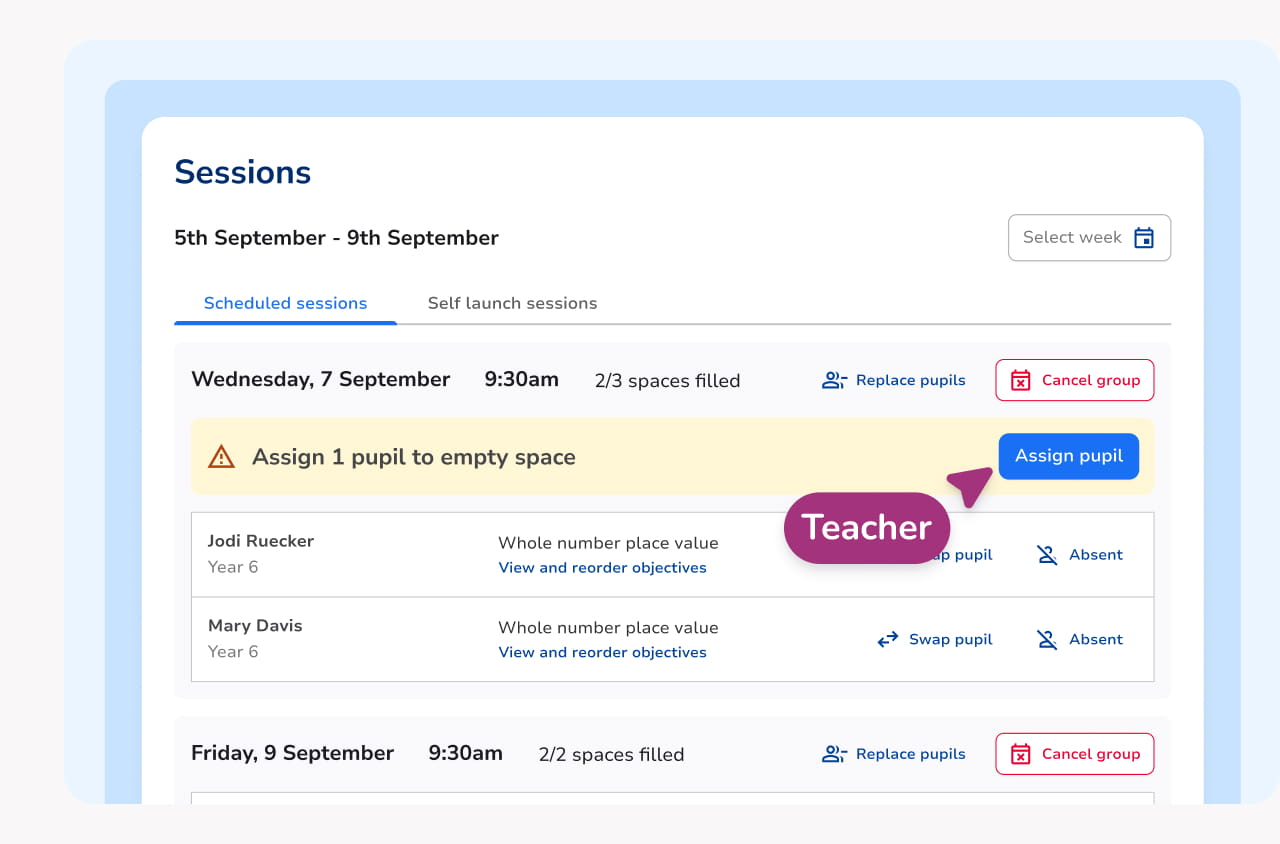
With high workloads, small group sessions to organise, and Ofsted visits to prepare for, SLT, teaching staff, and teaching assistants have enough on their plate. Schools pick their pupils and a timeslot that works for their timetable, and we take care of the rest – no additional burden on non-teaching staff or teachers.
Maths resources and supporting materials for the whole school
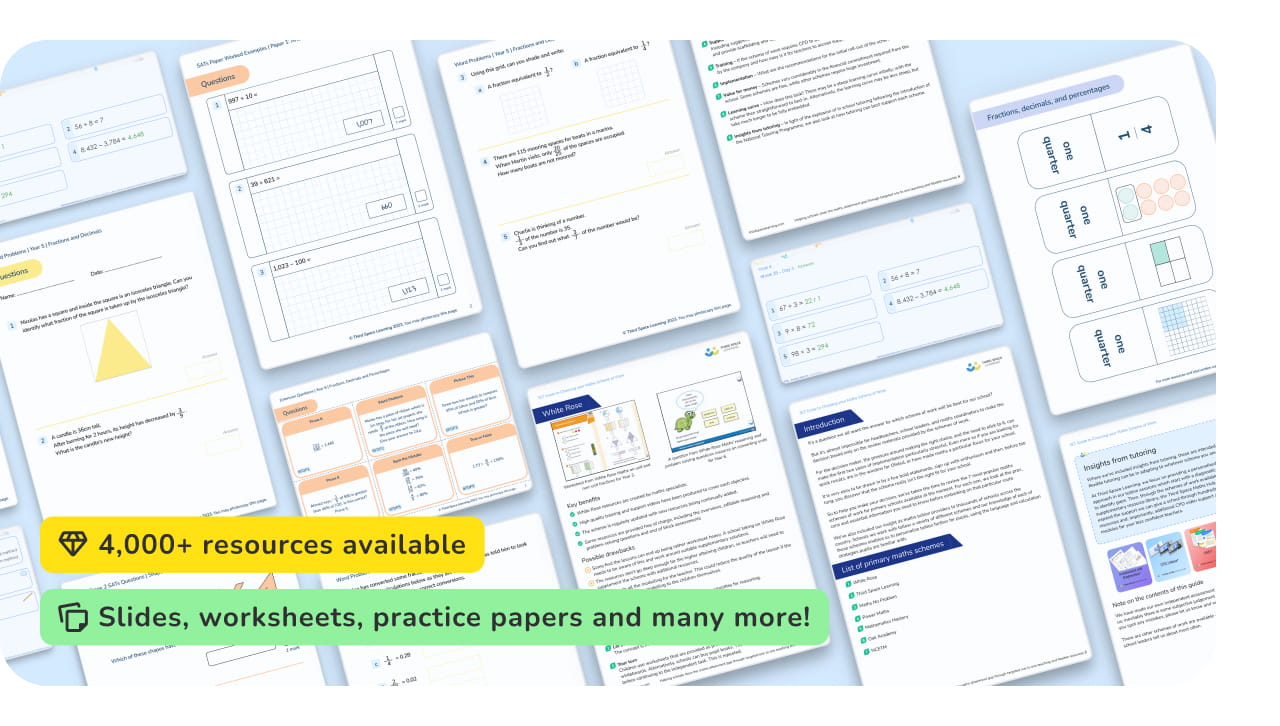
Access a library of maths resources and teaching materials – from printable resources, practical activities, and in-class worksheets to ready-to-go lesson plans and professional development for teaching assistants, teachers, and SLT. All material developed by qualified specialists to support children in building mathematical fluency in and beyond intervention sessions. Resources also support home learning, helping pupils practise outside of school.
“It’s individualised learning that takes on board where children are at in their learning at school – plus it builds confidence. The children love it!”

Angie Bailey, Deputy Headteacher – Giles Brook Primary
Giles Brook Primary
How our maths intervention programmes work
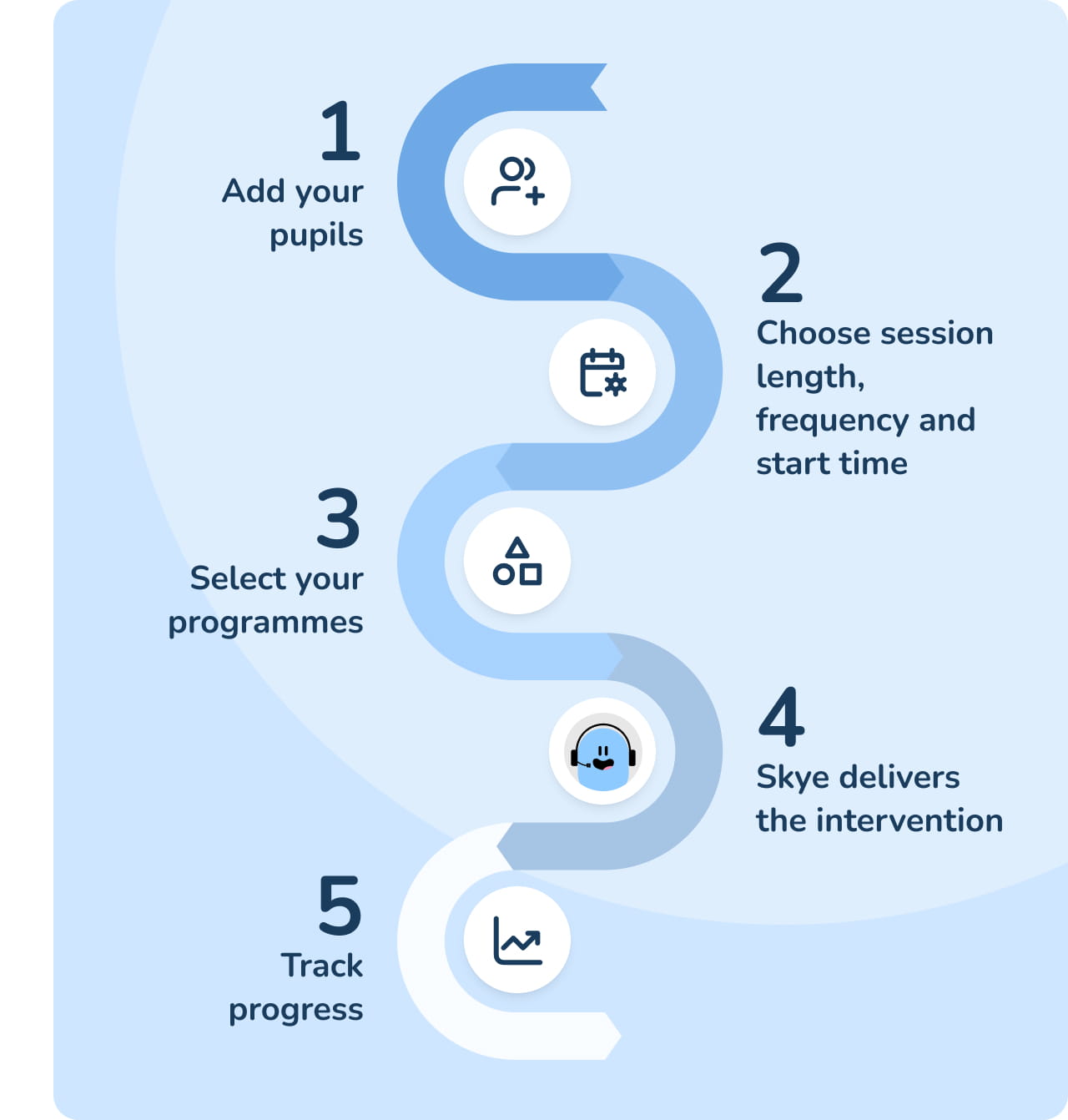
1. Add your pupils – Use your assessment data to identify the pupils who need extra support. Most schools prioritise pupils eligible for Pupil Premium or those at risk of not meeting age-related expectations.
2. Choose session length, frequency and start time – Sessions are available every 5 minutes before, during or after school, and can be rescheduled, extended or delayed at any point. No preparation time needed from staff. Sessions fit your timetable.
3. Select your programmes – Choose a programme for each pupil to set the concepts they’ll cover. Pick strand-specific programmes, broader programmes like SATs revision, or GCSE grade-targeted programmes. Reorder lessons at any point to align with your classroom teaching.
4. Skye delivers the intervention – Each pupil logs on with a headset and works one-to-one with their AI tutor. Lessons follow an “I do, we do, you do” structure, adapting to each pupil’s responses in real time.
5. Track progress – Access real time reports showing gaps diagnosed, concepts covered, and progress over time – helping pupils and teachers identify where additional classroom support is needed.
460 lessons designed to plug gaps and boost progress
In every Third Space Learning intervention programme, lessons follow an ‘I do, we do, you do’ approach to encourage pupils to move from guided to independent practice and apply their learning to a range of different contexts. Pupils develop the skills and understanding they need to solve problems with confidence.View example lessons below:
Book a free maths tutoring taster for your school
Get in touch today to arrange a free taster session with AI maths tutor Skye. On a quick call, we’ll set everything up so you can see how unlimited maths tutoring can support your UK primary or secondary school:
Trusted by more than 4,200 schools since 2013
Unlimited one-to-one tutoring for one low fixed cost
Developed by maths teachers for maximum academic impact
Built using insights from 2.3 million maths tutoring sessions
Designed to improve SATs and GCSE results
You can learn more about how we keep your data safe and secure in our privacy policy.
“Third Space Learning gives us a personal maths tutor that our selected students can work with each week. Their confidence has definitely improved.”

Nick Clark, Director of Learning for Maths – George Eliot Academy
George Eliot Academy