

What Is A Unit Fraction? Explained For Teachers

In this post we will be looking at unit fractions and providing you with some questions you can use to test your students’ skills.

Fractions, Decimals, Percentages and Ratio Sentence Stems
Help your school use consistent mathematical language for fractions, decimals, percentages and ratios.
Download Free Now!What is a unit fraction?
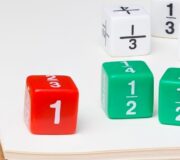
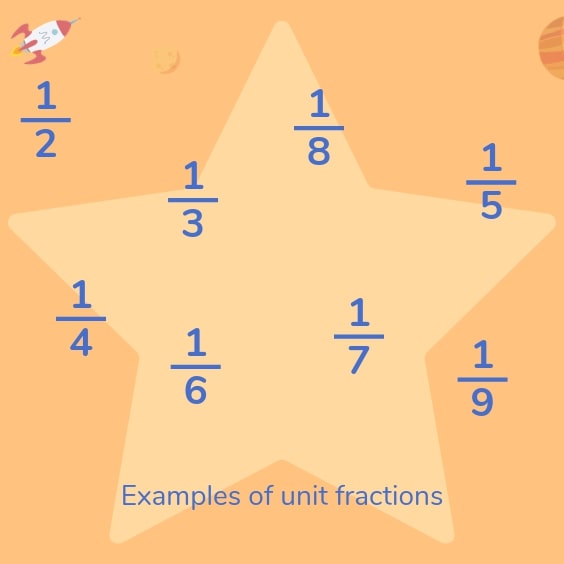
A unit fraction is any fraction with 1 as its numerator (top number), and a whole number for the denominator (bottom number).
When will children learn about them?
1st grade
Although the terminology of ‘unit fraction’ is not yet introduced, 1st grade students should:
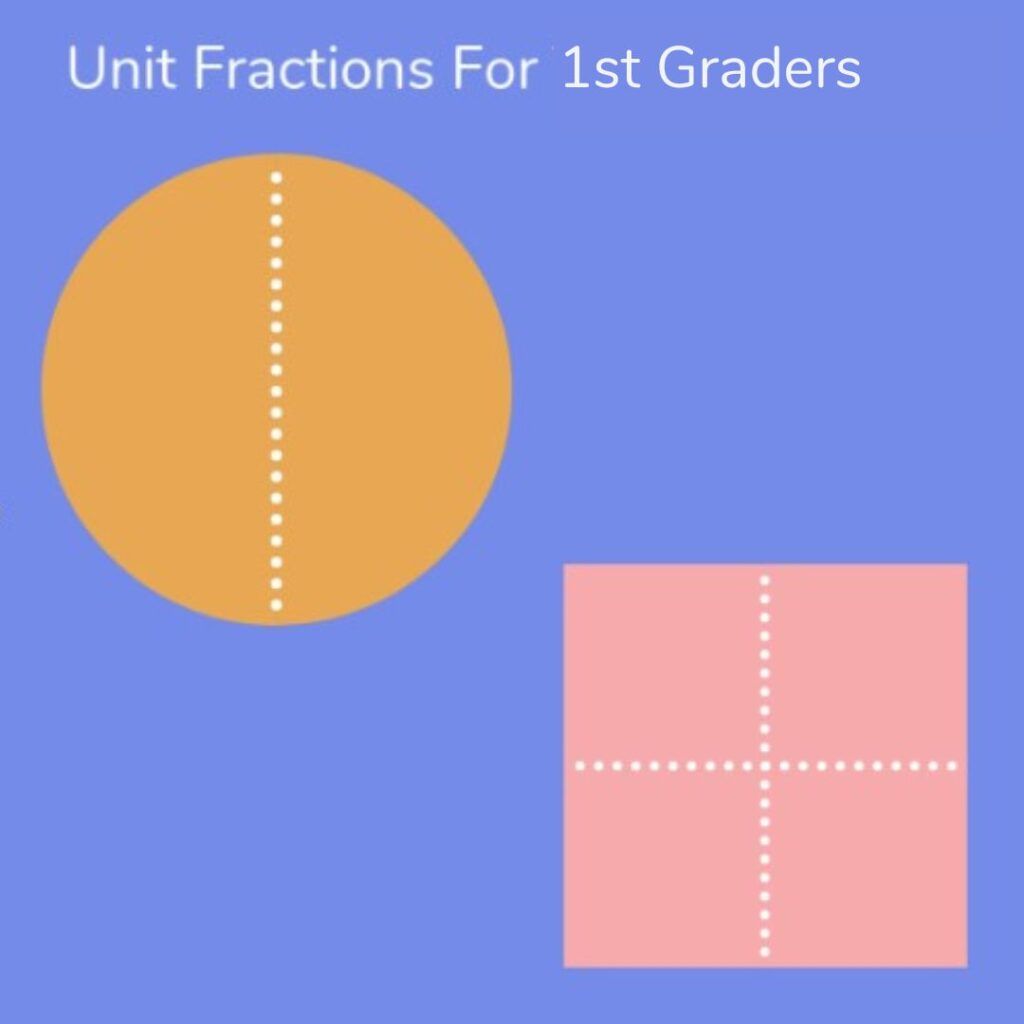
- Split circles and rectangles into two equal shares, describe the shares using the word ‘halves’ and use the phrase, “half of…”.
- Split circles and rectangles into four equal shares, describe the shares using the words “fourths” and “quarters, and use the phrases, “fourth of…” and “quarter of…”.
- When decomposing into more equal shares, it creates smaller shares (equal pieces)
2nd grade
In Second Grade, students use fractions to continue recognizing that equal shares of identical wholes don’t always have to have the same shape.
They are also introduced to thirds and are able to describe a whole as two halves, three thirds and four fourths.
Meet Skye, the voice-based AI tutor making math success possible for every student.
Built by teachers and math experts, Skye uses the same pedagogy, curriculum and lesson structure as our traditional tutoring.
But, with more flexibility and a low cost, schools can scale online math tutoring to support every student who needs it.
Find out more3rd grade
Third graders should:
- Develop understanding of fractions as numbers; understand a fraction a/b as the quantity formed by a parts of size 1/b.
- Explain equivalence of fractions, and compare fractions by reasoning about their size, using number lines and fraction models;
- compare and order fractions, and fractions with the same denominators or same denominator by reasoning about their size;
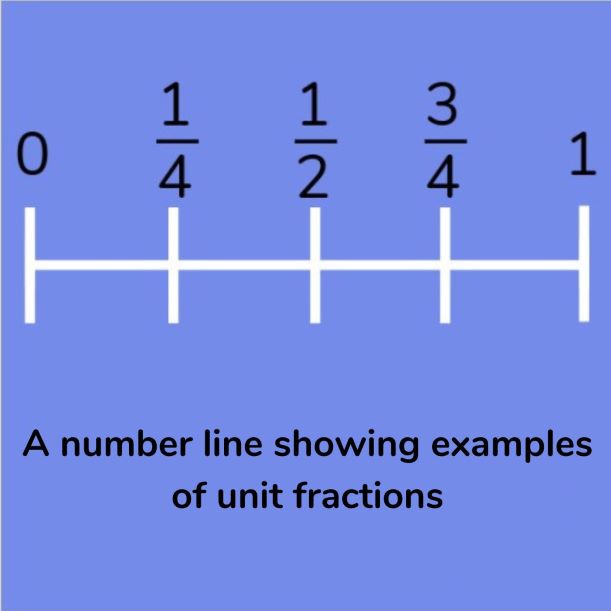
- begin to understand fractions as numbers on the number line, and represent the fractions on a number line;
- continue to recognize fractions in the context of parts of a whole, numbers, measurements, and a shape.
4th grade
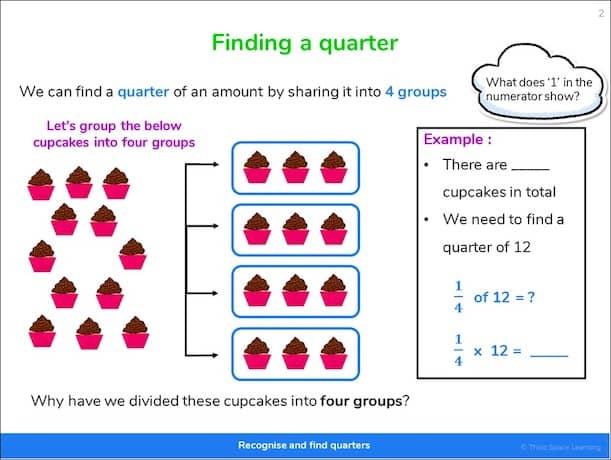
Unit fractions are not mentioned in the curriculum until 4th grade, when students begin to build fractions from unit fractions. Students also use their understanding of the relationship between unit fractions and division to work backwards by multiplying a quantity that represents a unit fraction to find the whole quantity (for example, if 1/4 of a length is 36cm, then the whole length is 36 × 4 = 144cm).
Wondering about how to explain other key math vocabulary to your children? Check out our Primary Math Dictionary, or try these other terms related to unit fractions:
- What Are Equivalent Fractions?
- What Is BODMAS (and BIDMAS)?
- Properties of shapes
- What are 2D shapes?
- What are 3D shapes?
Unit fraction practice questions for elementary school kids
1) Write these numbers in order, starting with the smallest: 1/2, 1/4, 1/8, 1/5
2) Circle the biggest unit fraction: 1/6, 1/4, 1/3, 1/5
3) Shade in 1/5 of this shape (you can recreate this on a piece of paper):

4) Calculate 1/7 of 21.
Looking for more practice questions? See our fraction worksheets blog for a selection of worksheets, practice questions and other resources to support learning.
Do you have students who need extra support in math?
Skye – our AI math tutor built by experienced teachers – provides students with personalized one-on-one, spoken instruction that helps them master concepts, close skill gaps, and gain confidence.
Since 2013, we’ve delivered over 2 million hours of math lessons to more than 170,000 students, guiding them toward higher math achievement.
Discover how our AI math tutoring can boost student success, or see how our math programs can support your school’s goals:
– 3rd grade tutoring
– 4th grade tutoring
– 5th grade tutoring
– 6th grade tutoring
– 7th grade tutoring
– 8th grade tutoring
The content in this article was originally written by primary school teacher Sophie Bartlett and has since been revised and adapted for US schools by elementary math teacher Christi Kulesza.