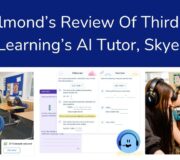


AI Tutoring Review: EdTech Expert Jodie Lopez’s Independent Assessment Of Skye

Jodie Lopez is a former teacher and respected EdTech expert from the UK, known as the EdTech Ninja UK, who specializes in evaluating how education technology products can support learning in the classroom.
We asked Jodie to independently trial Skye, our spoken AI math tutor, and share her honest assessment of the system’s strengths and areas for development.
Jodie tested Skye with her two sons – one completing a 4th Grade lesson and one a high school lesson – to evaluate how the system works across different grade levels and ability levels.
For those of you on the go, here’s a video version of Jodie’s independent review of the AI tutor Skye:
Or you can read the full review here:
When Third Space Learning approached me to test their AI tutor Skye, I was keen to see how it compared to other AI products I’ve been evaluating. I tested the system with my two sons – one did a 4th Grade lesson and one took a high school review lesson – so I could experience how it works across different grade levels.
It’s important to note upfront that AI isn’t replacing teachers. But what I discovered is that AI in the classroom, when combined with AI literacy, has real potential to fill gaps where there’s currently nothing, where schools simply don’t have the budget or resources for one-to-one support.
Here’s my honest assessment of what I found, including both the impressive aspects and the areas that still need work.
AI tutoring review key takeaways:
- Third Space Learning used its 10+ years of knowledge of what works in tutoring and has used it in this platform.
- They’ve created something affordable for schools with students who need extra support but cannot afford traditional one-to-one tutors.
- There’s something valuable here for students who might find AI less intimidating than working with a human tutor.
AI isn’t replacing teachers, but it can replace nothing
Let me be clear from the start: AI tutors will never replace human teachers. Humans add something essential to every conversation, and in teaching, they’re irreplaceable.
So, the key question isn’t whether AI tutoring is perfect, but whether it can serve a real purpose for schools where they don’t have other options for that one-to-one human support.
From what I observed, it absolutely can.
In creating Skye, Third Space Learning has provided something affordable for schools where traditional tutoring isn’t an option. This could be because there’s no budget for anything, or because you’re a rural school where it’s difficult to find local tutors who are reliable.
This is about filling a gap where there’s currently nothing, not about replacing good teaching. And that’s a crucial distinction that schools need to understand when considering AI tutoring solutions.

From traditional to AI tutoring: The transition to AI tutoring wasn’t about replacing humans, but about solving the accessibility problem. We didn’t build AI tutoring from scratch; we took everything we learned from a decade of effective human tutoring and translated that into AI tutoring.
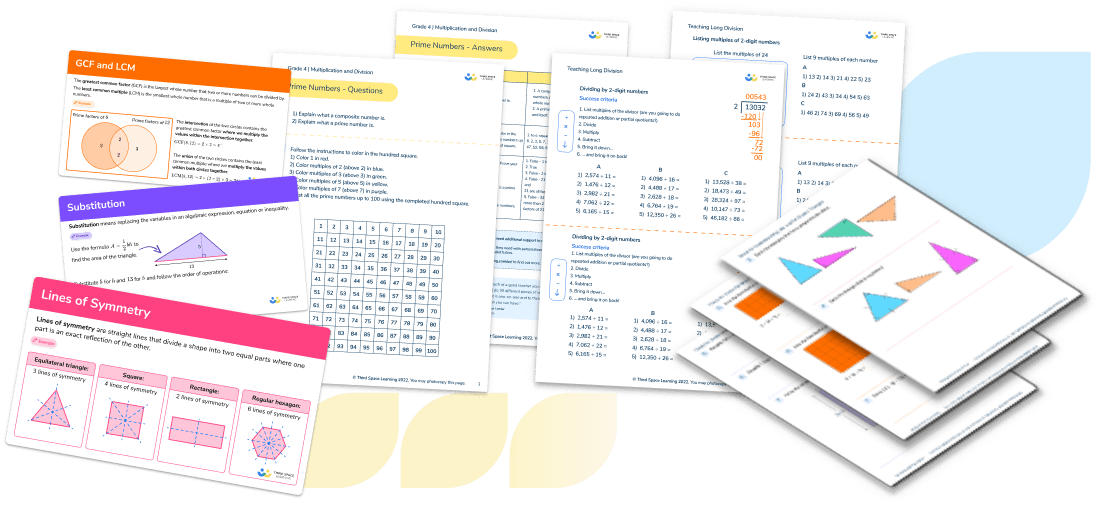
Skye uses the same curriculum, pedagogical approaches, and lesson structures that proved successful with our traditional tutoring.
Intelligent tutoring systems help schools provide one-to-one math support for every student who needs it, rather than having to choose between who gets help and what they can afford. AI tutoring sessions use the same principles as our traditional tutoring.
A less intimidating alternative for some students
One of the most interesting benefits I observed is how some children find AI tutoring less intimidating than working with a human tutor.
I made it very clear to my sons beforehand that they were dealing with an AI, not a human. This transparency actually takes some pressure off. If they get it wrong, it’s only a bot that knows about it. No human is sitting there with expectations.
For children who are struggling but don’t want to admit it, or who need a little confidence but don’t feel comfortable sitting down with a tutor for various reasons, the AI provides something genuinely different.
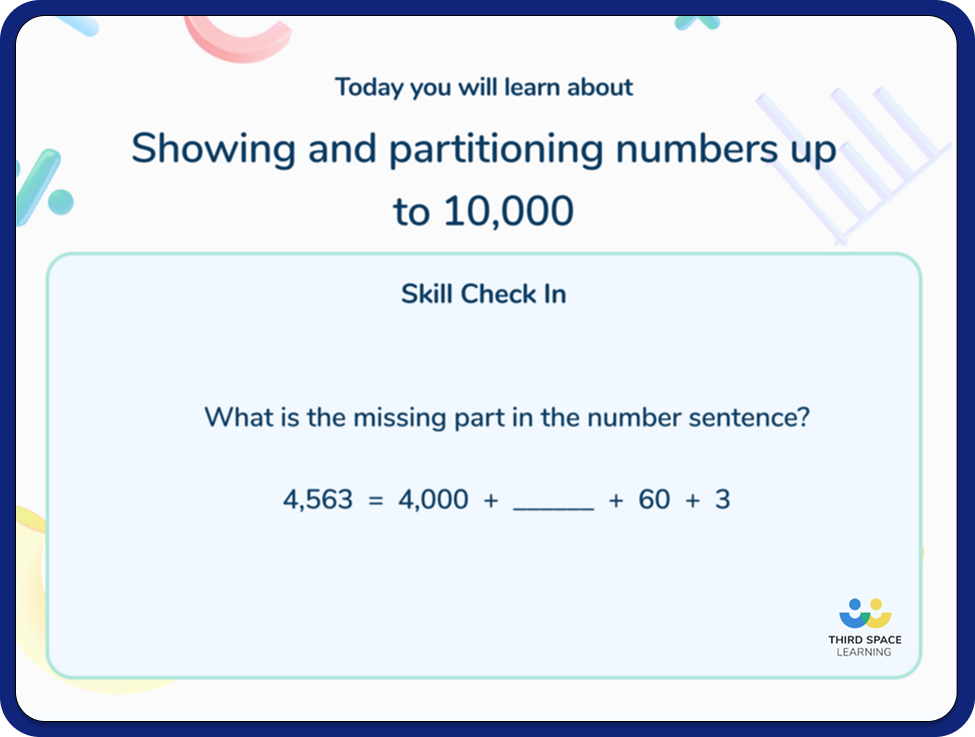
The AI is never disappointed. Skye has been trained to be encouraging, motivating, and positive, so children won’t feel they’re letting anybody down. It will guide them through, asking them to check different elements, referring to the visuals and the conversation.
For some children, this creates a feeling of safety that allows them to take risks with their learning.
Why this works: The non-judgmental nature of AI tutoring can be particularly powerful for students with math anxiety.
As the best AI for math should, Skye creates a safe space where students can make mistakes, ask questions, and work through problems without fear of disappointing anyone. This removes emotional barriers that can prevent effective learning.

Math Intervention Checklist
Download this essential step-by-step checklist to help you select, manage and evaluate the best math intervention programs for your students
Download Free Now!Teachers remain in control of the learning process
One aspect that impressed me was that the teacher isn’t removed from the process with Third Space Learning. I still had complete control over which lesson my children completed.
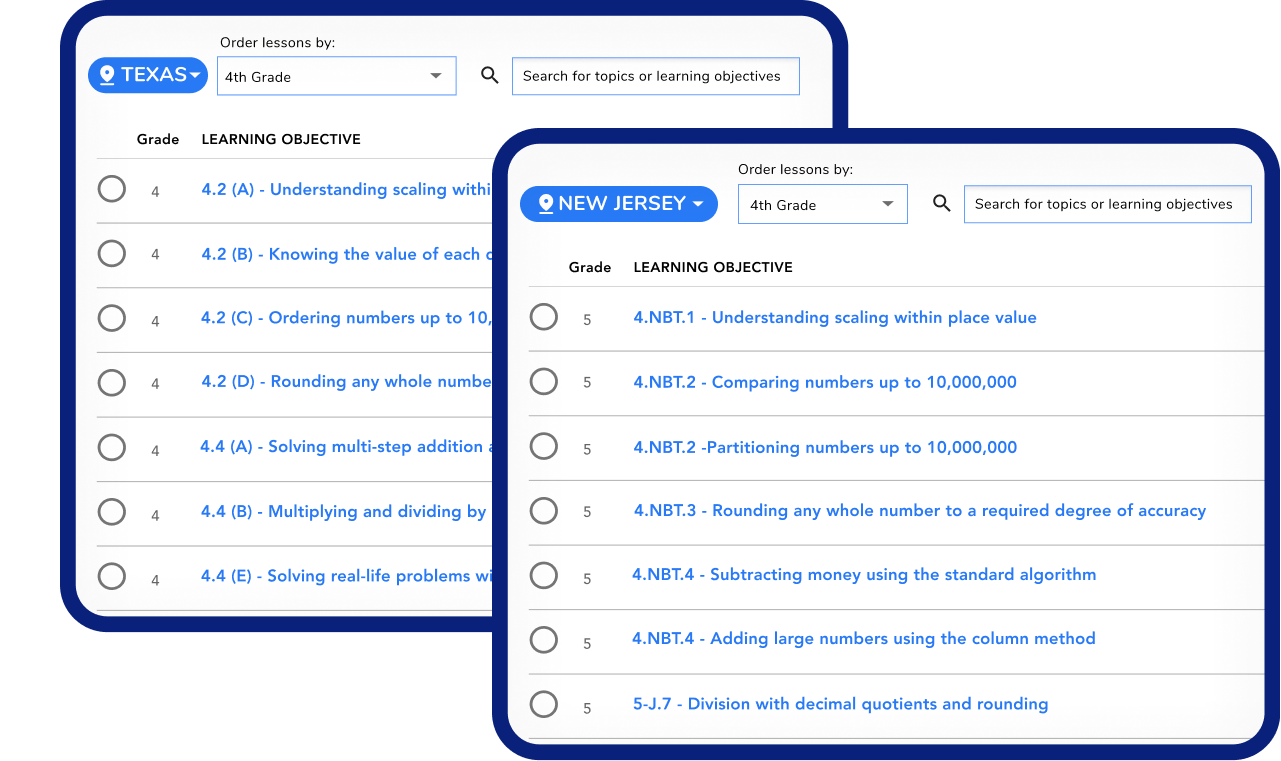
Within the platform, once you’ve set up a tutoring session, you can reorder the lesson to customize it for each child.
This means schools can ensure the AI tutoring aligns with their curriculum planning and students’ individual needs. The system doesn’t operate independently – it works under the teacher’s direction.
This level of control is crucial for schools considering AI tutoring. You’re not handing over educational decisions to the AI; you’re using it as a tool that delivers the content and approach you’ve determined is right for each student.
How this works: Teachers can reorder lessons within programs to align with their classroom teaching or prioritize specific gaps identified through assessment.
For example, if a 5th Grade class is struggling with fractions before moving on to percentages, teachers can adjust the sequence to spend more time on fractional concepts before progressing. This flexibility ensures AI tutoring complements rather than conflicts with classroom learning.
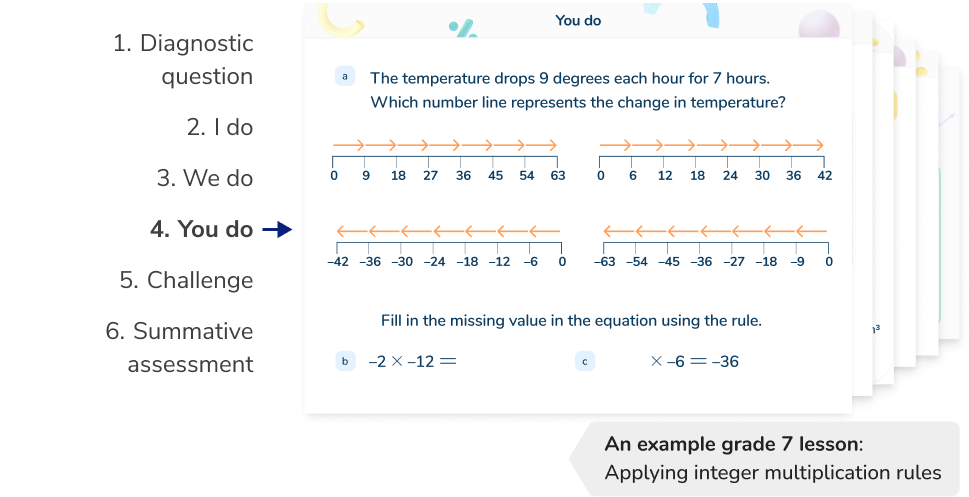
Lesson format: visual, structured, spoken support
Third Space Learning has built something truly different from generative AI products, where you enter a prompt to learn about math. Skye uses structured lessons with carefully planned visuals that walk you through concepts.
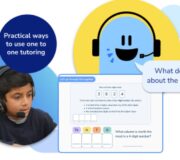
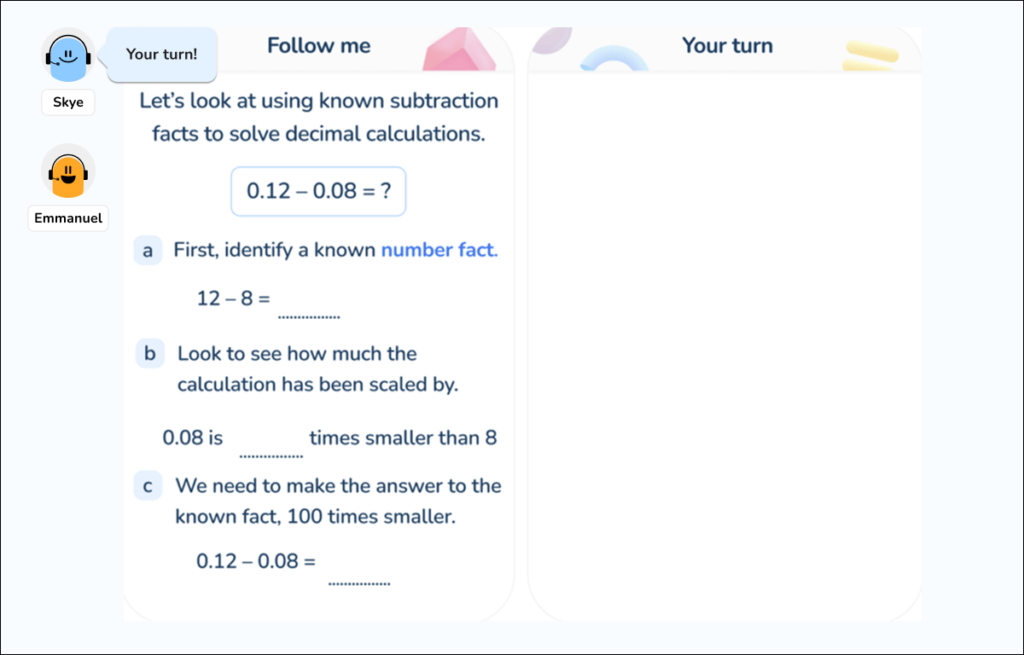
Skye adds a conversational layer on top of these visual lessons. It verbally explains examples to the child, then they do one together, and finally, the child tackles examples independently.
This brings together all Third Space Learning’s expertise from over 10 years of human tutoring. They’ve taken what works and built it into this platform, creating lessons that follow the same I do, we do, you do structure you’d expect from effective math teaching.
A combination of planned lessons with responsive spoken conversation makes it feel more like actual tutoring rather than just another online math tool.
Why this is important: The spoken element is crucial because mathematical thinking often develops through verbalization. When students explain their reasoning aloud, they engage in metacognitive processes that strengthen understanding.
The “I do, we do, you do” methodology ensures students receive appropriate scaffolding, see concepts modeled, practice with support, and then develop independence.
This mirrors effective classroom teaching and helps bridge the gap between whole-class instruction and individual understanding.
The system accommodates different communication preferences
Although the AI behind Skye is dialogue-driven, children can talk as much or as little to the tutor as they want, and Skye will keep talking back and prompting them.
You don’t have to talk a lot – if a child doesn’t want to speak much, they can interact on screen, but the tutor will still verbally guide them through as they work.
This flexibility is important because not all children are comfortable speaking aloud, especially when they’re uncertain about their answers. The system doesn’t force verbal participation but encourages it when children are ready.
If there’s silence, a gap, or if they’re struggling, the tutor will prompt them and ask them to think about certain things related to the math.
The conversational element adds value without creating barriers for less confident speakers.
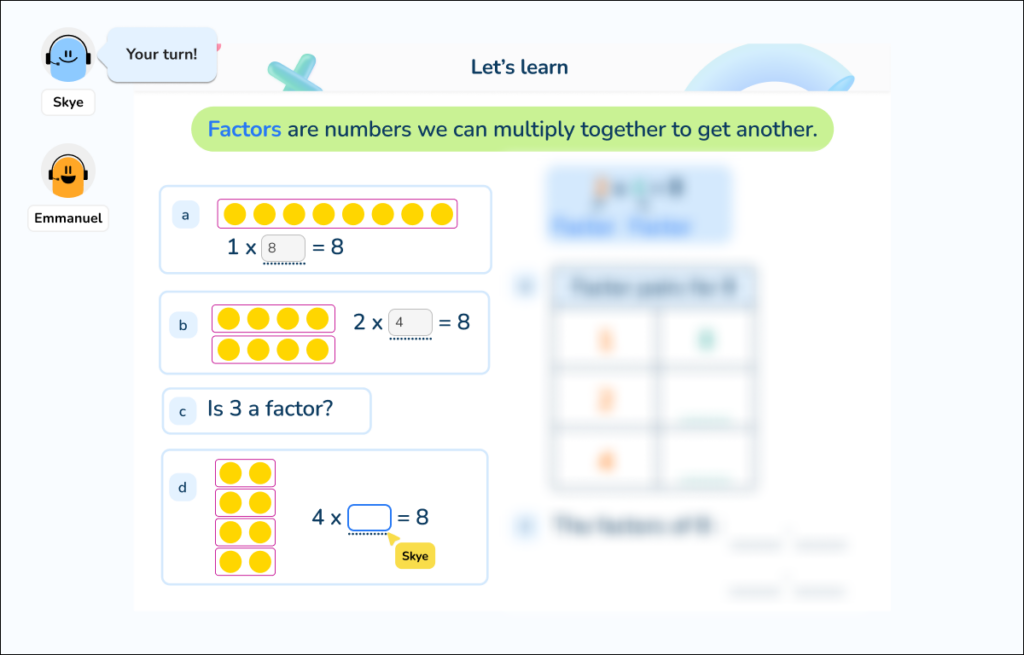
Why this matters: Features like the blur function help students focus on specific parts of questions, reducing cognitive load and supporting concentration.
Skye includes specific classroom tools designed to support learning during sessions. Highlighting and pointing tools direct attention to specific numbers, symbols, or areas students need to consider.
These visual aids work alongside the spoken guidance to ensure students know exactly what to focus on at each step, particularly helpful for students who struggle with processing multiple pieces of information simultaneously.
Meaningful mathematical guidance when students struggle
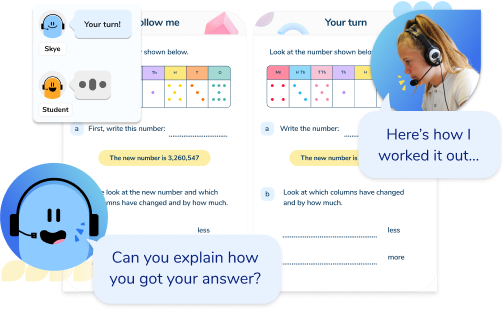
When children get answers wrong, Skye doesn’t just mark them incorrect and move on. It explains misconceptions from a mathematical point of view and helps guide them to the right answer.
For example, it might say “have a look at the tens column and think about what is in the tens column” – talking them through the specific concept they’re struggling with.
This reduces the chance of failure because the tutor actively helps children work through examples.
If a child doesn’t understand and can’t move past a problem, the tutor explains the right answer and ensures they understand before moving to the next question. Children don’t get stuck for too long.
Skye refers to the visuals on screen as well as providing verbal guidance, so children can see and hear the mathematical reasoning behind each step.
This approach mirrors what you’d expect from effective human tutoring – identifying the specific misconception and addressing it directly rather than just providing the correct answer.
How Skye is trained: Skye is trained to recognize common misconceptions and provide targeted hints rather than just giving correct answers.
If a student struggles with place value, Skye might guide them to examine specific columns or think about the value of digits in different positions.
This scaffolded approach builds understanding rather than simply providing solutions, helping students develop mathematical reasoning skills they can apply independently.
Current limitations
Of course, nothing is without its limitations, but the Third Space Learning team are rolling out updates and improvements every week.
During my sessions, there were a couple of instances where Skye didn’t always understand what the children were saying.
Some children might worry that they got the answer wrong when actually the tutor just didn’t understand them. This caused a couple of small frustrations during our testing.
However, the tutor simply carried on and moved through the lesson anyway, so it didn’t stop progress. I suspect this will improve quickly as the AI trains on more student interactions – that’s how AI generally progresses.
These are the kind of technical issues that will clear up as the technology develops and as more children use the system.
Skye’s continuous improvements: The development team continuously improves Skye’s speech recognition and response capabilities based on real classroom data.
Weekly updates address both technical improvements and pedagogical enhancements. As more students use the system, the AI better understands diverse accents, speech patterns, and mathematical language.
This iterative improvement process means Skye becomes more effective over time, adapting to the specific needs of US students.
AI tutoring: a valuable solution for schools
AI math tutoring is a workable solution. It adds something different to just using a chat functionality because spoken and visual guidance is sequential, and qualified teachers plan lessons for the tutor to work through.
The AI tutor adds an extra layer of support on top of structured content. Children can work through and get help as they go, similar to having a human next to them guiding the process.
From a cost and capacity perspective, this gives children valuable extra support. For schools with a small budget, Skye is a good option.
Third Space Learning is using all their expertise into what good tutoring is in this platform. They’re building something sustainable and useful for schools.

We paid Jodie for her time, but her review is unscripted and impartial.
Book a free AI math tutoring pilot for up to 20 of your students.
See how unlimited one-on-one high-dosage math tutoring can support your school or district and boost students’ math achievement.
Developed by math teachers, trusted by 4,100+ schools, and counting.
Book a free pilotDo you have students who need extra support in math?
Skye – our AI math tutor built by experienced teachers – provides students with personalized one-on-one, spoken instruction that helps them master concepts, close skill gaps, and gain confidence.
Since 2013, we’ve delivered over 2 million hours of math lessons to more than 170,000 students, guiding them toward higher math achievement.
Discover how our AI math tutoring can boost student success, or see how our math programs can support your school’s goals:
– 3rd grade tutoring
– 4th grade tutoring
– 5th grade tutoring
– 6th grade tutoring
– 7th grade tutoring
– 8th grade tutoring